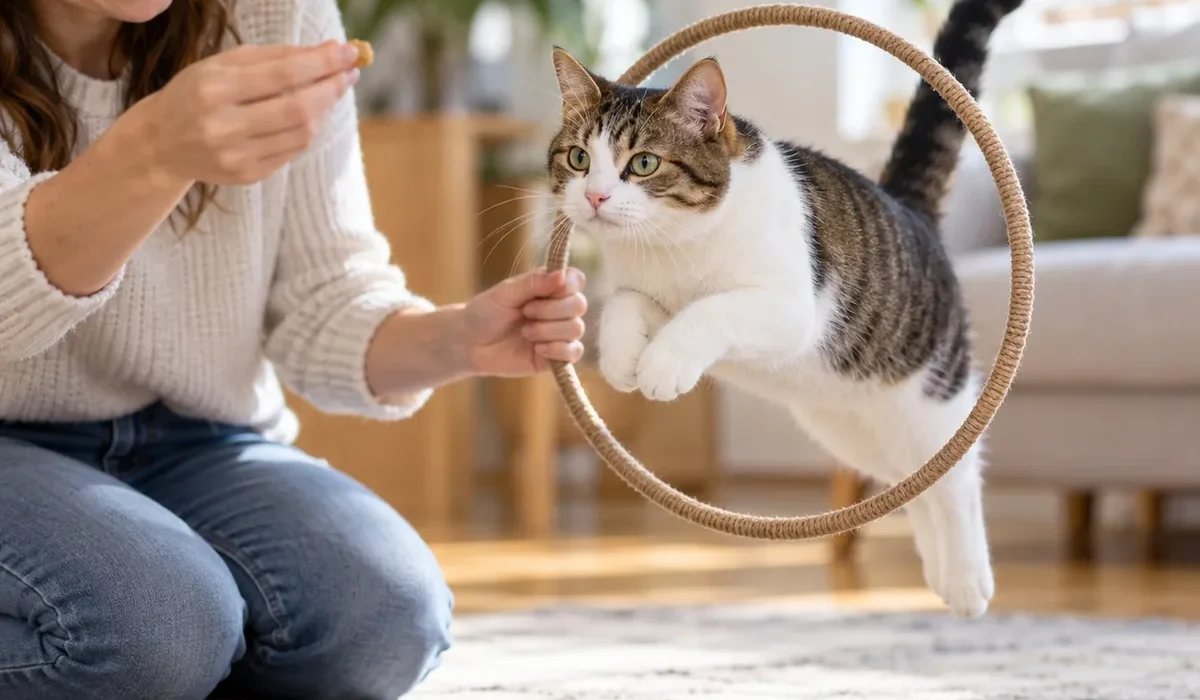
Cat Training Tricks: 10 Easy Tricks to Teach Your Cat Today
Cat training tricks work because cats learn through rewards, repetition, and short, consistent sessions, just like dogs do. Most healthy cats can master simple behaviors such as sit, come, and high five within one to three weeks, whatever their age.
This post may contain affiliate links. As an Amazon Associate I earn from qualifying purchases.
Table of Contents
Cat training tricks at a glance:
- Short Answer: Yes, cats can learn tricks. Reward-based clicker training is the most effective method.
- Best Session Length: 3 to 5 minutes, one to three times a day.
- Easiest First Tricks: Come when called, sit, and nose touch.
- Key Rule: Reward the instant the cat does the right thing, never punish mistakes.
- When to Pause: If your cat is stressed, ill, or has just eaten a full meal.
Can Cats Really Learn Cat Training Tricks?
Yes, cats learn tricks readily when the reward is something they truly want. The myth that cats cannot be trained comes from using dog methods, which depend on pleasing the owner. Cats respond to personal benefit, so the payoff must be a treat, play, or affection.
Cats are natural problem solvers. In the wild they study prey patterns and repeat what works, and training taps into that same instinct. A cat that figures out that sitting produces a treat will offer the sitting behavior again and again.
Age matters less than most owners expect. Kittens learn fastest, but many adult cats and even senior cats pick up new tricks. If you share your home with an older companion, our guide to senior cat care explains how to adapt activities to stiffer joints and lower energy.
How Cat Training Tricks Work: The Basics
Cat training works through positive reinforcement, which means rewarding the exact moment your cat performs a wanted behavior. Cats connect actions to outcomes within about two seconds, so timing is everything. A reward delivered five seconds late teaches your cat nothing.
Core principles:
- Reward immediately, within one to two seconds of the behavior.
- Use a marker such as a clicker or a short word like “yes” to pinpoint the right moment.
- Keep treats tiny, about the size of a pea, so your cat stays hungry for more.
- End every session on a success, before your cat loses interest.
- Never scold, spray water, or force a position, because fear shuts learning down.
A training clicker is the most useful tool you can buy. The sharp, consistent sound becomes a promise of food, which lets you mark behavior precisely even when your cat is across the room. Pair the click with a treat 10 to 15 times before you ask for any trick, so your cat understands what the sound means.
Setting Up for Success With Cat Training Tricks
Good cat training tricks begin with the right setup, because a distracted or anxious cat will not learn. Choose a quiet room, remove competing pets, and train when your cat is alert but slightly hungry, such as an hour before a regular meal.
Choose rewards your cat loves:
- Freeze-dried chicken or fish, broken into tiny pieces.
- A lick of plain wet food on a spoon.
- Small soft cat training treats made for short sessions.
Some owners wonder which kitchen foods are acceptable as rewards. Our list of human foods cats can eat covers safe options, and the list of dangerous foods for cats names the toxic ones to avoid. Keep all treats under 10 percent of your cat’s daily calories so training does not cause weight gain.
Keep sessions to 3 to 5 minutes. Cats tire mentally faster than dogs, and a short, happy session beats a long, frustrating one. Two or three mini sessions per day produce faster progress than one long weekly lesson.
10 Easy Cat Training Tricks to Teach Today
These ten cat training tricks are ordered from easiest to most advanced. Master each one before moving on, and expect most tricks to take several short sessions.
1. Come When Called
Coming when called is the most useful trick because it helps in emergencies and at vet visits. Say your cat’s name and a cue word like “come,” then immediately reward when your cat approaches. Start from 3 feet away and slowly increase the distance over a week.
2. Nose Touch (Target Training)
The nose touch teaches your cat to bump a target, and it is the foundation for many other tricks. Hold two fingers or a chopstick a few inches from your cat’s nose. When your cat sniffs it, click and treat. Repeat until your cat touches the target on purpose, then move it so your cat follows.
3. Sit
Sit is easy because cats sit naturally. Hold a treat just above your cat’s head and slowly move it backward over the skull. As the nose lifts, the rear usually lowers, so click and treat the moment the bottom touches the floor. Add the word “sit” only after the behavior is reliable.
4. High Five
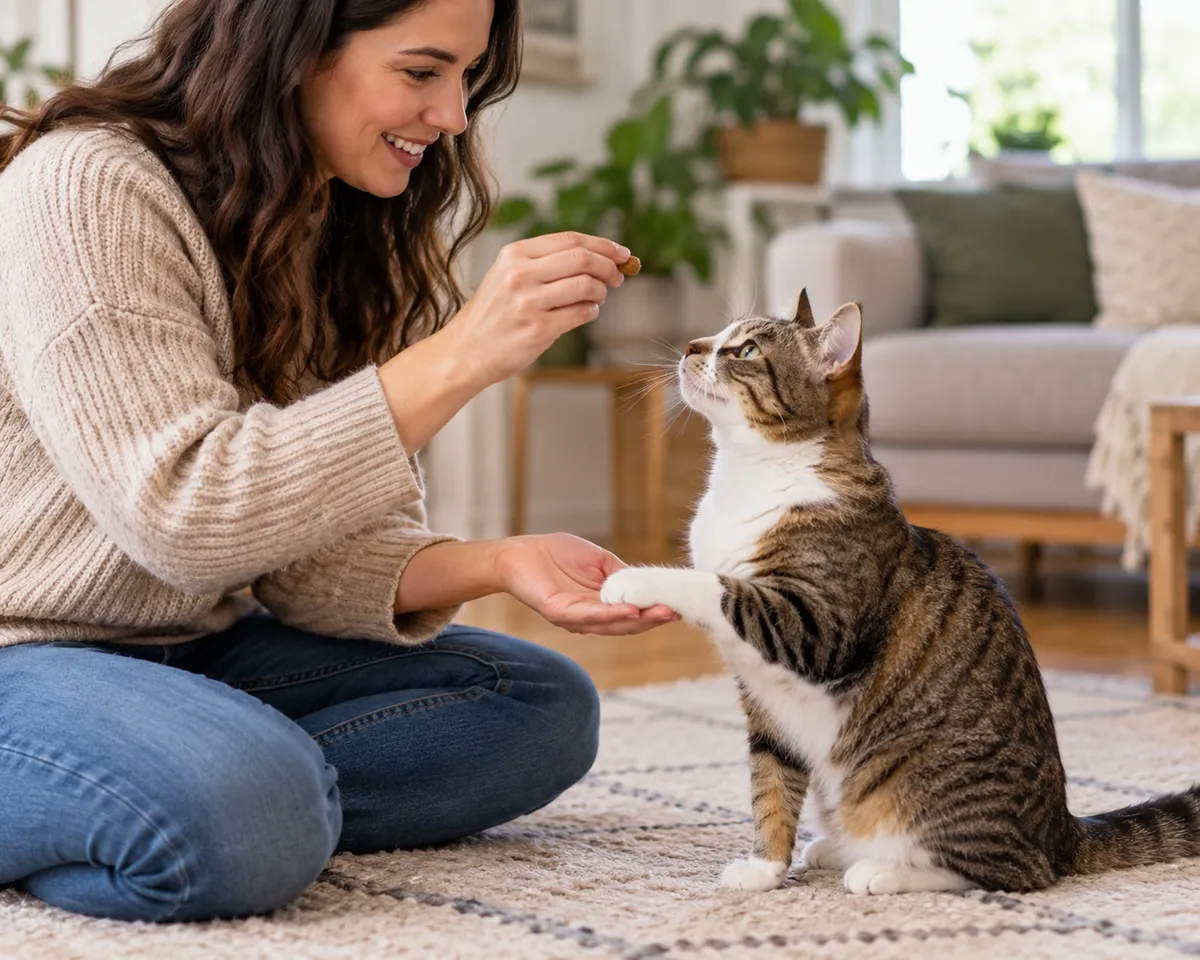
High five builds on the sit. Hold a treat in a closed fist at chest height. Most cats paw at the hand, so click and treat at the first paw lift. Gradually replace the fist with a flat open palm until your cat taps it on cue.
5. Spin in a Circle
Spinning teaches your cat to follow a lure. Hold a treat at nose level and draw a slow circle. Click and reward when your cat turns even a quarter circle, then ask for a bit more each time. Within a few sessions, most cats complete a full turn.
6. Jump Onto a Surface
This trick channels natural climbing. Place a sturdy stool or low box on the floor and tap it. Reward the instant your cat steps on it, then add the cue “up.” A stable cat tree or perch works as the target later, and it keeps jumping safe for the joints.
7. Fetch
Some cats retrieve naturally. Toss a lightweight toy a short distance and click when your cat picks it up. Reward every step toward returning it, even a single pace in your direction. If your cat also likes carrying toys around, our post on why cats carry toys around and meow explains the instinct behind it.
8. Roll Over
Roll over is harder because cats dislike exposed bellies unless they feel safe. Start from a lying position and lure the nose toward the shoulder with a treat. Reward each partial roll. If your cat already flops often, see our guide to cat rolling on back to understand what that posture means.
9. Go to Your Mat
Mat training gives your cat a calm place to settle during meals or visitors. Place a small mat on the floor and reward any paw or body contact with it. Slowly require four paws on the mat before the treat, then add the cue “place.”
10. Walk on a Leash and Harness
Leash walking takes the longest, often three to six weeks. Introduce a snug harness and leash indoors first, rewarding calm behavior while your cat wears it. Only move outside once your cat walks confidently inside, and always supervise closely.
Cat Training Tricks for Kittens vs. Adult Cats
Kittens and adult cats both learn well, but they need different approaches. Kittens have short attention spans and learn best in sessions of 1 to 3 minutes. Adults can focus for up to 5 minutes and are often more food motivated.
| Age Group | Session Length | Best First Trick | Main Tip |
|---|---|---|---|
| Kitten (8 to 16 weeks) | 1 to 3 minutes | Come when called | Pair training with play |
| Adult (1 to 9 years) | 3 to 5 minutes | Nose touch | Use high-value treats |
| Senior (10+ years) | 2 to 4 minutes | Go to mat | Avoid jumping tricks |
New kitten owners can pair cat training tricks with early socialization. Our kitten care essentials guide covers the first weeks, and our tips for playing with your cat show how play and learning support each other.
Common Mistakes With Cat Training Tricks
Most failed training comes from a handful of avoidable mistakes. Correcting them usually restores progress within a few days.
- Sessions that run too long: Stop after 5 minutes, even if your cat seems willing.
- Late rewards: A treat delivered after two seconds rewards the wrong behavior.
- Punishment: Yelling or spraying water raises stress and damages trust.
- Low-value treats: If your cat ignores the reward, switch to something tastier.
- Skipping steps: Jumping to hard tricks before the basics are solid causes frustration.
If your cat suddenly refuses to train, look at health and stress first. A cat in pain or under stress will not engage, and sudden changes in appetite or energy deserve attention. Our guide to signs a cat is in pain lists the changes worth noting.
Using Cat Training Tricks to Solve Behavior Problems
Training does more than entertain. It redirects energy, builds confidence, and reduces unwanted behavior by giving your cat a job. A cat that earns treats for using a scratching post is less likely to shred your sofa.
Cat training tricks work especially well for these everyday problems:
- Scratching furniture: reward your cat each time the claws hit a post. See our proven fixes to stop cats scratching furniture for setup ideas.
- Bored, destructive behavior: trick sessions add mental stimulation to an indoor day.
- Fearful vet visits: carrier and handling practice makes appointments calmer.
For a broader look at problem behaviors and their causes, read our post on common cat behavior problems. According to the ASPCA guide to common cat behavior issues, positive reinforcement is the recommended approach for changing behavior, while punishment often makes problems worse.
Keeping Your Cat Motivated Long Term
Lasting progress with cat training tricks comes from variety and consistency. Rotate treats so they stay exciting, vary the order of tricks, and quit while your cat still wants more. Keep a simple log of what your cat learned so you can see real progress.
- Train at the same times each day so your cat anticipates the fun.
- Save the best treat for the hardest new trick.
- Give a rest day if your cat seems bored or distracted.
- Combine tricks into short chains once each one is reliable.
Training also helps indoor cats stay engaged. Our guide on how to keep an indoor cat entertained offers more ideas that pair well with trick sessions.
Frequently Asked Questions
Can you really teach a cat tricks?
Yes, cats learn tricks quickly with food rewards and short, consistent sessions. Most cats pick up a basic behavior like sit within one to two weeks.
How long do cat training tricks take to learn?
Simple tricks take 1 to 3 weeks with daily 3 to 5 minute sessions. Harder behaviors such as leash walking can take 3 to 6 weeks.
What are the easiest cat training tricks for beginners?
The easiest tricks are come when called, nose touch, and sit. These use natural behaviors, so cats usually learn them in a handful of sessions.
What is the best treat for training a cat?
Freeze-dried chicken or fish, cut into pea-sized pieces, works best for most cats. Keep all treats under 10 percent of daily calories to prevent weight gain.
Is it too late to train an older cat?
No, older cats can learn new behaviors at any age. Choose low-impact tricks like nose touch or mat training and keep sessions to 2 to 4 minutes.
Cat training tricks are an easy, low-cost way to strengthen your bond and keep your cat mentally sharp. Start with just one trick, such as come when called, and practice it for 3 to 5 minutes today. Consistent rewards and patience will turn a curious cat into an eager learner within weeks.