
Human Foods Cats Can Eat: 15 Safe Treats From Your Kitchen
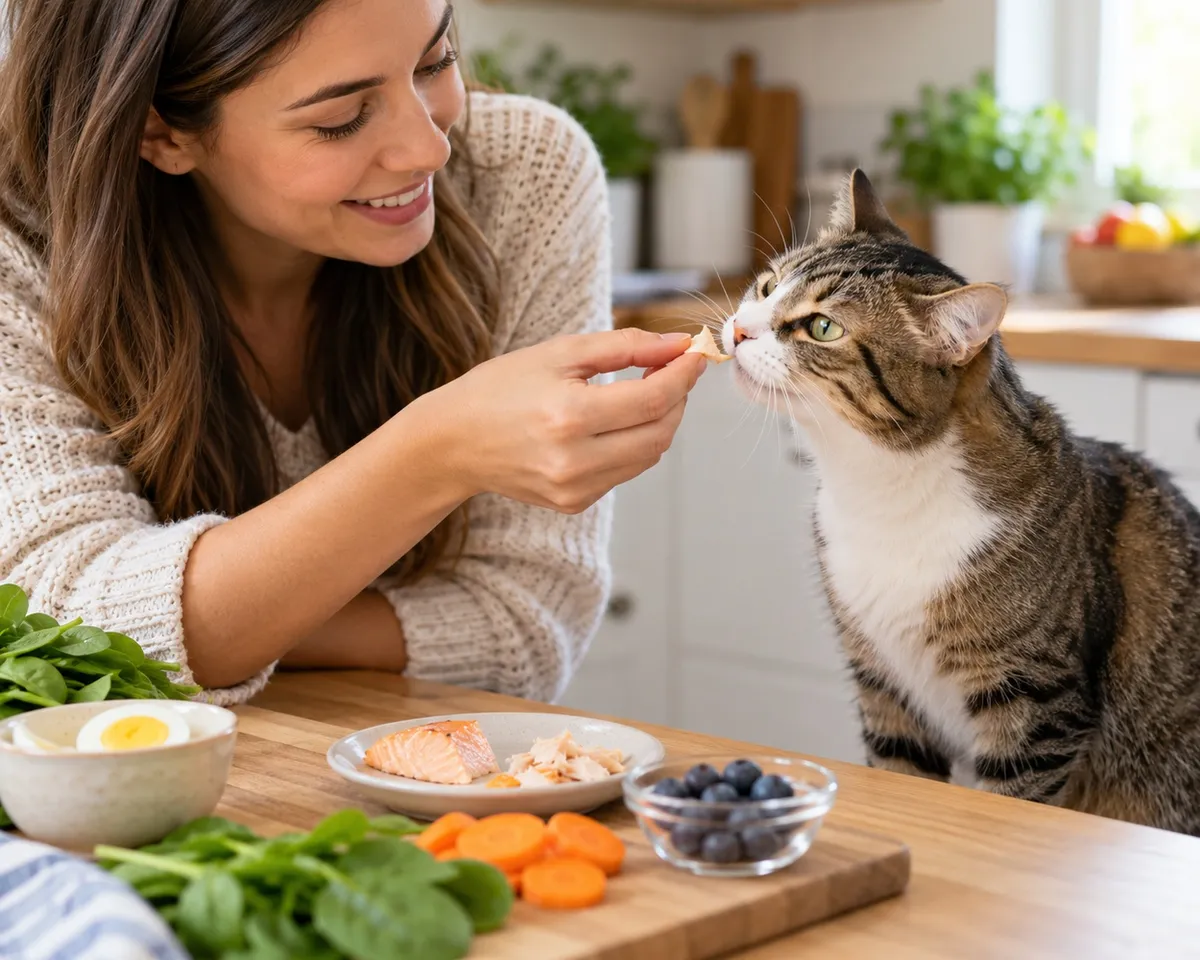
Human foods cats can eat include cooked plain meat, cooked eggs, small amounts of cooked fish, and a few vegetables and fruits, all given without salt, spices, onion or garlic. Cats are obligate carnivores, so these extras should stay as occasional treats and never replace a complete cat food.
This post may contain affiliate links. As an Amazon Associate I earn from qualifying purchases.
Table of Contents
Human foods cats can eat at a glance:
- Short Answer: Plain cooked meat, eggs, fish and a few produce items are safe in small portions.
- Safe Amount: Treats should make up no more than 10% of daily calories, roughly 20 to 25 calories for an average 10-pound cat.
- Main Benefit: Extra protein, moisture and variety, plus a handy reward for training or pill time.
- Main Risk: Seasoning, onion, garlic, grapes, chocolate and xylitol are toxic and must never be shared.
- Best Rule: Serve it plain, cooked, boneless, unsalted and cut into pea-sized pieces.
How to Choose Safe Human Foods Cats Can Eat
Safe human foods for cats share five traits: they are plain, cooked, boneless, unseasoned and served in tiny portions. A food that is harmless for people can still harm a cat, because cats lack certain liver enzymes needed to process many plant compounds.
Before sharing anything from your plate, run it through this quick checklist:
- No salt, butter, oil, sauces or marinades.
- No onion, garlic, chives or leeks, in any form, including powders.
- No bones, skin, fat trimmings or gristle.
- Cut into pieces smaller than a pea to prevent choking.
- Introduce one new food at a time and wait 24 hours to watch for vomiting or loose stool.
The 10% rule matters more than most owners realize. A single tablespoon of tuna can add 15 to 20 calories, which is a large share of a small cat’s treat allowance. Over weeks, those extras are a common path to obesity.
15 Human Foods Cats Can Eat Safely
The fifteen foods below are widely considered safe for healthy adult cats in small amounts. Each one works best as an occasional treat, not a daily staple.
Meat and Protein Treats
- Cooked chicken: Boiled or baked, skinless and boneless, chicken is lean protein that most cats love. Never use rotisserie chicken, which is heavily salted and seasoned.
- Cooked turkey: Plain white or dark meat is safe, but deli turkey and holiday birds are often loaded with salt and herbs. See our guide on safe turkey tips for cats for serving details.
- Cooked eggs: Scrambled or hard-boiled eggs without butter or salt supply protein and amino acids. Raw egg white carries salmonella risk and blocks biotin absorption, so always cook them, as explained in can cats eat eggs.
- Cooked lean beef: Plain, well-cooked beef in small cubes is acceptable, but trim all fat first.
- Cooked fish: Plain salmon or tuna, boneless and cooked, offers omega-3 fatty acids. Limit fish to once or twice a week, since frequent tuna can cause nutritional imbalance. Cats with a known sensitivity should skip it, as covered in fish allergy in cats.
- Cooked shrimp: Peeled, tail removed and fully cooked shrimp is a low-calorie protein treat.
Vegetables
- Cooked carrots: Steamed until soft and cut small, carrots provide fiber and beta-carotene. Details are in can cats eat carrots.
- Cooked sweet potato: Plain, mashed or cubed sweet potato is gentle on the stomach and rich in fiber. Skip any with sugar, marshmallow or spices; more in can cats eat sweet potatoes.
- Plain pumpkin: One teaspoon of canned pumpkin puree (not pie filling) can ease mild digestive upset, as shown in can cats eat pumpkin.
- Steamed green beans and peas: Both are low in calories and safe when cooked without salt, making them useful for weight-conscious cats.
Fruits
- Blueberries: A few fresh berries supply antioxidants. Offer one or two at a time, per can cats eat blueberries.
- Watermelon: Seedless flesh with the rind removed is mostly water and safe in small cubes.
- Banana: A thumbnail-sized slice is fine, but the sugar content means it should stay a rare treat.
- Strawberries: Hulled and chopped, strawberries are safe in tiny amounts and best served fresh.
Grains and Other Safe Extras
- Plain cooked rice: A spoonful of boiled white rice is a classic bland-diet ingredient, explained in can cats eat rice.
Rice is the only grain on this list because cats gain little from carbohydrates. Bread, pasta and oats are non-toxic in tiny bites but offer almost no nutritional value.

Safe Portion Sizes for Common Human Foods
Portion size decides whether a safe food stays safe. The table below gives practical starting amounts for an average 10-pound adult cat.
| Food | Typical Treat Portion | How Often |
|---|---|---|
| Cooked chicken or turkey | 1 to 2 teaspoons | 2 to 3 times a week |
| Cooked egg | 1 teaspoon of yolk and white | Once or twice a week |
| Cooked fish | 1 teaspoon flaked | Once or twice a week |
| Cooked carrot or sweet potato | 1 teaspoon mashed | Once or twice a week |
| Plain pumpkin puree | 1 teaspoon | As needed for digestion |
| Blueberries or strawberries | 1 to 2 pieces | Occasionally |
| Watermelon or banana | 1 small cube or slice | Rarely |
Kittens, seniors and cats with kidney disease, diabetes or pancreatitis need individual guidance. Ask your veterinarian before adding any new treat to their diet. For daily food amounts, our guide to how much to feed a cat is a useful baseline.
Human Foods Cats Cannot Eat
Some human foods are toxic to cats even in small quantities. Knowing this list is just as important as knowing which treats are safe, and the ASPCA Animal Poison Control Center maintains a full database of dangerous items.
- Onions, garlic, chives and leeks: These damage red blood cells and can cause anemia. Cooked, raw and powdered forms are all dangerous.
- Chocolate and cocoa: Theobromine is toxic to cats, and symptoms are covered in can cats eat chocolate.
- Grapes and raisins: Even tiny amounts may cause kidney failure, as described in can cats eat grapes.
- Xylitol: This sweetener, found in sugar-free gum, candy and some peanut butters, can be dangerous for pets.
- Alcohol and caffeine: Both can cause serious nervous system and heart effects in very small doses.
- Raw dough and cooked bones: Dough can expand in the stomach, and bones can splinter or cause blockages.
Ham, popcorn and dairy sit in a gray area. Ham is too salty and fatty, as explained in can cats eat ham, and most adult cats are lactose intolerant, which is why can cats drink milk advises against it. Our full list of dangerous foods for cats covers nine more items to avoid.
Signs a Human Food Did Not Agree With Your Cat
Most cats that react badly to a new treat show digestive signs within 6 to 24 hours. Watching for them early lets you stop feeding the food and avoid a bigger problem.
- Vomiting or repeated gagging.
- Loose stool or diarrhea lasting more than one day.
- Drooling, lip licking or pawing at the mouth.
- Lethargy, hiding or refusing meals.
- Itching, red skin or ear scratching, which can signal a food allergy.
If your cat shows tremors, pale gums, difficulty breathing, collapse or repeated vomiting after eating something toxic, contact an emergency veterinarian immediately. Persistent stomach upset is covered in cat vomiting and diarrhea, and the Cornell Feline Health Center feeding guide explains why a balanced commercial diet should remain the foundation of every cat’s nutrition.
How to Serve Human Foods Cats Can Eat Safely
Good preparation turns a risky scrap into a safe treat. Follow these steps every time you share food from your kitchen.
- Cook the food plainly by boiling, steaming or baking, with no oil, salt or seasoning.
- Remove all bones, skin, shells, seeds, pits and fat.
- Let it cool completely, since cats prefer food near body temperature.
- Cut it into pea-sized pieces or mash it into a smooth paste.
- Offer a small amount and observe your cat for the next 24 hours.
- Store leftovers in the fridge and discard cooked meat after 2 days.
For cats that dislike plain pieces, a small amount mixed into their regular meal works well. A freeze-dried single-ingredient cat treat is a convenient alternative when you do not want to cook, and a slow feeder bowl helps cats that gulp treats too quickly. Both fit easily within the 10% treat budget.
If you want to cook more regularly for your cat, vet-guided homemade cat food recipes explain how to keep meals complete and balanced. Cats with delicate digestion may also benefit from food for cats with sensitive stomachs.
Frequently Asked Questions
What human foods can cats eat every day?
No human food should be a daily staple, but a teaspoon of plain cooked chicken or egg can be given most days within the 10% treat limit. A complete commercial cat food must supply the rest of the diet.
Are there human foods cats can eat that help with digestion?
Yes, plain canned pumpkin puree is the most common choice, with about 1 teaspoon added to a meal for mild constipation or loose stool. If symptoms last longer than 24 to 48 hours, call your vet.
Can cats eat cheese or drink milk?
Most adult cats are lactose intolerant, so milk and cheese often cause diarrhea or gas. A tiny cube of hard cheese is the lowest-risk option, but it should be rare.
Can cats eat tuna from a can?
Canned tuna packed in water without added salt is safe once in a while, but it should not be a regular meal. Frequent tuna can lead to nutritional imbalance and mercury exposure.
How many human foods cats can eat in one day?
Offer only one new food at a time and keep all treats under 10% of daily calories, which is about 20 to 25 calories for an average cat. Adding several new foods at once makes it hard to identify the cause of any stomach upset.
Human foods cats can eat are best treated as small, plain and occasional extras that sit alongside a complete cat diet. Choose from the 15 safe options above, keep portions to a teaspoon or two, and always avoid onion, garlic, grapes and chocolate. Start with one new food this week and watch your cat for 24 hours before adding another.