
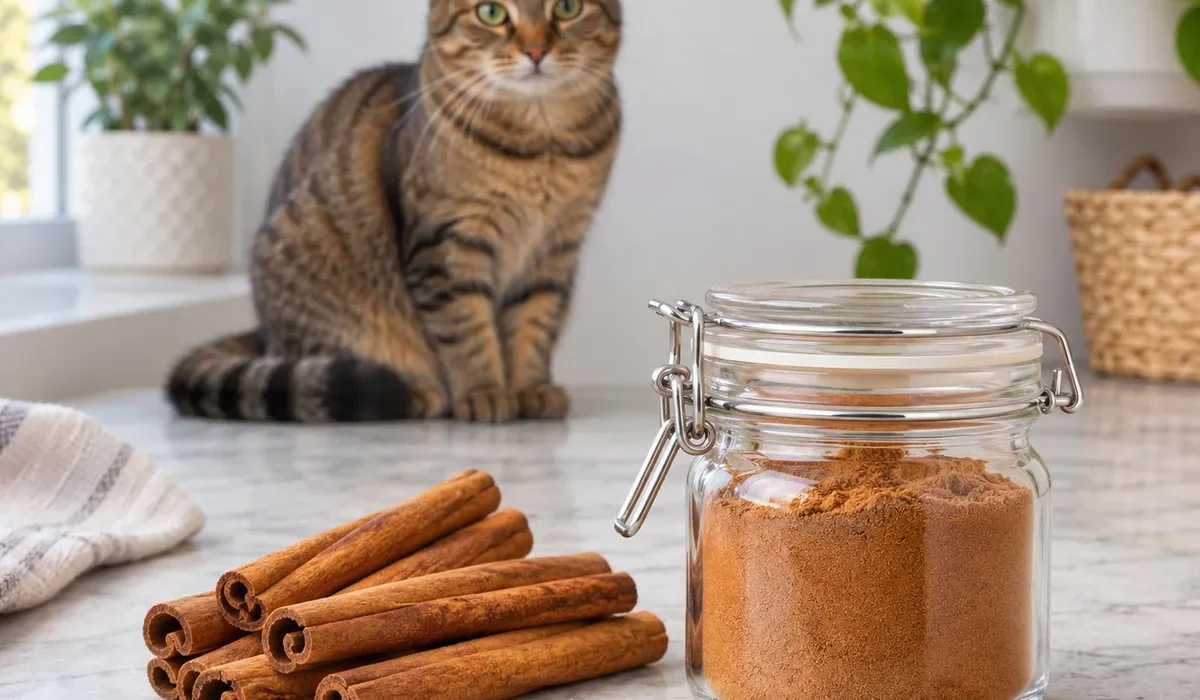
Can Cats Eat Cinnamon? 5 Surprising Risks for Curious Cats
The answer to can cats eat cinnamon is no as a treat: a tiny lick is not toxic, but larger amounts, oils and inhaled powder harm cats. This matters most from November to January, when cinnamon rolls, spiced candles and potpourri sit within reach of curious cats.
This post may contain affiliate links. As an Amazon Associate I earn from qualifying purchases.
Table of Contents
Can cats eat cinnamon at a glance:
- Short Answer: A small accidental lick of ground cinnamon is usually harmless, but never feed cinnamon on purpose.
- Main Risk: Cinnamon essential oil and inhaled powder cause the most serious problems in cats.
- Common Signs: Drooling, sneezing, coughing, vomiting and diarrhea usually appear within a few hours.
- When to See a Vet: Call a vet right away for oil exposure, breathing trouble, weakness or repeated vomiting.
Is Cinnamon Toxic to Cats?
Cinnamon is not classed as toxic to cats, but the dose and the form decide how much harm it causes. The ASPCA Animal Poison Control Center lists the cinnamon plant as non-toxic to cats, dogs and horses.
Two compounds matter:
- Cinnamaldehyde irritates the mouth, skin and airways on direct contact.
- Coumarin can stress the liver in large amounts, and cassia cinnamon holds far more coumarin than Ceylon cinnamon.
Most vets answer can cats eat cinnamon with a cautious no, since cats are obligate carnivores and gain nothing from spices.
Can Cats Eat Cinnamon Safely? 5 Surprising Risks
1. Mouth and Skin Irritation
Cinnamaldehyde can redden a cat’s gums, tongue and lips within minutes, causing drooling and pawing at the mouth.
2. Breathing Problems From Powder
Inhaled cinnamon powder triggers sneezing, coughing and gagging, and cats with asthma face the highest risk. When my tabby, Miso, sniffed a bowl of cinnamon sugar, she sneezed six times and backed away. A cat that keeps hacking afterward deserves the same care as any coughing cat.
3. Cinnamon Essential Oil Poisoning
Concentrated cinnamon oil is the most dangerous form because a few drops hold the strength of a large pile of powder. Oil on fur gets licked off during grooming and can cause oral burns, vomiting, wobbliness and liver damage.
4. Vomiting and Diarrhea
Swallowing more than a lick of cinnamon can cause vomiting and diarrhea within 1 to 6 hours. Mild cases often settle with bland meals suited to a cat with an upset stomach.
5. Hidden Ingredients in Baked Goods
Sweet rolls and pies often carry sugar, butter and nutmeg, whose myristicin can cause agitation and a fast heart rate in cats. These extras, listed among common dangerous foods for cats, often matter more than the cinnamon itself.
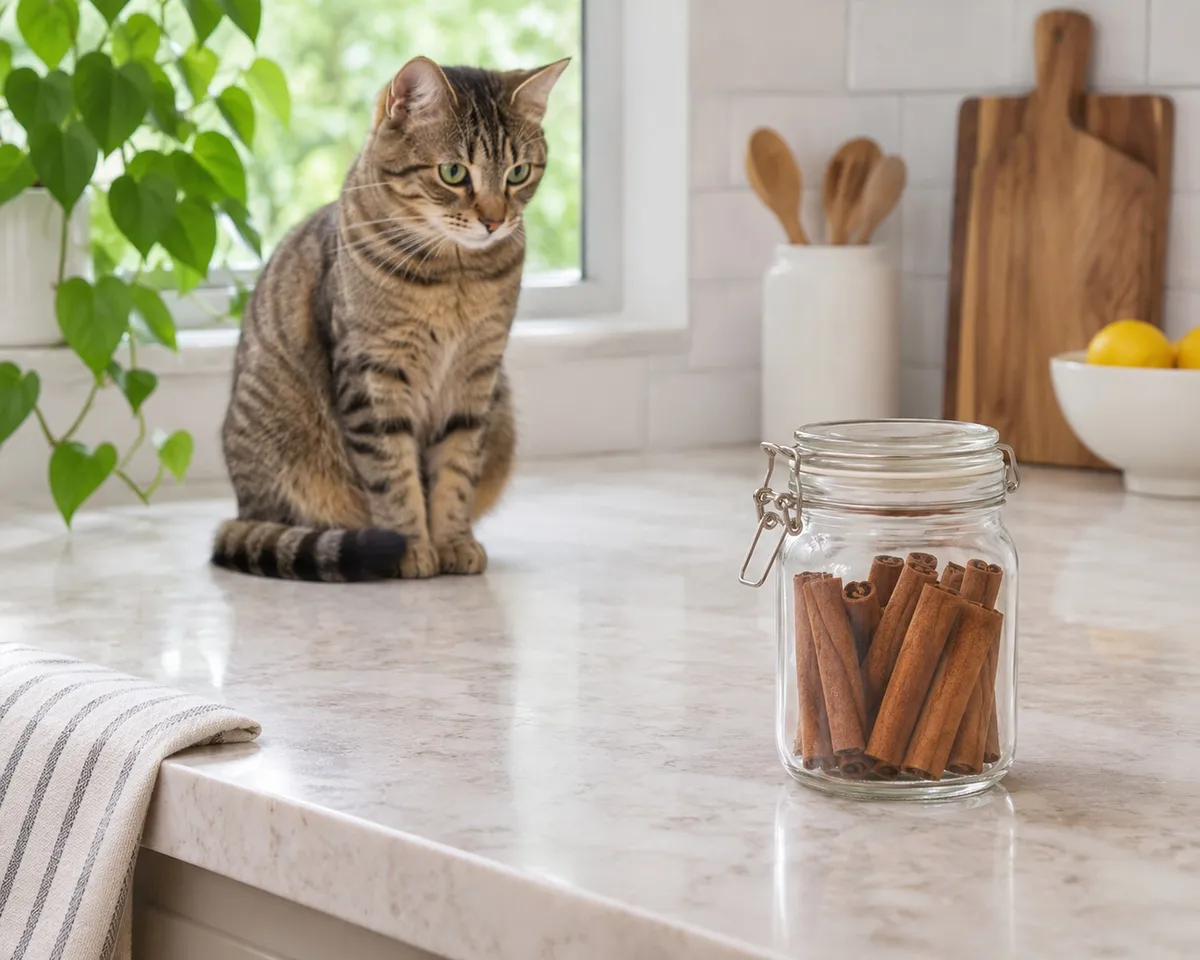
Cinnamon Risk Chart by Form
The real answer to can cats eat cinnamon depends on the form, so use this chart to judge urgency.
| Cinnamon Form | Risk Level | Main Concern |
|---|---|---|
| Cinnamon stick or plant | Low | Mild mouth irritation |
| Light dusting of ground cinnamon | Low | Sneezing and drooling |
| Spoonful of ground cinnamon | Moderate | Coughing, vomiting, diarrhea |
| Cinnamon baked goods | Moderate | Fat, sugar and nutmeg |
| Scented candles and potpourri | Moderate | Inhaled oils, chewed pieces |
| Cinnamon essential oil or diffuser | High | Burns and liver damage |
What to Do If Your Cat Ate Cinnamon
Owners asking can cats eat cinnamon after a spill should remove the cinnamon, clean the cat and watch closely for 24 hours.
- Take away remaining cinnamon or baked goods and estimate how much your cat swallowed.
- Wipe powder off the face with a damp cloth, and wash oil from fur with mild unscented dish soap.
- Offer fresh water, but never induce vomiting or give any human medicine at home.
- Watch for drooling, vomiting, coughing or lethargy over the next 24 hours.
A veterinarian should examine any cat exposed to cinnamon oil, even when the cat looks normal at first.
Emergency signs:
- Open-mouth breathing, wheezing or blue-tinged gums
- Collapse, tremors or severe weakness
- Vomiting more than 3 times in a few hours
- Yellow gums or eyes, a possible sign of liver damage
Can Cats Eat Cinnamon Treats? Safer Swaps and Tips
Cats should never get cinnamon treats, and simple storage habits prevent most accidents.
- Keep spices in closed cabinets fitted with child-safety cabinet locks, since some cats open doors with their paws.
- Skip cinnamon oil diffusers and scented candles in rooms where cats sleep or groom.
- Offer freeze-dried chicken cat treats instead, keeping all treats under 10% of daily calories.
Plain cooked chicken and other human foods cats can eat make better rewards than any spiced snack.
Frequently Asked Questions
Can cats eat cinnamon rolls?
Cinnamon rolls are unsafe for cats, because one large roll can hold more calories than a 4.5 kg cat needs in a full day.
How much cinnamon is toxic to cats?
No exact toxic dose is established for cats, but pet poison specialists generally treat more than 1 teaspoon of ground cinnamon as a concern.
Is the smell of cinnamon bad for cats?
Ground cinnamon smell is mostly harmless, but diffused cinnamon oil releases droplets that irritate a cat’s airways and settle on fur within hours.
Can kittens eat cinnamon?
Kittens should not eat cinnamon, because a 1 to 2 kg kitten reacts to a much smaller amount than an adult cat.
Is cinnamon essential oil safe for cats?
Essential oil from cinnamon is unsafe for cats, because licked or absorbed oil can cause chemical burns, vomiting and liver damage within hours.
So, can cats eat cinnamon? Ground cinnamon in a stray lick is rarely a problem, but cats gain nothing from it, and oils, powder clouds and spiced baked goods carry real risks. Store spices behind closed doors today, and call your vet whenever your cat swallows cinnamon oil or a large amount.