Cat Behavior Problems: 9 Common Issues and How to Fix Them
Cat behavior problems are actions like scratching furniture, urinating outside the litter box, or attacking people, and nearly all of them have a fixable cause. Most stem from stress, boredom, pain, or unmet instincts rather than spite. Owners of indoor cats, multi-cat homes, and new adoptions meet them most often.
This post may contain affiliate links. As an Amazon Associate I earn from qualifying purchases.
Table of Contents
Cat behavior problems at a glance:
- Short Answer: Most cat behavior problems are normal instincts expressed in the wrong place, or signs of stress or pain.
- Most Common Causes: Boredom, litter box issues, fear, territory conflict, and medical conditions.
- Is It Normal: Scratching, night activity, and play-biting are normal; sudden changes in habits are not.
- How to Respond: Rule out illness first, then change the environment and reward the behavior you want.
- When to See a Vet: Any sudden behavior change lasting more than 2 to 3 days, or any straining to urinate.
Why Cat Behavior Problems Happen
Cats act on instinct, and problems appear when those instincts have no acceptable outlet. A cat that scratches, hunts, climbs, and marks territory in the wild will do the same on your sofa if nothing else is available.
Four triggers explain most cases:
- Medical pain: Arthritis, dental disease, and urinary infections often show up as behavior changes first.
- Stress: Moving, a new pet, or a changed routine can unsettle a cat within hours.
- Boredom: Indoor cats with no climbing, hunting, or play outlets create their own entertainment, usually at 3 a.m.
- Lack of socialization: Kittens separated before 8 weeks often struggle with biting and handling.
Punishment makes nearly every one of these worse. Cats link yelling or spraying water to you, not to the behavior, so they simply learn to fear you.
Rule Out Medical Causes of Cat Behavior Problems First
Any sudden behavior change deserves a vet visit before you start training. A cat that stops using the litter box, hides, or turns aggressive may be hurting. Cats hide pain instinctively, so behavior is often the only clue.
Common medical causes behind these changes:
- Urinary tract infections or bladder stones causing litter box avoidance
- Arthritis making high-sided boxes or jumping painful, especially in older cats
- Hyperthyroidism causing restlessness and loud night crying in cats over 8 years
- Dental pain causing irritability or dropping food
Our guide on signs a cat is in pain lists the subtle clues to watch for. As the Cornell Feline Health Center notes, a veterinary exam is the first step whenever habits change suddenly.
9 Cat Behavior Problems and How to Fix Them
1. Scratching Furniture
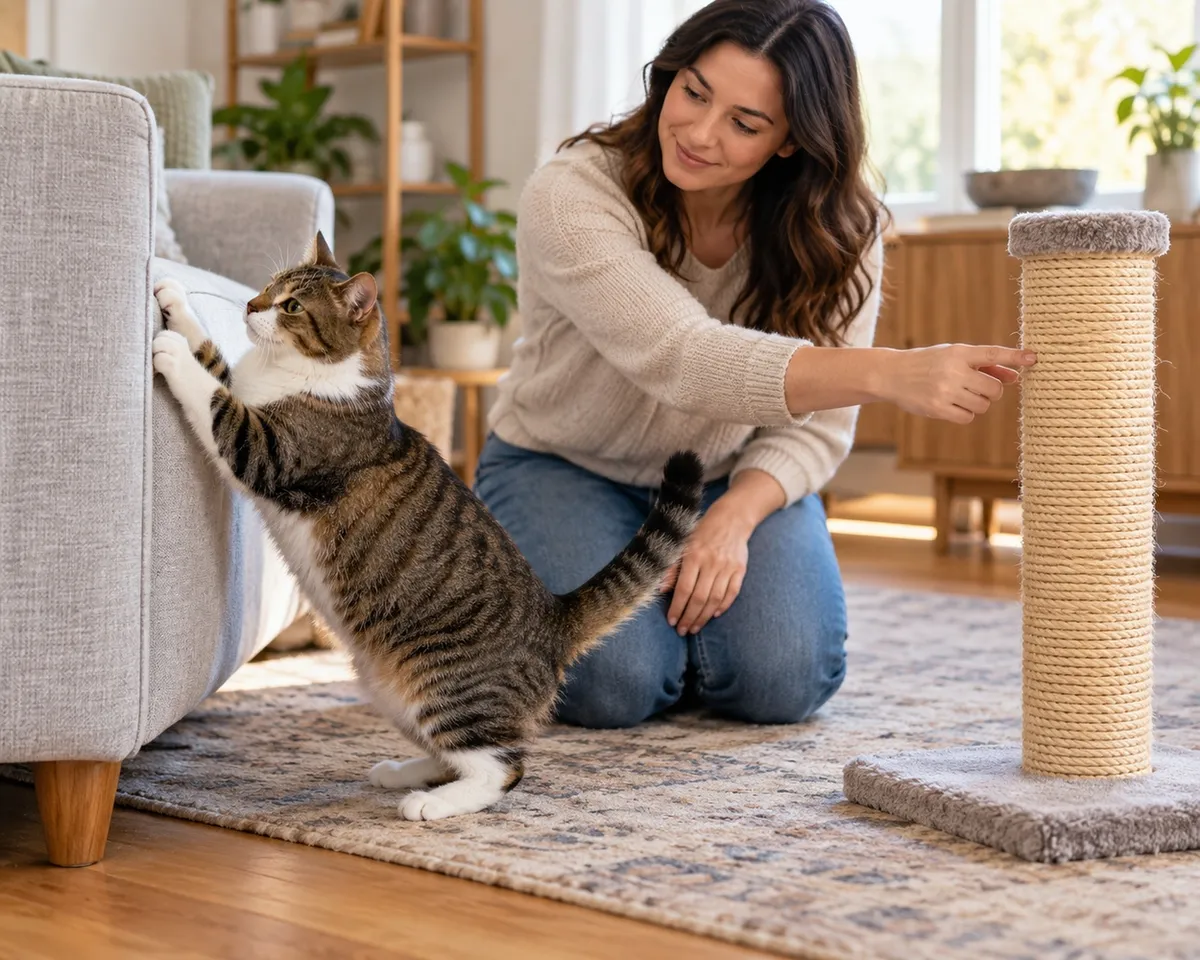
Scratching is a natural need: cats shed claw sheaths, stretch, and leave scent marks from glands in their paws. You cannot stop it, only redirect it.
- Place a sturdy, tall sisal scratching post next to the furniture being scratched.
- Offer both vertical and horizontal surfaces, since cats have preferences.
- Cover the damaged area with double-sided tape for 2 to 4 weeks.
- Reward every use with a treat or praise.
Our post on how to stop cats from scratching furniture covers each fix in detail.
2. Peeing Outside the Litter Box
Inappropriate urination is the most common reason cats are surrendered to shelters, and it is usually solvable. Causes include a dirty box, medical pain, stress, or a box in a bad spot.
- Scoop daily and keep one more box than the number of cats.
- Use unscented, clumping litter about 2 inches deep.
- Place boxes in quiet, low-traffic spots away from food.
- Clean accidents with an enzymatic cleaner so the smell does not invite a repeat.
See the best place to put a litter box for placement ideas, and how to remove cat urine for cleanup steps. Straining without producing urine, especially in male cats, is an emergency.
3. Aggression Toward People or Other Cats
Aggression usually comes from fear, pain, overstimulation, or redirected frustration. A cat that cannot reach a bird at the window may attack the nearest person or pet.
- Learn the warning signs: flattened ears, a thrashing tail, dilated pupils, and a low growl.
- Stop petting at the first sign, before the bite.
- Separate fighting cats and reintroduce them slowly over 1 to 2 weeks.
- Never use hands as toys, which teaches kittens to bite skin.
Read about the causes of aggression in cats to match the trigger to the fix.
4. Excessive Meowing and Night Crying
Cats are crepuscular, meaning most active at dawn and dusk, so night noise is common. Hunger, boredom, hormones, and age-related confusion also drive it.
- Play hard with your cat for 10 to 15 minutes before bedtime.
- Feed the last meal late, or set a timed portion for the pre-dawn hours.
- Never reward crying with attention, even scolding.
- Have a vet check cats over 10 years for thyroid or kidney disease.
Find more detail on why your cat meows at night.
5. Biting and Play Aggression
Kittens learn bite control from littermates, so those raised alone often bite hard. Adult cats may also bite during petting when overstimulated.
- Redirect biting onto wand toys and kicker toys, never fingers.
- Freeze and walk away calmly when bitten, ending the game.
- Schedule 2 or 3 short play sessions daily to burn off energy.
If your cat bites while relaxed, our article on why your cat bites while purring explains petting-induced overstimulation.
6. Attacking Feet and Ankles
Ambush behavior is hunting practice. Cats with little play often stalk moving feet because they are the best moving targets in the house.
- Carry a toy and toss it away when your cat crouches to pounce.
- Avoid wiggling toes or hands as lures.
- Add climbing structures and window perches for stimulation.
More fixes are in our guide to when your cat attacks your feet.
7. Hiding and Withdrawal
A cat that suddenly hides is often frightened, sick, or in pain. New people, loud noise, and furniture changes are common triggers.
- Provide a quiet room with a bed, water, and a litter box.
- Do not drag the cat out; let it approach on its own terms.
- See a vet if hiding lasts more than 24 hours with appetite loss.
Our post on why a cat is suddenly hiding lists the common causes.
8. Overgrooming and Hair Pulling
Excessive licking that creates bald patches is often stress or skin irritation. Fleas, allergies, and anxiety all cause it, and a vet visit should come first.
- Check for fleas, scabs, and red skin.
- Keep routines steady, especially feeding times.
- Use a plug-in diffuser with calming pheromones in the room where your cat spends the most time.
9. Knocking Things Off Shelves and Counters
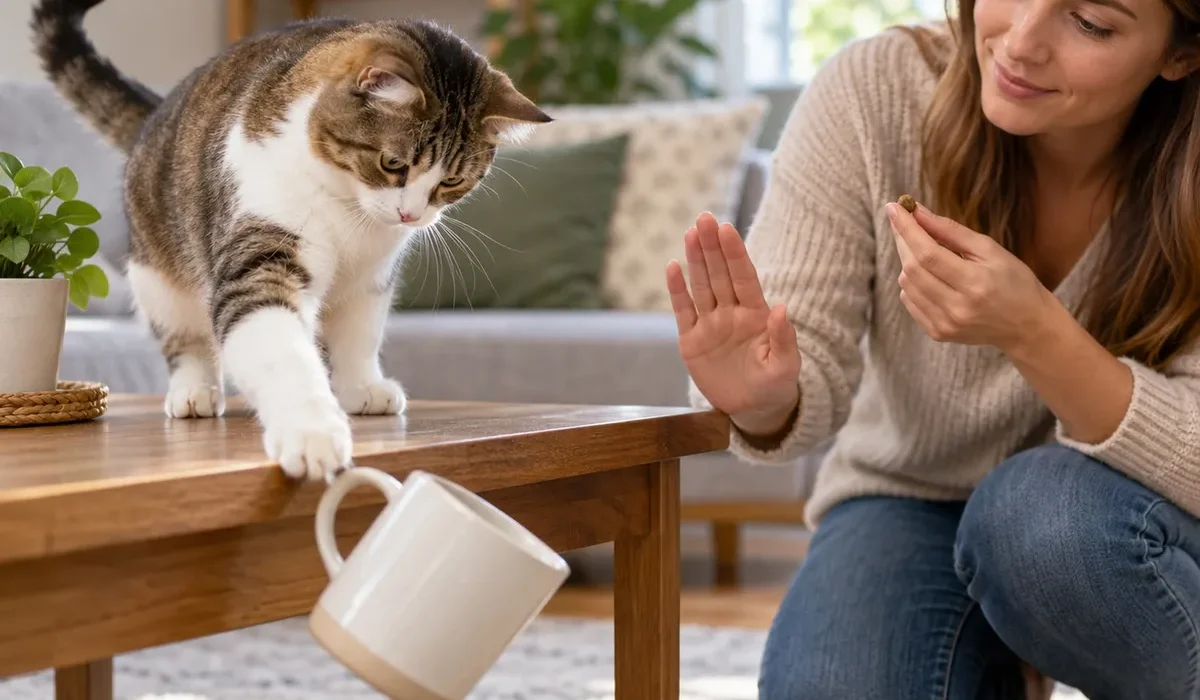
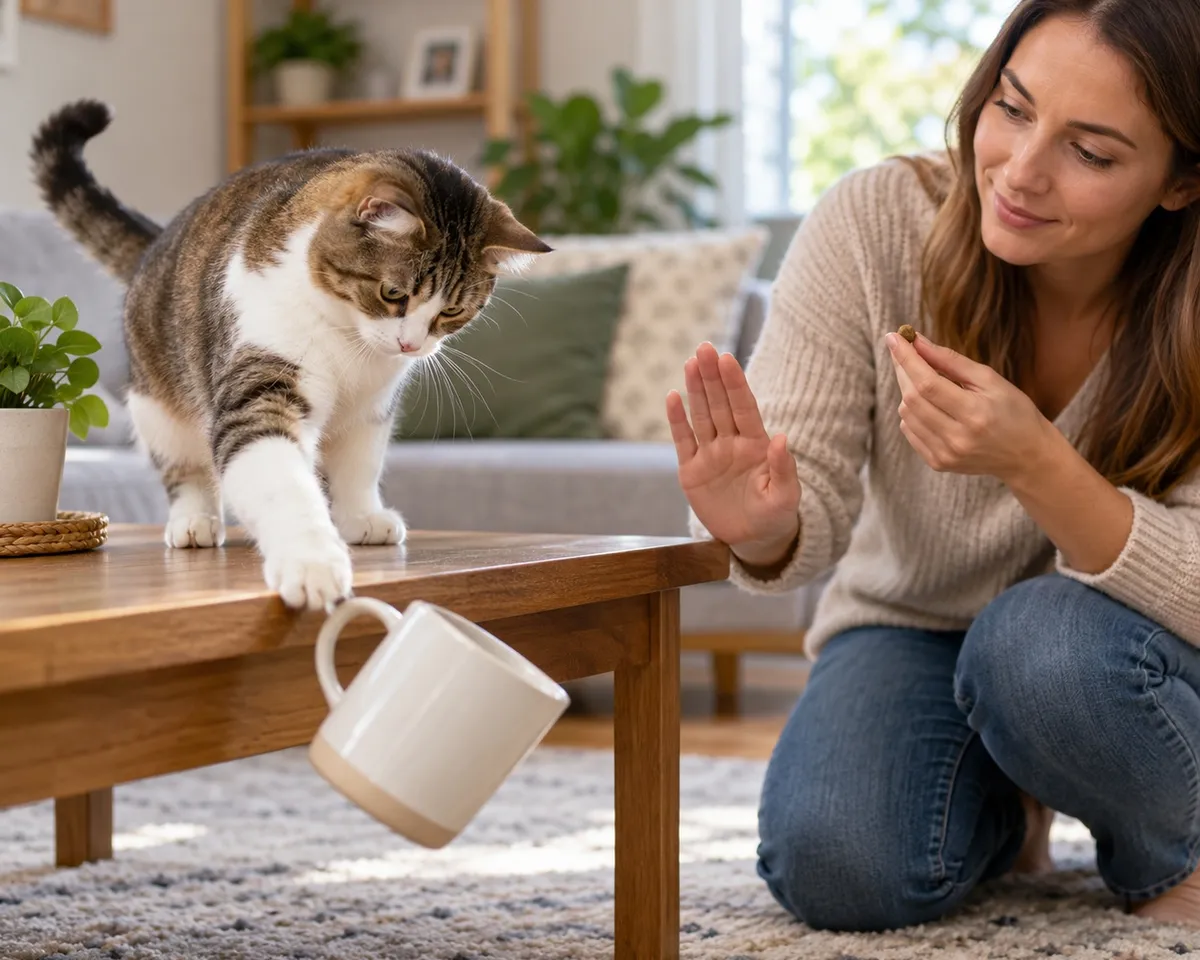
Cats bat objects to test them, get attention, or satisfy the urge to swat prey. Counter climbing is rewarded by food smells and a good view.
- Keep counters free of food and clear of tempting items.
- Offer taller, more interesting perches elsewhere.
- Reward the cat for staying on its own furniture.
Cat Behavior Problems: Quick Cause-and-Fix Chart
| Problem | Most Likely Cause | First Fix |
|---|---|---|
| Scratching furniture | Instinct, marking | Place a tall post nearby |
| Peeing outside box | Pain, dirty box, stress | Vet check, scoop daily |
| Aggression | Fear, overstimulation | Stop at warning signs |
| Night meowing | Boredom, hunger, age | Evening play session |
| Biting | Play, overstimulation | Redirect to toys |
| Attacking feet | Hunting instinct | Toss a toy, not your hand |
| Hiding | Fear, illness | Quiet room, vet if over 24 hours |
| Overgrooming | Stress, skin problems | Vet check, steady routine |
Preventing Cat Behavior Problems With Enrichment
A bored cat is a destructive cat, and enrichment solves a large share of problems. Indoor cats need outlets for hunting, climbing, and exploring.
- Offer 2 to 3 play sessions of 10 to 15 minutes with wand toys daily.
- Add vertical space such as shelves and cat trees so your cat can survey the room.
- Rotate toys weekly so they stay novel.
- Use puzzle feeders to turn meals into hunting.
Ideas to start with are in how to keep an indoor cat entertained and interactive toys for indoor cats.
How to Train Away Cat Behavior Problems
Cats respond to rewards, not punishment, and timing matters. A treat within 2 seconds of the right behavior teaches faster than any scolding.
- Identify the trigger by noting when and where the problem occurs.
- Remove or block the trigger when possible.
- Offer an acceptable alternative, such as a post or toy.
- Reward the alternative immediately and consistently.
- Stay patient; most habits take 2 to 6 weeks to change.
The ASPCA guide to common cat behavior issues supports reward-based methods over correction.
When Cat Behavior Problems Need a Vet or Behaviorist
Call a veterinarian promptly when a behavior problem appears suddenly or comes with other symptoms. Behavior changes can be the earliest sign of illness.
Seek help right away for:
- Straining in the litter box or producing no urine
- Blood in urine or stool
- Refusing food for more than 24 hours
- Sudden aggression in a normally gentle cat
If medical causes are ruled out and the problem continues after 4 to 6 weeks of consistent changes, ask your vet to refer you to a certified feline behaviorist.
Frequently Asked Questions
What are the most common cat behavior problems?
The most common cat behavior problems are scratching furniture, urinating outside the litter box, aggression, excessive meowing, and biting. Litter box issues are the leading behavioral reason cats are surrendered to shelters.
Why is my cat suddenly acting different?
A sudden behavior change usually signals pain, illness, or stress, so book a vet visit if it lasts more than 2 to 3 days. Changes in appetite, hiding, or litter habits deserve extra attention.
Can you fix cat behavior problems in older cats?
Yes, older cats can change habits, though it often takes 4 to 8 weeks of patient, reward-based work. Always check for arthritis, thyroid disease, or cognitive decline first.
Does punishment help with cat behavior problems?
No, punishment increases fear and often makes the problem worse, because cats do not link scolding to the earlier act. Rewarding the behavior you want works far better.
Do cat behavior problems go away on their own?
Rarely; without a change in environment, medical care, or training, the habit usually continues or worsens. Early action within the first few weeks gives the best results.
Most cat behavior problems improve once you find the cause, rule out illness, and give your cat acceptable outlets for its instincts. Start this week by picking the single worst issue, scheduling a vet check if it began suddenly, and adding one daily play session. Consistency over 2 to 6 weeks does the rest.