
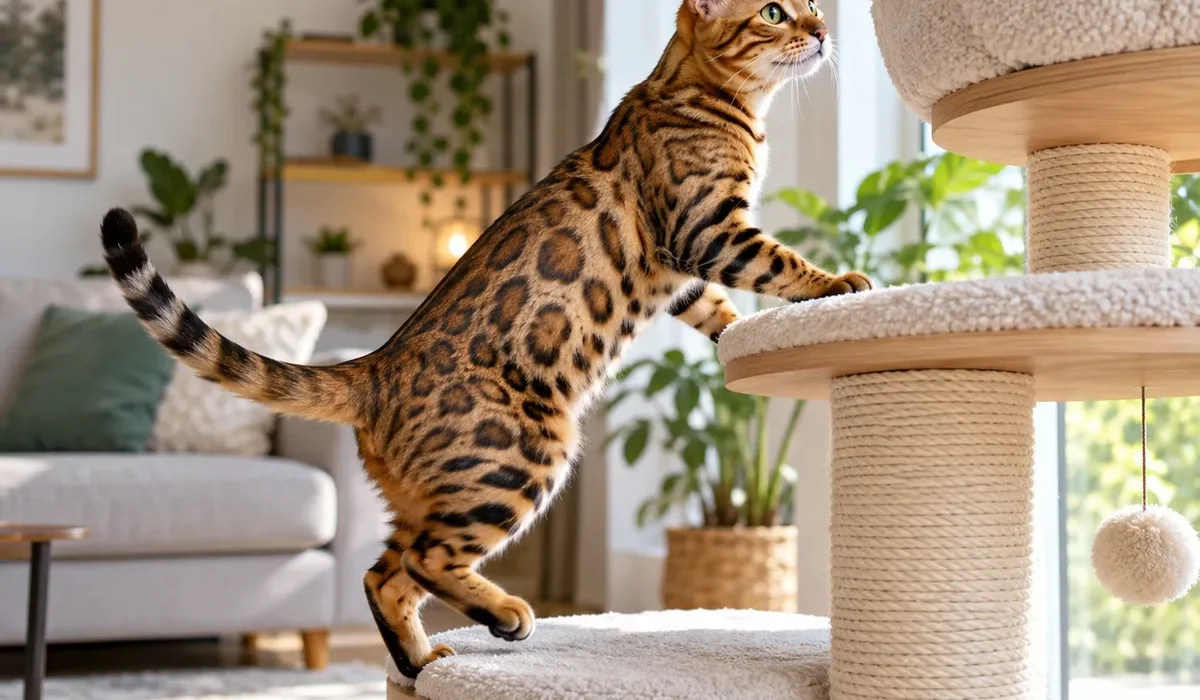
Bengal Cat Facts: 12 Wild Truths About This Stunning Breed
Bengal cat facts start with their wild ancestry: Bengals are a domestic breed created by crossing Asian leopard cats with domestic cats, which gives them a leopard-like spotted coat and an athletic build. They suit active owners who want an intelligent, playful cat and can offer plenty of daily stimulation.
This post may contain affiliate links. As an Amazon Associate I earn from qualifying purchases.
Table of Contents
Bengal cat facts at a glance:
- Short Answer: Bengals are muscular, spotted, high-energy cats developed from Asian leopard cat hybrids in the 1960s and 1970s.
- Size and Weight: Adults usually weigh 8 to 15 pounds, with males larger than females.
- Lifespan: Healthy Bengals commonly live 12 to 16 years.
- Temperament: Curious, vocal, athletic, and very people-oriented.
- Care Needs: Minimal grooming, but 30 to 60 minutes of active play every day.
Where the Bengal Breed Comes From: Key Bengal Cat Facts
The Bengal breed began when breeders crossed the Asian leopard cat (Prionailurus bengalensis) with domestic cats to capture the wild coat in a pet-friendly temperament. Jean Mill is widely credited with developing the modern Bengal in California during the 1970s and 1980s.
The name “Bengal” comes from the leopard cat’s scientific name, not from the Bengal tiger. Early crosses were called F1 hybrids, meaning one parent was a wild leopard cat. Those first-generation cats often had unpredictable temperaments.
Breeders then mated hybrids with domestic cats over several generations. By the fourth generation (SBT, or “stud book tradition”), Bengals behave like fully domestic cats. Nearly all Bengals sold today are SBT cats, and they are recognized by major registries such as The International Cat Association (TICA).
Bengal Cat Facts About Their Stunning Coat
The most famous of all Bengal cat facts is the coat: rosetted or spotted markings on a short, dense, unusually soft pelt. No other domestic breed looks quite so much like a small jungle cat.
Common Bengal coat types:
- Brown spotted and rosetted: Gold to orange base with dark brown or black markings, the classic look.
- Snow: Cream or ivory base with lighter markings, often with blue or aqua eyes.
- Silver: Silvery-white base with charcoal or black markings and no warm tones.
- Marbled: Swirled, horizontal flowing patterns instead of distinct spots.
Many Bengals have “glitter,” a shimmering sparkle where each hair tip catches the light. Breeders and fans often cite this effect among their favorite Bengal traits. Rosettes, which are spots with a darker outline and lighter center, are highly prized in show cats.
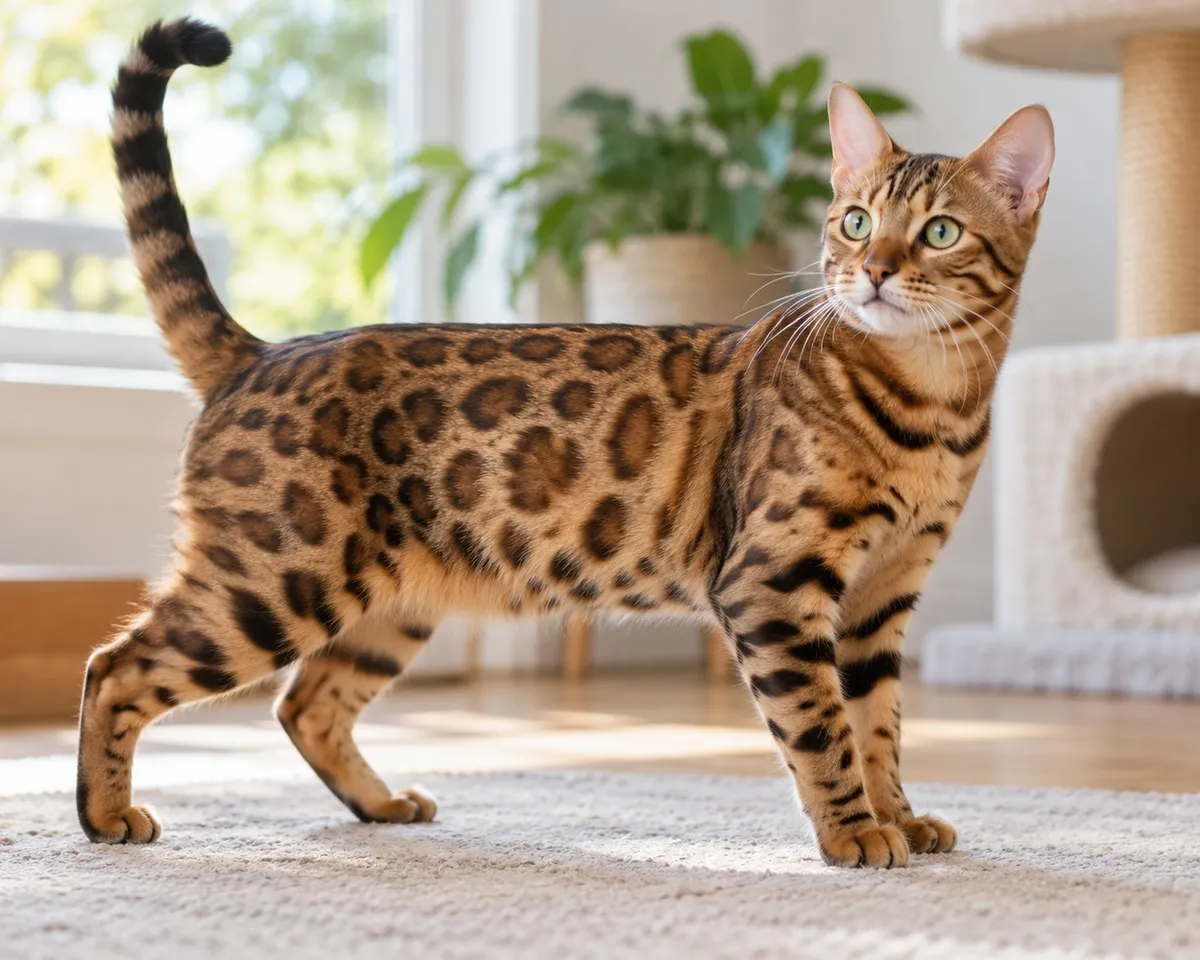
Size, Weight and Lifespan
Bengals are medium to large cats with long, muscular bodies and strong hind legs. Males typically weigh 10 to 15 pounds, while females usually weigh 8 to 12 pounds.
Most Bengals reach full size around two years of age, though they look fully grown at about one year. Their build is lean and athletic rather than chunky. A Bengal that looks round or soft is usually overweight.
With good care, a Bengal can live 12 to 16 years. Our guide on how long cats live explains the factors that add healthy years, such as diet, indoor safety, and regular vet visits.
| Trait | Typical Bengal Range |
|---|---|
| Adult weight (male) | 10 to 15 pounds |
| Adult weight (female) | 8 to 12 pounds |
| Height at shoulder | 13 to 16 inches |
| Lifespan | 12 to 16 years |
| Full maturity | About 2 years |
| Daily play needed | 30 to 60 minutes |
Bengal Temperament: Personality Bengal Cat Facts
Bengals are bold, curious, and extremely energetic, and they rarely tolerate being ignored. When I first spent time around a Bengal, I was struck by how it followed people from room to room and investigated every cupboard.
Typical Bengal personality traits:
- Highly intelligent and quick to learn tricks, including fetch and walking on a harness.
- Very vocal, with chirps, trills, and loud meows to get attention.
- Confident and social, often bonding strongly with one or two people.
- Playful well into adulthood, long after most breeds slow down.
Many Bengals love attention but dislike being held for long. They prefer to be part of the action, perched on a shoulder or shelf. Compared with calmer breeds, a Bengal can feel like living with a small athlete.
Why Bengals Are So High-Energy
Bengals are high-energy because their wild-cat heritage and selective breeding favor athleticism, climbing, and hunting behavior. A bored Bengal can quickly turn destructive, so daily exercise matters as much as food.
Ways to burn off a Bengal’s energy:
- Offer two or three 15 to 20 minute sessions of wand-toy play each day.
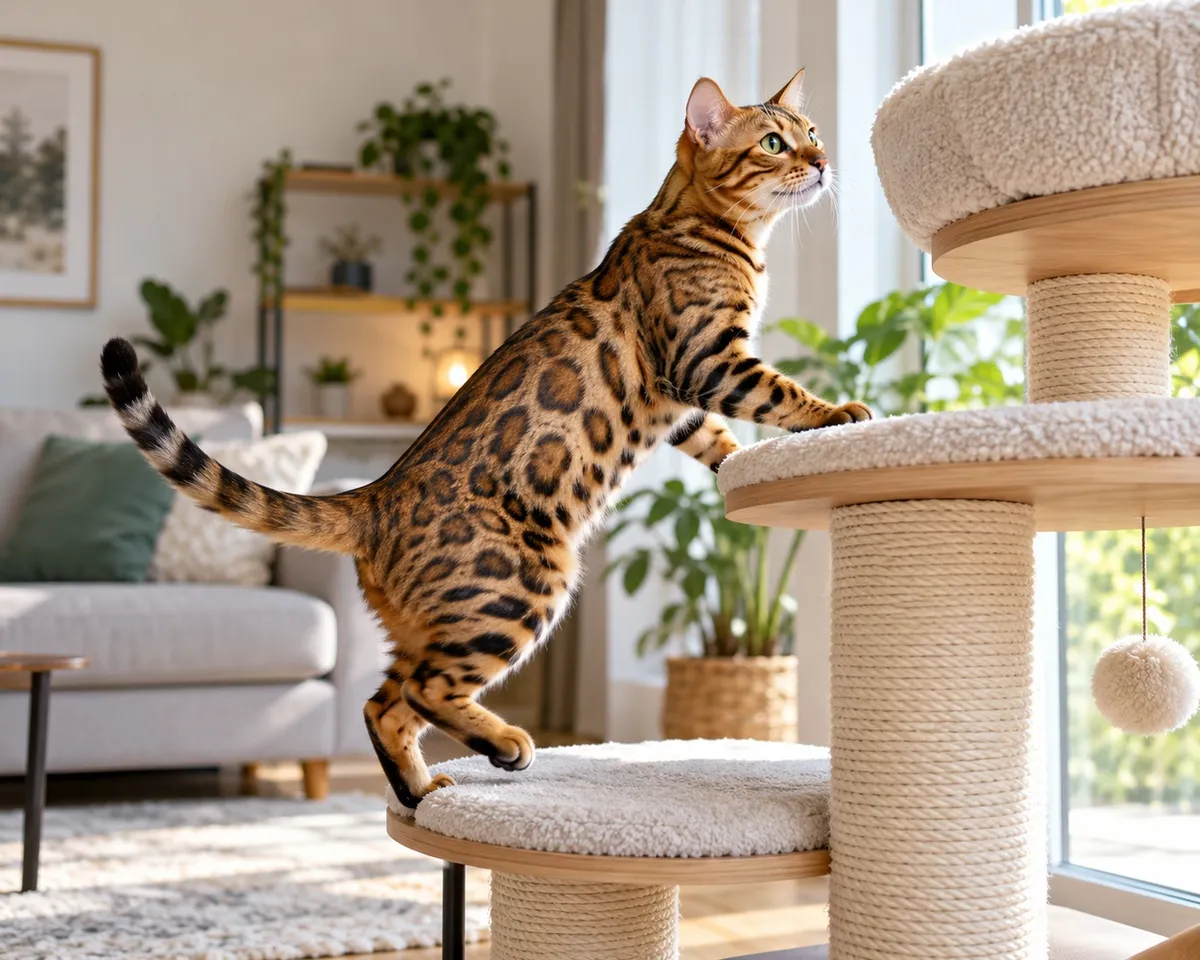
- Install tall cat trees and wall shelves so your cat can climb.
- Rotate puzzle feeders and a puzzle feeder for cats to turn meals into a hunting game.
- Teach clicker-training tricks to challenge the brain.
If you are building a stimulating home, our proven strategies for keeping an indoor cat entertained offer more ideas. Owners who skip enrichment often report 3 a.m. zoomies, shredded curtains, and constant vocal demands.
Bengals and Water
Many Bengals genuinely enjoy water, which sets them apart from most domestic cats. Owners often report cats that paddle in sinks, splash in bowls, or even join them in the shower.
This trait ranks high among Bengal cat facts because it is thought to come from the leopard cat, which lives near streams and wetlands. Not every Bengal loves water, but the tendency is much more common than in average breeds.
Use this to your advantage. A shallow water dish for supervised play can be great enrichment. Just keep toilet lids down, since a curious Bengal may fall in or fish items out of the bowl.
Bengal Cat Care: Feeding and Grooming
Bengals have simple grooming needs but a real appetite for protein and activity. Their short coat needs only a quick weekly brush to remove loose hair and keep the shine.
Basic Bengal care checklist:
- Brush once a week with a soft brush; shedding is generally low.
- Feed a high-protein, complete and balanced diet suited to age and weight.
- Trim nails every two to three weeks, as covered in our guide to trimming your cat’s nails.
- Provide fresh, clean water at all times.
- Brush teeth regularly to prevent dental disease.
Portion control matters even for an active breed. Our guide on how much to feed a cat helps you set portions by weight and life stage. Because Bengals are muscular, judge their condition by waist and ribs, not by the scale alone.
Health Bengal Cat Facts Every Owner Should Know
Bengals are generally healthy, but some inherited conditions appear more often in the breed. Reputable breeders screen for these issues, and routine vet care catches problems early.
Conditions linked to Bengals:
- Hypertrophic cardiomyopathy (HCM): A thickening of the heart muscle that can be screened with a cardiac ultrasound.
- Progressive retinal atrophy (PRA-b): An inherited eye disease that can lead to blindness, detectable by a DNA test.
- Pyruvate kinase deficiency: A genetic form of anemia, also detectable by DNA testing.
- Sensitive digestion: Some Bengals develop loose stools with sudden diet changes.
Ask any breeder for health-test results on both parents. A veterinarian should examine your Bengal at least once a year, and our overview of regular veterinary check-ups for cats explains what to expect. See a vet promptly if your cat shows breathing difficulty, sudden lethargy, or changes in appetite.
Is a Bengal the Right Cat for You?
A Bengal is best for active households where someone is home often and enjoys interactive play. It is usually a poor match for people who want a quiet lap cat or who are away 10 hours a day.
A Bengal may suit you if:
- You can commit to daily structured play and enrichment.
- You enjoy a talkative, curious cat with strong opinions.
- You have vertical space for climbing, such as tall trees or shelves.
A Bengal may not suit you if:
- You live in a very small space with no room to climb.
- You are away for long stretches without a companion pet.
- You want a low-maintenance, calm cat.
Bengals often do better with another playful cat or a cat-friendly dog for company. If you are comparing options, browse our list of rare cat breeds and our overview of cat breeds to adopt to see how the Bengal stacks up against other breeds.
For breed standards and welfare information, International Cat Care is a trusted resource worth reading before you bring any pedigree cat home. Reading reliable bengal cat facts before adoption prevents most mismatches.
Frequently Asked Questions
How much does a Bengal cat cost?
A pet-quality Bengal kitten from a reputable breeder typically costs between $1,500 and $3,000, while show-quality or rare-colored kittens can exceed $4,000.
Are Bengal cats good family pets?
Yes, most Bengals do well with families when they get enough exercise, since they are playful, social, and generally tolerant of active children.
Do Bengal cats shed a lot?
No, Bengals shed very little thanks to their short, dense coat, and a quick weekly brushing is usually enough to control loose hair.
What are the most surprising bengal cat facts?
The most surprising bengal cat facts are that many love water, that the breed descends from the Asian leopard cat, and that their coats can shimmer with a natural “glitter” effect.
Are Bengal cats aggressive?
No, SBT Bengals are not inherently aggressive, but a bored or under-exercised Bengal may become rough, loud, or destructive without enough play.
These bengal cat facts show a breed that is beautiful, brilliant, and demanding in equal measure. If you can offer climbing space, daily play, and plenty of attention, a Bengal rewards you with years of loyalty and entertainment. Before choosing one, visit breeders in person and ask for health-test results.