


Why Does My Cat Carry Toys Around and Meow
Your cat carries toys in her mouth and meows because she’s exhibiting hunting or nesting behavior, seeking attention, or attempting to communicate ownership and pride. This common behavior blends predatory instinct with social signaling, and understanding what drives it helps you respond appropriately to your cat’s needs.
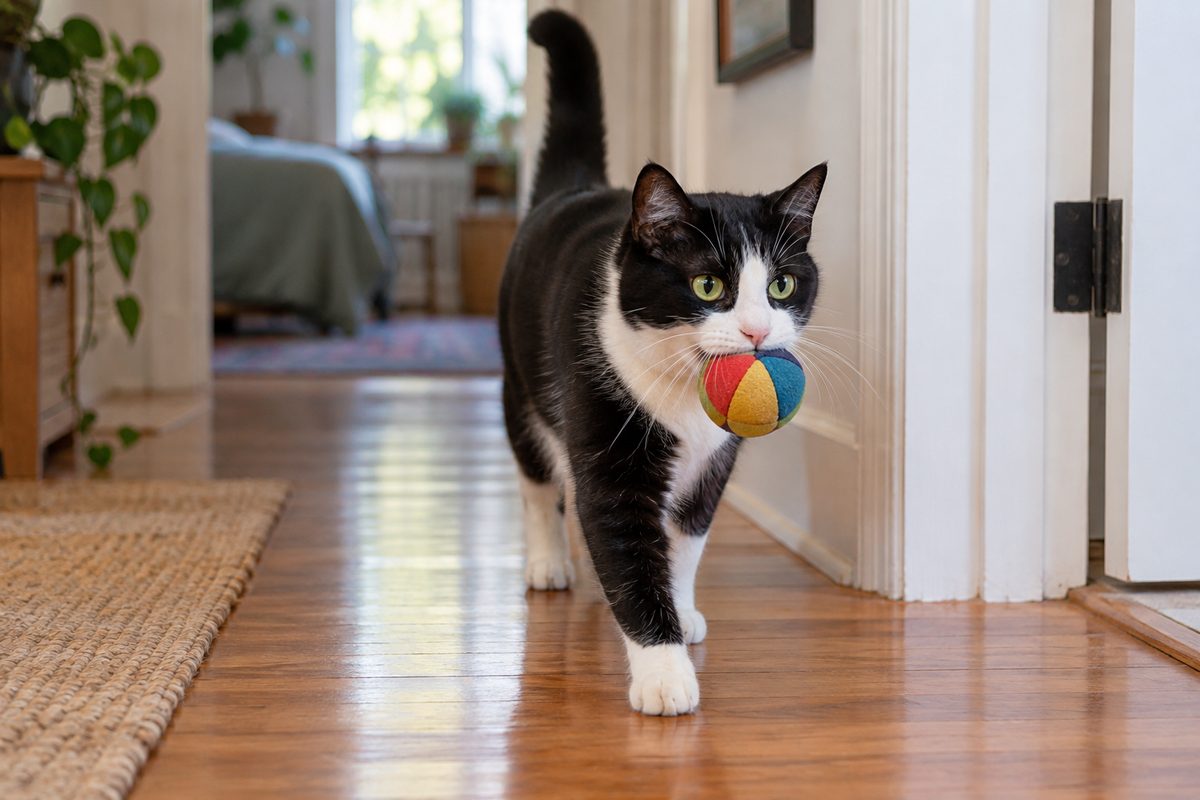
Table of Contents
Key Takeaways:
- Carrying toys while vocalizing mimics hunting success and maternal instincts.
- Your cat may be seeking play, attention, or approval from you.
- Excessive meowing during this behavior can indicate stress, hunger, or a need for environmental enrichment.
- Responding with play and interactive engagement usually reduces unwanted vocalization.
Why Cats Carry Toys Around and Meow
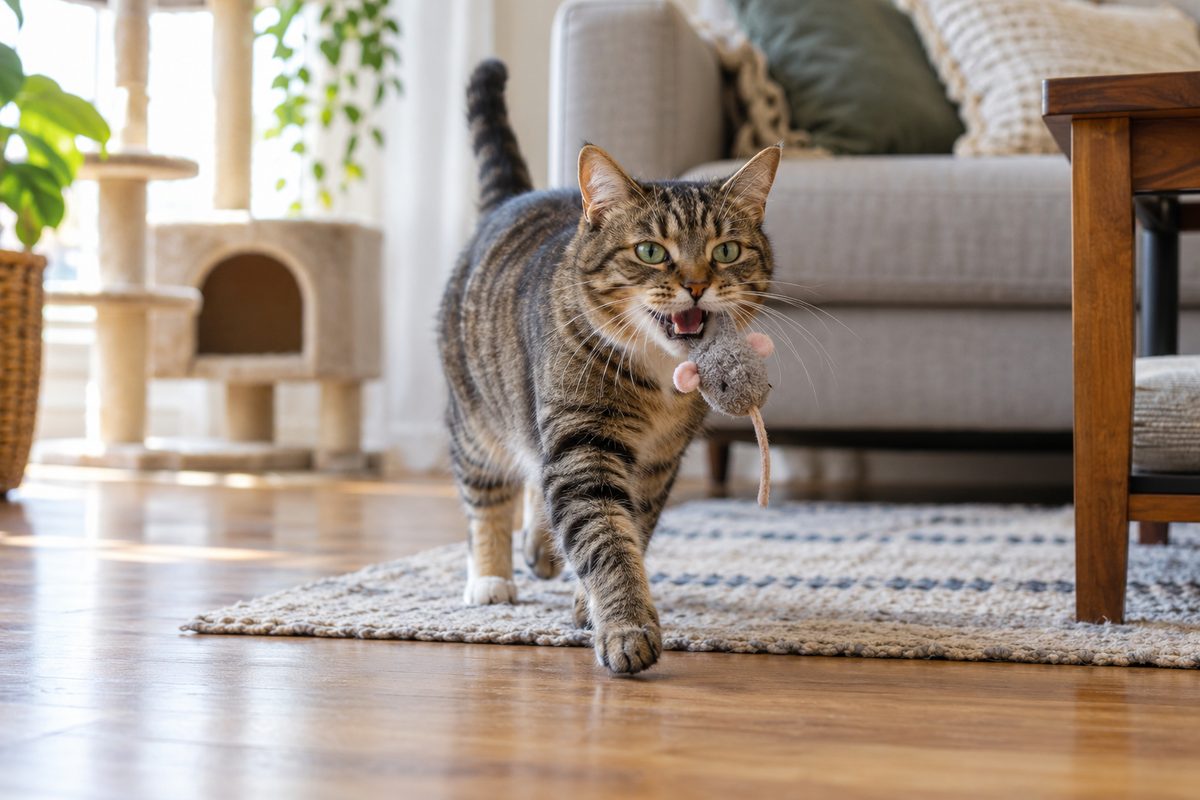
Cats carry toys in their mouths while meowing for several overlapping reasons rooted in instinct and communication. The behavior mimics a mother cat presenting prey or kittens to offspring, and it also reflects a cat’s hunting drive. By vocalizing during this act, your cat is essentially announcing her “catch” and broadcasting pride or seeking recognition from her human family members.
Instinctual Triggers:
- Hunting mimicry: carrying a toy simulates dragging captured prey
- Maternal behavior: female cats display this especially if spayed during peak hormones
- Territorial marking: meowing reinforces ownership of valued objects
- Social bonding: your cat wants to share her prize with her “family”
What This Behavior Means for Your Cat
When your cat brings you a toy while meowing, she is showing trust and affection—she views you as part of her social group and wants to include you in her success. This is not a sign of distress or illness in most cases, but rather a normal expression of feline communication and social hierarchy within your household.
If your cat repeats this behavior often, she may also be seeking interactive play or telling you she is bored. Interactive cat toys keep indoor cats mentally stimulated and can redirect repetitive carrying and meowing into constructive play sessions. Cats with insufficient environmental enrichment often amplify this vocalization to get your attention.
How to Respond to Your Cat’s Toy Carrying and Meowing
The best response depends on your cat’s age, energy level, and overall behavior pattern. Engagement usually satisfies the underlying need and reduces excessive meowing over time.
Positive Responses:
- Play with the toy immediately when she brings it to you
- Praise her verbally to reinforce the behavior and strengthen bonding
- Offer a wand toy or string toy to extend the play session
- Schedule dedicated play times twice daily to prevent boredom-driven meowing
Redirecting Excessive Behavior:
- Ignore attention-seeking meowing unless accompanied by genuine need signals (empty food bowl, litter box issues)
- Provide puzzle feeders and enrichment toys to occupy her between play sessions
- Rotate toys weekly so your cat stays interested and engaged
- Use cat puzzle toys to channel her hunting instinct into problem-solving rather than noise-making
When Toy Carrying and Meowing Becomes a Problem
Constant meowing while carrying toys can signal an underlying issue beyond normal hunting display. Assess whether the behavior occurs during specific times (early morning, late evening) or correlates with other changes in eating, litter box use, or activity level.
Signs That Warrant Veterinary Attention:
- Meowing intensifies suddenly or becomes distressed rather than proud-sounding
- Behavior accompanies decreased appetite, vomiting, or lethargy
- Your cat obsessively carries the same toy and ignores other stimulation
- Meowing occurs at night excessively and disrupts sleep patterns
Excessive vocalization at night can also indicate a separate behavioral or medical issue. Why your cat meows at night explores those causes in detail. If your cat’s meowing escalates despite playtime and enrichment, or if you notice behavioral changes, schedule a veterinary check-up to rule out pain, hyperthyroidism, or cognitive decline.
For more veterinary guidance, see the Cornell Feline Health Center.
Frequently Asked Questions
- Is my cat trying to give me the toy as a gift? Yes, cats often present toys as gifts to show affection and bond with their owners, viewing you as part of their family unit and wanting to share success with you.
- Should I worry if my cat meows loudly while carrying a toy? Loud proud meowing during toy carrying is normal, but if it’s accompanied by signs of distress, loss of appetite, or happens only at 3 a.m., consult your vet to rule out underlying issues.
- How much playtime does my cat need to stop excessive toy meowing? Most cats need 10 to 15 minutes of active play two to three times daily; increasing interactive sessions with feather wands or laser toys usually reduces attention-seeking vocalization within a few days.
Your cat’s toy-carrying meows are a sign of her playful, social nature and trust in you. By engaging with this behavior through regular interactive play and environmental enrichment, you’ll deepen your bond while keeping her mentally and physically satisfied.

