Is Mistletoe Poisonous to Cats? 5 Holiday Safety Facts
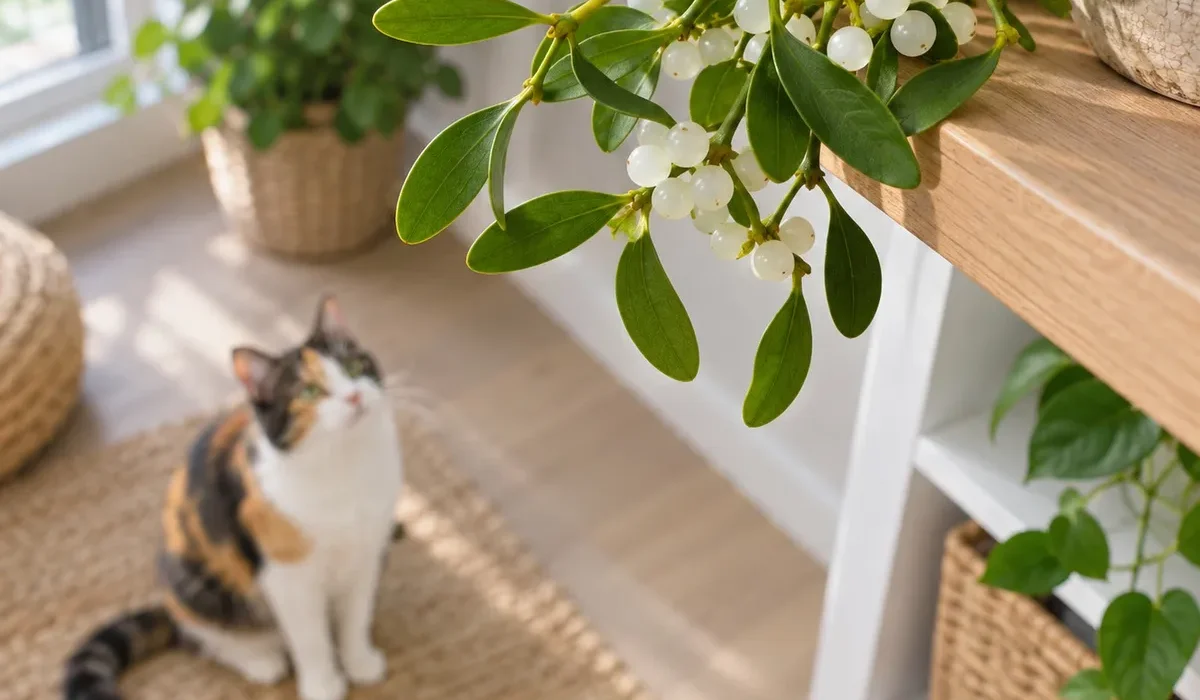
The answer to is mistletoe poisonous to cats is yes, because the leaves, stems and berries all contain toxins that cause vomiting, drooling and diarrhea. The risk peaks from late November to early January, when sprigs hang in doorways and fallen berries roll within reach of curious cats.
This post may contain affiliate links. As an Amazon Associate I earn from qualifying purchases.
Table of Contents
Is mistletoe poisonous to cats at a glance:
- Short Answer: Yes, both American and European mistletoe are toxic to cats.
- Most Common Signs: Cats show vomiting, drooling and diarrhea, plus a slow heart rate or collapse in serious cases.
- Urgency: Call a vet or poison hotline as soon as your cat chews mistletoe, even before signs appear.
- What to Do at Home: Remove plant pieces from the mouth, keep a sample, and never induce vomiting yourself.
- When to See a Vet: Go immediately for collapse, breathing trouble, seizures or repeated vomiting.
Is Mistletoe Poisonous to Cats in Every Variety?
Yes, both holiday types of mistletoe are toxic to cats, and the ASPCA Animal Poison Control Center lists mistletoe as harmful to pets. Knowing which variety hangs in your home helps your vet choose a treatment.
- American mistletoe (Phoradendron): Sold in most US stores, this type contains phoratoxin, which mainly causes stomach upset in cats.
- European mistletoe (Viscum album): Common in the UK and Europe, this type contains viscumin, which can also lower blood pressure.
- Dried sprigs: Dried mistletoe keeps its toxins, so last year’s decorations stay dangerous for cats.
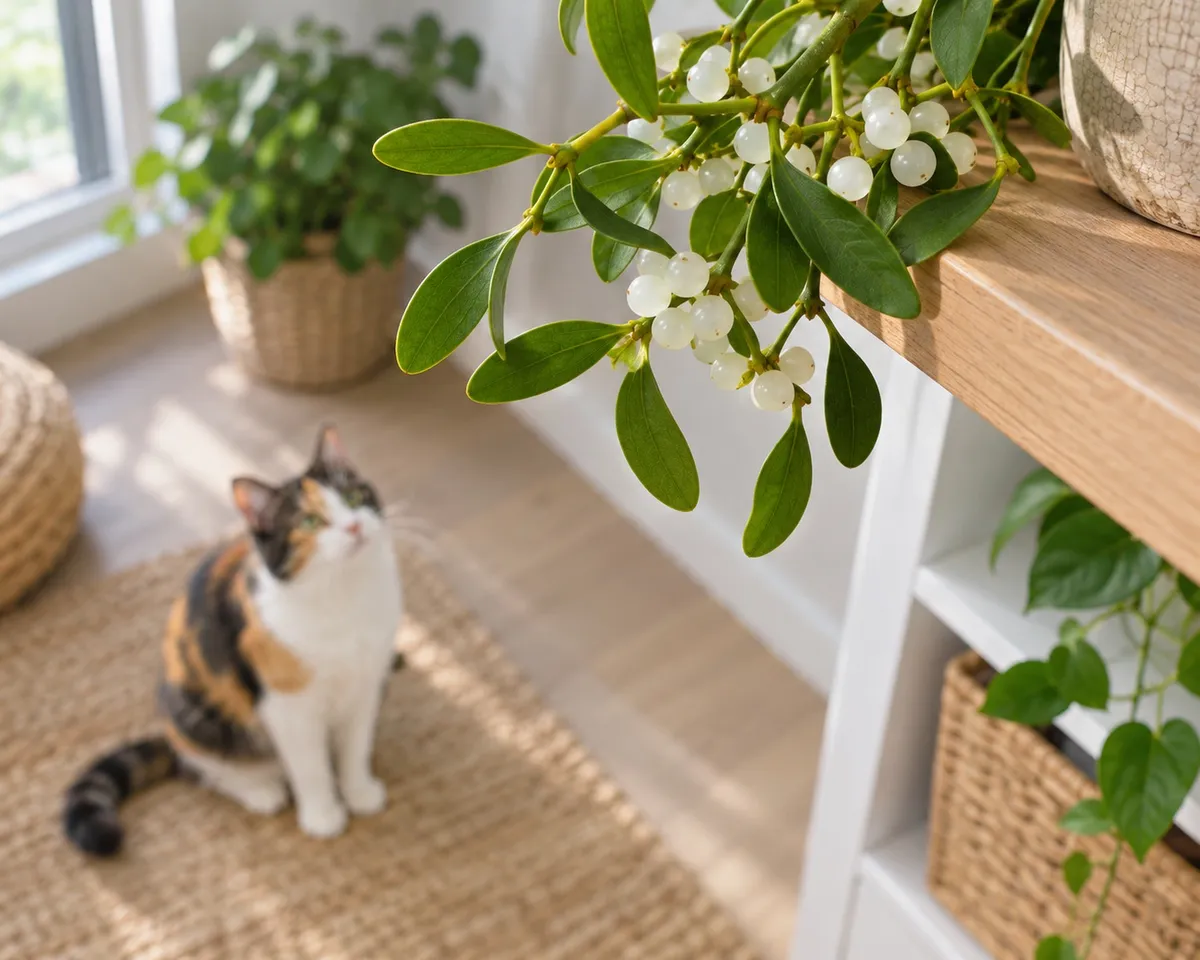
Leaves and stems hold most of the toxins, but cats eat the white berries more often because small rolling objects invite play.
Is Mistletoe Poisonous to Cats Even in Small Amounts?
A few berries or one leaf usually causes mild stomach upset, while larger amounts can trigger heart and neurological signs. An average cat weighs only 4 to 5 kg, so a small mouthful of mistletoe is a large dose.
Cats at higher risk:
- Kittens under 6 months chew almost everything and weigh very little.
- Senior cats over 10 years often have kidney or heart disease that slows recovery.
- Cats with heart conditions face extra danger because mistletoe can slow the heart rate.
When my tabby batted a fallen berry under the sofa one December, I moved every sprig to a closed porch that same night.
Mistletoe Poisoning Symptoms in Cats
Signs of mistletoe poisoning in cats usually appear within a few hours, with digestive signs first and heart or nerve signs after larger exposures.
| Symptom | What It Looks Like | Urgency |
|---|---|---|
| Drooling | Wet chin, pawing at the mouth | Call a vet today |
| Vomiting or diarrhea | One or more episodes after chewing | Call a vet today |
| Slow heart rate | Weakness, pale gums, lethargy | Emergency |
| Wobbly walking | Stumbling, poor balance | Emergency |
| Collapse or seizures | Falling over, trembling, unresponsive | Emergency |
Repeated vomiting can lead to dehydration in cats, so check for dry gums and skin that stays tented after a gentle pinch.
What to Do If Your Cat Eats Mistletoe
Act right away, because early veterinary care keeps most mistletoe cases mild and short.
- Remove any plant pieces from your cat’s mouth and move your cat to a quiet room.
- Keep the remaining sprig or a photo so the vet can identify the variety.
- Call your vet, an emergency clinic, or the ASPCA Animal Poison Control Center at (888) 426-4435.
- Never induce vomiting or give human medicine, since both can cause more harm.
- Note when your cat ate the plant and every symptom you see afterward.
Any cat that may have eaten mistletoe should be examined by a veterinarian, even if the cat seems normal at first. Vets may safely induce vomiting, give activated charcoal, start IV fluids and monitor the heart for 24 hours.
The VCA Animal Hospitals pet health library explains these treatments in detail. Most cats given prompt care recover fully within 1 to 2 days.
How to Keep Mistletoe Away From Cats This Holiday
The safest choice is to keep real mistletoe out of homes with cats or hang the plant where cats cannot reach it.
- Replace real sprigs with artificial mistletoe, and check that the plastic berries are glued firmly to prevent choking.
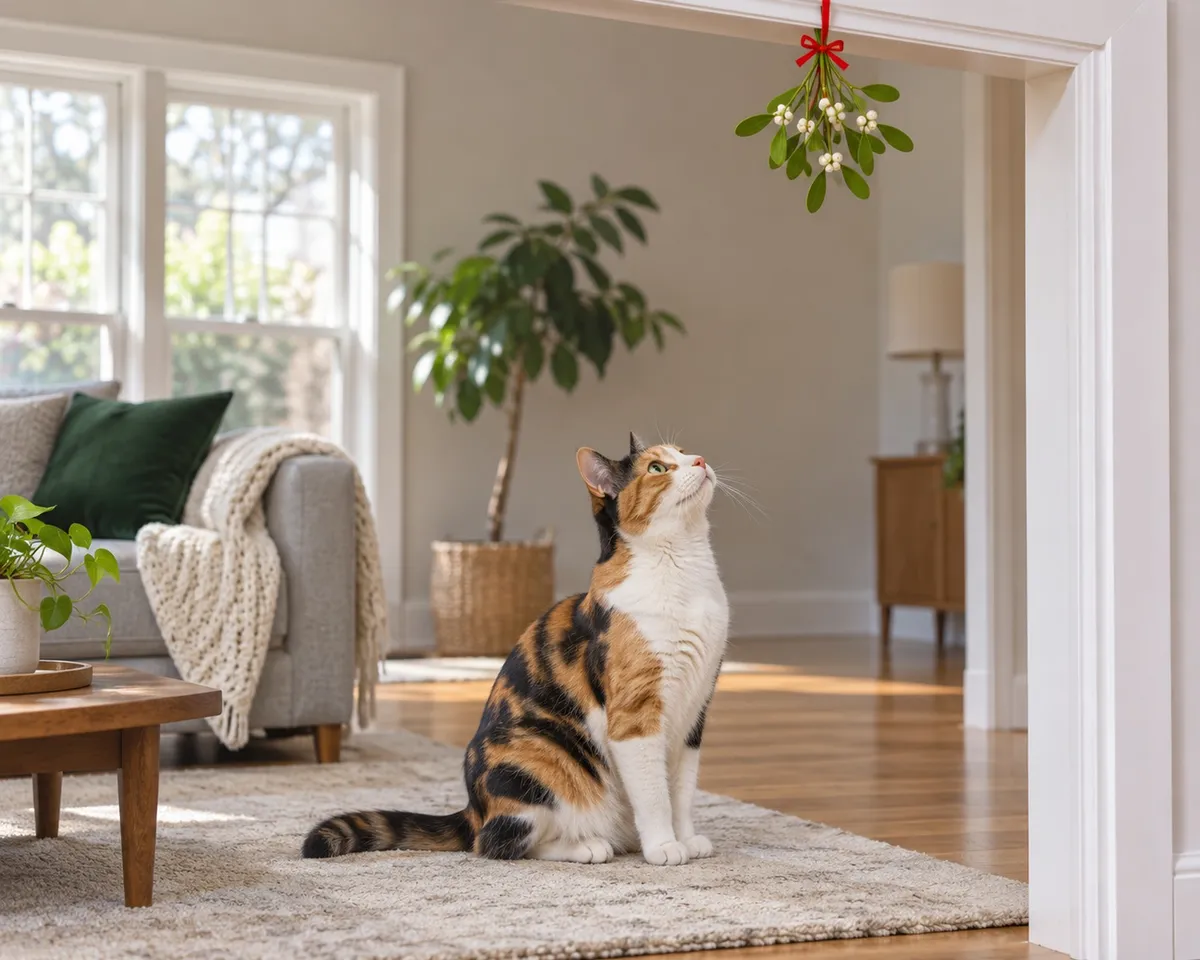
- Hang real mistletoe above 6 feet (1.8 m), away from shelves and cat trees.
- Sweep the floor daily, because dried leaves and berries drop as the plant ages.
- Apply a cat deterrent spray to nearby surfaces every few days to discourage jumps toward decorations.
Other decorations carry risks too, so read about poinsettias and cats and Christmas trees and cats. You can also cat proof your Christmas tree and decorate with cat-friendly houseplants.
Frequently Asked Questions
Is mistletoe poisonous to cats and dogs?
Yes, the ASPCA lists mistletoe as toxic to cats, dogs and horses, with vomiting and diarrhea as the most common signs.
How long after eating mistletoe will a cat get sick?
Most cats drool, vomit or develop diarrhea within a few hours of eating mistletoe. Heart or nerve signs can appear within 24 hours after larger amounts.
Are mistletoe berries more toxic than the leaves?
No, mistletoe leaves and stems usually contain more toxin than the berries, but cats chew the berries more often.
Can a cat die from eating mistletoe?
Death is rare but possible after a cat eats large amounts, especially of European mistletoe, which can slow the heart and drop blood pressure.
Is holly poisonous to cats too?
Holly is also toxic to cats, because its saponins commonly cause drooling, vomiting and diarrhea after chewing.
Anyone asking is mistletoe poisonous to cats should treat every sprig, berry and dried leaf as a real holiday hazard. Swap real plants for safer decorations and keep the poison hotline number on your fridge. Call your vet right away if your cat chews any part of the plant.