


Best Litter Box for Cats That Pee High: 5 Top Solutions
Cats that spray or pee high on walls and furniture need a taller litter box with higher sides to contain the mess. This guide covers the best litter box designs for high-spraying cats, including elevated models, corner boxes, and covered options that prevent urine from escaping beyond the pan itself.
This post may contain affiliate links. As an Amazon Associate I earn from qualifying purchases.
Table of Contents
Key Takeaways:
- High-sided and tall litter boxes are essential for cats that spray or pee at an angle.
- Corner boxes and enclosed designs reduce splatter and contain spray more effectively.
- Storage containers and custom tall boxes offer budget-friendly alternatives to commercial products.
- Place the box away from walls to prevent cats from aiming and spraying backward.
Why Cats Spray and Pee High
Cats that spray high are marking territory or responding to stress, medical issues, or litter box frustration. Some cats naturally have an upward spray pattern when urinating or spraying urine to reach heights where scent lingers longer. A standard litter box with low sides cannot contain this behavior, so urine ends up on walls, furniture, and baseboards. Urinating blood or inappropriate urination often signals a medical issue, so rule out health problems with your veterinarian first.
Top Litter Box Types for High-Spraying Cats
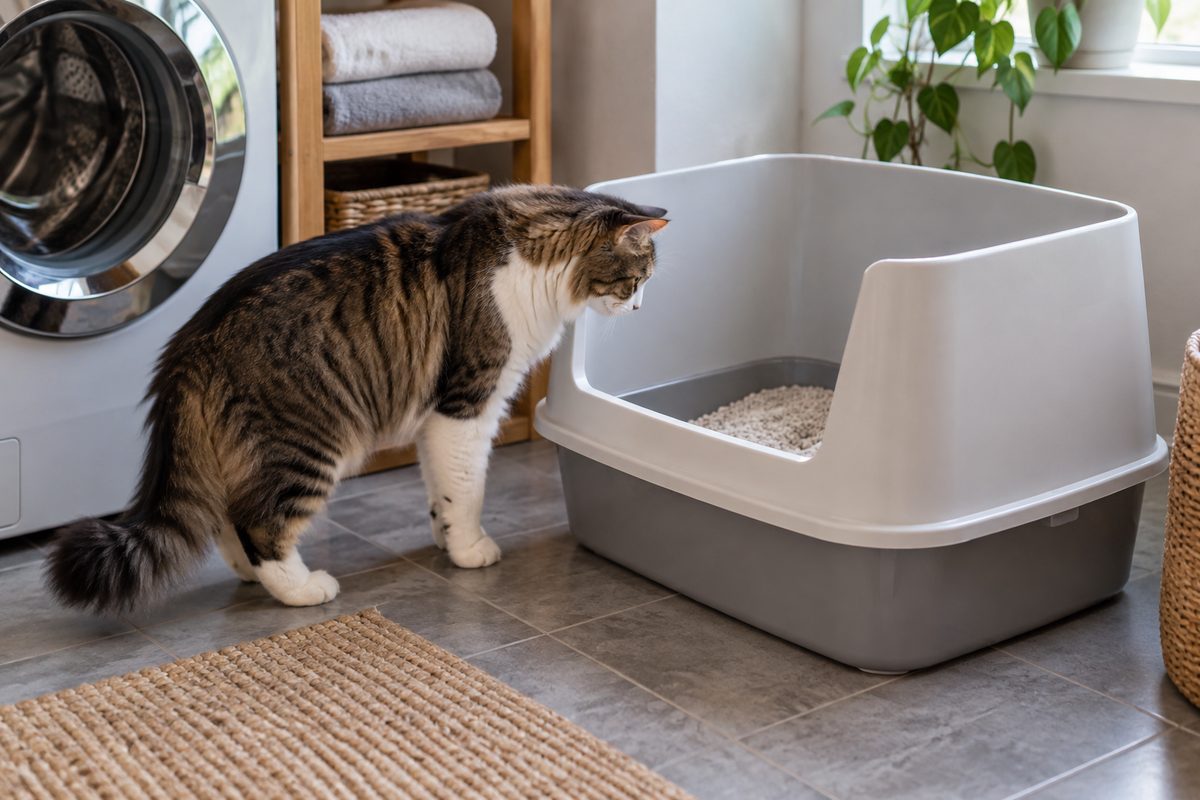
Tall-sided open boxes:
- Sides at least 15-18 inches high to contain upward spray.
- Allows cats to enter and exit easily without restriction.
- Best for cats that feel trapped in enclosed spaces.
Corner litter boxes:
- Fit into room corners to use walls as natural boundaries.
- The two corner walls help block spray from reaching furniture behind the box.
- Reduce the direction a cat can spray and still miss the pan.
Top-entry and enclosed boxes:
- Force cats to enter from above, redirecting spray downward into the pan.
- Contain odors better than open boxes.
- Some cats resist top-entry designs; test before committing.
Storage container conversions:
- Use large plastic storage bins (18+ inches tall) and cut a front entrance.
- Cost-effective and fully customizable in height and entry size.
- Easy to clean and replace if urine soaks into seams.
Best Features for High-Spraying Cats
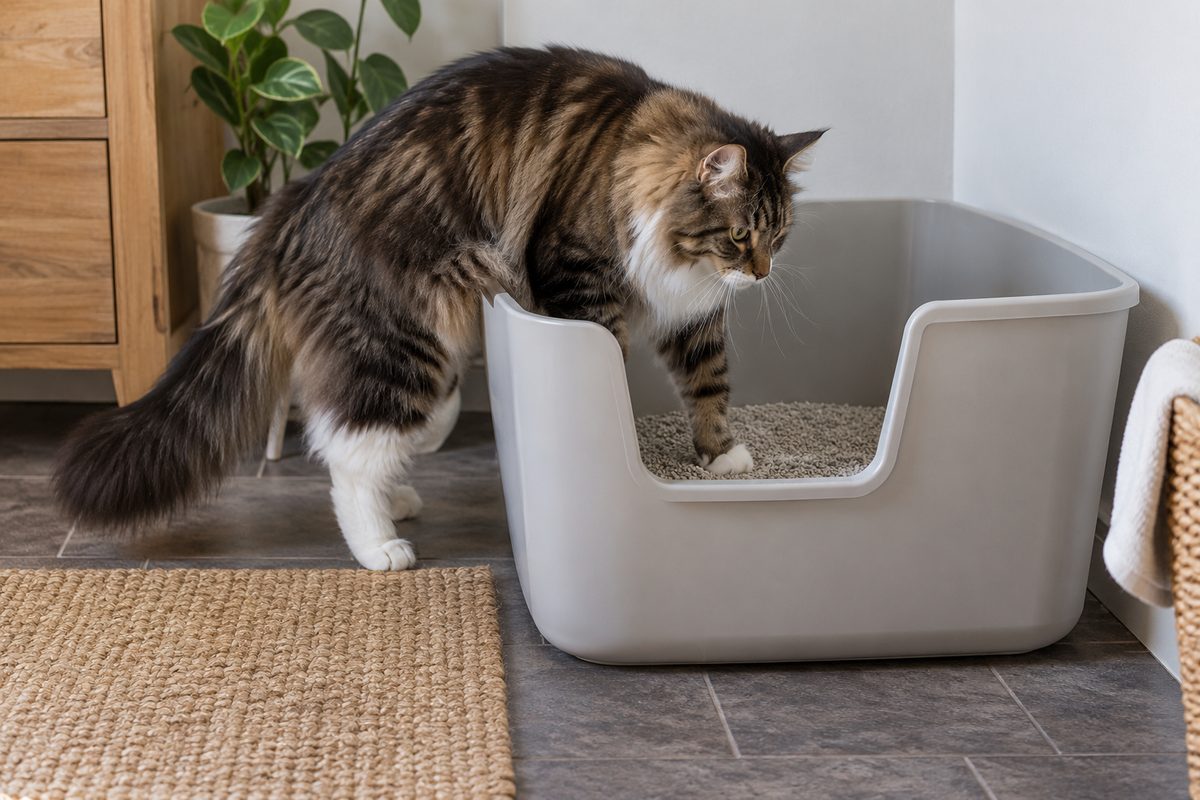
Look for high-sided litter boxes with splash guards, waterproof liners, or built-in walls that extend upward. The box should be at least 18 inches tall and 24 inches long to give your cat room to turn and squat. Avoid boxes with roofs or lids unless your cat has already accepted top-entry designs; many cats that spray also feel confined and may avoid enclosed boxes entirely.
Place the box at least 12 inches away from walls so your cat cannot position itself to spray backward onto the wall behind the litter box. This simple placement change stops cats from using walls as part of their spray target. Ensure you use clumping litter and enzyme-based litter box cleaners to remove urine odor completely; lingering scent encourages repeat spraying in the same spot.
Placement and Setup Tips for High-Sprayers
Position the litter box in a low-traffic area where your cat feels safe but not trapped. Place it away from food and water bowls, which cats naturally keep separate from their bathroom area. Install the box in a corner that is visible to your cat but isolated from bedding and furniture; this discourages high-spraying because cats prefer to aim away from their resting spaces.
If your cat sprays multiple locations, place a waterproof litter box mat underneath and around the box to catch overflow. Keep the box scrupulously clean; cats often spray when the litter is soiled or when they are unhappy with box conditions. Clean the litter box often to prevent behavioral issues and urine marking.
When to Consult a Veterinarian
High-spraying can indicate urinary tract infections, kidney disease, diabetes, or other medical conditions. If your cat suddenly changes its urination habits or sprays blood-tinged urine, schedule a vet visit immediately. Behavioral spraying often requires addressing both the litter box and the underlying stress or territorial concern; your veterinarian can rule out medical causes and recommend behavior modification or calming aids if needed.
For more veterinary guidance, see the Cornell Feline Health Center.
Frequently Asked Questions
- Do covered litter boxes prevent high spraying? Covered boxes can help if your cat accepts them, but some cats that spray also resist enclosed spaces and may avoid the box entirely; test a covered option before buying.
- How often should I clean a litter box for a high-spraying cat? Scoop daily and do a full litter change 2-3 times per week to remove odor and keep the cat satisfied with the box.
- Can diet or supplements reduce spraying behavior? Cat supplements may support urinary health and reduce stress-related behaviors, but they work best alongside a proper litter box setup and veterinary guidance.
Choosing the right litter box for a high-spraying cat requires height, smart placement, and cleanliness. A tall-sided or corner box combined with frequent cleaning and proper location stops most cats from aiming high and missing the pan.

