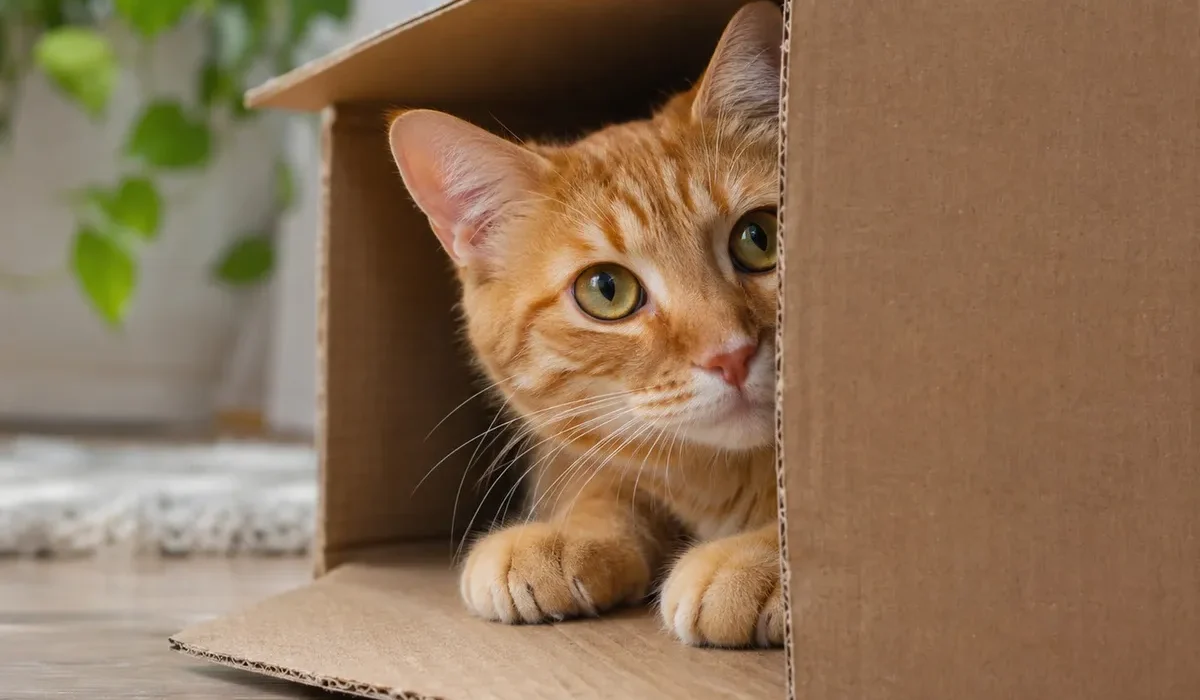
Why Do Cats Like Boxes? 6 Fascinating Reasons Cats Love Them
The answer to why do cats like boxes is simple: enclosed cardboard spaces lower stress, hold body heat, and hide cats for ambush hunting. Box seeking matters most for indoor, newly adopted, and nervous cats adjusting to moves, visitors, or other pets.
This post may contain affiliate links. As an Amazon Associate I earn from qualifying purchases.
Table of Contents
Why do cats like boxes at a glance:
- Short Answer: A box offers security, warmth, and a hidden lookout in one cheap package.
- Why Cats Do It: Wild ancestors rested in tight dens and hunted from cover.
- Is It Normal: Yes, box seeking is normal for cats of every age and breed.
- How to Respond: Offer 1 or 2 clean boxes and rotate them every 1 to 2 weeks.
Why Do Cats Like Boxes? 6 Proven Reasons
Cats like boxes for six overlapping reasons rooted in survival, comfort, and curiosity.
1. Boxes Lower Stress
Hiding is a core feline coping strategy, so a box lets a worried cat withdraw instead of fleeing. A 2014 Dutch study found that new shelter cats given hiding boxes had lower stress scores than cats without them.
2. Boxes Keep Cats Warm
Cats feel most comfortable at roughly 86 to 97°F (30 to 38°C), well above typical home temperatures of 68 to 72°F. Cardboard insulates well, so a small box traps body heat.
3. Boxes Make Perfect Ambush Spots
Cats are ambush predators that wait under cover, then pounce on passing prey. A box hides the body while leaving the eyes free to track feet and toys.
4. Tight Spaces Feel Like a Hug
Many cats pick a box barely bigger than their body, because walls on every side feel like a safe den. Flexible spines let cats squeeze into tiny spaces, as these cats are liquid science facts explain.
5. New Boxes Smell Interesting
New boxes carry unfamiliar warehouse and truck scents, so cats investigate them nose first. Cheek rubbing then marks the cardboard as owned territory.
6. Cats Even Sit in Fake Boxes
A 2021 citizen-science study found many cats sat inside a Kanizsa square, an optical illusion outlining a box without real walls. Outlines alone can trigger the urge, so some cats settle inside a tape square on the floor.
Box Features That Make Cats Like Boxes Most
Owners asking why do cats like boxes should check five features that decide which box a cat claims.
| Box Feature | Why Cats Like It |
|---|---|
| Snug fit | Close walls feel secure and hold heat |
| Cardboard material | Insulates well and feels good to scratch |
| One open side | Allows a quick exit and a clear view |
| Raised location | Gives a safe lookout above floor activity |
| Quiet corner | Lets a cat nap without being startled |
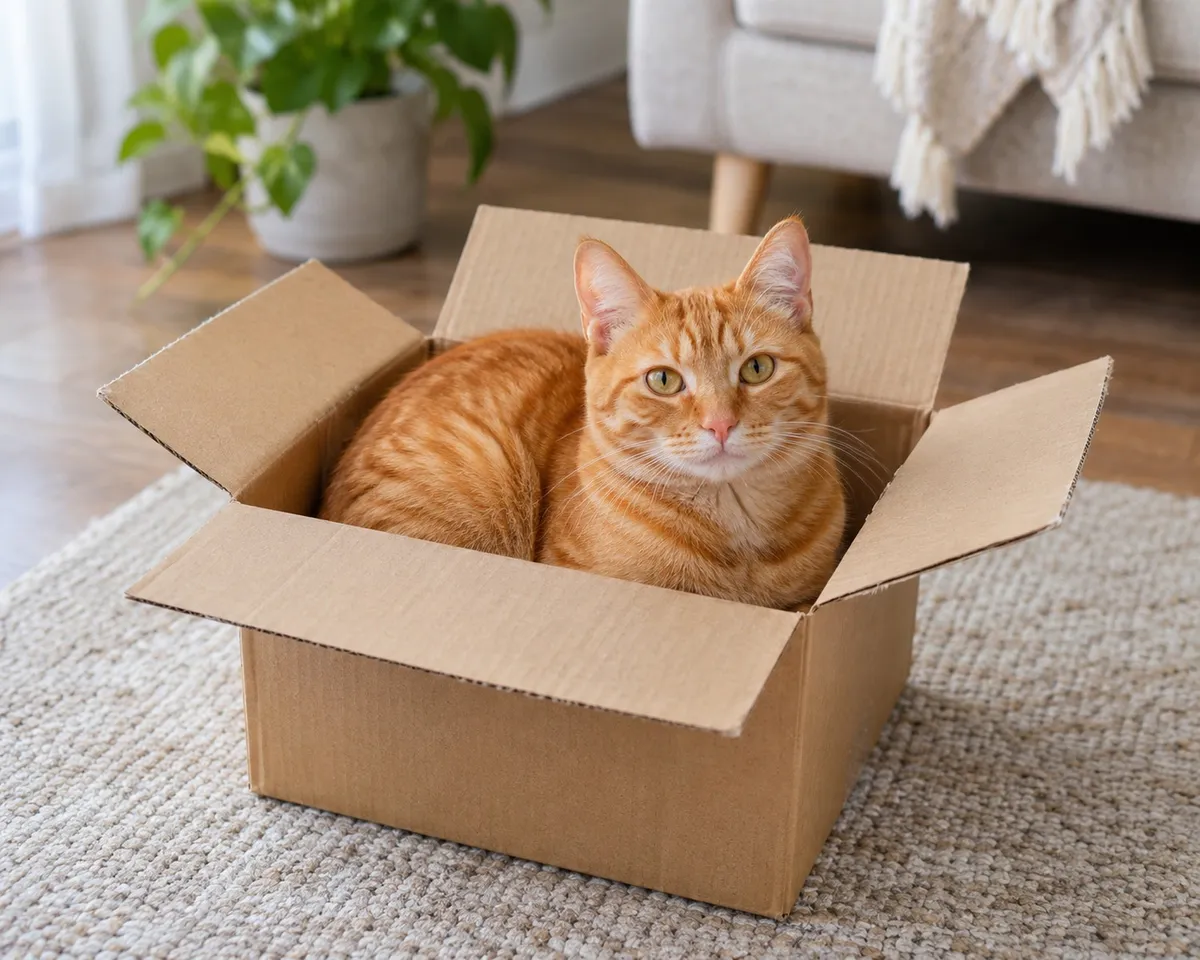
Why Do Cats Like Boxes More Than Expensive Beds?
Boxes often beat pricey beds because they offer rigid walls, a single entrance, and a scratchable texture. When my tabby Milo ignored a plush new bed for a shoe box, the firm sides were clearly the draw.
A covered cat cave bed copies the box design with soft walls and one opening, which suits seniors who feel the cold.
Boredom also drives box hunting, so pair boxes with these strategies to keep an indoor cat entertained.
How to Give Your Cat Safe Boxes
Once you know why do cats like boxes, safe setup takes five minutes and prevents cuts, swallowed tape, and mold.
- Remove staples, tape, plastic film, and loose handles first.
- Choose a size where your cat can turn around inside close walls.
- Place boxes in quiet corners or on a stable shelf.
- Cut a second doorway in multi-cat homes so a cornered cat can escape.
- Replace soggy, torn, or soiled boxes, since damp cardboard grows mold.
A cardboard cat scratcher house combines a hiding box with a scratching surface, sparing your furniture.
Leaving the carrier open at home like a box builds positive associations, which helps when you need to get a cat into a carrier. International Cat Care recommends giving every cat several hiding places for security.
When Box Hiding Signals a Problem
Healthy box time looks relaxed: a loose body, slow blinks, napping, or playful pouncing. Hiding becomes a concern when a cat stays boxed most of the day, skips meals for over 24 hours, or hisses when approached.
See a veterinarian if hiding comes with:
- Appetite loss or vomiting lasting more than one day
- Straining, crying, or frequent litter box trips
- Limping, flinching when touched, or a hunched posture
Cats mask pain well, so a veterinarian should rule out the common causes of sudden hiding before you blame stress. The ASPCA lists fear and stress as common triggers behind hiding.
Frequently Asked Questions
Why do cats like boxes so much?
Boxes give cats safety, trapped warmth, and cover for ambush play at the same time. A box only slightly larger than the cat’s body delivers all three.
Is it normal for cats to sit in boxes?
Yes, sitting in boxes is normal for kittens, adults, and senior cats. Concern applies only when a cat hides most of the day or stops eating for over 24 hours.
Why do cats sit in squares on the floor?
A 2021 study found many cats sat inside an illusory square with no real walls, so outlines alone seem to signal a safe space.
Do cats prefer small or big boxes?
Most cats prefer a small box where the walls touch their sides, because snug spaces hold heat and feel secure.
Can cardboard boxes be bad for cats?
Cardboard boxes are safe once staples, tape, and plastic are removed. Replace any damp, soiled, or shredded box, since swallowed pieces and mold can harm cats.
Boxes calm stress, conserve body heat, and hide cats for ambush play, and that instinctive mix answers why do cats like boxes. Set out one clean, tape-free box in a quiet spot this week and note which features your cat picks.