


Best Cat Litter for Multiple Cats: 5 Key Buying Guide
Finding the right litter for multiple cats requires balancing odor control, dust levels, and clumping strength. Multi-cat households demand a litter that absorbs moisture quickly and masks ammonia effectively, since more cats mean more waste and faster odor buildup.
This post may contain affiliate links. As an Amazon Associate I earn from qualifying purchases.
Table of Contents
This guide walks you through the features that matter most and helps you choose litter your cats will use and you’ll enjoy maintaining.
Key Takeaways:
- Clumping ability and odor control are non-negotiable for multiple-cat homes.
- Low-dust formulas protect respiratory health in households with several cats.
- Litter type (clay, crystal, plant-based) affects cost, performance, and cleanup frequency.
- Box quantity and location matter as much as litter choice for multi-cat success.
Why Litter Choice Matters More With Multiple Cats
One cat produces manageable waste; multiple cats create exponential odor and moisture challenges. Standard litter designed for one cat fails quickly in busy households, leading to litter box aversion and inappropriate elimination. Regular litter box cleaning becomes essential, but only premium litter prevents ammonia spikes between scoops. Multi-cat homes also risk higher dust exposure, which affects air quality for both pets and owners.
What multi-cat households need:
- Superior clumping that forms firm, scoopable clumps even when wet.
- Maximum odor neutralization lasting 24+ hours between full changes.
- Low or zero dust to reduce respiratory irritation from frequent scooping.
- Adequate volume per box without becoming cost-prohibitive.
Top Litter Types Compared for Multiple Cats
Not all litter formulas perform equally in multi-cat settings. Your choice depends on your cats’ preferences, your budget, and maintenance commitment.
Clay-based clumping litter:
- Strongest clumping action and odor absorption; proven reliable for multiple cats.
- Higher dust content can irritate airways, especially with frequent scooping.
- Most affordable per pound but requires frequent replacement.
- Heavy and dense, making disposal and transport labor-intensive.
Crystal or silica litter:
- Excellent odor control through absorption; lasts longer between changes than clay.
- Low dust reduces respiratory risk for both cats and owners.
- Higher upfront cost but lower volume needed per box.
- Does not clump; requires scooping out whole soiled crystals daily.
Plant-based (corn, wheat, pine) litter:
- Eco-friendly and biodegradable; naturally clumping varieties available.
- Mild to good odor control; varies by brand and material.
- Generally low dust and safe if ingested during grooming.
- Can track easily and may attract unwanted pests if stored improperly.
What to Look For in Best Cat Litter for Multiple Cats
Prioritize these features to ensure success in a multi-cat household.
Clumping strength:
- Test litter in a small amount first; watch how quickly clumps form and hold shape.
- Hard clumps stay intact during scooping without crumbling into powder.
- Fast clumping reduces odor development and simplifies daily maintenance.
Odor control duration:
- Look for litters featuring activated charcoal, baking soda, or enzymatic additives.
- Read labels claiming 24-48 hour odor suppression and verify with initial use.
- Ammonia neutralization is more important than fragrance for multi-cat homes.
Dust levels:
- Choose dust-free or low-dust formulas to protect lungs during frequent scooping.
- Dust clouds visible when pouring are red flags for respiratory irritation.
- Crystal and plant-based options typically produce less dust than standard clay.
Tracking and mess:
- Smaller, denser granules track less than light, powdery litter.
- Pair litter choice with a mat or tray at the box entrance to catch paws.
- Some litters clump to paws more than others; observe your cats during initial trials.
Setup and Maintenance Tips for Multi-Cat Households
The best litter fails if setup is wrong. Multi-cat homes require proper box placement and quantity to prevent competition and litter avoidance.
Box quantity and placement:
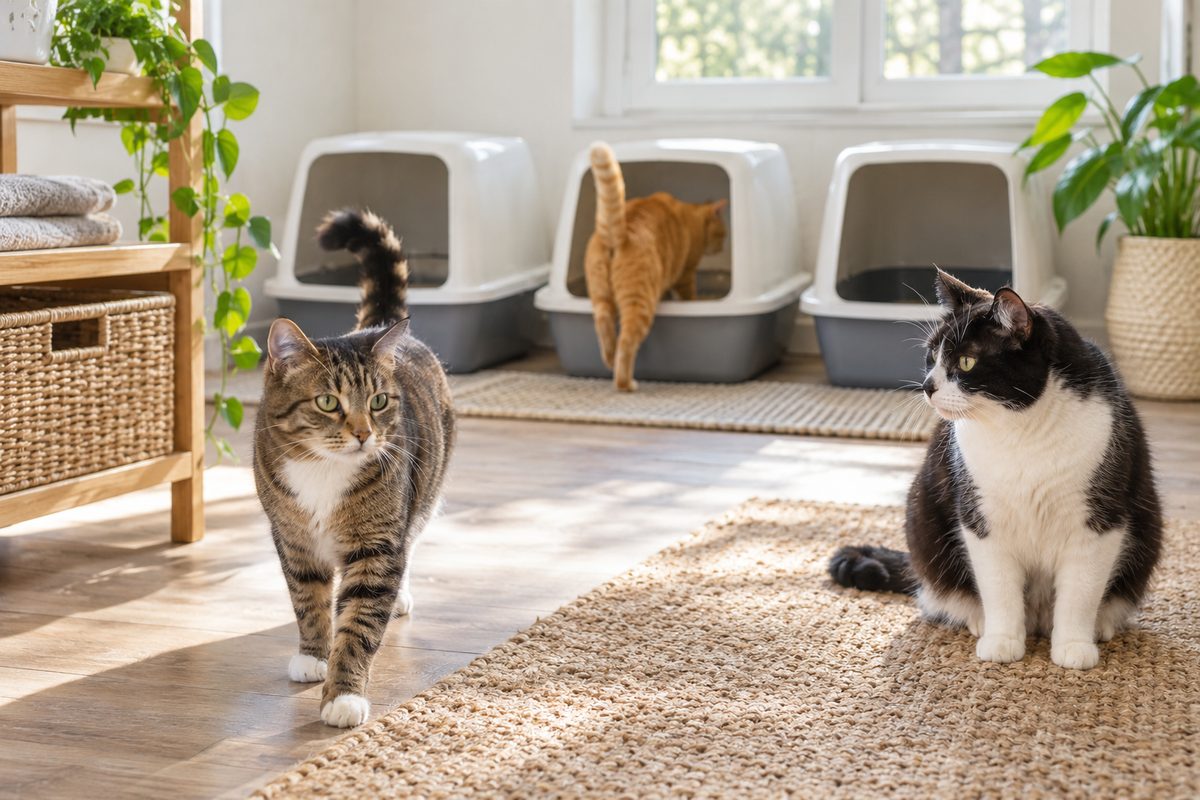
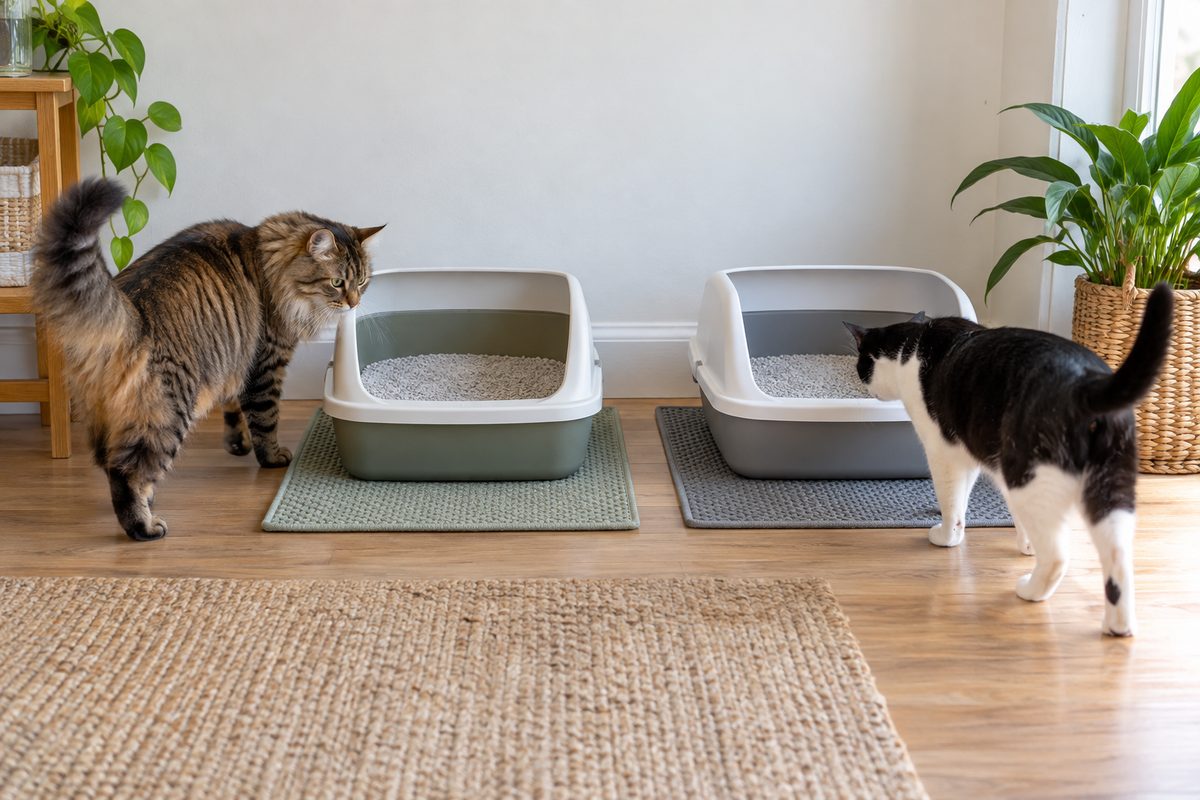
- Follow the rule: number of boxes = number of cats plus one. For three cats, use four boxes.
- Place boxes in separate, quiet, low-traffic locations to reduce tension.
- Avoid placing boxes near water or food bowls; cats naturally prefer privacy while eliminating.
- Ensure at least one box is easily accessible to senior or shy cats away from dominant pets.
Scooping and replacement schedule:
- Scoop clumped waste at least twice daily in multi-cat homes; once daily is insufficient.
- Fully replace litter weekly or every 10 days, depending on box capacity and litter type.
- Use enzyme-based litter box cleaners between full changes to eliminate bacterial odor sources.
- Consider automatic self-cleaning litter boxes if your budget allows; they reduce daily scooping labor.
Litter depth and refilling:
- Maintain 2-3 inches of litter depth for proper clumping and absorption.
- Add litter as needed to keep depth consistent; topping off prevents odor buildup.
- Never mix old and new litter unless transitioning brands gradually.
For more veterinary guidance, see the Cornell Feline Health Center.
Frequently Asked Questions
- Can I use the same litter brand in all boxes with multiple cats? Yes, consistency reduces confusion and litter aversion. Cats accept one familiar brand across all boxes better than switching between types.
- What do I do if one cat rejects the litter I chose? Offer two litter types in separate boxes for a week to identify the preferred option. Some cats are texture-sensitive; switching from clay to crystal or plant-based may resolve refusal.
- Is clumping litter safe if my cat ingests it while grooming?
Success with multiple cats depends on matching litter performance to your household’s specific needs, then committing to daily scooping and regular litter changes. Test small quantities of your top choices before committing to bulk purchases.

