


Best Cat Litter for Odor Control in Small Apartments
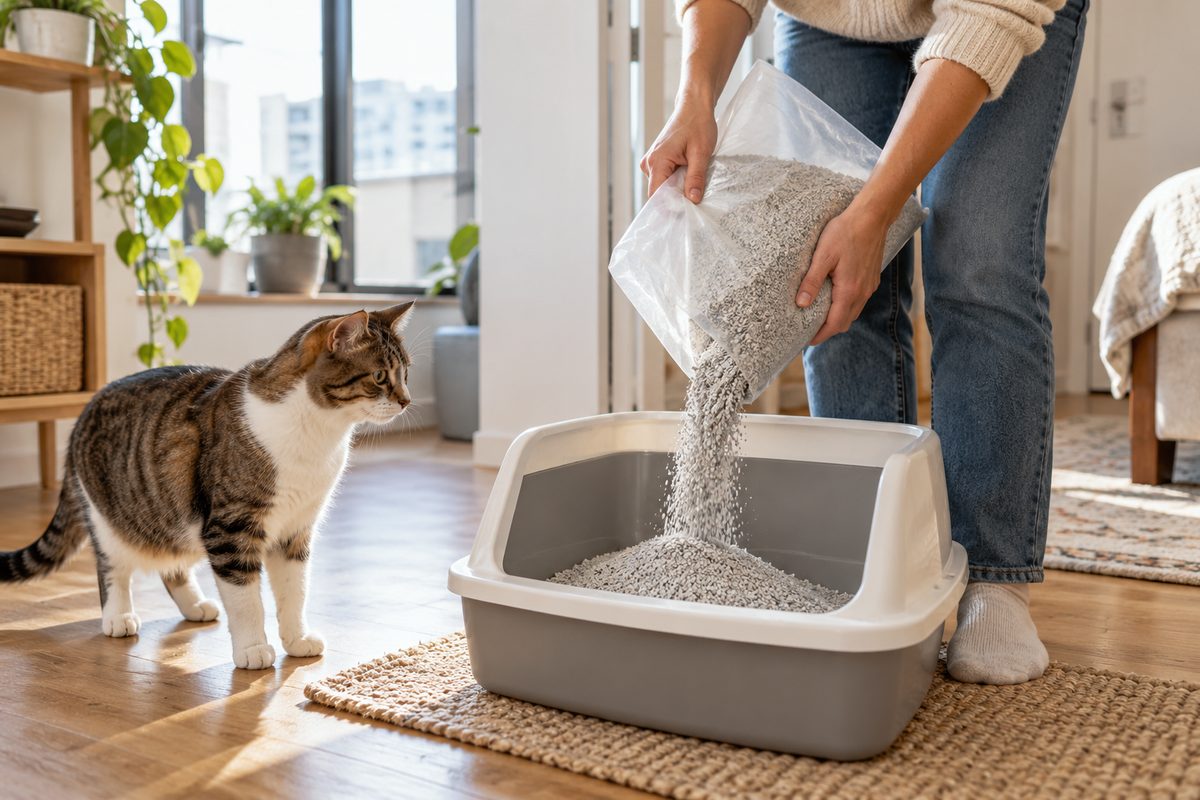
The right cat litter makes a huge difference in keeping your small apartment fresh and livable. Odor control is essential when space is limited and ventilation is poor, so choosing a high-performance litter prevents your home from smelling like a litter box. We’ll walk you through the top litter types, what to look for, and how to set up your system for maximum freshness.
This post may contain affiliate links. As an Amazon Associate I earn from qualifying purchases.
Table of Contents
Key Takeaways:
- Clumping litters with activated charcoal or baking soda offer the best odor control for apartments.
- Crystal and pine litters are low-dust alternatives that trap odors effectively.
- Regular scooping, proper litter depth, and box placement all affect how fresh your home stays.
- Enzyme cleaners eliminate odors at the source when accidents happen outside the box.
Top Litter Types for Odor Control
The most effective odor-control litters fall into three main categories. Each has strengths suited to small spaces where smell lingers longer.
Clumping clay litters:
- Unscented clumping litter with baking soda or activated charcoal neutralizes ammonia fast and traps odors in tight clumps.
- Clumping lets you remove waste daily without dumping the entire box, keeping odor trapped longer.
- Choose low-dust clumping formulas to avoid air-quality issues in confined apartments.
Non-clay alternatives:
- Crystal litter absorbs urine instantly and locks odor away without ammonia smell; it lasts longer than clay.
- Pine or wood-based litter neutralizes odors naturally and tracks less; some cats prefer the texture.
- Both are lower-dust and better for air quality in tight spaces.
What to Look For When Choosing Litter
Odor control strength depends on the litter’s active ingredients and clumping ability. Focus on these features to find the best match for your apartment.
- Activated charcoal or baking soda: These absorb and neutralize odors rather than mask them with perfume.
- Low dust: Dust spreads smell particles and reduces air quality; dust-free or low-dust formulas stay contained.
- Strong clumping: Tight clumps seal moisture and smell inside, making scooping more effective.
- Unscented options: Heavy perfume often masks bad odors temporarily but can add chemical smell to a small space.
- Long-lasting formula: Litter that absorbs more per scoop means fewer refills and less overall odor buildup.
Setup and Maintenance Tips for Small Spaces
Even the best litter works poorly without proper setup. Small apartments need extra care to keep odor under control between scoops.
- Scoop once daily minimum: In a small apartment, daily scooping is non-negotiable; twice daily is better if possible.
- Use enough litter: Fill the box 3 to 4 inches deep so urine is absorbed fully and odor stays trapped.
- Place the box away from living areas: Keep it in a bathroom, laundry room, or corner with good airflow, not near the bedroom or kitchen.
- Ventilate the litter area: Open a window or run a fan near the box to pull odors away from your living space.
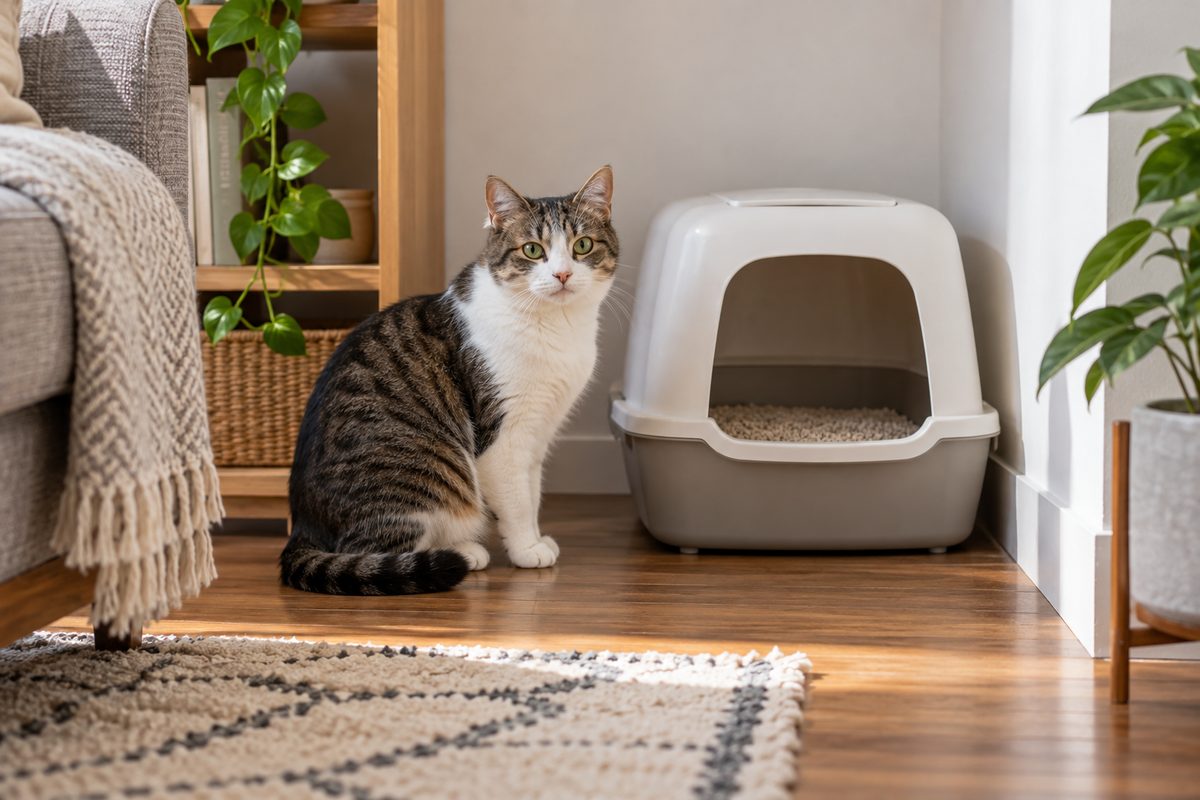
- Use a covered or hooded box: Enclosed boxes contain odor better, though some cats dislike them; test before committing.
- Add a mat underneath: A cat litter mat traps litter dust and prevents it from spreading odor throughout the apartment.
Handling Accidents and Deep Odor
Even with perfect litter, accidents happen outside the box. In small apartments, these can quickly make the whole space smell bad unless you clean thoroughly.
- Use an enzyme cleaner specifically made for cat urine; it breaks down urine compounds rather than just covering the smell.
- Spray the affected area generously and let it sit for 10 to 15 minutes before wiping.
- Repeat if the smell returns after drying; some spots need two applications.
- Identify why the cat avoided the box; common causes include litter box placement, dirty box, or box aversion.
- If accidents are frequent, consult your vet to rule out urinary tract issues.
For more veterinary guidance, see the Cornell Feline Health Center.
Frequently Asked Questions
- How often should I change cat litter in a small apartment? Change the entire box every 1 to 2 weeks for clumping litter, or every 3 to 5 days for non-clumping crystal litter; scoop waste daily. Regular litter box cleaning is the fastest way to manage odor in confined spaces.
- What’s the difference between activated charcoal and baking soda for odor control? Activated charcoal absorbs odor molecules and traps them inside, while baking soda neutralizes ammonia smell chemically; many litters combine both for best results.
- Can I use scented litter in a small apartment? Heavy perfume can become overwhelming in enclosed spaces and may mask rather than eliminate odor; unscented litter with odor-absorbing ingredients works better.
The best cat litter for small apartments combines strong clumping or absorption with low dust and daily maintenance. Pair your litter choice with consistent scooping and an enzyme cleaner for accidents, and your apartment will stay fresh even with a cat.

