
Can Cats Eat Tuna? 7 Important Facts Every Smart Owner Should Know
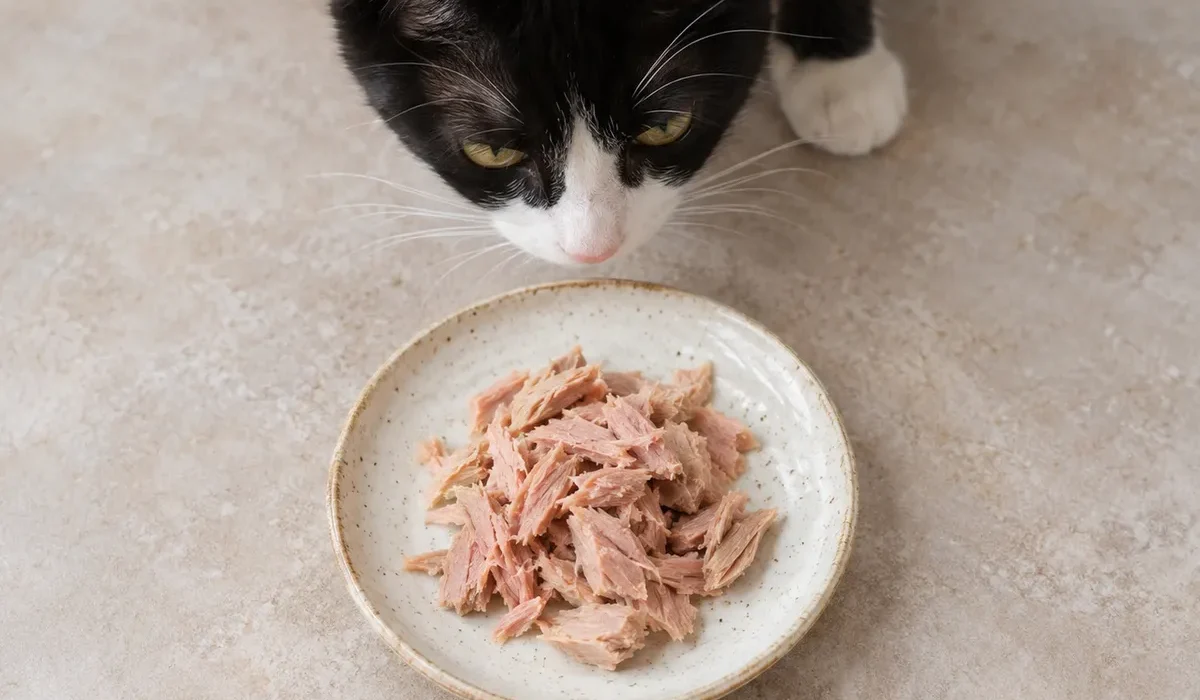
Cats can eat tuna only as an occasional treat, so the answer to can cats eat tuna is yes, in small portions of plain tuna packed in spring water. The limit matters most for cats that beg at every opened can, because daily tuna causes mercury buildup, vitamin E deficiency and picky eating.
This post may contain affiliate links. As an Amazon Associate I earn from qualifying purchases.
Table of Contents
Can cats eat tuna at a glance:
- Short Answer: Yes, cats can eat plain, water-packed tuna once or twice a week as a treat.
- Safe Amount: About 1 teaspoon to 1 tablespoon per serving suits a 10-pound adult cat.
- Main Benefit: Tuna adds lean protein, omega-3 fatty acids and a smell that tempts poor eaters.
- Main Risk: Frequent tuna causes mercury exposure, vitamin E deficiency and an unbalanced diet.
Tuna Nutrition: What Cats Actually Get
Tuna gives cats high-quality animal protein, which obligate carnivores need from meat.
- Protein: A 3-ounce portion of light tuna in water provides about 20 grams of protein.
- Omega-3 fatty acids: Tuna fats support skin and coat health in cats.
- Taurine: Fish contains taurine, which cats need for heart and eye function.
- Appetite appeal: The strong smell can tempt a recovering cat not eating normally.
Owners asking can cats eat tuna as real nutrition should know plain tuna lacks balanced calcium and vitamins. The Cornell Feline Health Center recommends complete and balanced cat food as the foundation of every cat’s diet.
Can Cats Eat Tuna Every Day?
Cats should not eat human tuna daily, because daily tuna causes five well-known health problems.
- Mercury buildup: Tuna stores mercury, and chronic exposure can damage a cat’s nervous system.
- Vitamin E deficiency: Tuna-heavy diets can cause steatitis, a painful fat inflammation called yellow fat disease.
- Sodium overload: Tuna in brine adds salt that strains cats with kidney or heart disease.
- Picky eating: Cats fed tuna often refuse their regular food.
- Allergy: Fish is a common feline allergen, so watch for fish allergy in cats.
When my cat Milo got tuna three days running, he ignored his kibble until I stopped tuna for a week.
A complete and balanced tuna cat food is different, because added vitamin E, calcium and taurine make it safe as a regular meal.
Can Cats Eat Tuna From a Can? Safe and Unsafe Types
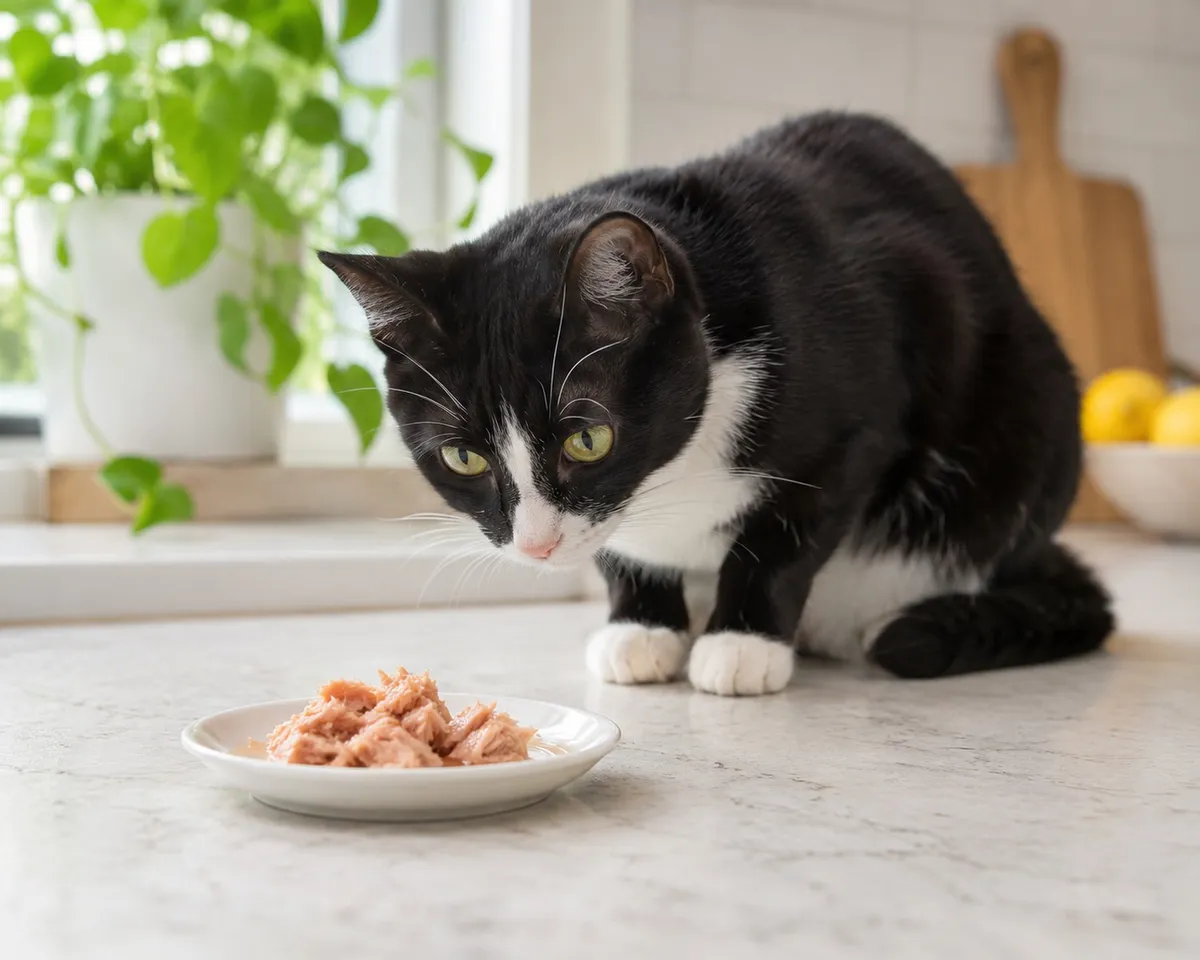
The answer to can cats eat tuna from a can is yes only when the label lists just tuna and water.
| Tuna Type | Safe for Cats? | Reason |
|---|---|---|
| Light or skipjack tuna in spring water | Yes, occasionally | Lower mercury, no added fat |
| Albacore (white) tuna in water | Rarely | Higher mercury |
| Fresh tuna, cooked plain | Yes, occasionally | No additives |
| Tuna in sunflower or olive oil | No | Extra fat triggers vomiting and diarrhea |
| Tuna in brine | No | High sodium |
| Flavored tuna or tuna salad | No | May contain onion, garlic or mayo |
| Raw tuna or sushi | No | Bacteria, parasites and thiaminase, which destroys vitamin B1 |
Onion and garlic appear on every list of toxic foods to avoid, and the ASPCA Animal Poison Control Center lists both as toxic to cats.
How Much Tuna Cats Can Eat Safely
The safe answer to can cats eat tuna depends on portion size. Treats should stay under 10 percent of daily calories, so a 10-pound cat needing about 200 calories gets roughly 20 calories of treats.
- Adult cats: 1 teaspoon to 1 tablespoon, once or twice a week, is a safe portion.
- Kittens under 6 months: Skip tuna, because growing kittens need complete kitten food.
- Seniors or cats with kidney disease: Ask your vet first, since tuna adds sodium and phosphorus.
Base the other 90 percent on a guide to how much to feed a cat.
How to Serve Tuna to Your Cat
Once you know can cats eat tuna safely, correct serving prevents most stomach problems.
- Choose light or skipjack tuna canned in spring water with no added salt.
- Drain the liquid, remove bones and flake the tuna into pea-sized pieces.
- Offer 1 teaspoon beside regular food or as a training reward.
- Refrigerate leftovers in a sealed container and use them within 3 days.
- Watch for vomiting, diarrhea or itching over the next 24 hours.
Single-ingredient freeze-dried tuna cat treats offer the same flavor in pre-portioned pieces. Rotate tuna with other human foods cats can eat for balanced variety.
When to See a Vet After Tuna
Even when the answer to can cats eat tuna is yes, some cats react badly and need a veterinarian’s exam.
- Digestive upset: Vomiting or diarrhea lasting over 24 hours needs a vet visit.
- Skin signs: Itching, ear scratching or hair loss over weeks can signal a fish allergy.
- Steatitis signs: Pain when touched, fever or lumps under the skin need prompt care.
- Emergency signs: Wobbling, tremors, seizures or sudden blindness require an emergency vet immediately.
Never treat these symptoms with human medicine, because many human drugs are toxic to cats.
Frequently Asked Questions
Can cats eat tuna in oil?
No, oil-packed tuna adds fat that can cause vomiting, diarrhea and, over time, pancreatitis in cats.
Can kittens eat tuna?
Kittens under 6 months should not eat tuna, because they need complete kitten food for growth.
How often can cats have tuna?
Most adult cats can have plain tuna once or twice a week, kept under 10 percent of daily calories.
Is tuna water safe for cats?
Tuna water from salt-free, spring-water cans is safe at 1 to 2 teaspoons, but brine is too salty.
Can tuna give cats mercury poisoning?
Yes, cats fed human tuna daily for months can develop mercury poisoning, which causes tremors and poor coordination.
The answer to can cats eat tuna is yes, as long as tuna stays a small, occasional treat. Serve 1 teaspoon to 1 tablespoon of light tuna in spring water once or twice weekly, keep complete cat food as the main diet, and check your pantry today for salt-free, water-packed cans.