Are Christmas Cactus Poisonous to Cats? 5 Essential Safety Facts
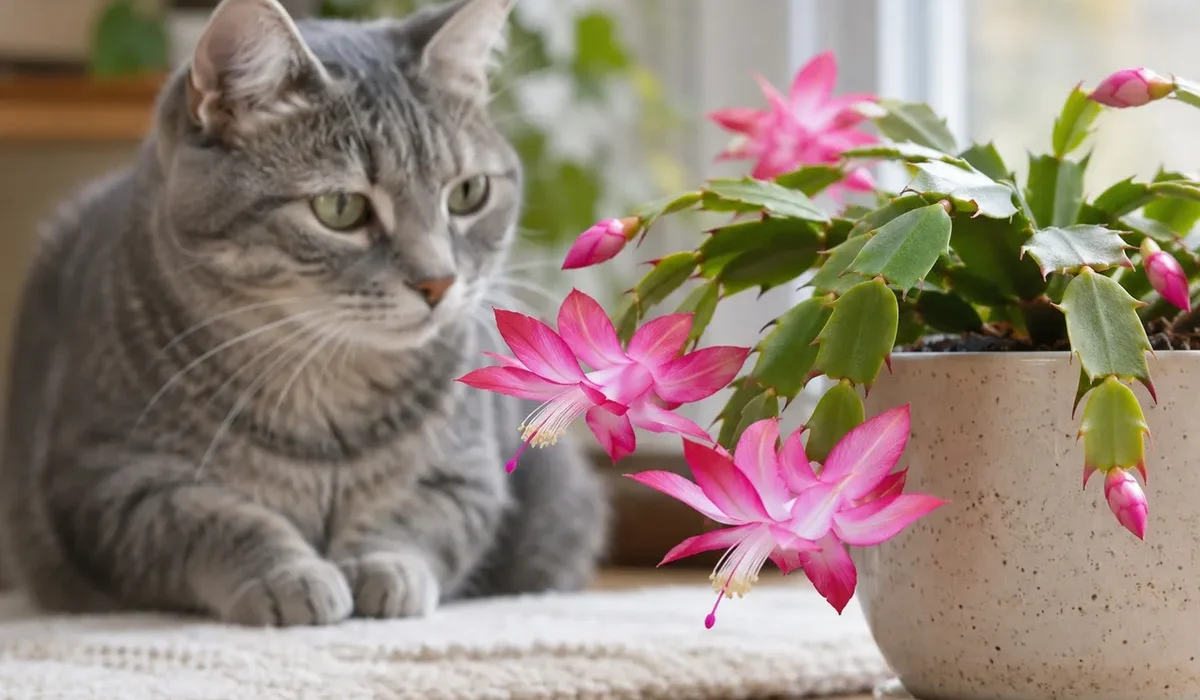
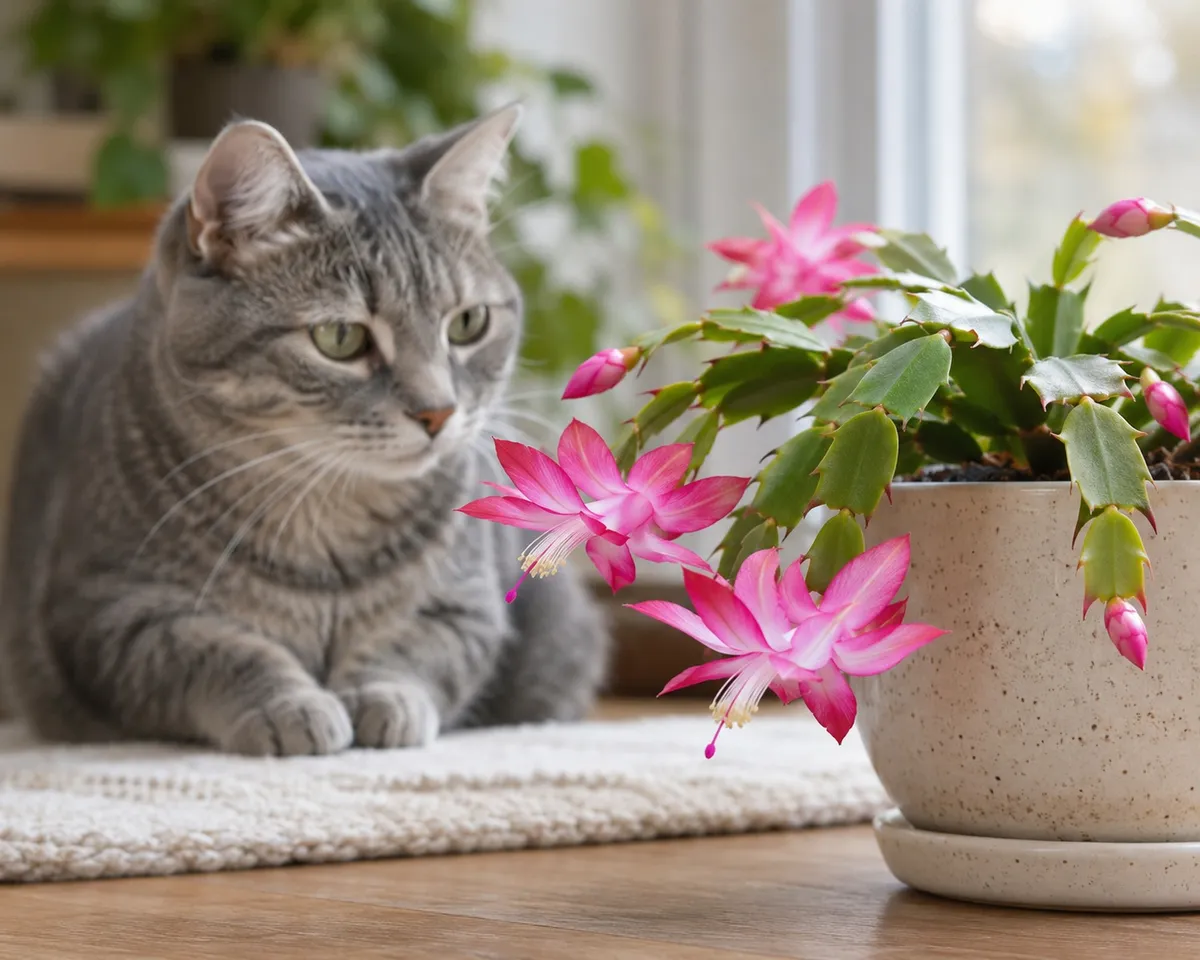
The answer to are Christmas cactus poisonous to cats is reassuring: the Christmas cactus (Schlumbergera) is non-toxic to cats, though chewing large amounts can cause mild vomiting or diarrhea. This matters most from November to January, when the plant blooms and curious cats nibble its dangling stems.
This post may contain affiliate links. As an Amazon Associate I earn from qualifying purchases.
Table of Contents
Are Christmas cactus poisonous to cats at a glance:
- Short Answer: No, the ASPCA lists the Christmas cactus as non-toxic to cats, dogs and horses.
- Most Common Effects: Mild vomiting, soft stool or drooling after a cat eats several stem segments.
- Urgency: Low for most cats, with stomach upset usually fading within 24 hours.
- What to Do at Home: Remove plant pieces, offer fresh water and watch your cat for one day.
- When to See a Vet: Call if vomiting lasts over 24 hours, your cat refuses food, or the plant may be something else.
Are Christmas Cactus Poisonous to Cats? What Experts Say
Christmas cactus is safe for cats because it contains no known toxins that damage the kidneys, liver or heart. According to the ASPCA Animal Poison Control Center, Schlumbergera species are non-toxic to cats.
Thanksgiving cactus (Schlumbergera truncata) and Easter cactus share this safe rating. All three holiday cacti have spineless segments, so cats rarely injure their mouths on them.
When my cat first batted at our Christmas cactus, I checked the nursery tag twice before relaxing. Non-toxic plants can still upset a cat’s stomach, because obligate carnivores digest plant fiber poorly.
Symptoms If Your Cat Eats Christmas Cactus
A cat that eats Christmas cactus usually shows mild stomach upset within a few hours, not true poisoning.
Mild signs to expect:
- Vomiting once or twice, often with green plant bits
- Soft stool or mild diarrhea
- Drooling or repeated lip licking
- Skipping one meal
Emergency signs:
- Repeated vomiting beyond 24 hours
- Blood in vomit or stool
- Lethargy, weakness or hiding
- Straining in the litter box, a possible blockage sign
Any emergency sign means your cat needs a veterinarian the same day, since a non-toxic plant rarely explains severe illness. See our guide to cat vomiting after eating for other common causes.
What to Do If Your Cat Chews the Plant
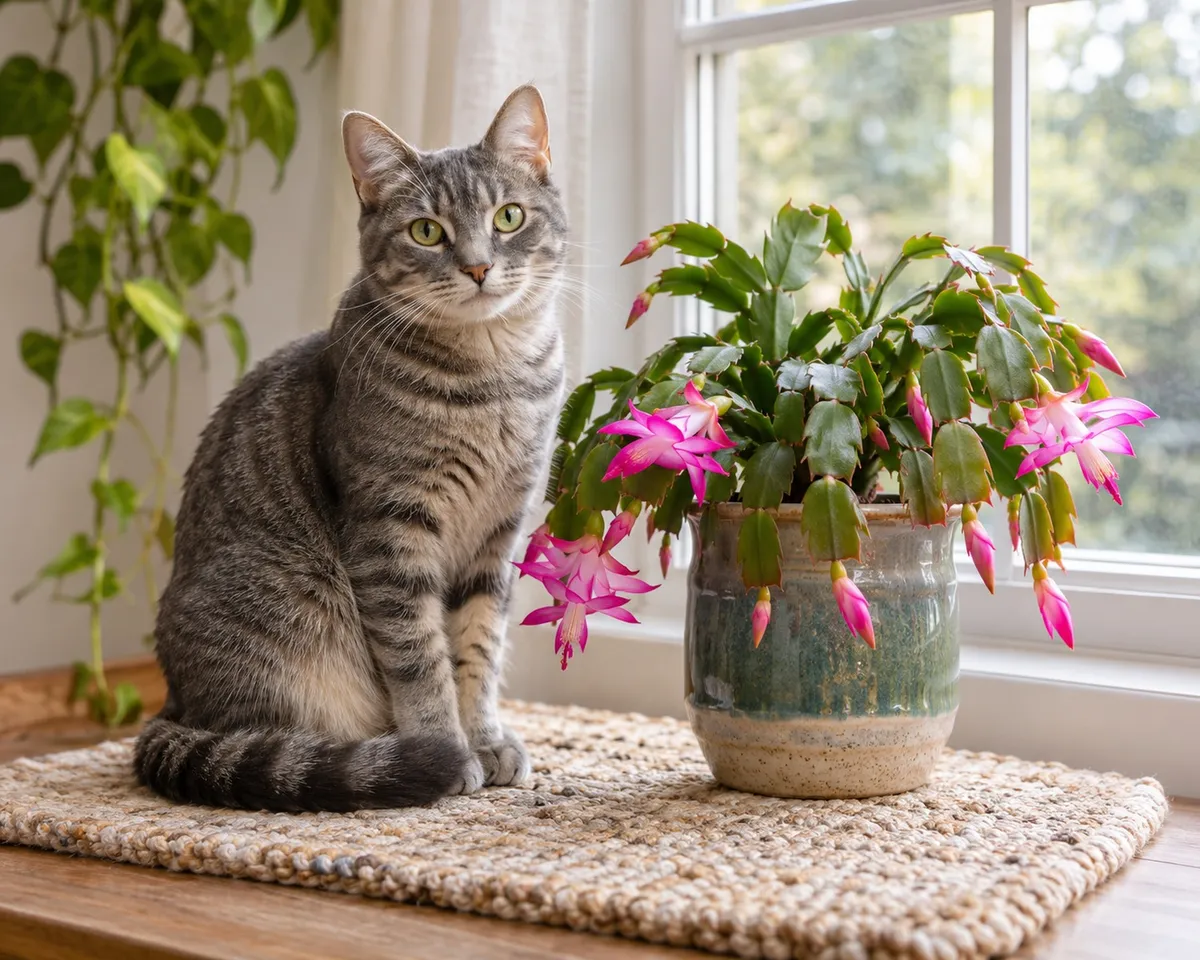
Most cats need only simple home monitoring after nibbling a Christmas cactus.
- Remove leftover stem pieces from your cat’s mouth and the floor.
- Confirm the plant is a true Schlumbergera using the nursery tag or a photo.
- Offer fresh water to prevent dehydration after vomiting.
- Feed small portions of your cat’s usual food once vomiting stops.
- Watch appetite, energy and litter box habits for 24 hours.
Never induce vomiting or give human medicine to a cat after it eats a plant. Call your vet if you cannot identify the plant your cat ate.
Hidden Risks: Pesticides, Fertilizer and Lookalike Plants
Real danger near a Christmas cactus usually comes from what sits on or beside the plant.
- Pesticides: Store-bought holiday plants may carry insecticide residue, so rinse new plants before bringing them home.
- Fertilizer: Granules and liquid feed irritate a cat’s mouth and gut, so store them in a closed cabinet.
- Spiny cacti: Desert cacti such as prickly pear cause painful mouth and paw injuries.
- Mixed arrangements: Holiday baskets may hide lilies, holly or mistletoe beside safe plants.
Lilies are the deadliest mix-up, because even small amounts of pollen can cause kidney failure in cats.
Are Christmas Cactus Poisonous to Cats Compared to Other Holiday Plants?
Among December plants, the Christmas cactus is one of the safest, while several holiday favorites are toxic to cats.
| Plant | Toxic to Cats? | Main Risk |
|---|---|---|
| Christmas cactus | No | Mild stomach upset |
| Poinsettia | Mildly | Drooling, vomiting |
| Fir Christmas tree | Mildly | Mouth irritation, needle blockage |
| Holly | Yes | Vomiting, diarrhea, drooling |
| Mistletoe | Yes | Vomiting, slow heart rate |
| Amaryllis | Yes | Vomiting, tremors |
| Lilies | Severely | Acute kidney failure |
Poinsettias cause milder effects than many owners fear, as our article on poinsettias poisonous to cats explains. Our list of flowers safe for cats offers more festive options.
How to Keep Cats Away From a Christmas Cactus
Putting the Christmas cactus out of reach protects both your cat and the plant.
- Height: Hang the plant in a hanging planter away from shelves and furniture cats can climb.
- Distraction: Grow a cat grass kit of wheat or oat grass so your cat has a safe plant to chew.
- Cleanup: Sweep up dropped blooms and segments daily, because fallen pieces tempt playful cats.
- Placement: Keep the cactus apart from your tree and follow these cat proof Christmas tree tips.
In my home, the hanging planter stopped the nibbling within a week, and the cat grass gave my cat a better target. Our guide to cat-friendly houseplants lists more safe greenery.
Frequently Asked Questions
Are Christmas cactus poisonous to cats and kittens?
No, the Christmas cactus is non-toxic to cats and kittens of any age, though small kittens may vomit after eating a few stem segments.
What happens if a cat eats a Christmas cactus flower?
Christmas cactus flowers are non-toxic, and eating one usually causes no symptoms or a single bout of vomiting.
Is Thanksgiving cactus safe for cats?
Yes, the ASPCA lists the Thanksgiving cactus (Schlumbergera truncata) as non-toxic to cats, just like the Christmas cactus.
Why does my cat keep eating my Christmas cactus?
Cats chew plants from boredom, curiosity or a desire for fiber, and dangling cactus stems look like toys. Two 10 to 15 minute play sessions a day often reduce plant chewing.
How long does stomach upset last after a cat eats a plant?
Mild stomach upset from a non-toxic plant usually clears within 24 hours, and vomiting beyond 24 hours needs a vet visit.
Are Christmas cactus poisonous to cats? No, the plant is non-toxic, and most cats only show mild stomach upset after chewing it. Confirm your plant is a true Schlumbergera, keep pesticides and lilies away, and move the pot into a hanging spot today so your cat stays safe all season.