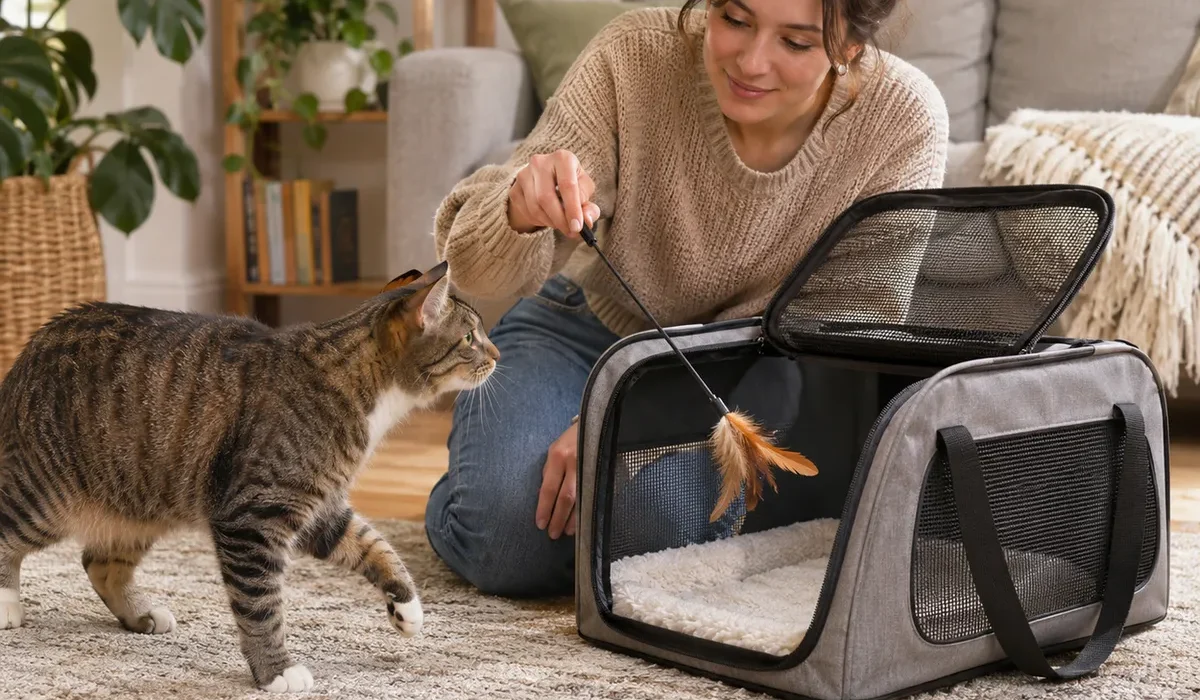
How to Get a Cat Into a Carrier: 9 Stress-Free Tips
How to get a cat into a carrier starts days before the trip: leave the carrier out as a resting spot, reward visits with treats, then load the cat calmly rear-first. These steps matter most before vet visits, moves and travel, when a panicked cat can scratch or bolt.
This post may contain affiliate links. As an Amazon Associate I earn from qualifying purchases.
Table of Contents
How to get a cat into a carrier at a glance:
- Short Answer: Train the carrier as a bed for 1-3 weeks, then lower the cat in rear-first through a top opening.
- Why Cats Resist: Most cats see the carrier only before vet visits, so they link it with car rides.
- Is It Normal: Hiding, freezing and spreading the legs wide are common fear responses.
- How to Respond: Move slowly, stay quiet and never chase a frightened cat into a corner.
- Backup Method: A thick towel wrap protects a struggling cat and your hands.
Why Cats Hate the Cat Carrier
Cats resist the carrier because they associate it with stressful events, not because the box itself is frightening.
- Smell: An unwashed carrier holds stress odors from the previous trip.
- Surprise: A carrier pulled from storage minutes before leaving gives no time to adjust.
- Restraint: Being pushed head-first through a small front door makes cats feel trapped.
- Bad memories: Cats that vomited or cried on past car rides remember those trips.
When my cat Milo saw the carrier leave the closet, he vanished under the bed within seconds. Once the carrier stayed in the living room, he started napping in it on his own.
Prepare the Carrier Before Travel Day
The easiest carrier to use is one the cat already treats as a bed.
Choose the right carrier:
- A top-loading hard-sided carrier lets you lower the cat in from above.
- The carrier should be about 1.5 times the cat’s body length so the cat can turn around.
- A removable top lets a nervous cat stay in the bottom half during exams.
- Our guide to the best cat carrier for nervous cats compares the most helpful features.
Make the carrier inviting:
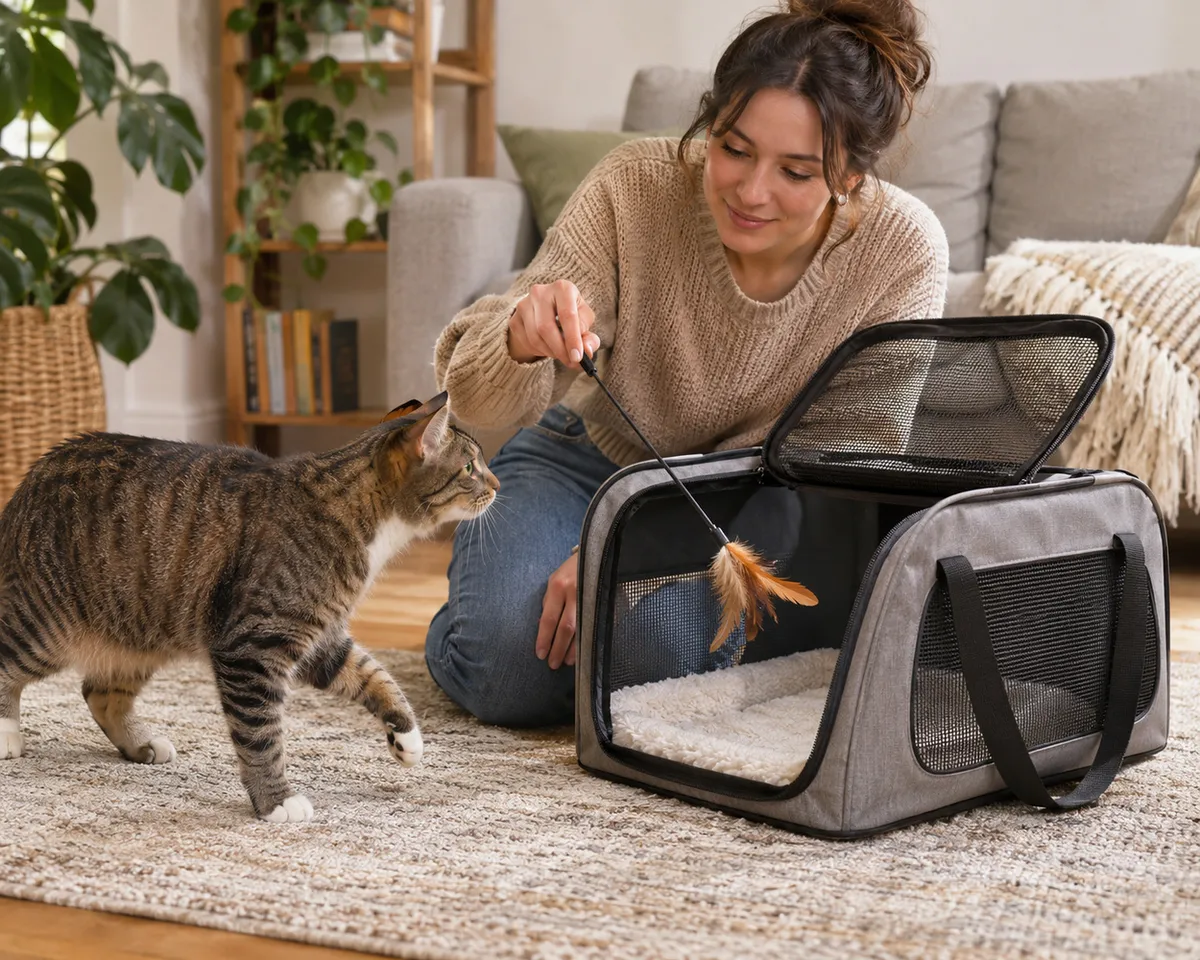
- Leave the carrier open in a room where the cat already rests.
- Line the carrier with a worn T-shirt that smells like home.
- Apply a feline pheromone spray inside about 15 minutes before the cat enters.
How to Get a Cat Into a Carrier in 9 Steps
The most reliable method combines gradual training with calm handling on travel day.
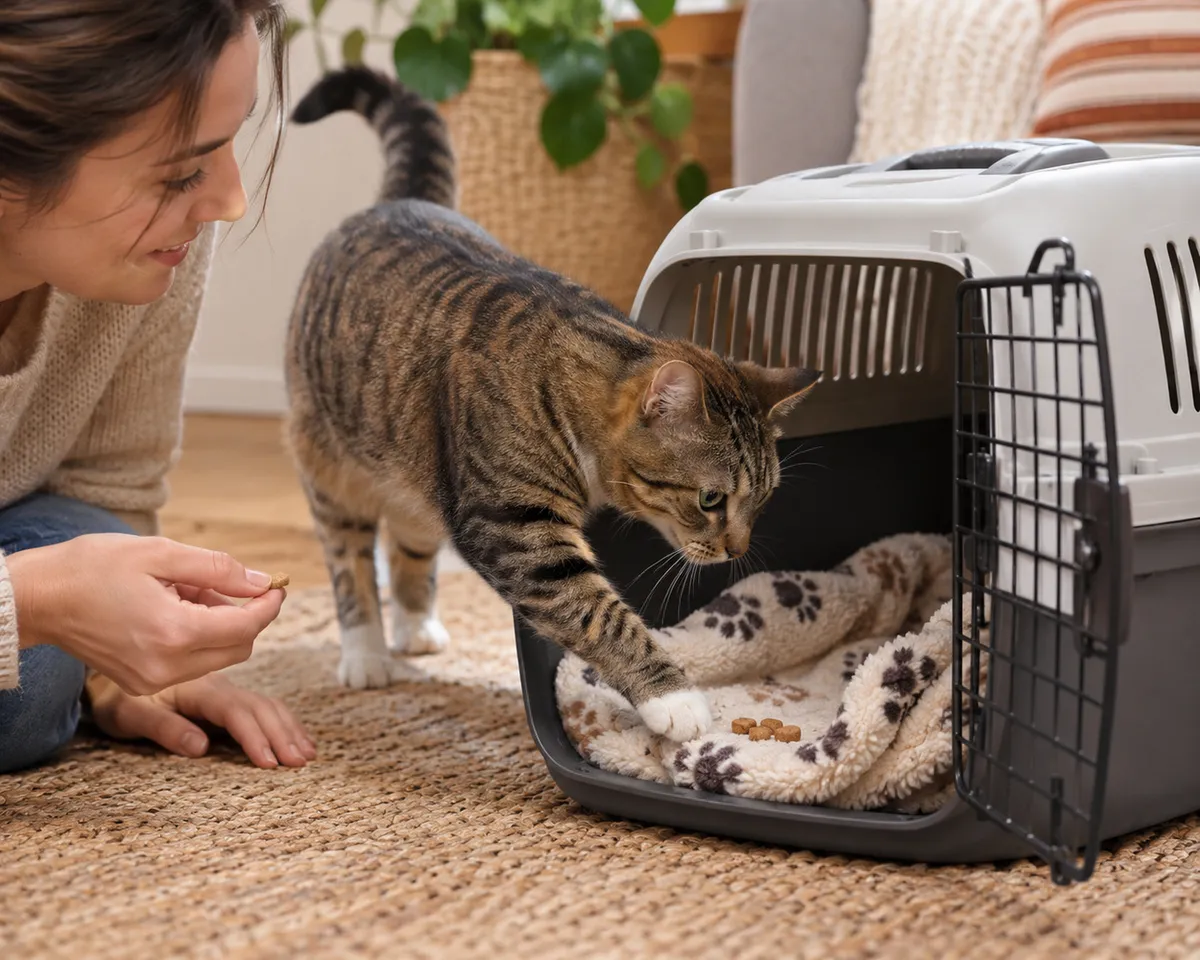
- Start 1-2 weeks early by leaving the carrier out with the door open.
- Toss treats near the carrier, then inside the entrance, then at the back.
- Move meals closer daily until the cat eats fully inside the carrier.
- Reward every voluntary entry, using the marker-and-treat approach from cat training tricks.
- Close the door for 5-10 seconds, then reward, building slowly to several minutes.
- Practice lifting the carrier around the house, then take 5-minute car rides.
- Shut the cat in a small room without hiding spots 1 hour before departure.
- Support the chest and hindquarters, then lower the cat rear-first through the top.
- Drape a light towel over the carrier and carry it level with both arms.
Cat Carrier Training Timeline
Most cats accept a carrier within 2-3 weeks of short daily sessions, while fearful adults may need longer.
| Stage | Time Frame | Goal |
|---|---|---|
| Carrier left out | Days 1-3 | Cat sniffs it calmly |
| Treats inside | Days 3-7 | Cat steps in for food |
| Meals inside | Week 2 | Cat eats fully inside |
| Door closed briefly | Week 2 | Cat relaxes for 1-5 minutes |
| Lifting and carrying | Weeks 2-3 | Cat stays calm when moved |
| Short car rides | Week 3 | Cat tolerates 5-10 minutes |
How to Get a Cat Into a Carrier When It Fights Back
A panicking cat needs a slower, safer technique rather than more force.
- Towel wrap: Wrap the cat snugly in a thick towel, head out, then lower the bundle in.
- Vertical tip: Stand a front-door carrier on end, opening up, and lower the cat rear-first.
- Split the shell: Remove the top half, place the cat in the base, then reattach the top.
- Take a break: After an escape, wait 15-20 minutes for the cat’s breathing to slow.
International Cat Care recommends gentle, minimal restraint because force raises fear on later trips. For severe distress, ask your veterinarian about prescription anxiety options, and never give cats human sedatives.
Carrier comfort makes regular veterinary check-ups easier and prepares cats for journeys in our checklist for flying with cats. The American Veterinary Medical Association also encourages owners to reduce travel stress before appointments.
Frequently Asked Questions
Why does my cat hate the carrier?
Cats hate the carrier because they usually see it only before vet visits. Leaving the carrier out daily for 1-2 weeks breaks that association for most cats.
How long does it take to carrier train a cat?
Most cats become comfortable after 2-3 weeks of short daily sessions. Kittens often adapt within days, while fearful adults can need a month.
Is a top-loading carrier better for cats?
Yes, a top-loading carrier lets you lower the cat in from above instead of pushing it through a narrow door. Vets can also examine the cat in the bottom half.
How to get a cat into a carrier without getting scratched?
Wrap the cat in a thick towel with only the head exposed, then lower it rear-first into the carrier. Long sleeves and slow movements cut the scratch risk further.
Should I cover my cat’s carrier in the car?
Yes, draping a light towel over three sides blocks moving scenery and helps most cats settle. Keep one side uncovered for fresh air.
Learning how to get a cat into a carrier is mostly about preparation: a familiar carrier, food rewards and rear-first loading prevent most travel-day battles. Start today by placing the carrier in your living room with the door open and a few treats inside, then add one small step every day.