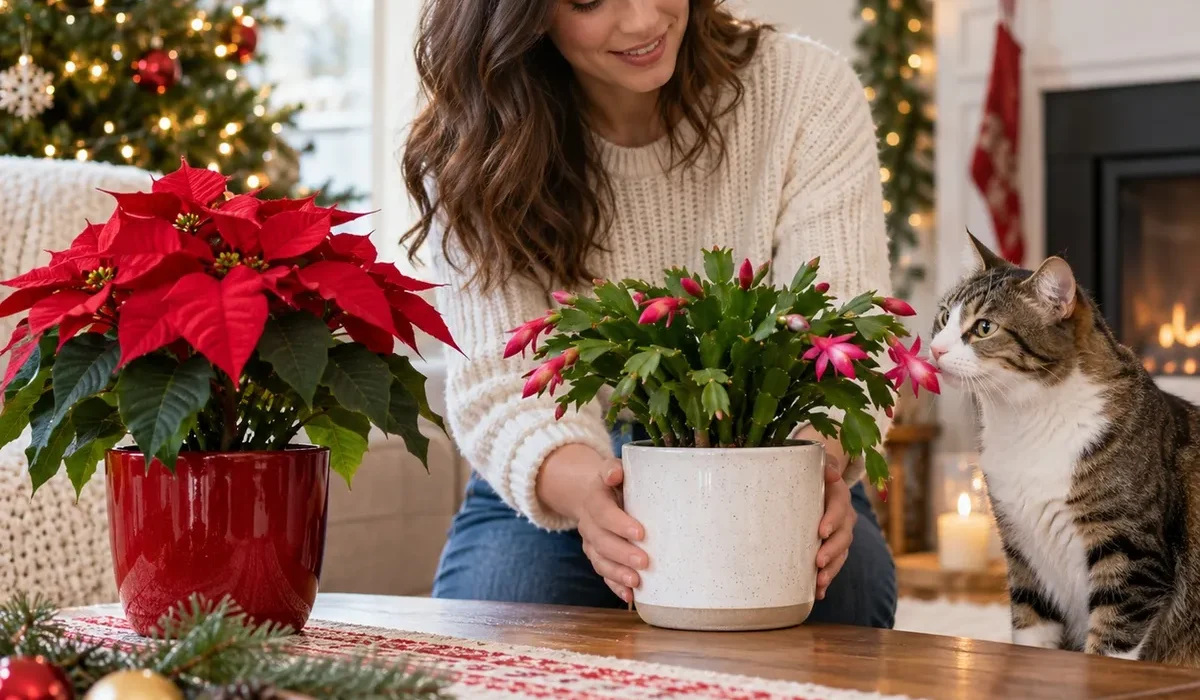
Are Poinsettias Poisonous to Cats? 7 Vital Holiday Facts
Poinsettias are only mildly poisonous to cats, so a nibble usually causes drooling, lip-smacking and an upset stomach rather than serious illness. Still, any cat that chews a leaf deserves a close watch, especially during the holidays when decorated homes are full of tempting plants.
This post may contain affiliate links. As an Amazon Associate I earn from qualifying purchases.
Table of Contents
Are poinsettias poisonous to cats at a glance:
- Short Answer: Yes, but only mildly. Poinsettias rarely cause life-threatening poisoning in cats.
- Most Common Signs: Drooling, mouth irritation, vomiting and occasionally mild diarrhea.
- Urgency: Low to moderate. Call a vet if symptoms last over 24 hours or your cat is a kitten or senior.
- What to Do at Home: Rinse the mouth, remove plant pieces and offer fresh water.
- Safer Choice: Pet-safe holiday decor or sealed artificial plants.
Are Poinsettias Poisonous to Cats? The Short Answer
Poinsettias are classed as mildly toxic to cats, not deadly. The plant’s milky white sap contains irritating compounds that inflame the mouth and stomach. Most cats that chew a leaf show only brief, self-limiting signs.
The old claim that a poinsettia can kill a cat is a myth. It has circulated for decades, yet veterinary toxicology sources consistently describe the plant as low in toxicity. You can read the official plant listing at the ASPCA Animal Poison Control Center, which labels poinsettia as mildly irritating to cats.
That said, “mild” does not mean “harmless.” A small cat that eats a lot of leaves can vomit repeatedly and become dehydrated. Cats with kidney disease or other health problems also tolerate vomiting poorly.
Why Poinsettias Irritate Cats
The irritation comes from the sap, which is a milky latex found in the stems and leaves. This sap contains diterpenoid compounds and other irritants that inflame soft tissue on contact. Cats feel it first in the mouth, then in the stomach.
Owners often ask whether are poinsettias poisonous to cats in every situation, and the honest answer is that the reaction depends on several factors:
- Amount eaten: One bitten leaf usually causes less trouble than several chewed leaves.
- Body size: Kittens and small cats feel the effects more than large adults.
- Sensitivity: Some cats vomit after a tiny taste, while others show nothing.
- Health history: Cats with sensitive stomachs, kidney disease or digestive problems may react more strongly.
The sap can also irritate skin and eyes. If a cat brushes against a broken stem and then grooms itself, the sap ends up in its mouth anyway.
Signs of Poinsettia Poisoning in Cats
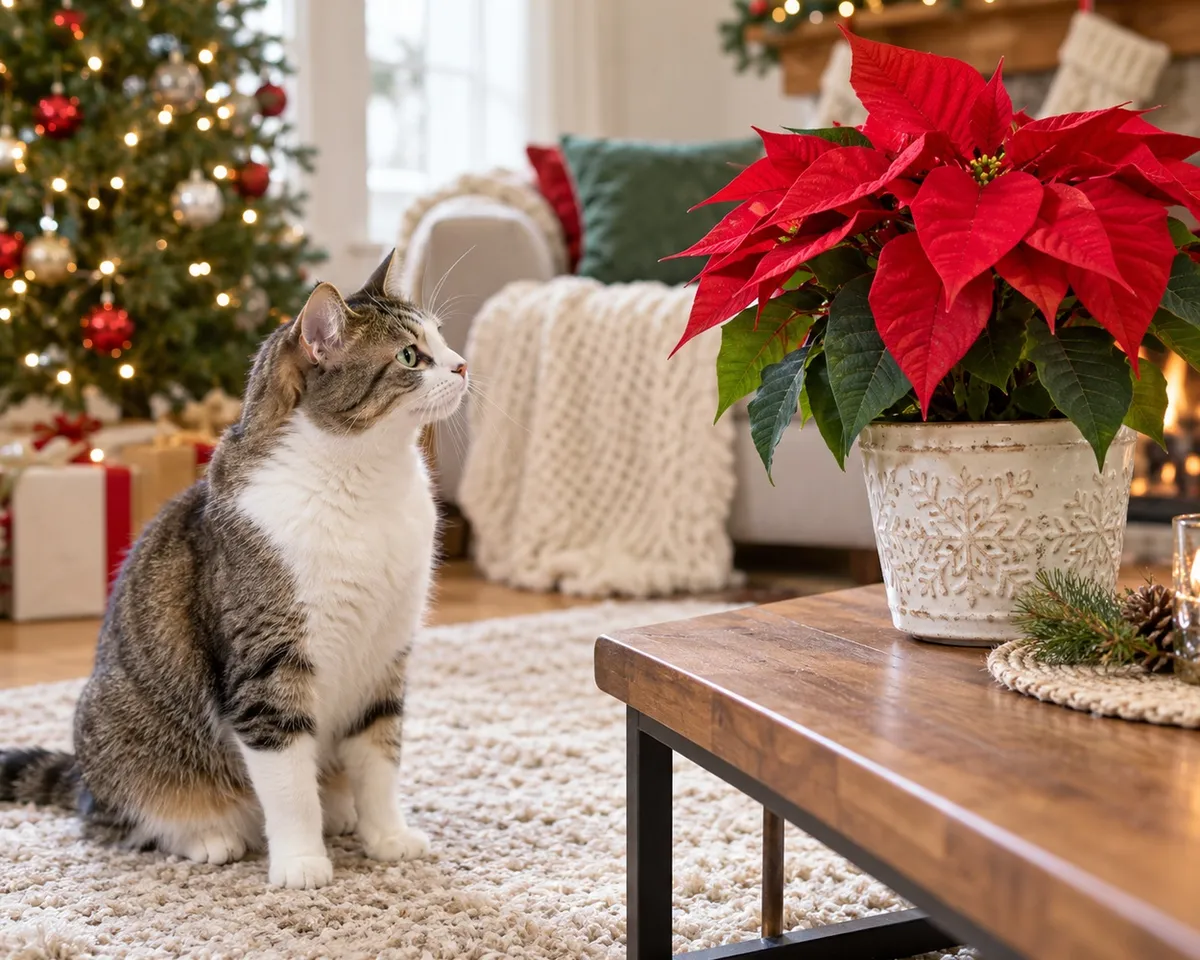
The most common signs appear within minutes to a few hours after chewing the plant. They are almost always limited to the mouth, skin and digestive tract.
Symptoms to watch for:
- Drooling or excessive salivation
- Pawing at the mouth or lip-licking
- Vomiting, sometimes with plant pieces
- Mild diarrhea
- Reduced appetite
- Redness or itching on the skin or around the eyes after contact with sap
If you also notice your cat vomiting repeatedly, our guide on vomiting in cats explains how to tell a minor stomach upset from a problem that needs a vet.
Severity by symptom:
| Sign | Typical Severity | What to Do |
|---|---|---|
| Drooling or lip-smacking | Mild | Rinse mouth, offer water, monitor |
| Single episode of vomiting | Mild | Withhold food briefly, monitor |
| Mild diarrhea | Mild | Watch for 24 hours, keep water available |
| Repeated vomiting | Moderate | Call your veterinarian |
| Lethargy or refusing water | Moderate to serious | See a vet the same day |
| Collapse or severe weakness | Emergency | Go to an emergency clinic |
What to Do If Your Cat Ate a Poinsettia
Stay calm, because most cases resolve with simple home care. Acting quickly still helps limit irritation and gives you useful information if you need to call a vet.
- Remove any plant pieces from your cat’s mouth and the surrounding area.
- Gently wipe the mouth and face with a damp cloth to remove sap.
- Offer fresh, clean water so your cat can rinse its mouth and stay hydrated.
- Check how much of the plant is missing and note the time your cat ate it.
- Watch your cat closely for the next 24 hours for vomiting, drooling or low energy.
- Call your veterinarian or a pet poison hotline if symptoms are strong or last longer than a day.
Do not try to make your cat vomit at home, and never give human medicine. Many common human drugs are dangerous for cats. If your cat is stressed or off its food afterward, a bland diet recommended by your vet is safer than guessing.
When to See a Vet
Call a veterinarian if vomiting happens more than two or three times or if your cat will not drink. Dehydration develops faster in cats than in people, so persistent stomach upset should not wait. Kittens, seniors and cats with chronic illness should be checked sooner.
Contact your vet promptly if you see:
- Repeated vomiting or vomiting that continues past 24 hours
- Diarrhea that lasts more than a day or contains blood
- Extreme lethargy, weakness or hiding
- Refusal to eat or drink
- Swelling around the mouth or eyes, or trouble breathing
A vet may give anti-nausea medication, fluids or supportive care. For a broader view of warning signs, see our article on signs your cat is in pain and when to call a vet. Never rely on this article in place of professional advice if you are unsure.
Are Poinsettias Poisonous to Cats Compared With Other Holiday Plants?
Poinsettias are among the milder holiday hazards, but several other seasonal plants are far more dangerous. Many owners worry about the wrong plant while overlooking the risky ones. Knowing the difference helps you decorate smartly.
Holiday plants and their risk to cats:
| Plant | Risk Level | Main Concern |
|---|---|---|
| Poinsettia | Mild | Mouth and stomach irritation |
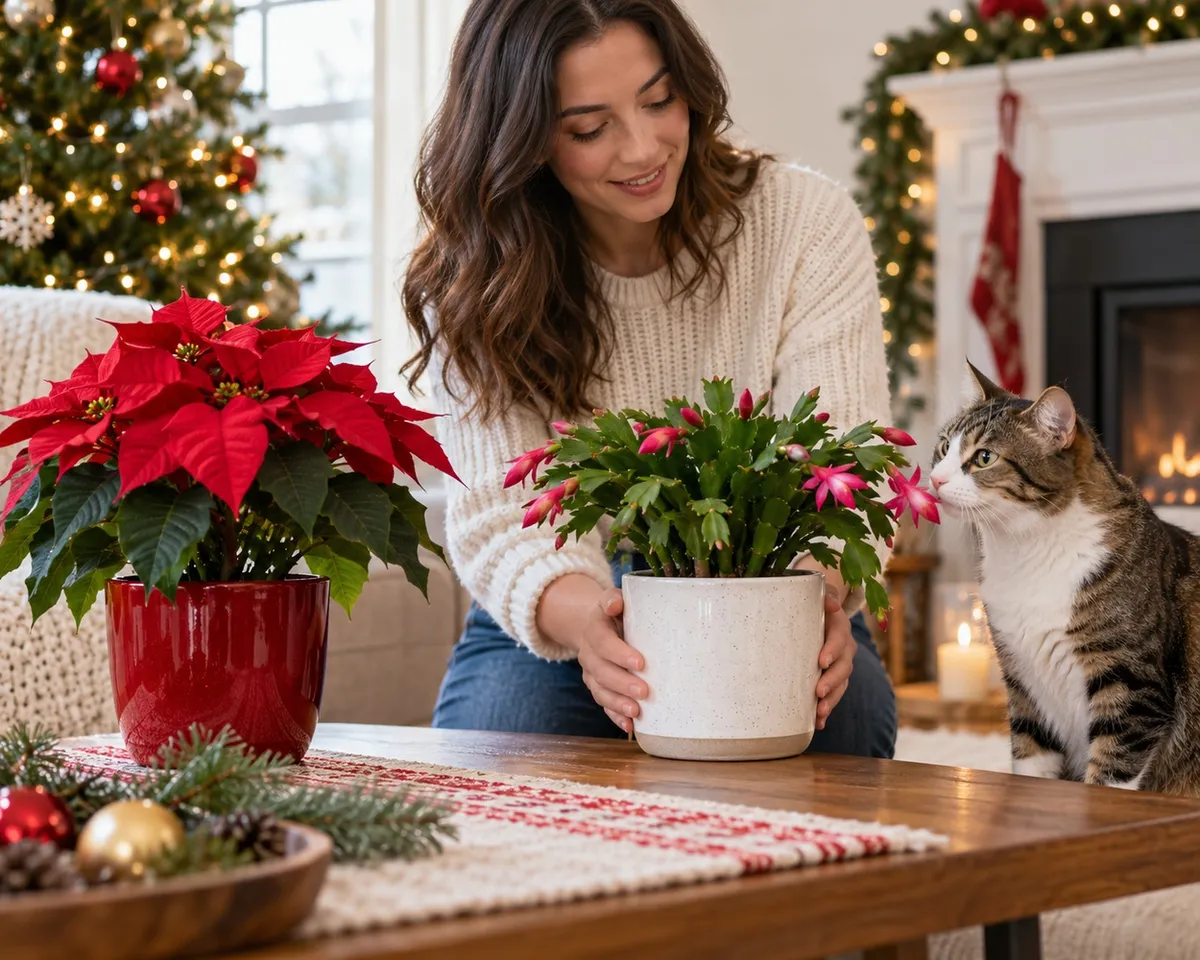
| Christmas cactus | Very low | Occasional mild vomiting |
| Holly | Moderate | Vomiting, drooling, stomach upset |
| Mistletoe | Moderate to serious | Vomiting, diarrhea, heart effects |
| True lilies | Life-threatening | Acute kidney failure, even from pollen |
| Amaryllis | Moderate | Vomiting, drooling, lethargy |
Lilies deserve special attention. Even a small amount of pollen or vase water can cause kidney failure in cats, which makes bouquets far riskier than a poinsettia. Our guide to cat-friendly houseplants lists safer greenery you can keep around curious cats.
Holiday dangers go beyond plants. Tinsel, ribbon and string can cause serious intestinal blockages if swallowed. Food scraps are another seasonal risk, which is why our list of dangerous foods for cats is worth reviewing before the holiday table is set.
How to Keep Your Cat Safe Around Poinsettias
The simplest approach is prevention, since cats are curious and love chewing leafy plants. A few small changes make poinsettias much safer to keep in the home. Many owners choose to skip real plants entirely during the holidays.
Practical ways to reduce risk:
- Place plants in rooms your cat cannot enter, or on high shelves cats cannot reach.
- Remember that agile cats can climb and jump to surprising heights.
- Pick up fallen leaves right away, since they attract chewing.
- Choose a pet-safe artificial holiday plant that has no sap or edible leaves.
- Offer a cat grass planter so your cat has a safe plant to chew instead.
- Provide plenty of play and attention, because bored cats chew more.
A grass planter works because many cats chew plants out of instinct or boredom, and redirecting that urge reduces the temptation to nibble decorations. Keeping your cat busy also helps, and you can find ideas in our article on keeping an indoor cat entertained.
If you still want a real poinsettia, treat it like any other hazard. Keep it out of reach, check the leaves daily and know your emergency vet’s phone number before the holidays begin.
Frequently Asked Questions
Are poinsettias poisonous to cats if only a small piece is eaten?
Yes, but the effect is usually mild, such as brief drooling or one episode of vomiting. Serious poisoning from a small piece is very rare, and most cats recover within a day.
Are poinsettias deadly to cats?
No, poinsettias are not deadly to cats in typical cases. They cause mild irritation, usually drooling or brief vomiting, and serious poisoning is very rare.
How much poinsettia does it take to make a cat sick?
Even one or two bitten leaves can upset a cat’s stomach, especially a small one. Larger amounts increase the chance of repeated vomiting and dehydration.
How long do poinsettia symptoms last in cats?
Mild symptoms usually fade within a few hours to a day. If vomiting or diarrhea continues beyond 24 hours, a veterinarian should examine your cat.
What holiday plants are safe for cats?
Christmas cactus is considered a low-risk choice, and sealed artificial plants avoid the problem altogether. Always check any new plant against a trusted poison list before bringing it home.
So, are poinsettias poisonous to cats? Yes, but only mildly, and most cats recover with simple home care and fresh water. The better approach is prevention: keep plants out of reach, choose pet-safe decor, and call your vet if vomiting lasts beyond a day.