
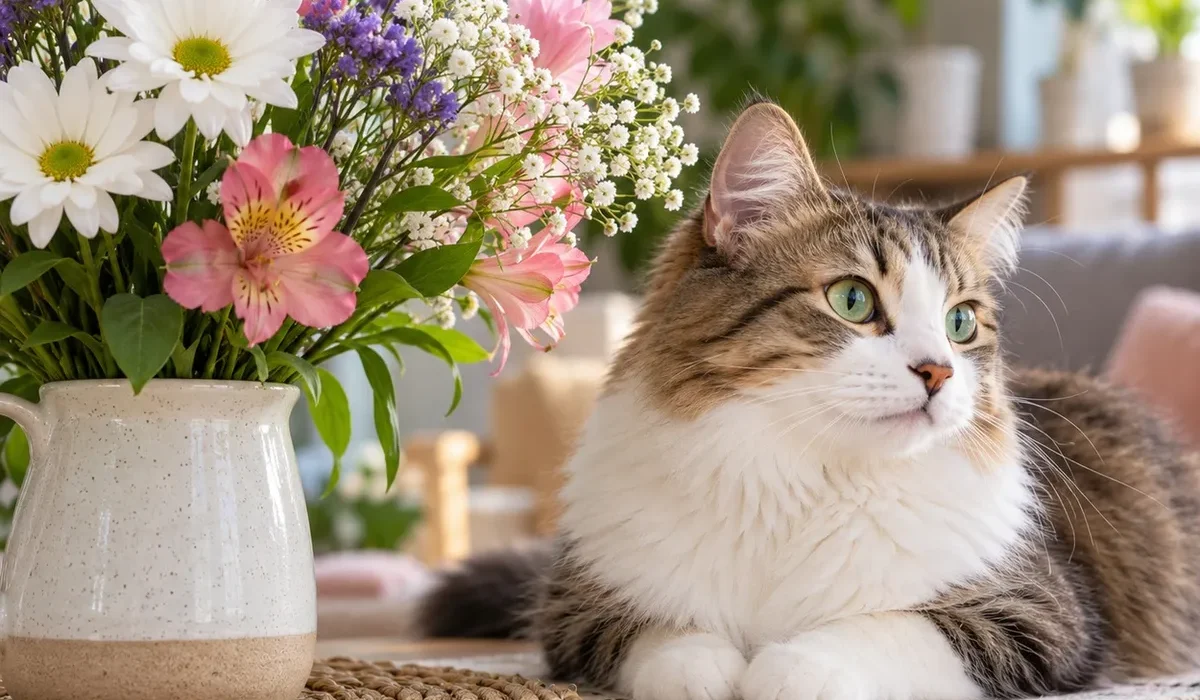
Flowers Safe for Cats: 15 Beautiful Blooms You Can Keep
Flowers safe for cats include roses, sunflowers, snapdragons, orchids, freesia, gerbera daisies, and African violets, all listed as non-toxic by the ASPCA. Any cat owner who loves fresh bouquets or a flowering garden needs this list, because one wrong stem can mean an emergency vet visit.
This post may contain affiliate links. As an Amazon Associate I earn from qualifying purchases.
Table of Contents
Flowers safe for cats at a glance:
- Short Answer: Roses, sunflowers, snapdragons, orchids, freesia, zinnias, and gerbera daisies are non-toxic to cats.
- Most Dangerous Flowers: Lilies (Lilium and Hemerocallis) can cause fatal kidney failure within 24 to 72 hours.
- Other Toxic Blooms: Tulips, daffodils, azaleas, oleander, and chrysanthemums.
- Safest Habit: Check every bouquet label and florist mix before bringing it home.
- If Your Cat Eats a Bad Bloom: Call a veterinarian or poison hotline immediately; do not wait for symptoms.
Why Choosing Flowers Safe for Cats Matters
Cats chew plants because they are curious, bored, or craving fiber, and flowers at nose height are an easy target. Even a non-toxic bloom can cause mild stomach upset, but a toxic one can cause organ failure.
Most cats nibble petals, leaves, or stems, and many also drink vase water or lick fallen pollen off their fur. That last habit is how cats get poisoned by lilies without even biting the plant.
When I brought home my first bouquet after adopting a cat, she had a petal in her mouth within ten minutes. That moment taught me to check every stem before buying.
Sticking to flowers safe for cats removes the guesswork. A short list of verified blooms lets you enjoy fresh flowers without worrying every time you leave the room.
15 Flowers Safe for Cats You Can Keep at Home
The following blooms are listed as non-toxic to cats by the ASPCA. Non-toxic does not mean edible, so your cat may still vomit if it eats a large amount.
Popular Bouquet Flowers Safe for Cats
- Roses: The petals and blooms are non-toxic, but thorns can scratch a cat’s mouth or paws, so remove them from cut stems.
- Sunflowers: Bright, sturdy, and non-toxic, they make an easy bouquet centerpiece.
- Snapdragons: Tall, colorful spikes that are safe if your cat nibbles them.
- Gerbera daisies: Large, cheerful blooms in nearly every color, and non-toxic.
- Freesia: Fragrant, small flowers that are a safe alternative to lilies in mixed bouquets.
- Orchids (Phalaenopsis): Long-lasting indoor blooms that are non-toxic to cats.
- Lisianthus: A soft, rose-like flower that is a safe filler in arrangements.
- Alstroemeria (Peruvian lily): Despite the name, it is not a true lily and is considered safe, though it can cause mild drooling in some pets.
Garden and Potted Flowers Safe for Cats
- Zinnias: Easy-to-grow annuals that thrive in sunny garden beds and are non-toxic.
- Marigolds (Tagetes): Cheerful and safe in small amounts, though the strong scent may deter some cats.
- African violets: Compact indoor flowering plants that are safe on a windowsill.
- Petunias: Trailing bloomers for baskets and borders, and non-toxic.
- Pansies and violas: Edible and non-toxic, so they are a good choice for cat-friendly patios.
- Camellias: Woody shrubs with showy winter blooms that are safe for cats.
- Bachelor’s buttons (cornflowers): Delicate blue wildflowers that are non-toxic.
Species names matter, so always check the Latin name on the tag. Common names often overlap between safe and toxic plants.
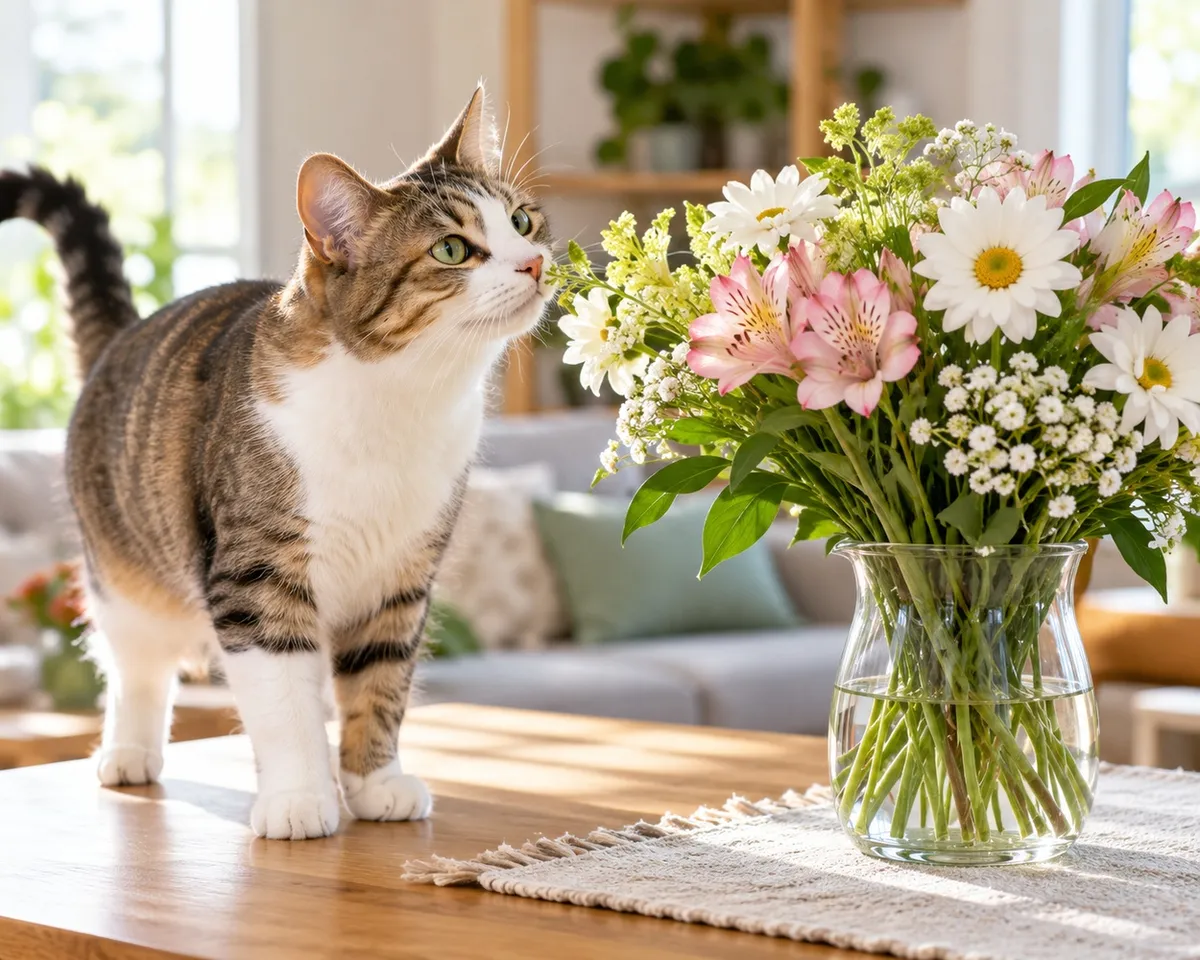
Toxic Flowers to Keep Away From Your Cat
Knowing which blooms are dangerous matters as much as knowing flowers safe for cats. Florist bouquets often mix both types in one arrangement.
| Flower | Risk Level | Main Effect on Cats |
|---|---|---|
| True lilies (Easter, tiger, Asiatic, stargazer) | Deadly | Acute kidney failure |
| Daylilies | Deadly | Acute kidney failure |
| Oleander | Deadly | Heart rhythm problems |
| Sago palm (flowering cycad) | Deadly | Liver failure |
| Azalea and rhododendron | High | Vomiting, weakness, heart effects |
| Tulips and hyacinths (bulbs) | Moderate | Drooling, vomiting, diarrhea |
| Daffodils | Moderate to high | Vomiting, tremors, irregular heartbeat |
| Chrysanthemums | Moderate | Vomiting, drooling, poor coordination |
Lilies are the single most dangerous bouquet flower for cats. Even licking pollen from fur or drinking vase water can trigger kidney damage, so a cat-owning home should never keep them.
If you also decorate for the holidays, read our guide on whether poinsettias are poisonous to cats before buying festive plants.
Signs Your Cat Ate a Toxic Flower
Symptoms depend on the plant, but early signs are often vague. Acting quickly gives your veterinarian the best chance to prevent organ damage.
Common warning signs:
- Drooling or pawing at the mouth
- Vomiting or repeated gagging
- Diarrhea or vomiting and diarrhea together
- Lethargy, hiding, or loss of appetite
- Increased thirst and urination (a red flag for kidney injury)
- Tremors, stumbling, or an irregular heartbeat
Emergency signs: Seizures, collapse, pale gums, or no urination for 12 hours need immediate veterinary care. With lily exposure, treatment within the first 18 hours greatly improves survival, so never wait for symptoms to appear.
Contact your veterinarian or the ASPCA Animal Poison Control Center right away if you suspect your cat ate a toxic flower. Do not induce vomiting at home unless a professional tells you to, and never give human medication.
How to Build an Arrangement With Flowers Safe for Cats
A few simple habits let you enjoy fresh blooms without turning your living room into a plant-free zone.
- Ask the florist for a cat-safe bouquet. Request roses, snapdragons, sunflowers, and freesia, and say clearly that no lilies are allowed.
- Check every stem. Florist mixes often hide a single lily or chrysanthemum as filler.
- Use a heavy, narrow-necked vase. It is harder for a cat to tip over or reach into for water.
- Place arrangements high. Cats can jump 5 to 6 feet, so a closed room or a hanging display is safer than a tall shelf.
- Clean fallen petals daily. Wilted flowers attract chewing and may carry mold.
- Skip floral preservative packets. The chemicals in them can upset a cat’s stomach if it drinks vase water.
A heavy weighted flower vase keeps tall stems steady even if your cat bumps the table. Pair it with a cat-safe plant deterrent spray to discourage chewing without harming your cat.
Growing Flowers Safe for Cats in the Garden
Garden blooms add another layer of risk because cats roam, dig, and chew without supervision. A cat-friendly garden starts with plant choice and ends with careful maintenance.
Safe planting basics:
- Plant zinnias, marigolds, snapdragons, and sunflowers in beds your cat can reach.
- Keep bulbs such as tulips and daffodils out of the ground entirely, since the bulb is the most toxic part.
- Avoid cocoa bean mulch, which contains theobromine, the same compound that makes chocolate dangerous for cats.
- Skip slug pellets, rodent bait, and snail killers, all of which are toxic.
- Choose organic fertilizer and keep bags sealed, because blood meal and bone meal tempt cats to eat them.
Planting cat grass or catnip nearby gives your cat a legal alternative to chew. Our guide on cat-friendly houseplants covers safe indoor greenery that pairs well with a flower display.
Never assume a plant is safe because it is sold at a garden center. Retail tags rarely mention pet toxicity, and the ASPCA’s searchable plant list is the most reliable source for verifying a species.
Gifting Flowers Safe for Cats on Special Occasions
Holidays and celebrations are when most lily poisonings happen, because bouquets arrive as gifts. Tell friends and family ahead of time that your home is a cat household.
Safer gift ideas:
- Valentine’s Day: Roses are safe, but keep the ribbon and wrapping away from your cat.
- Mother’s Day: Choose orchids, gerbera daisies, or freesia instead of the usual lily mix.
- Easter: Skip Easter lilies completely, and pick pansies or violas instead.
- Christmas: Choose a cat-safe wreath and read our tips for a cat proof Christmas tree.
Rose thorns, wire stems, and cellophane wrapping cause injuries as often as the blooms themselves. Strip thorns, dispose of packaging right away, and keep ribbon out of reach, since string can cause intestinal blockage.
Sending a short note with your gift request works well. Ask loved ones to choose flowers safe for cats, and offer a list of three or four favorites so nobody has to guess.
Frequently Asked Questions
What are the best flowers safe for cats?
Roses, sunflowers, snapdragons, orchids, freesia, and gerbera daisies are among the best flowers safe for cats, and all are listed as non-toxic by the ASPCA.
Are roses safe for cats to be around?
Yes, rose petals and blooms are non-toxic to cats, but thorns can injure the mouth and paws, so trim them from cut stems.
How dangerous are lilies to cats?
Lilies are extremely dangerous because even small exposures, such as licking pollen, can cause kidney failure within 24 to 72 hours without treatment.
Can cats eat sunflowers?
Sunflower petals, leaves, and seeds are non-toxic to cats, though large amounts can cause mild stomach upset, so offer only a nibble at most.
What should I do if my cat eats a flower?
Remove any plant material from the mouth, identify the flower, and call your veterinarian or the ASPCA poison hotline immediately, even if your cat looks fine.
Choosing flowers safe for cats lets you keep a colorful home without risking your cat’s health. Stick to verified blooms like roses, sunflowers, and snapdragons, ban lilies completely, and check every bouquet label. When in doubt, ask your veterinarian before bringing any new plant through the door.