

Cat Vomiting After Eating: 7 Causes and Simple Fixes
Cat vomiting after eating is most often caused by eating too fast, a sudden diet change, hairballs, or a food sensitivity, though it can also signal a serious illness. Occasional vomiting within minutes of a meal is usually minor, but repeated episodes deserve attention from a veterinarian.

This post may contain affiliate links. As an Amazon Associate I earn from qualifying purchases.
Table of Contents
Cat vomiting after eating at a glance:
- Short Answer: Most cases come from eating too quickly, a recent food change, or hairballs, and a single episode rarely needs a vet visit.
- Most Common Causes: Rapid eating, diet changes, hairballs, food allergies, parasites, kidney disease and hyperthyroidism.
- Urgency: Vomiting more than twice in 24 hours, blood, lethargy or refusing food needs a vet the same day.
- What to Do at Home: Slow down meals, offer smaller portions, and pick up the food bowl for a few hours after a vomiting episode.
- When to See a Vet: Any vomiting lasting over 24 hours, or any vomiting in kittens, seniors or cats with chronic illness.
Why Cat Vomiting After Eating Happens
Vomiting is an active process where the cat contracts its abdominal muscles to push stomach contents out. It is different from regurgitation, which is passive and happens without effort.
When my cat first started bringing up breakfast ten minutes after finishing it, I assumed something was seriously wrong. It turned out he was gulping his food like it might disappear.
The timing of the vomiting offers clues about the cause. Food that comes back within minutes often points to eating too fast or an esophageal problem. Vomiting several hours after a meal, with partly digested food, points more toward the stomach or intestines.
Vomiting versus regurgitation:
- Vomiting: heaving, drooling and retching before the food comes up, often with a yellow or foamy liquid.
- Regurgitation: food slides out quickly with no warning, usually in a tube shape and undigested.
Knowing which one your cat shows helps your veterinarian narrow down the cause much faster. Try to note the timing, the look of the vomit and any other symptoms.
7 Common Causes of Cat Vomiting After Eating
Each cause below has a typical pattern. Matching your cat’s symptoms to these patterns helps you decide how urgent the situation is.
1. Eating Too Fast
Cats that gulp their food swallow a lot of air, which stretches the stomach and triggers vomiting within 5 to 15 minutes. This is especially common in multi-cat homes where cats compete for food.
The vomit usually contains whole, undigested kibble in a tubular shape. Cats that were once strays or underfed as kittens often keep this habit for life, and it is the top reason behind cat vomiting after eating in healthy adults.
2. Sudden Diet Change
Switching foods abruptly upsets the gut bacteria that digest food. Vomiting or loose stool commonly appears within one to two days of a sudden switch.
A safe transition takes 7 to 10 days, mixing a little more of the new food into the old each day. Cats with a sensitive stomach may need even longer.
3. Hairballs
Cats swallow loose fur while grooming, and some of it collects in the stomach. A hairball can trigger vomiting after eating because a full stomach adds pressure and stimulates the gag reflex.
Longhaired cats are most at risk, and regular brushing cuts the amount of swallowed hair. Hairballs more than once a week are not normal and should be checked.
4. Food Allergies or Intolerance
Cats can react to proteins such as beef, dairy or fish, causing cat vomiting after eating soon after meals. Skin itching and chronic diarrhea often appear alongside the vomiting. If you suspect this, read about cat food for cats with allergies and ask your vet about an elimination diet that lasts 8 to 12 weeks.
5. Intestinal Parasites
Roundworms and other parasites irritate the gut lining and cause intermittent vomiting, often with a pot-bellied look in kittens. Worms may appear in the vomit or stool as thin white strands. A fecal test at the vet confirms the diagnosis, and treatment is simple and effective.
6. Kidney Disease and Hyperthyroidism
Older cats that vomit regularly after meals may have chronic kidney disease or an overactive thyroid. Both conditions are common in cats over 10 years old.
Other signs include increased thirst, weight loss despite a good appetite, and a dull coat. Bloodwork is the only reliable way to diagnose these illnesses, so see our guide on senior cat care for what to monitor.
7. Foreign Objects and Blockages
Cats that chew string, hair ties or toy parts can develop a blockage. Repeated vomiting right after eating or drinking, with no appetite, is a classic sign of this emergency. Blockages are life-threatening and need veterinary care the same day.
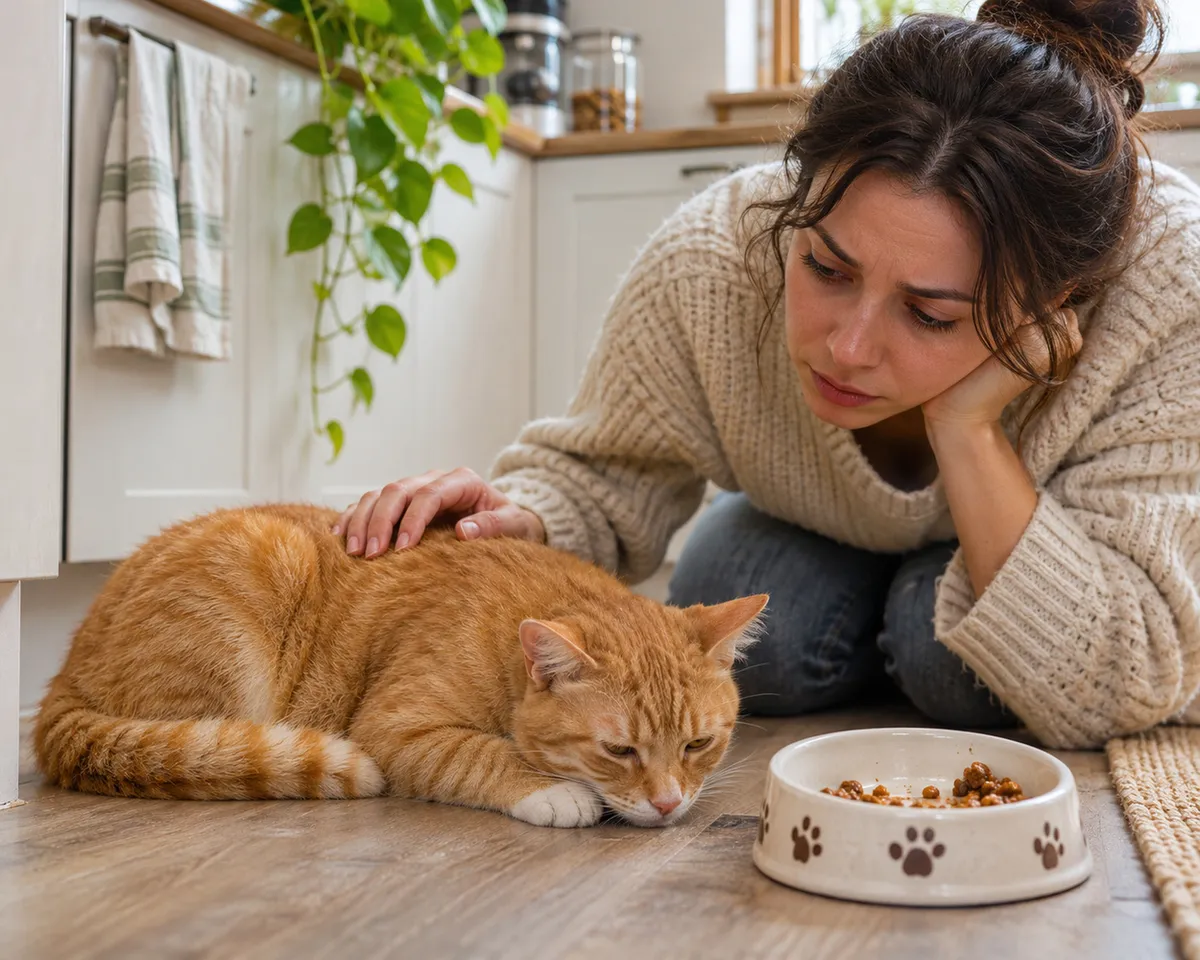
Signs to Watch For With Cat Vomiting After Eating
The vomit itself gives useful information, so look at it before cleaning up. Color, content and frequency all help your vet.
| What You See | Possible Meaning | Urgency |
|---|---|---|
| Undigested food within 15 minutes | Eating too fast | Low |
| Yellow or foamy liquid | Empty stomach, bile | Low to moderate |
| Hair clumps | Hairball | Low |
| Red or coffee-ground color | Bleeding in the digestive tract | Emergency |
| Vomiting with lethargy | Systemic illness or blockage | High |
| Repeated vomiting over 24 hours | Infection, organ disease, blockage | High |
White or yellow foam is common when the stomach is empty, and our post on why a cat throws up white foam explains this in more detail.
Emergency signs that need a vet right away:
- Blood in the vomit or stool
- Repeated vomiting more than twice in 24 hours
- A swollen or painful belly
- Extreme tiredness or hiding
- Not eating for more than 24 hours
- Signs of dehydration such as dry gums and sunken eyes
How to Stop Cat Vomiting After Eating at Home
For mild, occasional vomiting in an otherwise healthy adult cat, a few simple changes often solve the problem. These are the fixes I have seen work most often.
Slow down the eating:
- Switch to a slow feeder bowl with ridges or obstacles that force your cat to eat in small bites.
- Spread the food on a flat plate or lick mat instead of piling it in a bowl.
- Feed cats in separate rooms so that none feels pressure to finish quickly.
Adjust the meals:
- Divide the daily food into 3 to 4 small meals instead of one or two large ones.
- Follow the portion guidance in our post on how much to feed a cat.
- Keep the food at room temperature, as cold food straight from the fridge can upset some cats.
Reduce hairballs:
- Brush your cat several times a week, daily for longhaired breeds.
- Ask your vet about a hairball control cat food with added fiber.
After a vomiting episode, remove the food for 2 to 3 hours and then offer a small portion. Keep fresh water available at all times, because vomiting causes fluid loss. If your cat also has loose stool, read about cat vomiting and diarrhea for the next steps.
When Cat Vomiting After Eating Needs a Veterinarian
See a vet if cat vomiting after eating happens more than once a week, even if your cat seems otherwise fine. Chronic vomiting is never considered normal in cats, and it often signals an underlying disease.
Kittens, senior cats and cats with diabetes or kidney disease can become dehydrated within a day, so call earlier for these groups. A vet may run bloodwork, a fecal test, X-rays or an ultrasound to find the cause.
Never give your cat human anti-nausea or pain medicine, since many are toxic to cats. Only a veterinarian should prescribe medication, and the Cornell Feline Health Center offers reliable guidance on feline digestive disease.
Bring a fresh photo of the vomit and a note of the timing to your appointment. That small detail often saves time and money during diagnosis. Reduced appetite is another warning sign, so see why a cat is not eating for more help.
Preventing Cat Vomiting After Eating Long Term
Prevention comes down to consistent feeding habits and routine health care. A calm, predictable mealtime helps most cats keep their food down.
- Choose a high-quality diet with named animal proteins and keep the same brand consistent.
- Transition to any new food over 7 to 10 days.
- Keep string, rubber bands and small toys out of reach.
- Schedule a vet checkup at least once a year, and twice a year for cats over 10.
- Keep up with parasite prevention and vaccines.
Scheduled regular veterinary check-ups catch kidney and thyroid disease early, when they are easiest to manage. Consistent routines also reduce stress, which can contribute to cat vomiting after eating in sensitive cats.
Frequently Asked Questions
Why does my cat throw up right after eating?
Most cats throw up right after eating because they swallow food too fast and take in air. Using a slow feeder bowl and offering smaller meals fixes this in most cases within a week.
Is it normal for a cat to vomit once a week?
No, vomiting once a week is common but not normal, and it deserves a vet visit. Chronic vomiting can signal kidney disease, inflammatory bowel disease or hyperthyroidism.
How long should I wait before taking my vomiting cat to the vet?
Call a vet the same day if your cat vomits more than twice in 24 hours or refuses food for over 24 hours. Kittens and senior cats should be seen sooner, within 12 hours.
Can I give my cat anything to stop vomiting?
No, do not give human medicines because many, such as acetaminophen, are toxic to cats. Remove the food for 2 to 3 hours, offer water, and call your vet for safe options.
What does it mean if my cat has cat vomiting after eating dry food only?
Cat vomiting after eating dry food only often means the kibble is eaten too fast or the cat is sensitive to an ingredient. Switching to smaller kibble, wet food or a slow feeder usually helps, and a vet can confirm a food sensitivity.
Cat vomiting after eating is usually a manageable problem caused by fast eating, diet changes or hairballs, but repeated episodes should never be ignored. Start with a slow feeder and smaller meals this week, and book a vet visit if the vomiting continues past 24 hours or happens more than once a week.