
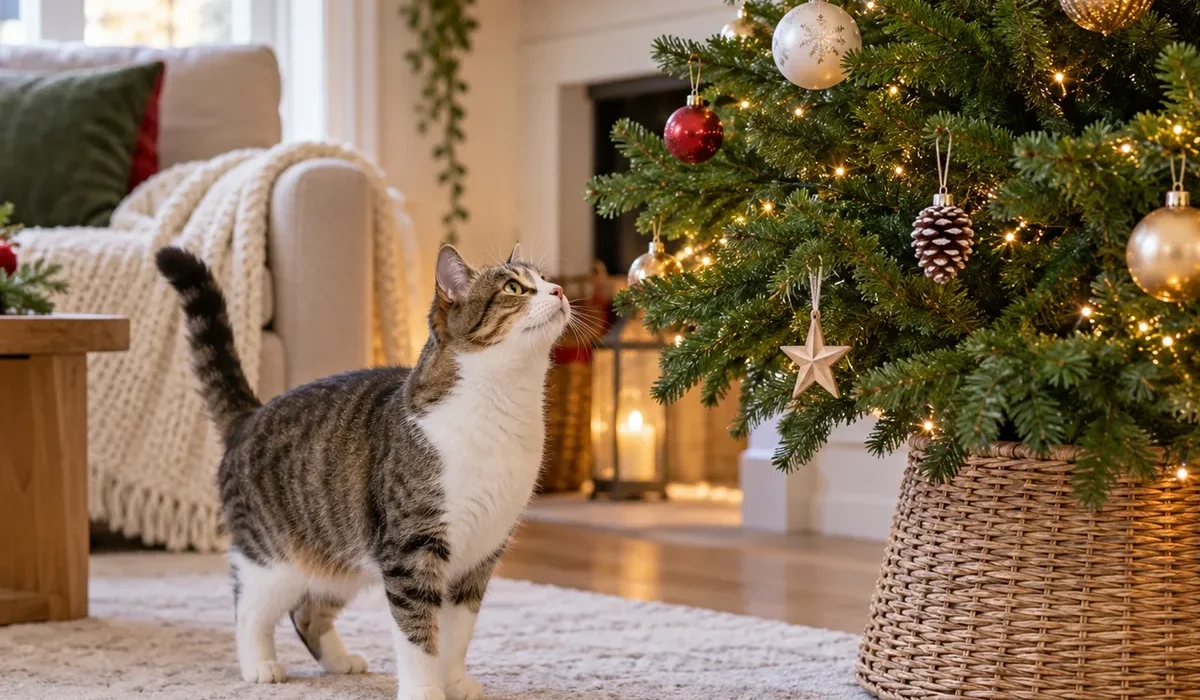
Cat Proof Christmas Tree: 9 Clever Tips That Actually Work
A cat proof christmas tree is a tree set up so curious cats cannot climb it, knock it over, chew its needles or swallow ornaments. Most tree disasters happen in the first week, when a new climbing opportunity appears in the living room. These steps matter for any home with a cat, kitten or climber.
This post may contain affiliate links. As an Amazon Associate I earn from qualifying purchases.
Table of Contents
Cat proof christmas tree at a glance:
- Short Answer: Anchor the tree, remove tempting ornaments below 3 feet, skip tinsel and real-tree water access, and give your cat a better climbing option.
- Biggest Risks: Toppling trees, swallowed tinsel or ribbon, chewed light cords, and sap or preservative water.
- Urgency: Vomiting, drooling or lethargy after tree contact needs a call to your vet the same day.
- Best Quick Fix: A sturdy base plus ceiling or wall anchoring stops most tip-overs.
- Timeline: Most cats lose interest in the tree within 1 to 3 weeks if it is secured.
Why Cats Go After Christmas Trees
Cats go after Christmas trees because the tree is a tall, new, shiny, swaying object that triggers climbing, hunting and chewing instincts. Cats are natural climbers, and a vertical trunk with branches looks like the perfect perch.
Several features make a tree almost irresistible:
- Dangling ornaments move like prey and invite batting.
- Reflective baubles and lights catch the eye, especially at dusk.
- Branch tips swing under paw weight, which rewards pouncing.
- Real trees add a strong pine scent and a water bowl at floor level.
Kittens under 12 months are the most likely to climb. Adult cats tend to bat, chew and knock things off. Knowing which behavior your cat shows tells you which cat proof christmas tree measures to prioritize. If your cat already climbs everything, stopping cats from scratching furniture shows the same redirection principles at work.
9 Ways to Build a Cat Proof Christmas Tree
1. Choose the Right Tree and Location
A smaller, sturdy tree in the right spot is easier to cat proof than a tall one. Choose a tree under 6 feet if you have a determined climber.
- Place the tree in a corner so two sides are blocked.
- Keep it at least 3 feet from sofas, shelves and cat trees, because cats can jump 5 feet or more horizontally.
- Pick a room with a door you can close when you are away.
2. Anchor the Tree Firmly
Anchoring is the single most important step in creating a cat proof christmas tree. A climbing cat can topple an unsecured tree in seconds.
- Use a heavy, wide base rather than the thin plastic stand that comes with many artificial trees.
- Tie fishing line or strong cord around the trunk at the halfway point.
- Attach the other end to a ceiling hook, wall stud or heavy furniture.
- Test by pushing the tree firmly from two directions.
3. Skip Tinsel, Ribbon and Angel Hair
Tinsel is one of the most dangerous holiday items for cats. Linear objects can bunch the intestines and cause a blockage that needs emergency surgery. Choose wide fabric garlands that are too thick to swallow, or skip garland altogether on your cat proof christmas tree.
4. Hang Ornaments Smartly
Cats bat at whatever hangs within reach, so ornament placement matters as much as ornament choice.
- Leave the bottom 2 to 3 feet of the tree bare or hang only soft, unbreakable felt ornaments there.
- Choose shatterproof plastic or wood over glass.
- Use wire hooks bent closed, or twist ties, so ornaments cannot be pulled off easily.
- Avoid anything edible, such as popcorn strings, candy canes and salt dough.
5. Secure Lights and Cords
Chewed light cords can cause mouth burns and electric shock. Keep lights off the lower branches and tape cords flat against the wall or floor. Cover cords with a cord protector tube and unplug the tree whenever you leave the house.
6. Cover the Tree Water
Real tree water often contains sap, bacteria and sometimes preservatives that can upset a cat’s stomach. Cover the stand completely with a tree skirt tucked tightly or a lidded tree stand. Never add aspirin, sugar or commercial preservatives, and change the water daily.
7. Use Scents Cats Dislike
Cats usually avoid citrus. Placing orange or lemon peels around the tree base can discourage close approach. Never use essential oils near the tree, because many are toxic to cats. A pet-safe citrus deterrent spray on the lower trunk or skirt area works too, as covered in our guide to cat repellent sprays for indoor furniture.
8. Add Texture Barriers
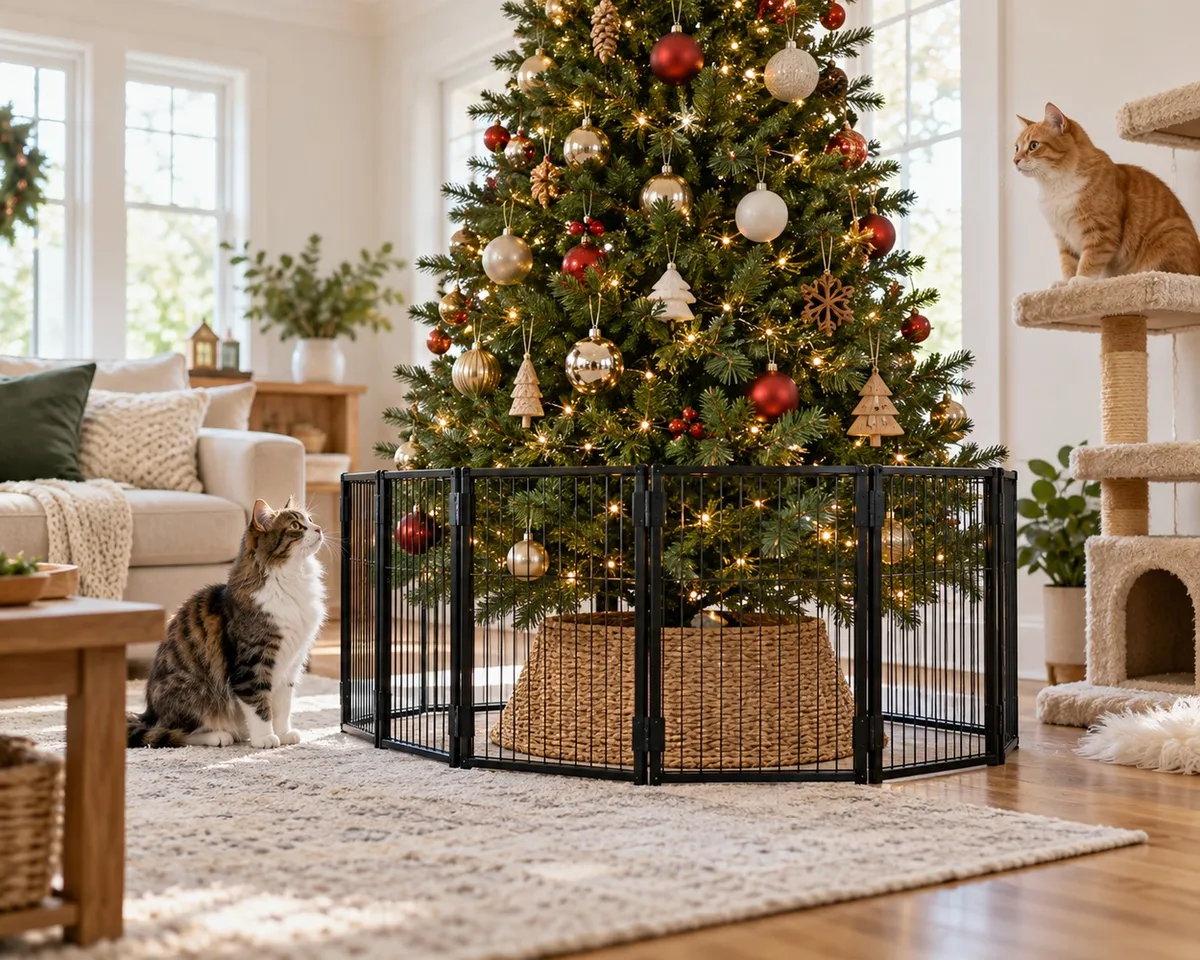
Cats dislike walking on unfamiliar surfaces. Wrap the base with aluminum foil or place double-sided tape on the skirt edge. A freestanding playpen fence around the base also helps a stubborn climber’s cat proof christmas tree setup hold up through December.
9. Give Your Cat a Better Option
A cat with a more appealing climbing spot will often leave the tree alone. Place a sturdy cat tree near, but not touching, the Christmas tree and add treats or catnip to make it attractive. Our guide to the best cat tree for small apartments covers space-saving options.
Real vs Artificial: Which Cat Proof Christmas Tree Is Safer?
Artificial trees are usually safer for cats because they shed no needles and have no sap or water. Real trees can still work with precautions.
| Feature | Real Tree | Artificial Tree |
|---|---|---|
| Needle risk | Needles can irritate the mouth and stomach | Low, but plastic can be chewed |
| Water hazard | Sap, bacteria and preservatives | None |
| Stability | Heavier base | Often lighter, needs extra anchoring |
| Cleanup | Daily needle sweeping | Minimal |
If you choose a real tree, vacuum needles daily and cover the water. If you choose an artificial one, check that branches are firmly attached so a cat cannot pull them loose.
Holiday Plants and Foods to Keep Away From Your Cat
The tree is only one holiday hazard. Several seasonal plants and foods are toxic to cats.
- Mistletoe and holly: both can cause vomiting, drooling and heart problems.
- Lilies: even small amounts can cause kidney failure in cats.
- Poinsettias: mildly irritating, as explained in our article on whether poinsettias are poisonous to cats.
- Chocolate: toxic, see cats and chocolate poisoning signs.
- Ham and turkey skin: fatty scraps can trigger pancreatitis.
The ASPCA Animal Poison Control Center keeps a searchable list of toxic plants if you are unsure about a decoration.
Signs Your Cat Has Been Hurt by the Tree
Even a well-planned cat proof christmas tree can fail, so watch your cat closely for the first few days after it goes up. Symptoms that need a vet include:
- Repeated vomiting or gagging
- Drooling or pawing at the mouth
- Loss of appetite lasting more than 24 hours
- Lethargy or hiding
- Straining in the litter box or no stool
- String or tinsel hanging from the mouth or rectum
Never pull a string or tinsel strand that is visible, because it may be anchored inside the intestines. Call your veterinarian or an emergency clinic immediately if you suspect your cat swallowed tinsel, ribbon or an ornament. For persistent stomach upset, see our article on cat vomiting and diarrhea.
How to Train Your Cat to Leave the Tree Alone
Training works best when combined with the physical barriers above. A calm, consistent approach makes any cat proof christmas tree plan succeed within two weeks.
- Set up the bare tree a few days before decorating so the novelty fades.
- Reward your cat with a treat when it walks past without touching it.
- Redirect climbing attempts with a gentle clap and a toy, never with shouting.
- Schedule two 10-minute play sessions daily so your cat burns energy elsewhere.
Daily play is the most underrated tip, since a bored cat is the one that shreds the tree. Try the ideas in keeping an indoor cat entertained or our guide to interactive toys for indoor cats.
Frequently Asked Questions
What is the best way to make a cat proof christmas tree?
The best way to make a cat proof christmas tree is to anchor it to the ceiling or wall and keep the bottom 2 to 3 feet free of ornaments. A heavy base plus fishing line anchoring stops most tip-overs.
Do cats eventually stop climbing the Christmas tree?
Yes, most cats lose interest within 1 to 3 weeks once the tree is no longer new. Kittens under 12 months may take longer and need stronger barriers.
Is a real or fake Christmas tree safer for cats?
An artificial tree is generally safer because it has no sap, no needles to swallow and no standing water. Real trees need a covered stand and daily needle cleanup.
What scents keep cats away from Christmas trees?
Citrus scents such as orange or lemon peel usually keep cats away from the tree base. Avoid essential oils, which are toxic to cats.
Should I put my cat in another room when I am not home?
Yes, closing the tree room when you leave is the safest option for unsupervised hours. Even a well-trained cat can tip a tree or chew a cord in a few minutes.
A cat proof christmas tree depends on three habits: a firmly anchored base, a bare bottom third and daily play to keep your cat busy. Set up the tree a few days early, watch your cat’s reactions and adjust. Call your vet right away if you see vomiting, drooling or signs of a swallowed ornament.