Cat Dandruff: 7 Proven Causes and Gentle Fixes That Work
Cat dandruff is a build-up of dry, white skin flakes in the coat, usually caused by dry skin, poor grooming, diet gaps, parasites, or an underlying health problem. It matters for any owner who sees flakes on a dark sofa or along the cat’s back, because the cause decides whether a simple home fix is enough or a vet visit is needed.
This post may contain affiliate links. As an Amazon Associate I earn from qualifying purchases.
Table of Contents
Cat dandruff at a glance:
- Short Answer: Flakes are dead skin cells shed faster than normal, most often from dry skin, low humidity, or a cat that cannot groom well.
- Most Common Causes: Dry indoor air, obesity, fatty-acid-poor food, fleas, mites, allergies, and skin infections.
- Urgency: Mild flaking is rarely an emergency, but red skin, hair loss, or intense itching needs a vet within a few days.
- What to Do at Home: Brush gently, add humidity, improve diet quality, and check for fleas.
- When to See a Vet: Flakes lasting more than 2 to 3 weeks, moving specks, scabs, or any change in appetite, thirst, or energy.
What Is Cat Dandruff and What Does It Look Like?
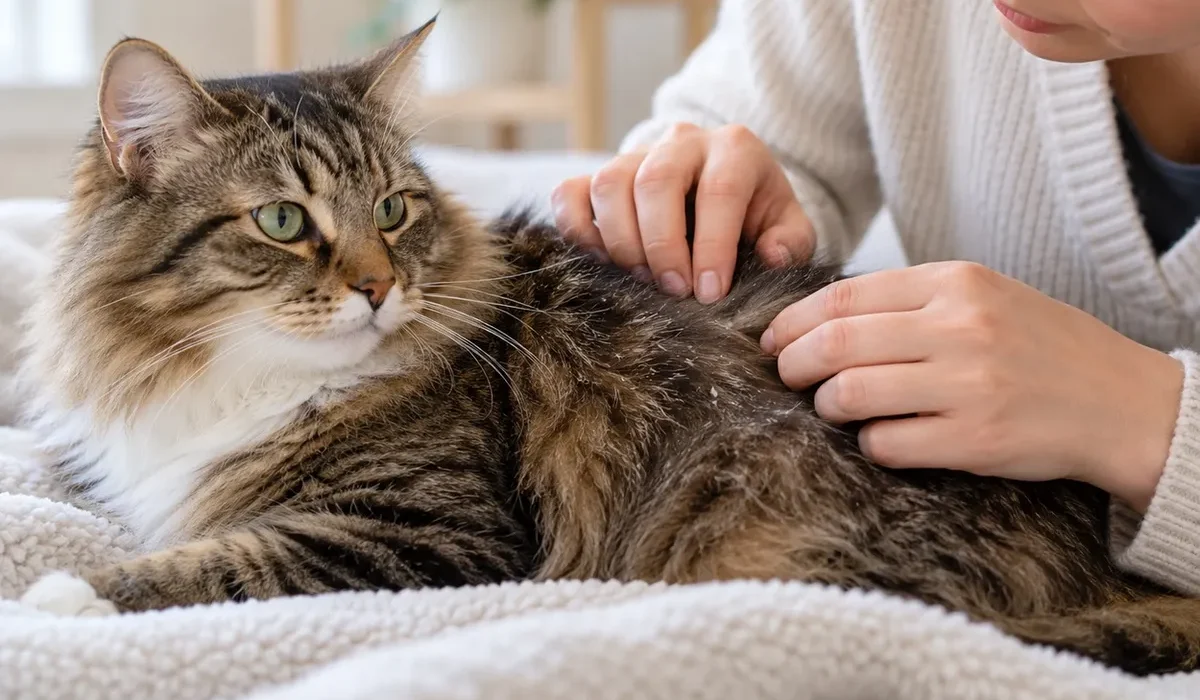
Cat dandruff is made of dead skin cells that clump into visible white or grey flakes on the fur and skin. Healthy skin renews itself in a steady cycle, but when that cycle speeds up or the skin dries out, the flakes show.
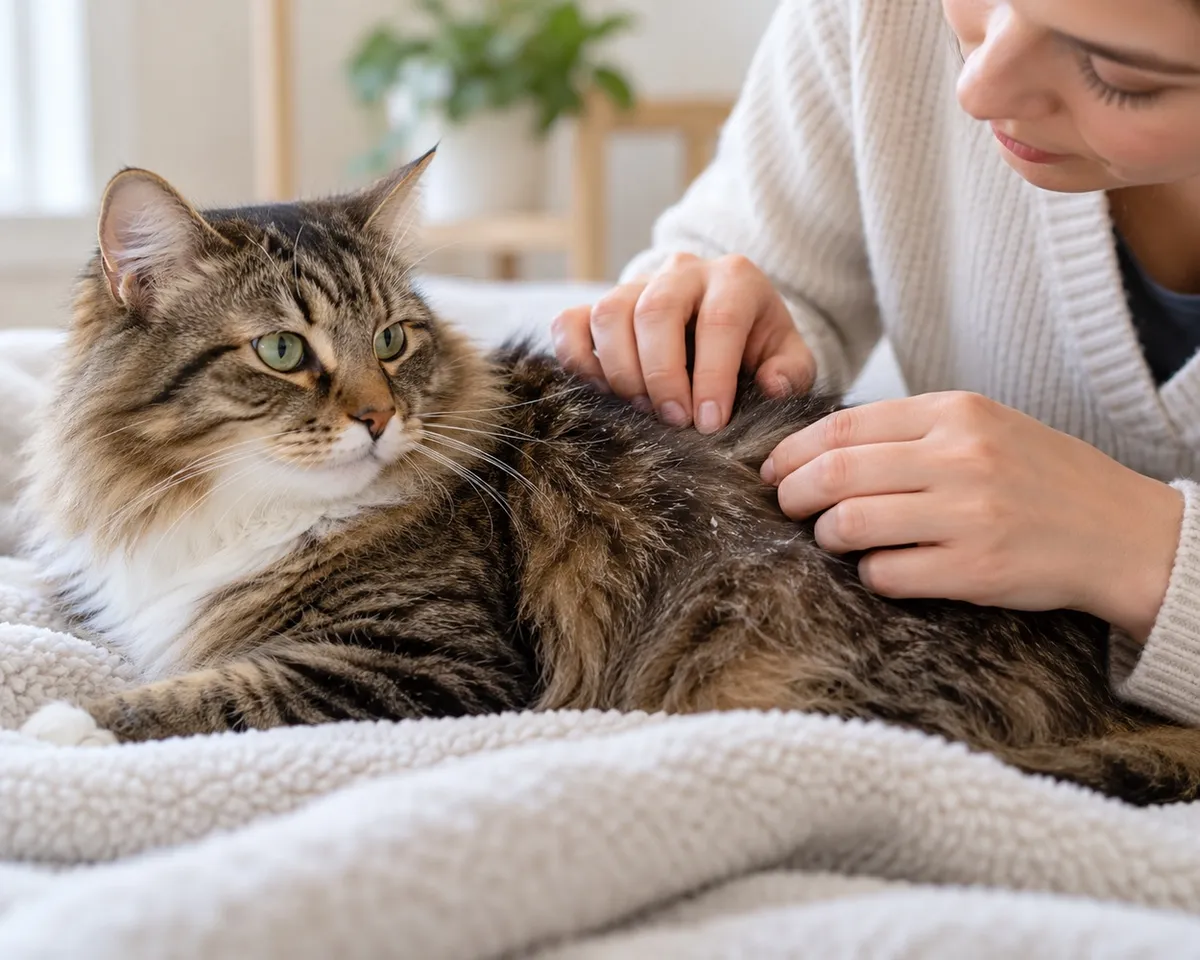
Most owners first spot flaking along the lower back and near the base of the tail. Dark-coated cats show it most clearly, which is why black and tuxedo cats often get noticed first.
What normal skin looks like:
- Pale pink or pigmented skin with no redness
- A smooth, glossy coat with no bald patches
- Little to no visible flaking after brushing
What dandruff looks like:
- Fine white or grey flakes that fall off when the cat shakes or is petted
- A dull, dry-looking coat
- Sometimes mild itching or extra scratching
Cat dandruff alone is a symptom, not a disease. The real task is working out why the skin is shedding so many cells.
7 Proven Causes of Cat Dandruff
1. Dry Skin From Low Humidity
Dry indoor air is one of the most common triggers, especially in winter when heating runs for weeks. Home humidity below about 30 percent can dry a cat’s skin the same way it dries human skin. A cat that flakes only in cold months often has an environmental cause.
2. Poor Diet and Missing Fatty Acids
Skin needs omega-3 and omega-6 fatty acids to hold moisture. Low-quality food or a diet short on healthy fats often shows up first as a dull coat and flaky skin. Cats on very low-fat diets are especially prone. Our guide on feeding your cat for a healthy life covers what a balanced diet should include.
3. Obesity and Overweight
Overweight cats cannot reach their lower back and tail base to groom properly. Dead skin and loose hair then build up in exactly the places flaking appears. A cat that has gained weight and now flakes over the hips is a classic pattern of cat dandruff.
4. Fleas, Mites and Other Parasites
Parasites irritate the skin and trigger flaking. One well-known cause is Cheyletiella, often called walking dandruff, where the flakes appear to move because tiny mites are carrying them. If you see flakes that seem to crawl, see a vet, since this mite also spreads between pets and can cause itchy bumps on people. Learn more in our guide to getting rid of cat fleas.
5. Allergies
Food allergies, flea-bite allergy, and environmental allergies all inflame the skin. Inflamed skin sheds cells faster, so flaking comes with itching, over-grooming, or small scabs. Read more about allergies in cats and how they are treated.
6. Skin Infections
Ringworm, a fungal infection, can cause scaly, round patches with broken hair. Bacterial and yeast infections also cause flaking, often with a greasy feel or odor. These need veterinary diagnosis, because a skin scrape or fungal culture is the only reliable way to tell them apart.
7. Underlying Health Conditions
Diabetes, an overactive or underactive thyroid, and other chronic illnesses can leave the coat dry and flaky. Senior cats and cats with arthritis also groom less because it hurts to twist. If cat dandruff comes with weight change, increased thirst, or low energy, consider conditions like diabetes in cats or hypothyroid disease in cats.
Cat Dandruff Causes Compared
| Cause | Typical Clue | Urgency |
|---|---|---|
| Dry air | Flaking worse in winter | Low |
| Poor diet | Dull coat, flakes all over | Low to moderate |
| Obesity | Flakes over lower back and tail | Moderate |
| Parasites | Itching, moving flakes | Moderate |
| Allergies | Itching, scabs, over-grooming | Moderate |
| Infection | Round patches, odor, hair loss | High |
| Chronic illness | Thirst, weight change, low energy | High |
Signs to Watch For Alongside Cat Dandruff
Cat dandruff on its own is usually mild, but certain companion signs point to a bigger problem. Checking for them helps you decide whether to wait or call the vet.
Mild signs that usually allow home care first:
- Light flaking with a normal appetite and energy
- No redness, scabs, or bald spots
- Flaking that clearly follows dry weather
Signs that call for a vet visit:
- Intense scratching or visible red skin
- Hair loss or round scaly patches
- Small black specks (flea dirt) or flakes that move
- Greasy skin, strong odor, or open sores
- Weight loss, extra thirst, or lethargy
When my own cat’s coat turned dull one winter, the flakes cleared once I ran a humidifier and adjusted her food. A vet check on anything beyond that simple pattern is always safer than guessing.
Gentle Fixes: Treating Cat Dandruff at Home
Home care works best when the cause is dry skin, mild grooming trouble, or a diet gap. These steps are low-risk and can be done together.
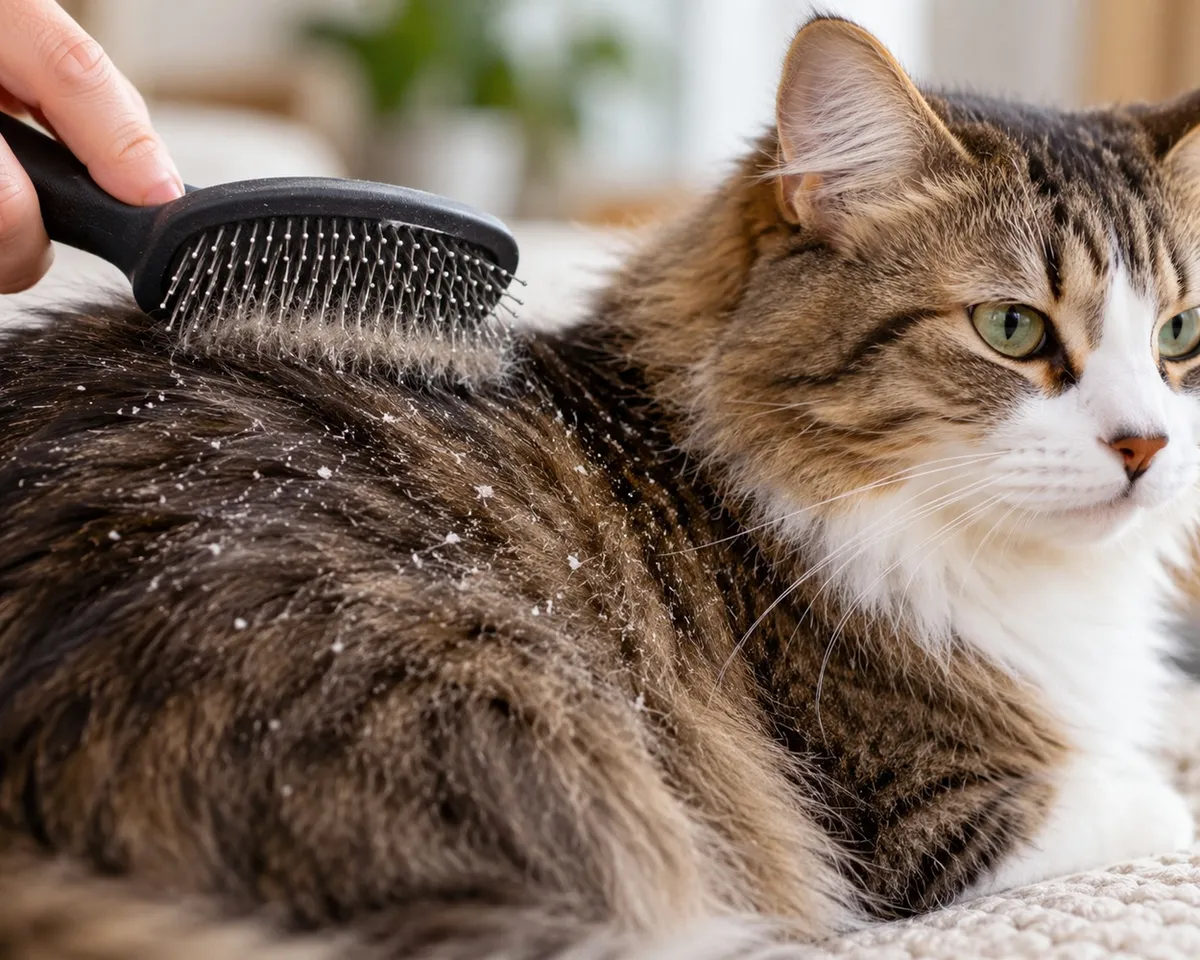
- Brush regularly. Brush 3 to 5 times a week to lift dead skin and spread natural oils. A soft cat grooming brush works well, and our guide to the best cat brush for short hair shedding helps you choose.
- Raise humidity. Aim for 40 to 50 percent indoor humidity with a humidifier near where your cat sleeps.
- Improve the diet. Choose complete food with named animal protein and omega-3 sources. Ask your vet about adding fatty acids rather than guessing at amounts.
- Encourage water intake. Wet food and a flowing water source raise hydration, which supports skin health. See signs of dehydration in cats to know what to watch for.
- Control fleas. Use a vet-approved flea preventive year-round, since one missed month can restart the cycle.
- Help overweight cats. Gradual weight loss under vet guidance improves reach and grooming.
What to avoid when treating cat dandruff:
- Human dandruff shampoo, which can be toxic if licked off
- Essential oils, especially tea tree, which are dangerous for cats
- Frequent bathing, which strips natural oils and can worsen dryness
If a bath is truly needed, a gentle cat-safe moisturizing shampoo used sparingly is the only appropriate type. Follow the steps in our guide to bathing a cat safely.
When to See a Vet for Cat Dandruff
See a veterinarian if flaking lasts more than 2 to 3 weeks despite home care, or sooner if you notice itching, scabs, hair loss, or changes in thirst or appetite. Persistent cat dandruff is the skin’s way of signaling something that grooming and humidity cannot fix.
Your vet may examine the coat with a comb or tape test, take a skin scrape, run a fungal culture, or order blood work to check for internal disease. Treatment then targets the real cause, such as medicated parasite control, an antifungal, or a diet change for allergies.
Never give human medication or guess at doses. Only a veterinarian should decide on treatment. The Cornell Feline Health Center offers reliable background on feline skin and coat conditions.
Seek prompt care if your cat also shows open sores, rapid hair loss, or sudden lethargy. These combinations are not routine flaking.
How to Prevent Cat Dandruff Long Term
Prevention comes down to steady habits rather than one big fix. A consistent routine keeps skin moisturized and the coat clean.
- Brush your cat on a schedule, adjusting for coat length
- Keep indoor humidity in a comfortable range during heating season
- Feed a balanced diet and measure portions to protect a healthy weight
- Keep fleas under control all year
- Book routine check-ups so early disease shows up before the coat does
Our overview of the cat grooming guide with best tips and advice covers coat care for every length. Regular vet visits matter too, as explained in the importance of regular veterinary check-ups for cats.
Senior and long-haired cats benefit from extra help, since stiff joints and thick fur make self-grooming harder. A few minutes of gentle brushing also builds trust and lets you spot lumps or sore spots early. Cat dandruff is far easier to prevent than to reverse once the skin is irritated.
Frequently Asked Questions
Is cat dandruff normal?
A small amount of flaking can be normal, but visible, ongoing flakes usually mean dry skin or an underlying cause. If it lasts more than 2 to 3 weeks, have a vet check it.
Can I use human dandruff shampoo on my cat?
No, human dandruff shampoos contain ingredients that can be toxic to cats, who ingest whatever they lick off their fur. Use only products made for cats and approved by your vet.
What does cat dandruff mean for my cat’s health?
Cat dandruff is a symptom that can point to dry air, diet gaps, obesity, parasites, allergies, or infection. Flakes with itching, hair loss, or weight change deserve a vet visit.
Why does my cat have dandruff only on its back?
Flakes concentrated over the lower back and tail base often signal a cat that cannot groom that area, commonly due to obesity or arthritis. Brushing that spot and addressing weight usually helps.
Does diet really affect flaky skin in cats?
Yes, because skin relies on omega-3 and omega-6 fatty acids and enough high-quality protein to stay moisturized. A diet low in these nutrients often shows up as a dull, flaky coat within weeks.
Cat dandruff is usually a sign of dry skin, weight, diet, or parasites rather than a crisis, and most mild cases improve with brushing, humidity, and better food. Watch for itching, scabs, or hair loss, and take your cat to a vet if flakes last beyond 2 to 3 weeks. Your next step: start a gentle brushing routine this week and note any changes.