
Interactive Toys for Indoor Cats: 5 Types That Work
Interactive toys for indoor cats are toys that copy hunting, stalking, and catching, which gives indoor cats the exercise and mental work they miss without outdoor access. They matter most for single cats, kittens, and any cat showing boredom signs such as night yowling, furniture scratching, or overeating.
This post may contain affiliate links. As an Amazon Associate I earn from qualifying purchases.
Table of Contents
Interactive toys for indoor cats at a glance:
- Short Answer: Rotate 3 to 5 toy types, mixing wand play, puzzle feeders, and solo-play toys.
- Main Benefit: Better weight control, less boredom, and a stronger bond with you.
- Best Daily Routine: Two to three play sessions of 10 to 15 minutes each.
- Key Safety Rule: Put away string, feathers, and wands after every session.
- What to Avoid: Small parts that can be chewed off and swallowed.
Why Indoor Cats Need Interactive Toys
Cats are predators by design, so indoor cats without hunting outlets often turn to boredom behaviors. When my own cat started shredding the sofa at 6 a.m., more structured play fixed it within two weeks.
Play does real work for a cat’s body and mind:
- Burns calories and helps prevent obesity.
- Keeps muscles toned and balance sharp.
- Stimulates the senses and problem-solving skills.
- Reduces stress and destructive behavior.
- Builds trust between cat and owner.
For more ideas beyond toys, see our guide on keeping an indoor cat entertained.
Best Types of Interactive Toys for Indoor Cats
The best interactive toys for indoor cats fall into five groups, and each satisfies a different hunting instinct. Browse a full range of interactive toys for indoor cats to see how designs differ.
Puzzle Feeders
Puzzle feeders turn mealtime into a hunt by making cats work for kibble or treats. Start with an easy treat ball, then move up to harder designs once your cat solves it quickly. Puzzle Feeders also slow down fast eaters.
Wand Toys and Feather Wands
Wand toys let you control prey-like movement, which makes them the most reliable option for most cats. A Feather Wands design mimics a bird, while a telescopic fishing rod style toy gives extra reach for jumping and leaping. Move the lure away from your cat, as real prey would flee.
Laser Pointers
A laser dot triggers an intense chase because it darts unpredictably. Laser Pointers and other Laser toys work well, but never shine the beam at your cat’s eyes. Always end the session with a treat or a physical toy, so the cat gets a real catch and avoids frustration.
Automated Toys
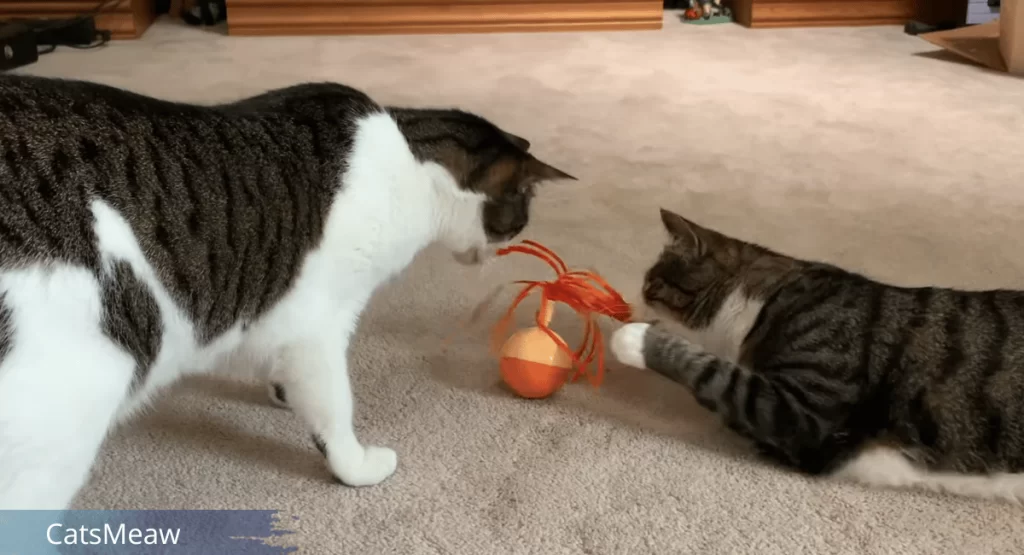
Automated toys keep cats busy while you are at work or asleep. Automated Toys include robotic mice, spinning lures, and balls that zig-zag across the floor. Their unpredictable motion holds attention longer than a ball that simply rolls.
Balls, Tunnels, and Light-Up Toys
Solo-play toys suit cats who like to bat, chase, and hide. Interactive balls and The luminous balls roll and flash when touched, while The Tunnel Tube offers a hiding and ambush spot. Cats who love tunnels often enjoy a tall perch too, so a cat tree for a small apartment pairs well.
How to Choose Interactive Toys for Your Cat
Match the toy to your cat’s age, energy, and play style rather than buying the most popular option. Quality matters too, and reputable specialist brands usually publish materials and safety details.
Check these points before buying:
- Age: Kittens need small, lightweight toys with no loose parts, while seniors prefer slower, low-impact play.
- Energy level: High-energy cats suit wands and chase toys; calm cats often prefer puzzle feeders.
- Materials: Choose non-toxic, sturdy materials with no small parts that detach.
- Size: A toy small enough to swallow is too small for any cat.
- Variety: Offer a mix of chase, pounce, and food-based toys.
Our post on playing with your cat covers technique in more detail. If your cat carries toys around and meows, see why cats carry toys and meow.
Safe Play and Toy Rotation Tips
Safe play means supervising every session and storing string-based toys out of reach. Cats can swallow string, ribbon, or feathers, which may cause a dangerous intestinal blockage.
- Play at the same times each day, ideally before meals so the hunt ends with food.
- Keep sessions to 10 to 15 minutes, and stop when your cat loses interest.
- Let your cat win and catch the toy regularly.
- Rotate toys every few days, since novelty keeps interest high.
- Inspect toys weekly and throw away any that are torn or chewed.
Playing also helps tell a game from a fight, and our guide to telling if cats are playing or fighting explains the signs. For general cat care standards, see the ASPCA cat care guide.
Recommended products:
Frequently Asked Questions
How often should I play with my indoor cat?
Most indoor adult cats need two to three play sessions a day, lasting about 10 to 15 minutes each. Kittens and young cats often need more.
Are laser pointers safe for cats?
Laser pointers are safe when used carefully and never aimed at the eyes. Finish each session with a treat or physical toy so your cat can complete the catch.
What toys can I leave with my cat when I’m not home?
Puzzle feeders, large sturdy balls, and tunnels are the safest unsupervised choices. Avoid string, ribbon, and any toy with small detachable parts.
How do I know if my cat is bored?
Common signs include excessive meowing, destructive scratching, overeating, and sleeping far more than usual. Adding daily structured play usually reduces these behaviors within a few weeks.
Choosing interactive toys for indoor cats comes down to variety, safety, and daily routine. Start by trying one wand toy and one puzzle feeder this week, then watch which your cat loves most.