


Best Cat Tree for Small Apartments: Space-Saving Solutions
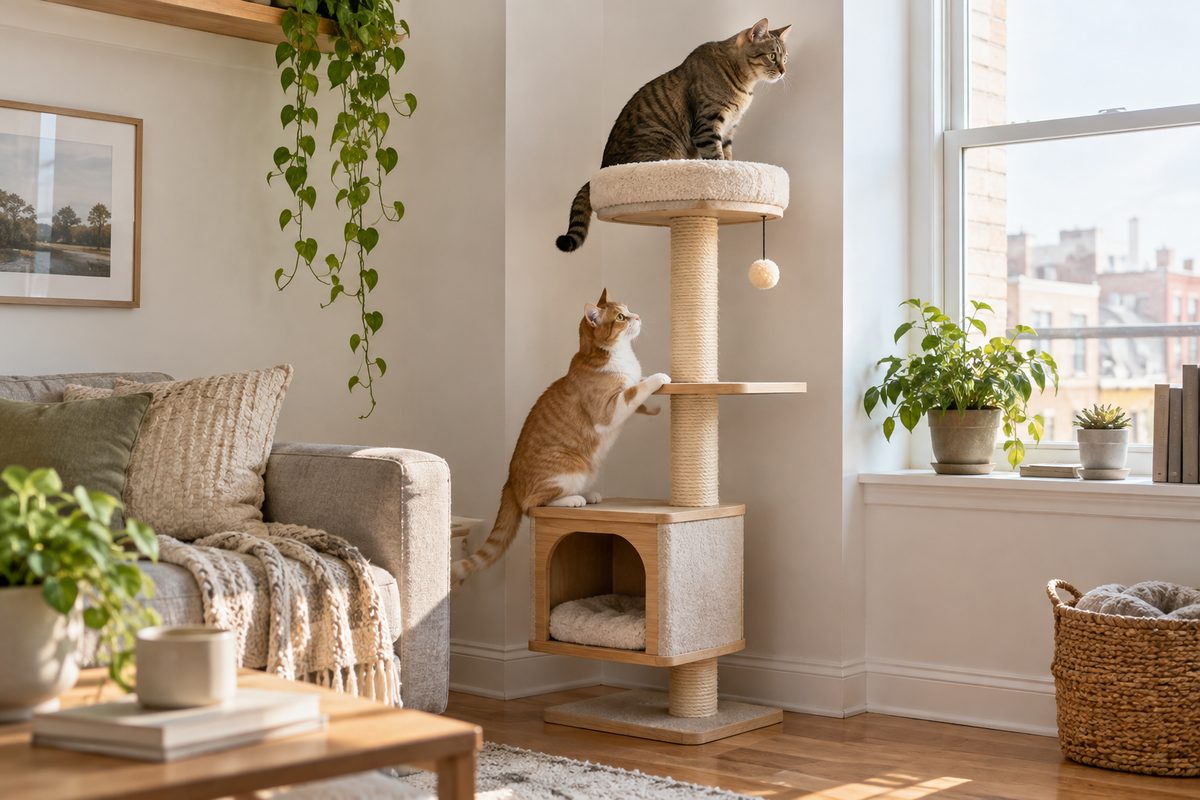
A cat tree is essential for small apartment living, offering vertical exercise and mental stimulation without consuming floor space. The best cat tree for small apartments combines compact footprint, sturdy construction, and engaging features that keep indoor cats active and content in tight quarters.
This post may contain affiliate links. As an Amazon Associate I earn from qualifying purchases.
Table of Contents
Key Takeaways:
- Vertical cat trees maximize limited floor space while meeting climbing and perching instincts.
- Look for lightweight, modular designs that fit corners or against walls in small homes.
- Multi-level trees with scratching surfaces reduce furniture damage and destructive behavior.
- Stable bases and quality materials ensure safety even in compact living environments.
Why Small Apartments Need Vertical Cat Trees
Apartment cats lack outdoor access and open roaming space, making vertical enrichment critical for physical and mental wellbeing. A cat tree satisfies natural climbing urges, provides safe perching spots, and creates territory boundaries that reduce stress. Vertical structures also help stop cats from scratching furniture, channeling destructive energy toward appropriate outlets instead.
Compact cat trees serve dual purposes: they entertain your cat while freeing valuable floor space in studios, one-bedrooms, or shared apartments. Multi-level designs let you stack activity zones upward rather than outward, making them ideal for rooms where square footage is limited.
Key Features to Look For in Small-Apartment Cat Trees
The right cat tree balances size, stability, and durability for apartment living. Prioritize these features when shopping:
- Footprint: Base no wider than 2-3 feet; corner-fitting or wall-mounted options work best.
- Height: 5-7 feet tall to satisfy climbing without touching ceilings or blocking sightlines.
- Weight capacity: At least 40-50 pounds to safely support multiple cats or larger breeds.
- Stability: Heavy base, non-slip feet, or wall anchors to prevent tipping during active play.
- Materials: Sisal rope, particle board, or carpet wrapped around wooden frames for durability and claw grip.
- Modular design: Removable or replaceable parts extend lifespan and allow customization.
Lightweight structures are easier to move for cleaning, and unscented, hypoallergenic materials minimize odors in enclosed apartments. Avoid oversized trees with wide bases that dominate small rooms.
Best Cat Tree Styles for Apartment Living
Different designs suit different apartment layouts and cat preferences. Evaluate these popular styles:
Wall-Mounted or Corner Trees: These attach directly to walls or fit snugly into corners, eliminating floor footprint entirely. They work beautifully in studios or open-plan apartments where space is precious. Cats still get climbing and perching without occupying prime real estate.
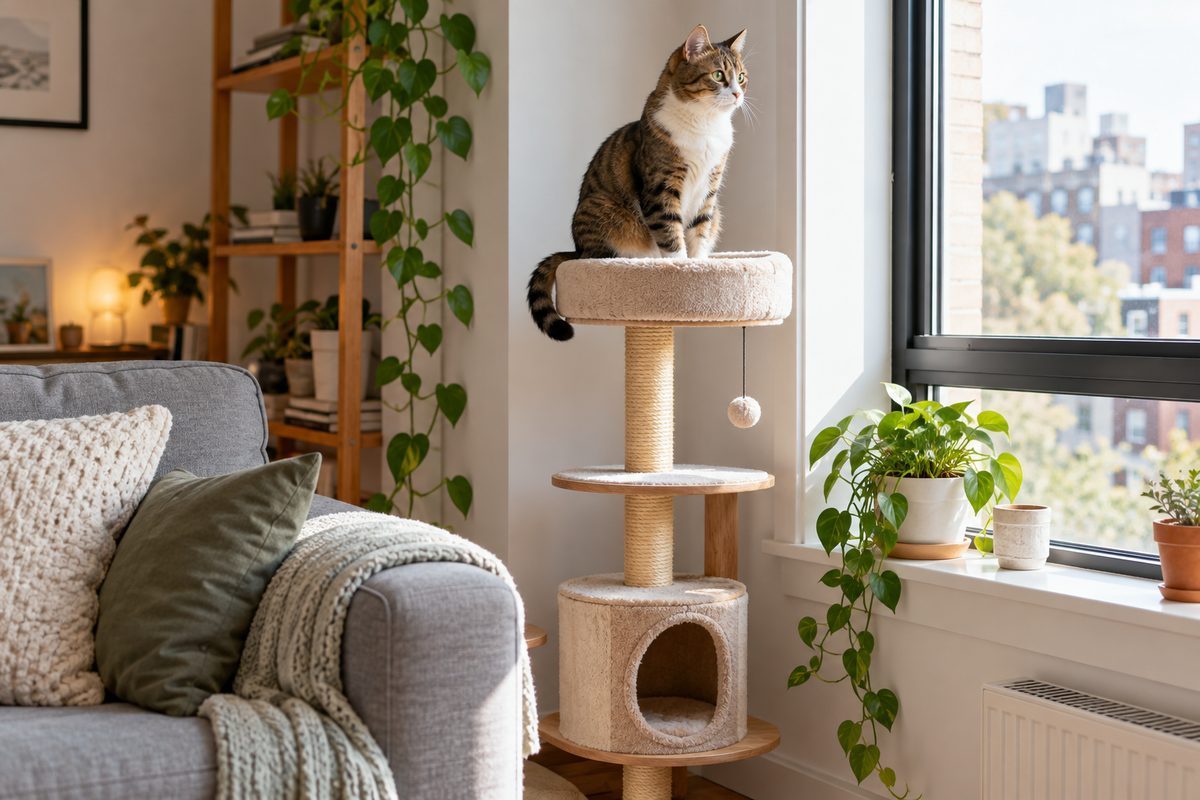
Slim, Tall Towers: Narrow column-shaped trees with a small base maximize vertical play while staying out of walkways. They suit long, narrow apartments and work well against empty wall space.
Modular or Stackable Trees: Individual platforms and cubes can be arranged in custom configurations, so you build only what fits your space. Add or remove levels as your apartment layout changes.
Multi-Purpose Furniture: Some cat tree shelves double as decorative wall décor, blending aesthetics with function in style-conscious apartments. Others integrate climbing into side tables or bookcases.
Apartments with multiple cats benefit from trees with distinct levels and hiding spots, reducing territorial disputes. How cats get along often depends on having enough vertical real estate to give each cat personal zones.
Materials and Durability in Compact Designs
Apartment cat trees take daily wear from constant climbing and scratching in a confined space. Durable construction ensures your investment lasts years without degrading. Quality materials absorb odors and resist staining, crucial in apartments where ventilation is limited.
- Sisal rope and twine: The gold standard for scratching surfaces; cats love the texture and grip, protecting furniture from damage.
- Plush carpet or velvet: Soft on paws, comfortable for resting, and effective at masking odors when quality is high.
- Solid wooden frames: Stronger and longer-lasting than particle board, especially for heavier cats or active play.
- Reinforced bases: Metal or weighted bottoms prevent wobbling during energetic jumping and climbing.
Regular vacuuming and enzymatic cleaners keep apartment cat trees fresh and hygienic. Washable covers or removable cushions extend lifespan and make maintenance easier in tight living spaces.
Placement and Setup Tips for Maximum Impact
Where you position your cat tree dramatically affects how much your cat uses it and whether it enhances or clutters your apartment. Strategic placement combines your cat’s preferences with your space constraints.
- Place trees near windows so cats can observe outdoor activity while perching, adding mental enrichment.
- Position against walls or in corners to anchor the tree and free central floor space for movement.
- Avoid high-traffic walkways where family members constantly pass; cats need stable, undisturbed territory.
- Keep the tree away from heating vents, cold drafts, and direct sunlight that may discourage use.
- Ensure the top platform allows your cat clear sightlines throughout the apartment, satisfying territorial instincts.
How to keep an indoor cat entertained includes rotating toys and refreshing scratching surfaces. Pairing your cat tree with interactive play sessions increases engagement and exercise in limited spaces.
For more veterinary guidance, see the Cornell Feline Health Center.
Frequently Asked Questions
- Can a cat tree fit in a studio apartment? Yes. Wall-mounted trees, corner units, and slim towers occupy virtually no floor space, making them ideal for studios where every square foot counts.
- How tall should a cat tree be for a small apartment? A 5-7 foot tree provides ample climbing without feeling cramped or touching ceilings in standard 8-9 foot rooms.
- What’s the best cat tree material for apartments with odor concerns? Sisal rope and high-quality, washable plush carpet combined with regular enzymatic cleaning keep apartment cat trees fresh and odor-free.
The best cat tree for your small apartment matches your space constraints, cat’s size, and décor style while prioritizing stability and durability. Vertical design transforms compact living into an enriched environment where indoor cats thrive.

