Ear Mites in Cats: 7 Proven Signs and Safe Treatments
Ear mites in cats are tiny parasites called Otodectes cynotis that live in the ear canal and feed on wax and skin debris, causing intense itching and dark, crumbly discharge. They matter most for kittens, outdoor cats and multi-pet homes, because the mites spread easily through close contact and can cause painful infections if ignored.
This post may contain affiliate links. As an Amazon Associate I earn from qualifying purchases.
Table of Contents
Ear mites in cats at a glance:
- Short Answer: Ear mites are highly contagious microscopic parasites that cause itchy ears and dark, coffee-ground debris.
- Most Common Signs: Head shaking, scratching at the ears, dark waxy discharge and red, irritated ear skin.
- Urgency: Not an emergency, but it needs treatment within days to prevent infection and ear damage.
- What to Do at Home: Gently clean the outer ear and keep other pets separated until a vet confirms the diagnosis.
- When to See a Vet: Any time a cat shows ear symptoms for more than a day or two, or shows pain, odor or head tilt.
What Are Ear Mites in Cats?
Ear mites are surface-dwelling parasites that measure about 0.3 millimeters, barely visible to the naked eye as moving white specks. They live mostly in the ear canal, but they can also wander onto the head, neck and tail base. The full life cycle takes about three weeks, so eggs left behind can reinfect a cat after the first treatment.
Kittens and cats that spend time outdoors catch them most often. Mites pass from cat to cat, and also to dogs and rabbits, through direct contact. They do not survive long off a host, so contaminated furniture is rarely the main source of spread.
Ear mites are among the top reasons cats visit the vet for ear trouble. If you are also seeing general cat itchy ears without dark debris, other causes such as allergies or yeast may be involved.
7 Signs of Ear Mites in Cats
The signs of ear mites in cats usually appear in both ears at once and worsen over several days. When my own rescue kitten arrived with a dirty ear, the head shaking was the first thing I noticed. Watch for these seven signs:
- Frequent head shaking: Cats shake their heads repeatedly to dislodge the irritation.
- Intense ear scratching: Cats may scratch hard enough to break the skin behind the ears.
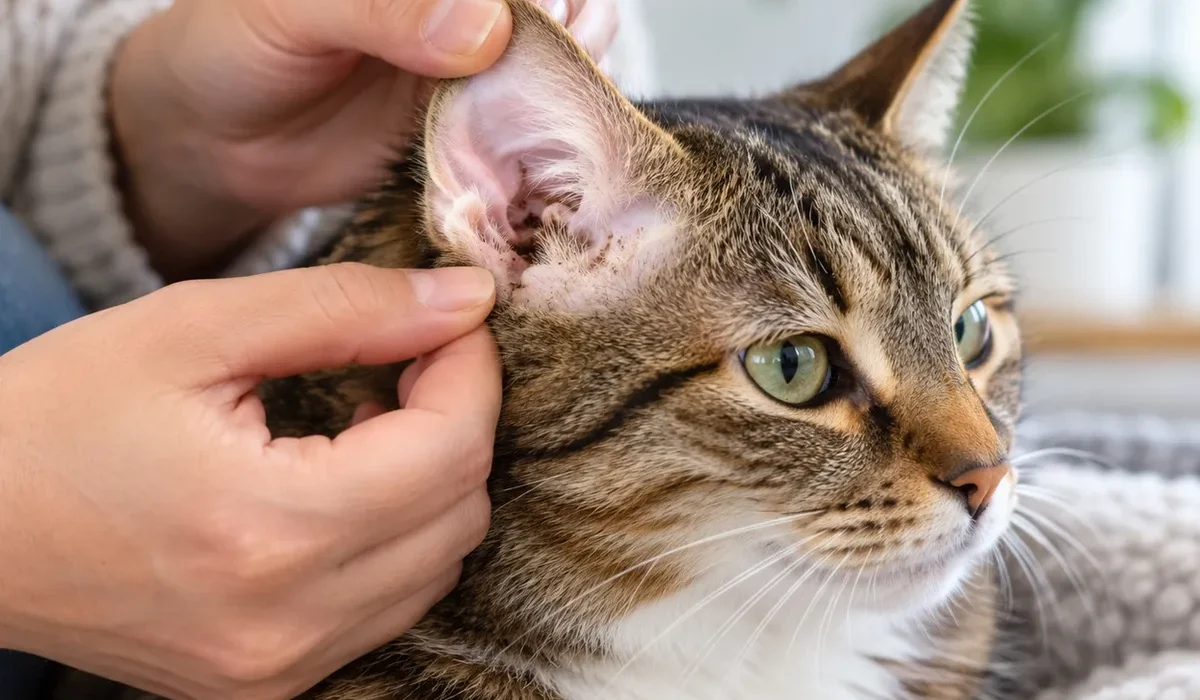
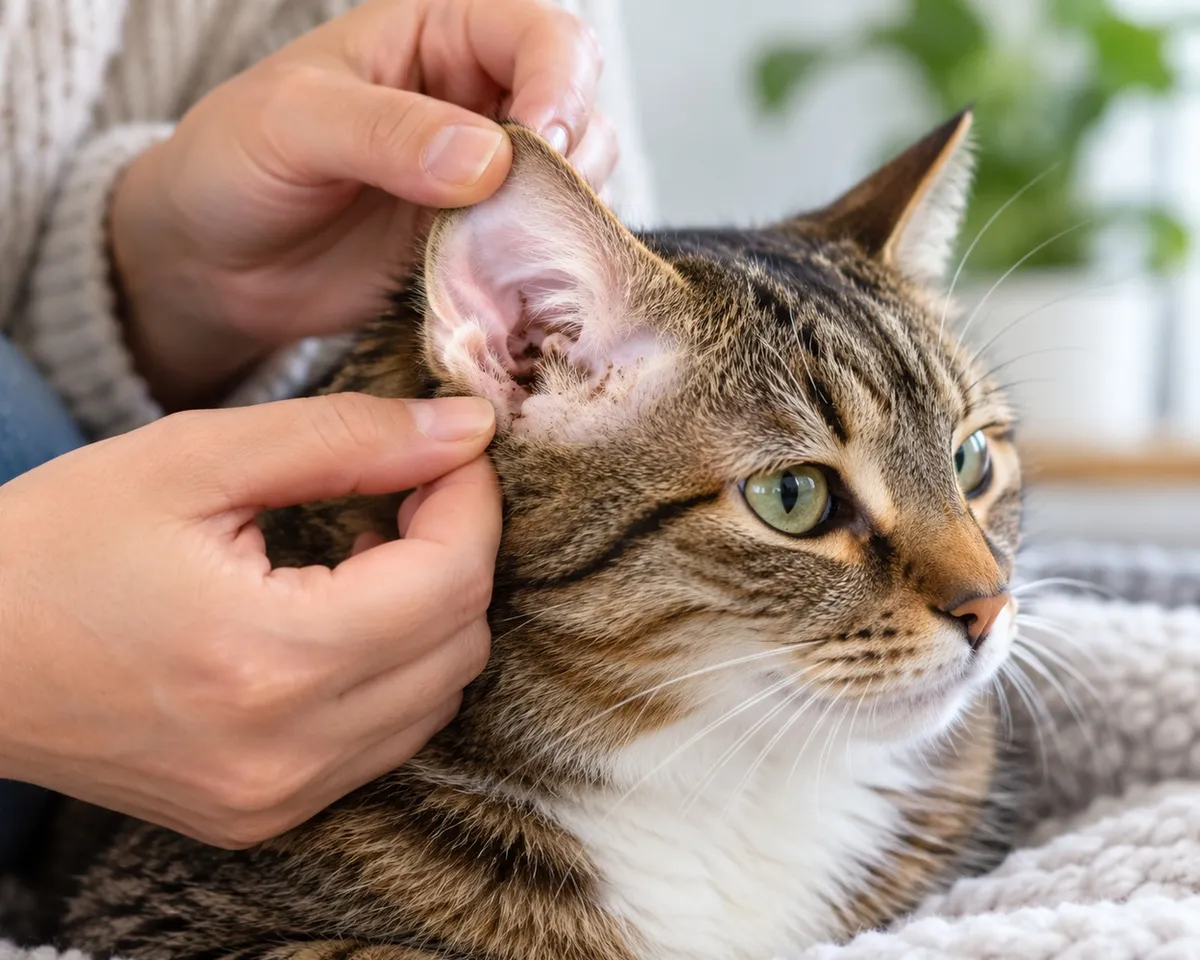
- Dark, crumbly debris: The discharge looks like dry coffee grounds and is a classic sign.
- Red or inflamed ear skin: The inner ear flap looks pink to red and may feel warm.
- Strong or musty odor: A foul smell often points to a secondary bacterial or yeast infection.
- Scabs or hair loss around the ears: Constant scratching creates crusted sores on the ear tips and neck.
- Head tilt or ear hematoma: A swollen, puffy ear flap can form after violent shaking and needs vet care.
A single sign alone does not confirm mites. Many ear problems look similar, which is why a vet check matters.
Ear Mites in Cats vs Ear Infection: How to Tell
Ear mites usually produce dry, dark, crumbly debris, while bacterial ear infections tend to produce wet, yellow or green discharge with a stronger smell. Yeast infections often cause brown, greasy wax. Both can occur at the same time, because mites damage the skin and invite infection.
| Feature | Ear Mites | Bacterial or Yeast Infection |
|---|---|---|
| Discharge | Dry, dark, coffee-ground texture | Wet, yellow, green or greasy brown |
| Itching | Severe, both ears | Moderate to severe, often one ear |
| Odor | Mild or none | Often strong and unpleasant |
| Contagious | Yes, to other pets | Usually not |
| Common in | Kittens, outdoor cats | Cats with allergies or ear damage |
Persistent itching can also come from food or environmental triggers, so it helps to read about allergies in cats if mites are ruled out.
How Vets Diagnose Ear Mites in Cats
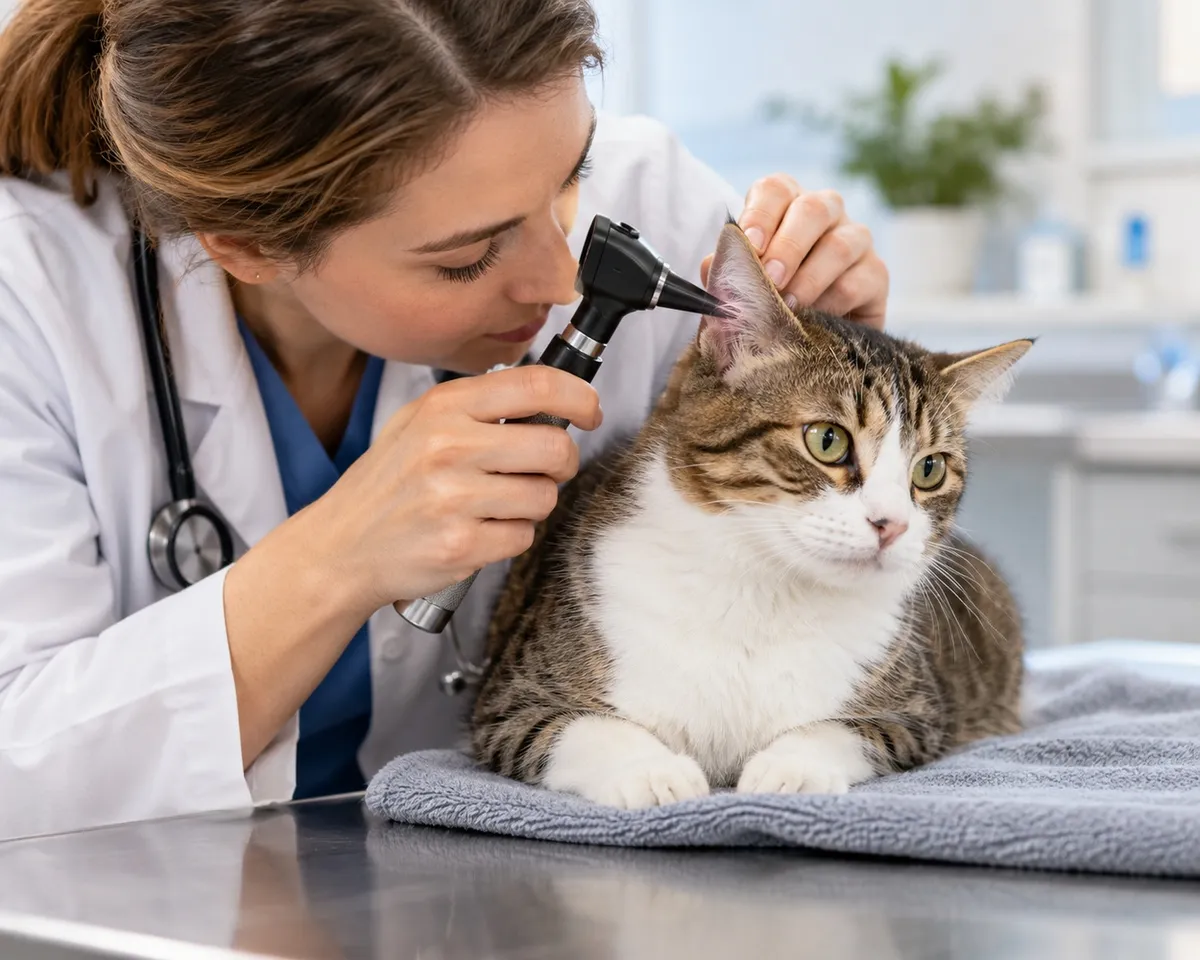
A vet diagnoses ear mites by looking into the ear with an otoscope, and by examining a sample of debris under a microscope. The mites appear as small, pale, moving organisms. This quick test takes only a few minutes and confirms the cause with certainty.
Diagnosis also checks for other problems that look the same. Your vet may look for:
- Bacterial or yeast overgrowth in the ear canal
- A ruptured eardrum, which changes which medications are safe
- Polyps or foreign objects such as grass seeds
- Skin disease spreading from the ears to the head and neck
Never insert cotton swabs deep into the canal at home, because this can push debris further in and injure the eardrum. A routine exam also helps, and regular veterinary check-ups for cats catch ear problems early.
Safe Treatments for Ear Mites in Cats
The safest treatment for ear mites in cats is a veterinarian-prescribed anti-parasitic medication, applied either in the ears or on the skin. Most modern products kill adult mites quickly, but treatment must continue long enough to cover the three-week life cycle. Your vet will choose the right product and schedule for your cat’s age and weight.
Common veterinary options:
- Topical spot-on medications applied to the skin between the shoulder blades, often as a single dose or repeated after a few weeks
- Prescription ear drops that kill mites directly in the canal, usually used for about 7 to 10 days
- Combination products that also treat fleas and some intestinal worms
- Antibiotic or antifungal ear medication when a secondary infection is present
Follow the label and your vet’s schedule exactly, and never stop early because the ears look better. A prescription cat ear mite treatment is far more reliable than over-the-counter remedies, since weak products often leave live eggs behind.
Ask your vet before using any product on kittens under 8 weeks old, because many treatments are not approved for very young cats. For more on treating parasites, see our guide to the best practices to get rid of cat fleas, since fleas and mites are often managed together.
Home Care and Cleaning for Ear Mites in Cats
Home care for ear mites in cats supports medication but never replaces it. Gentle cleaning removes debris so medication reaches the mites. Cleaning is useful before treatment and again if your vet recommends it.
How to clean your cat’s ears safely:
- Hold your cat gently in a calm, well-lit room, wrapping them in a towel if needed.
- Apply a vet-approved cat ear cleaning solution to fill the visible ear canal, following the label.
- Massage the base of the ear for about 20 to 30 seconds to loosen debris.
- Let your cat shake their head, then wipe the outer ear with a cotton ball or gauze.
- Reward your cat with a treat to keep future cleanings stress-free.
Avoid home remedies such as olive oil, vinegar, tea tree oil or essential oils. Tea tree oil in particular is toxic to cats, and oils can trap moisture and worsen infection. If you want to learn more about safe handling, our cat grooming guide covers ear and coat basics.
Preventing the Spread of Ear Mites in Cats
Ear mites spread mainly through direct contact, so every pet in the household should be examined and usually treated at the same time. A cat without symptoms can still carry mites and reinfect the others. Treating only one animal is the most common reason the problem returns.
- Check and treat all cats, dogs and rabbits that share living space
- Wash bedding, blankets and soft toys in hot water
- Vacuum carpets and cat trees to remove stray debris
- Keep new or rescued cats separated until a vet has checked their ears
- Schedule a follow-up ear check about 3 to 4 weeks after treatment starts
New kittens are especially likely to carry mites, so anyone bringing one home should follow our kitten care essentials and plan a first vet visit early. When you introduce pets, our tips on introducing two cats help limit stress while you manage the treatment period. For general medical background on feline parasites, the Cornell Feline Health Center offers reliable veterinary information.
When to See a Vet About Ear Mites in Cats
You should see a vet whenever your cat shows ear symptoms lasting longer than a day or two, because mites cannot be confirmed or safely treated by guesswork. A vet visit is also urgent if the ear looks swollen, bleeds, smells foul or your cat seems to be in pain. Untreated mites can lead to bacterial infection, ear hematomas and even permanent hearing damage.
Go to the vet quickly if you notice:
- A head tilt, loss of balance or walking in circles
- A swollen, puffy ear flap
- Pus, blood or foul-smelling discharge
- Your cat crying, hiding or refusing to be touched near the head
- Symptoms that return after treatment finishes
Never give human medicine or leftover medication from another pet. Your vet can prescribe the correct treatment for your cat’s age and condition. Cats in pain often hide it, so see our guide on signs your cat is in pain if your cat seems unusually withdrawn.
Frequently Asked Questions
How do cats get ear mites?
Cats get ear mites through close contact with an infected cat, dog or rabbit, and kittens often catch them from their mother. Outdoor and shelter cats have a higher risk because of frequent contact with other animals.
Can humans catch ear mites from cats?
Humans rarely catch ear mites from cats, and the mites do not normally live in human ears. In rare cases they may cause a mild, temporary itchy rash on the skin.
How long do ear mites in cats take to go away?
Ear mites in cats usually clear within 2 to 4 weeks with proper treatment, depending on the product used. Treatment must cover the roughly three-week life cycle so newly hatched mites are also killed.
Can ear mites in cats go away on their own?
No, ear mites do not go away on their own and they typically worsen without treatment. Left alone, the mites multiply and can lead to infection, hematomas and hearing damage.
What do ear mites look like in a cat’s ear?
Ear mites look like dark brown or black crumbly debris resembling coffee grounds, and the mites themselves are tiny white specks that sometimes move. A vet confirms them with a microscope, since similar debris can come from other ear problems.
Understanding ear mites in cats means acting early: spot the head shaking and dark debris, confirm the cause with a vet, and complete the full treatment course for every pet in the home. Book a vet visit as soon as you notice the first symptoms, and plan a follow-up ear check about a month later to make sure the mites are gone.