Cat Constipation: 8 Proven Remedies That Bring Fast Relief
Cat constipation is difficult or infrequent passing of hard, dry stool, and it usually improves with more water, fiber, and exercise. Most healthy cats poop once or twice a day, so any cat that strains or skips more than 48 hours deserves close attention.
This post may contain affiliate links. As an Amazon Associate I earn from qualifying purchases.
Table of Contents
Cat constipation at a glance:
- Short Answer: Constipation means hard, dry, infrequent stool, often caused by dehydration, low fiber, or a lack of exercise.
- Most Common Causes: Dehydration, hairballs, obesity, kidney disease, and megacolon.
- Urgency: Call a vet if no stool appears for 48 to 72 hours or if your cat vomits or cries in the litter box.
- What to Do at Home: Increase water intake, add vet-approved fiber, and encourage daily play.
- When to See a Vet: Repeated straining, a bloated belly, loss of appetite, or no stool for more than two days.
What Is Cat Constipation?
Cat constipation happens when stool stays in the colon too long, so the colon absorbs extra water and the stool becomes hard and dry. A normal cat passes firm, moist, log-shaped stool one to two times daily.
When my own cat started skipping the litter box for a full day, I learned that frequency alone does not tell the whole story. Small, pebble-like stools passed with effort count as constipation even if they appear daily.
Occasional constipation is common and often mild. Chronic or repeated constipation can signal an underlying disease and needs veterinary care.
Signs of Cat Constipation to Watch For
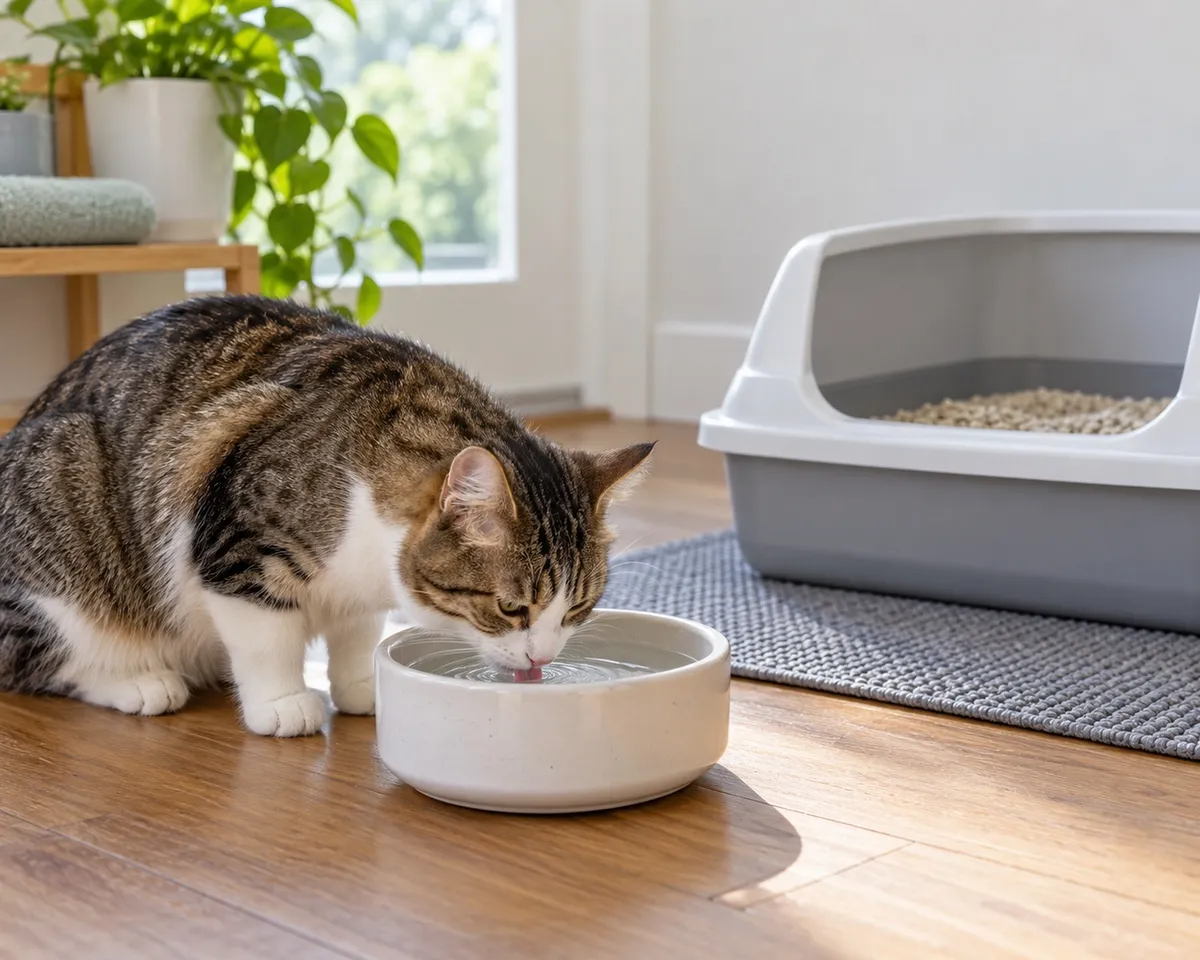
The clearest sign of cat constipation is straining in the litter box with little or no stool produced. Owners often mistake this for a urinary problem, so watching closely matters.
- Straining or crying while in the litter box
- Hard, dry, small stools, or no stool for 48 hours or longer
- Frequent trips to the box with nothing to show for them
- Loss of appetite and low energy
- Vomiting, especially in more severe cases
- A firm or painful belly when touched gently
- Small amounts of liquid stool leaking around a blockage
Straining can also point to a urinary blockage, which is a life-threatening emergency, especially in male cats. If you cannot tell whether your cat is peeing or pooping, see a vet right away. Our guide to blood in cat urine explains the urinary warning signs.
How to Tell Constipation From Diarrhea or Urinary Trouble
Constipation looks different from diarrhea, even though both involve time spent in the litter box. A constipated cat passes little or nothing, while a cat with diarrhea passes loose, watery stool repeatedly.
Watch what actually comes out. Dry, hard pellets or an empty box point toward constipation, and loose stool with urgency points toward a gut infection or diet upset. Our guide to cat vomiting and diarrhea covers that side of the problem.
Urinary trouble is the dangerous look-alike. Cats with a urinary blockage squat, strain, and cry, but only a few drops of urine or none appear. This can become fatal within 24 to 48 hours, so treat it as an emergency.
Mixed signs are also possible. A cat with a blocked colon may leak small amounts of liquid stool around the hard mass, which owners mistake for diarrhea. If stool is loose but your cat is still straining and uncomfortable, a vet exam can sort out which problem you are facing.
Common Causes of Cat Constipation
The most common cause of cat constipation is dehydration, because dry colons produce dry, hard stool. Cats evolved from desert animals and often drink too little, especially on a dry-food diet.
Dehydration and Diet
Dry kibble contains about 10 percent moisture, while wet food contains roughly 75 percent. Cats eating only kibble often take in far less water than they need. Our article on dehydration in cats lists the early warning signs.
Low-fiber diets also contribute. Very high-protein, low-residue foods leave little bulk for the colon to move along, so stool becomes small and dense.
Hairballs and Grooming
Swallowed hair can combine with stool and slow its passage through the colon. Long-haired cats and heavy groomers are most at risk, and regular brushing reduces the hair they swallow.
Obesity and Inactivity
Overweight and sedentary cats have slower gut movement. Daily exercise stimulates the intestines and helps stool move along.
Medical Conditions
Several diseases cause or worsen constipation:
- Chronic kidney disease: causes dehydration and dry stool.
- Megacolon: an enlarged, weak colon that cannot push stool out.
- Arthritis: makes squatting painful, so cats hold stool in.
- Pelvic injuries or tumors: narrow the passage stool must take.
- Hypothyroidism and metabolic problems: slow the digestive system. See our guide to hypothyroid disease in cats for details.
Stress and Litter Box Problems
A dirty, hard-to-reach, or poorly placed box can make cats hold their stool. Cats that avoid the box may become constipated within days, so cleanliness matters. Read how often to clean a cat litter box for a simple schedule.
Changes at home matter too. A new pet, a move, or a loud construction project can make a cat nervous enough to delay going.
8 Proven Remedies for Cat Constipation at Home
The best home remedies for cat constipation increase water, fiber, and movement. Try these only for mild cases in an otherwise healthy, alert cat, and never use human laxatives or enemas.
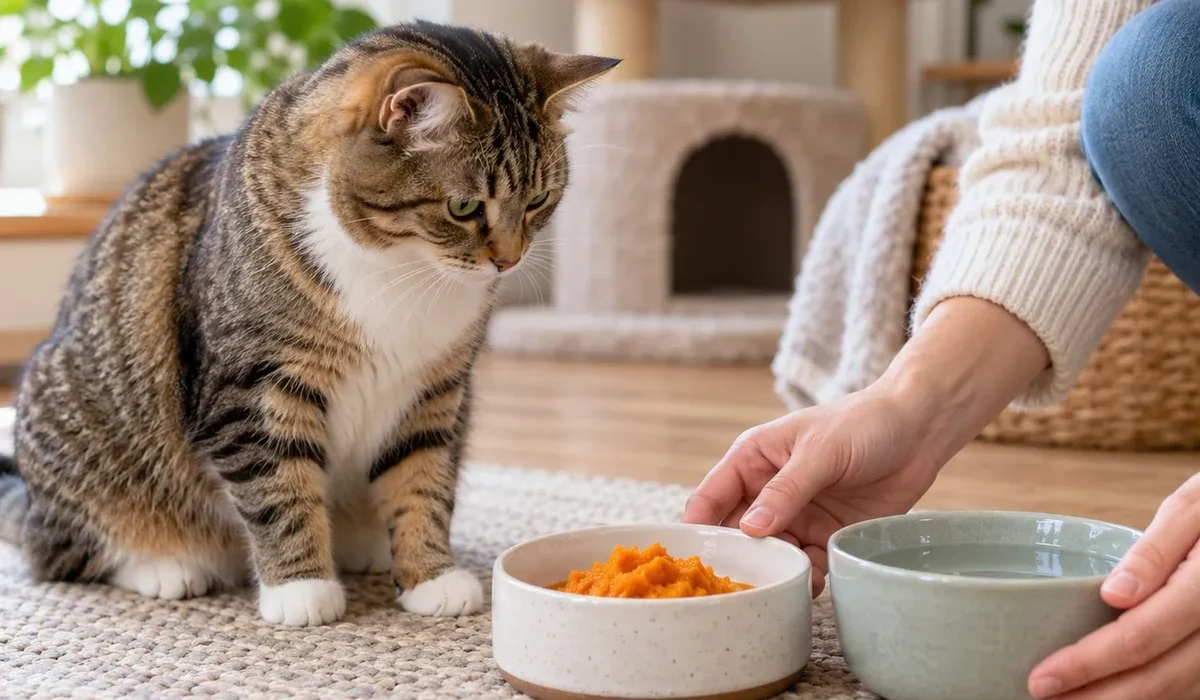
- Add wet food. Switching some or all meals to canned food boosts daily water intake significantly.
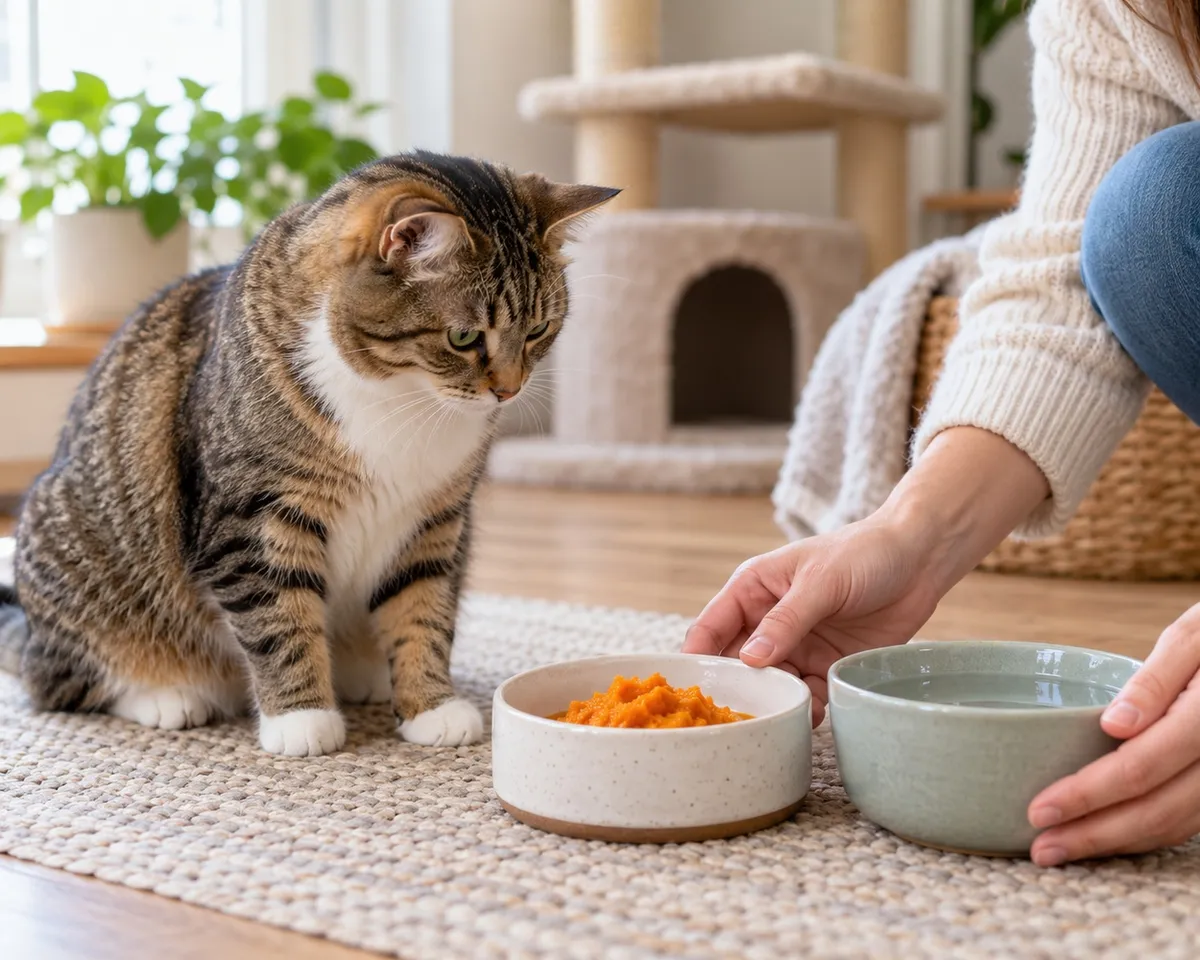
- Offer more water. Place several bowls around the house, and try a flowing water fountain, since many cats prefer moving water.
- Mix in plain pumpkin. Plain canned pumpkin puree adds soluble fiber and moisture. Our post on feeding pumpkin to cats covers safe amounts, and a vet should confirm the right portion for your cat.
- Try a cat-safe fiber supplement. A psyllium husk fiber supplement for cats can soften stool, but only use one your vet recommends and always with plenty of water.
- Encourage exercise. Aim for two or three short play sessions daily. Browse our ideas for keeping an indoor cat entertained.
- Brush your cat regularly. Brushing removes loose hair before your cat swallows it, which lowers hairball-related blockages.
- Help your cat reach a healthy weight. Gradual weight loss improves gut motility. See our cat feeding guidelines for portion advice.
- Keep the litter box clean and accessible. Scoop daily and offer one box per cat plus one extra, placed in a quiet spot.
Avoid giving any laxative, stool softener, or oil without veterinary guidance. Some products are toxic to cats, and oral mineral oil can cause serious lung problems if inhaled.
How Long Does Cat Constipation Last?
Mild cat constipation usually clears within 24 to 48 hours once you increase water and activity. If stool has not passed after two days of home care, the problem is likely more than a simple dry stool.
Several factors change the timeline:
- Cause: dehydration resolves faster than megacolon or kidney disease.
- Age: senior cats recover more slowly and relapse more often.
- Severity: a hard mass of stool packed in the colon, called obstipation, needs professional treatment.
- Diet changes: a switch to wet food often shows results within three to five days.
Cats with repeated episodes may need long-term management. Vets often suggest a prescription high-fiber diet, regular hydration support, and scheduled checkups to keep the colon working. Never wait more than 72 hours with a cat that is also eating poorly or vomiting.
When to See a Vet for Cat Constipation
Take your cat to a veterinarian if cat constipation lasts longer than 48 to 72 hours. Earlier is better if your cat is also vomiting, lethargic, or refusing food.
Contact a vet promptly for any of these signs:
- No stool for more than two days
- Repeated vomiting or loss of appetite
- Crying, hiding, or obvious abdominal pain
- A swollen or hard belly
- Straining with no urine produced, which is an emergency
Your vet may perform a physical exam, bloodwork, and X-rays to find the cause. Severe cases may need fluids, an enema given by a professional, or hospital care. For trusted background information, see the Cornell Feline Health Center.
How to Prevent Cat Constipation
The best way to prevent cat constipation is to keep your cat hydrated, active, and eating a balanced diet. Small daily habits make the biggest difference over time.
- Feed at least one wet meal every day.
- Provide fresh water in multiple spots and wash bowls daily.
- Schedule regular play and keep your cat at a healthy weight.
- Brush long-haired cats several times a week.
- Book routine checkups so conditions like kidney disease are caught early. Our page on regular veterinary check-ups explains what to expect.
Senior cats are more prone to constipation because of slower digestion and joint pain. Extra water, easy-access litter boxes with a low entry, and twice-yearly vet visits help older cats stay regular.
Frequently Asked Questions
How long can a cat go without pooping?
Most healthy cats poop at least once every 24 to 36 hours, and going more than 48 hours without stool is a reason to call your vet.
What can I give my cat for constipation at home?
Plain canned pumpkin puree, extra water, and more wet food are the safest first steps, but ask your vet for the right amount before adding anything.
Can cat constipation go away on its own?
Mild cat constipation often resolves within 24 to 48 hours with more water and activity, but persistent cases rarely clear without treatment.
Is cat constipation an emergency?
Constipation becomes an emergency if your cat vomits, cries in pain, or has a swollen belly, and straining without producing urine is always urgent.
Why is my older cat constipated so often?
Senior cats become constipated more often because of dehydration, kidney disease, arthritis, and slower digestion, so frequent episodes call for a vet exam.
Cat constipation is common, but it should never be ignored. Keeping your cat hydrated, active, and fed a fiber-friendly diet prevents most cases. If your cat has not passed stool in 48 hours, book a vet visit today.