Best Cat Repellent Sprays for Indoor Furniture
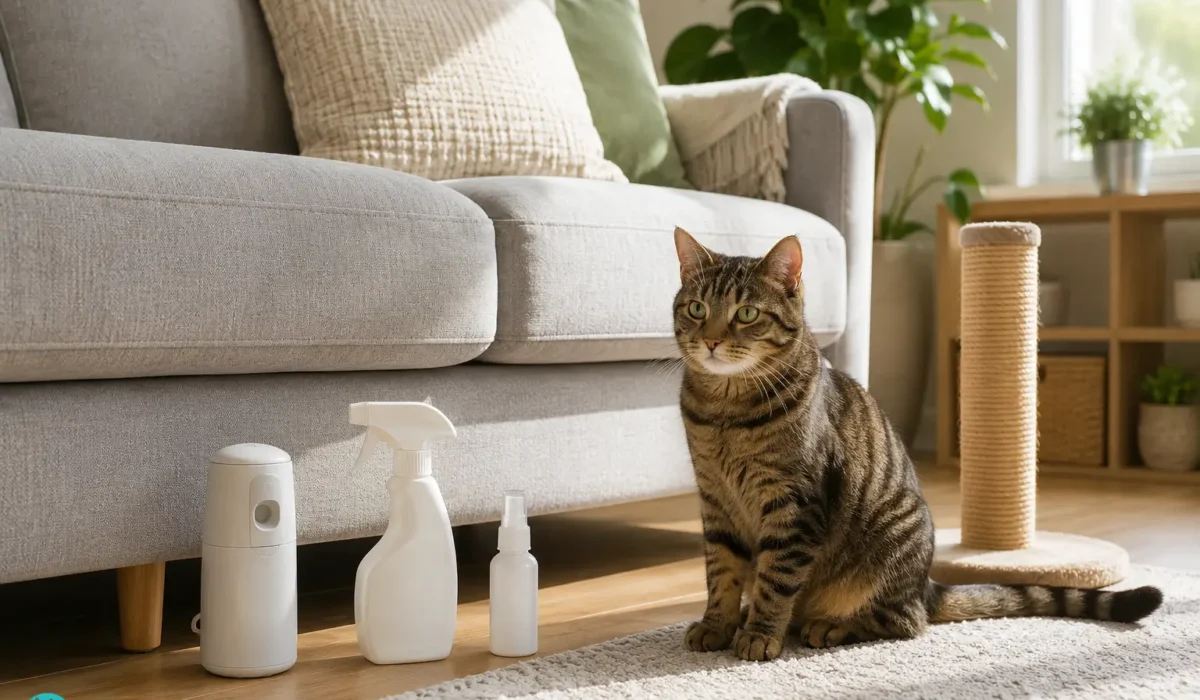
The best cat repellent sprays for indoor furniture are fabric-safe, scent-based products used alongside a nearby scratching surface, plus a motion-activated spray for one problem zone. Choosing the right type matters most for owners whose cats claw sofas, mark chair legs, or keep returning to the same cushion.
This post may contain affiliate links. As an Amazon Associate I earn from qualifying purchases.
Table of Contents
Best cat repellent sprays for indoor furniture at a glance:
- Short Answer: Match the spray to the behavior: motion-activated for one spot, surface spray for wide areas, calming spray for stress.
- Best Overall Approach: A deterrent paired with an appealing scratcher placed beside the furniture.
- Main Risk: Concentrated essential oils and DIY mixes can harm cats.
- What to Expect: Scent sprays usually need repeat application, often daily at first.
- When to See a Vet: Sudden spraying, hiding, or aggression can signal stress or illness.
What Cat Repellent Sprays Do and How They Work
Cat repellent sprays discourage cats from specific surfaces using an unpleasant scent, taste, or a sudden harmless burst of air. They work by making a spot less appealing, not by teaching a cat what to do instead.
- Scent-based sprays: Cats dislike certain smells, so they avoid treated fabric, wood, or rugs.
- Motion-activated sprays: A sensor detects movement and releases a quick, odorless puff of air.
- Calming sprays: These aim to reduce stress-related scratching instead of blocking access.
When my cat first targeted the arm of our sofa, a scent barrier alone did nothing. The real change came when I added a sturdy scratcher right beside it.
Best Types of Cat Repellent Sprays Compared
The best cat repellent spray for indoor furniture depends on whether the problem is one location, a broad surface, or anxiety. Each of the three types below suits a different situation.
Motion-Activated Spray: Best for One Off-Limits Zone
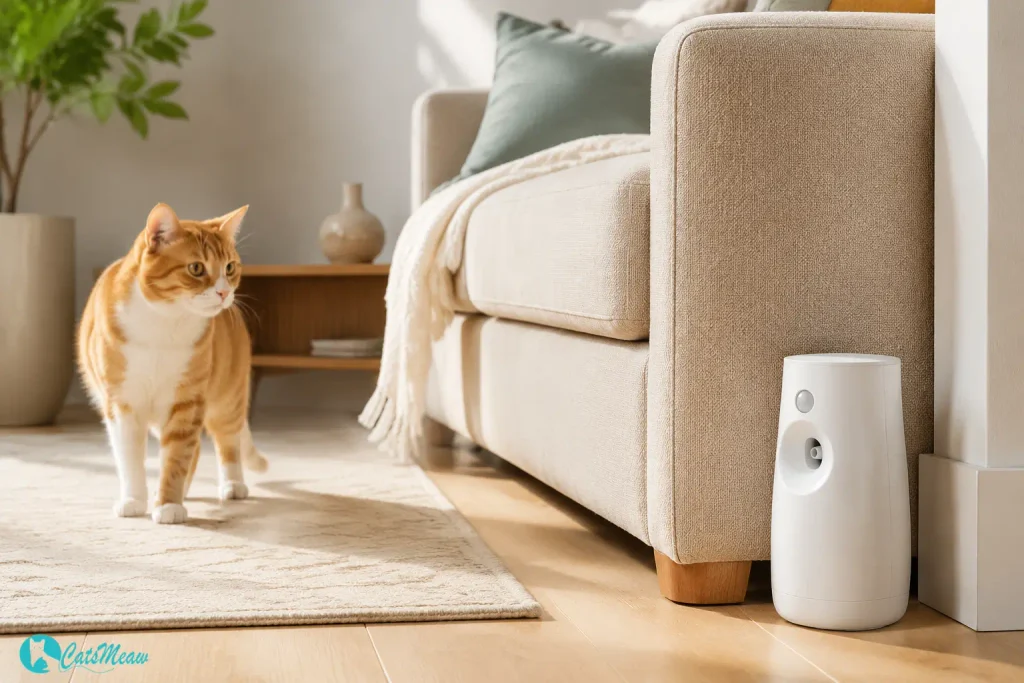
The Check the current price option is a motion-activated deterrent that detects movement from roughly three feet away and releases an odorless burst. One canister typically provides up to 120 sprays, and the device runs on four AAA batteries.
- Best for: A predictable trouble spot such as a sofa corner, countertop, or houseplant.
- Skip it if: Your cat is very fearful, or household traffic will trigger the sensor repeatedly.
- Placement: Position it near the area instead of spraying upholstery directly.
Surface Spray: Best for Broad, Washable Areas
A surface-applied Check the current price repellent suits cats that target several chair legs, rugs, or other wide areas. Its flexible coverage is the main advantage, while the drawback is that scent fades and needs consistent reapplication.
- Test a hidden patch of fabric or wood first, since even indoor-rated products can stain.
- Ventilate the room and never spray the cat.
- If urine marking is involved, clean the spot thoroughly before treating it.
Calming Spray: Best for Stress-Related Scratching
Cats often scratch more when routines, visitors, or new pets create stress. A Check the current price calming spray targets household areas to encourage redirection rather than startle the cat.
Its limit is patience: a calming product does not physically block access, and results vary by cat. Pair it with a cat scratching board placed directly beside the protected furniture. Owners of big cats may also want a taller option, as covered in our guide to the best scratching post for large cats.
How to Choose Cat Repellent Sprays for Indoor Furniture
Choose by behavior first, then by safety. Reading the label and testing a small area prevents most problems.
- Identify the behavior: scratching one spot, scratching many surfaces, or marking.
- Pick the matching format: motion-activated, surface spray, or calming spray.
- Test the product on a hidden patch and wait 24 hours.
- Place an attractive scratcher or perch next to the protected piece.
- Reward your cat each time it uses the approved surface.
Ingredients to avoid:
- Concentrated essential oils, which the ASPCA warns can harm pets; read the ASPCA Animal Poison Control Center guidance before using any DIY mix.
- Sprays that are not labeled for use around pets.
- Anything applied directly to your cat’s body, bed, food, or water.
Safe Use Tips and Better Alternatives
A repellent works best as one part of a plan. Scratching is a natural behavior that cats need for claw maintenance and stretching, so give it a legal outlet.
- Read our tips to stop cats from scratching furniture for training ideas that pair well with sprays.
- Learn what cats’ claws are used for to understand why scratching feels necessary.
- Keep claws short with regular nail trimming to reduce damage.
- Boredom drives destruction, so try ideas from keeping an indoor cat entertained.
For urine-marking problems, a repellent will not remove the odor that invites repeat marking. Use an enzyme cleaner first, and see our guide to cat pee cleaner products if accidents are part of the issue.
Always check the ASPCA guide to common cat behavior issues and consult your veterinarian if scratching, spraying, hiding, or aggression suddenly increases, since stress or illness may be the cause.
Recommended products:
Frequently Asked Questions
Can I spray cat repellent directly on my cat?
No, never spray repellent on a cat’s body or face. Apply products only to furniture as the label directs, and keep them away from food, water, bedding, and the litter box.
Do cat repellent sprays work permanently?
Usually not, because scent fades and scratching is natural. Expect to reapply scent sprays as directed, often daily at first, and combine them with a scratcher and rewards.
What if my cat keeps returning to the same sofa?
Move a scratcher directly beside the exact target spot and try both vertical and horizontal textures. Ask a veterinarian if the behavior starts suddenly or becomes compulsive.
Are homemade cat repellent sprays safe for furniture?
Many are not. Concentrated essential oils can be toxic to cats, and DIY mixes may stain fabric, so a pet-labeled product tested on a hidden patch is the safer choice.
The best cat repellent sprays for indoor furniture work only when paired with a better option for your cat. Match the spray to the behavior, test a hidden patch, and place an appealing scratcher beside the sofa today.