Indoor Cat Room Ideas: 12 Fun Setups Your Cat Will Love
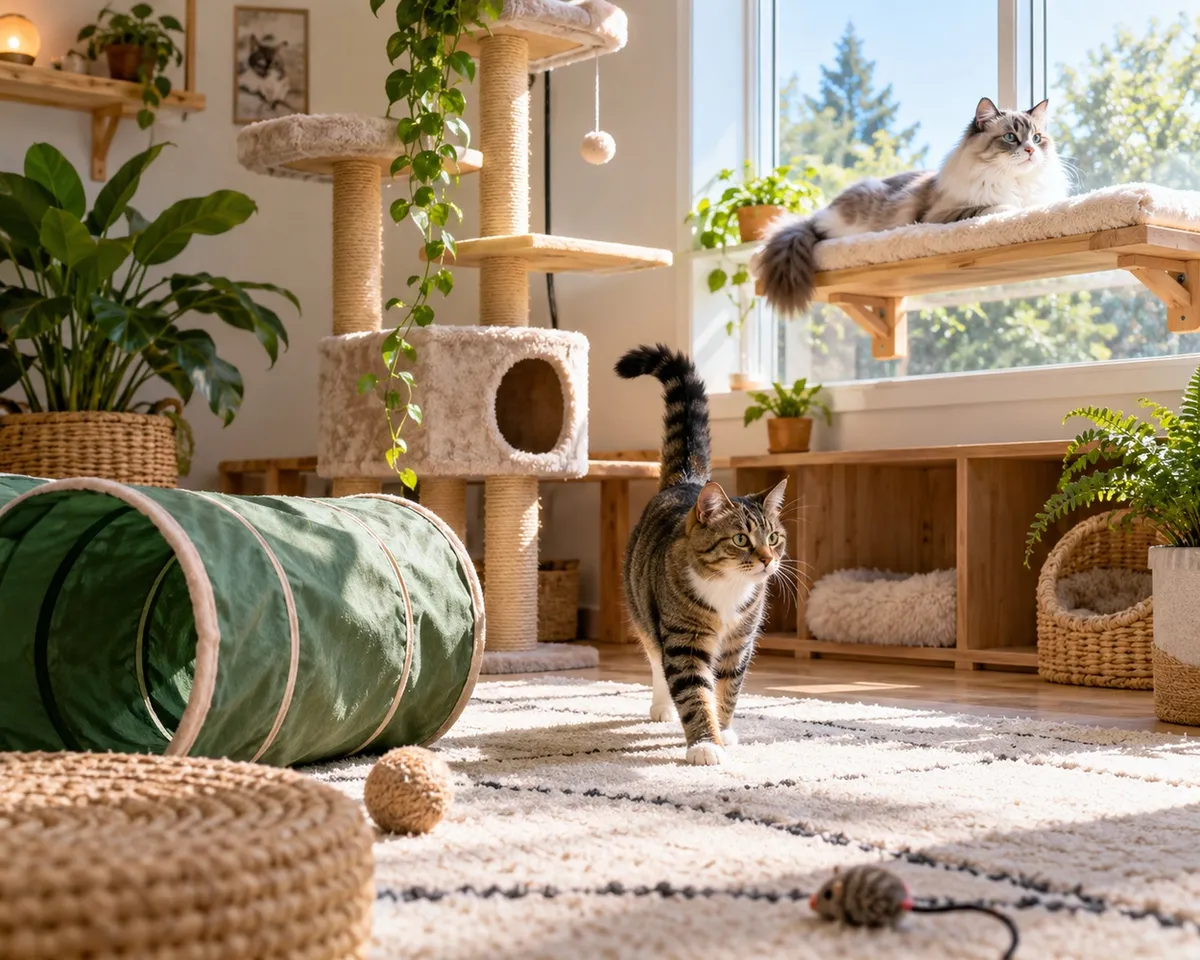
Indoor cat room ideas work best when they give cats vertical space, safe hiding spots, scratching zones, and window views in one connected area. A well-planned room lowers boredom and stress, so it matters most for apartment cats and cats that live without outdoor access.
This post may contain affiliate links. As an Amazon Associate I earn from qualifying purchases.
Table of Contents
Indoor cat room ideas at a glance:
- Short Answer: A great cat room combines climbing levels, hideaways, scratching surfaces, a window perch, and play zones.
- Best Starting Point: Vertical space, because cats feel safest when they can observe from above.
- Key Feature to Look For: Sturdy, wall-anchored furniture that holds an adult cat of 10 to 15 pounds.
- What to Avoid: Toxic plants, loose cords, and wobbly shelves.
- Budget Range: Many setups use furniture you already own, with a few shelves and boxes added.
Why Indoor Cat Room Ideas Matter for Your Cat’s Health
Indoor cats need enrichment because their environment replaces the territory they would patrol outdoors. A bare room can lead to boredom, overeating, destructive scratching, and nighttime yowling. Cats have three core needs inside the home: safety, stimulation, and territory.
When my cat started shredding the sofa every evening, I realized she was not being naughty. She had nothing better to climb, scratch, or watch. Applying a few indoor cat room ideas fixed it within two weeks.
Good room design supports natural behaviors:
- Climbing and perching: Cats use height to feel secure and to survey their space.
- Scratching: This stretches muscles, marks territory, and keeps claws healthy.
- Hunting play: Stalking and pouncing burn energy and prevent weight gain.
- Hiding and resting: Cats sleep 12 to 16 hours a day and need quiet, enclosed spots.
If you also want to understand why your cat naps so much, see our guide on why cats sleep so much.
Planning Your Space Before Choosing Indoor Cat Room Ideas
Start with the room itself, because layout decides which setups will work. A spare bedroom, a corner of the living room, a sunroom, or even a large closet can become a cat zone. Measure the space, note windows and outlets, and decide how many cats will share it.
Follow these steps to plan the room:
- Choose a quiet area away from loud appliances and heavy foot traffic.
- Locate the best window, since cats love watching birds and movement outside.
- Remove hazards such as dangling cords, breakable items, and unsafe plants.
- Map out three zones: a climbing zone, a rest zone, and a play zone.
- Keep food, water, and the litter box well apart so none of them compete for the same spot.
For litter placement, our post on the best place to put a litter box explains the spots cats prefer.
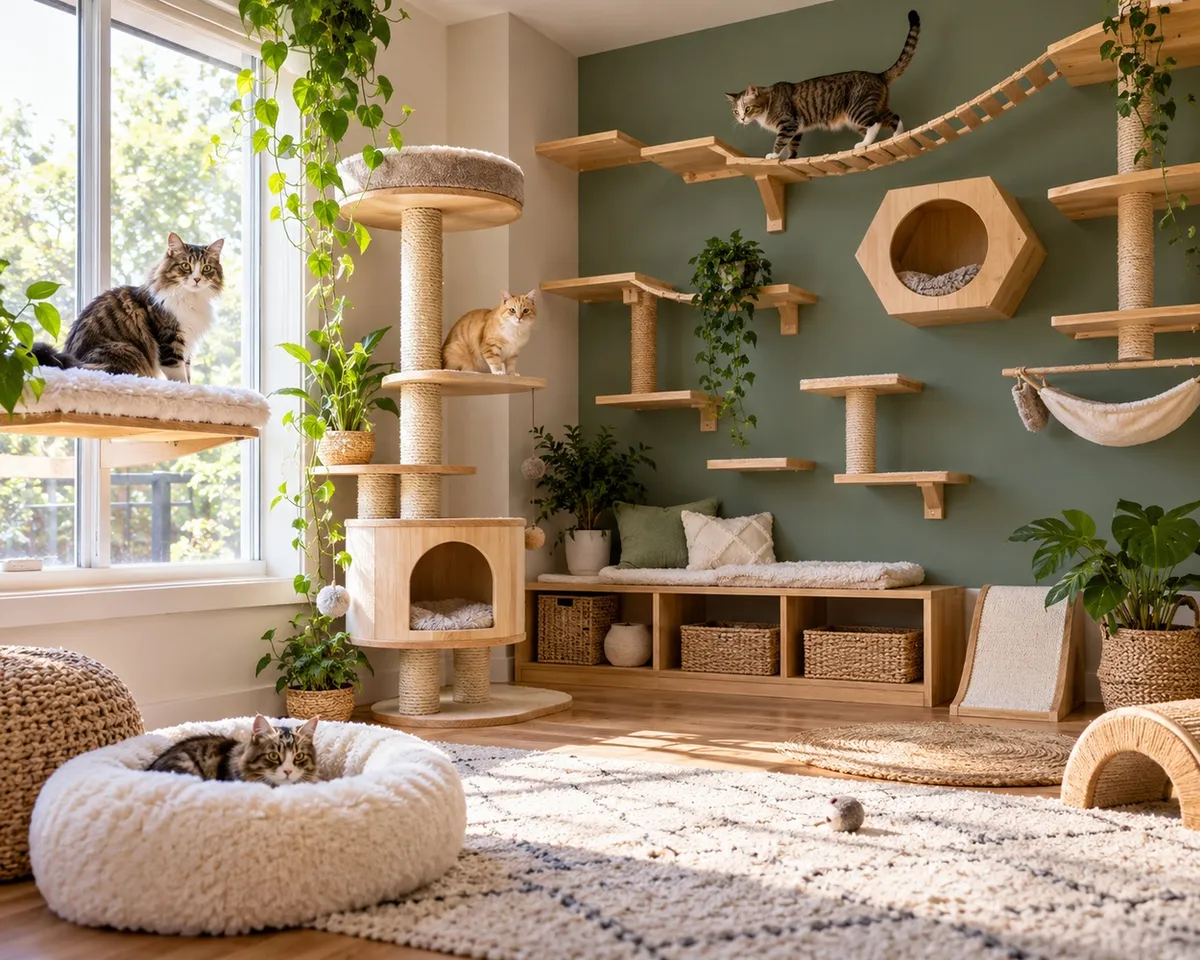
12 Fun Indoor Cat Room Ideas to Try
1. Wall-Mounted Cat Shelves
Wall shelves create a climbing path without using floor space. Mount them 12 to 18 inches apart so cats can jump comfortably, and anchor them into wall studs. A staggered zigzag pattern works well for adult cats.
2. A Floor-to-Ceiling Cat Tree
A tall cat tree gives cats the height they crave and doubles as a scratching post. Look for a wide, heavy base and sisal-wrapped posts. Small homes benefit from our guide to the best cat tree for small apartments.
3. A Window Perch Station
A window perch is one of the cheapest and most loved upgrades. Cats can spend hours watching birds, squirrels, and passing cars. Choose a perch rated for at least 15 pounds and place it on the sunniest window.
4. A Catio-Style Window Box
An enclosed window box lets cats feel fresh air without leaving the house. It must be secured tightly with sturdy mesh so a cat cannot squeeze through. This setup suits cats that stare longingly at the outdoors.
5. A Cozy Hideaway Cave
Cats retreat to enclosed spaces when they feel stressed or tired. A covered bed, cardboard box, or cube cave gives them a private refuge. If your cat suddenly retreats more than usual, read about why a cat is suddenly hiding.
6. A Dedicated Scratching Zone
Place scratchers where cats already scratch, usually near sleeping areas and doorways. Offer both vertical and horizontal options with different textures. A sturdy sisal scratching post works well for most cats, and large breeds need a taller, heavy model.
To protect your furniture while you set this up, see how to stop cats from scratching furniture.
7. An Interactive Play Corner
Set aside floor space for daily hunting-style play. Wand toys, tunnels, and puzzle feeders keep cats mentally sharp. Rotating toys every week prevents boredom, and our list of interactive toys for indoor cats covers the types that work.
8. A Cat Tunnel and Playground Loop
Collapsible tunnels create a fun obstacle course for chasing and ambushing. Connect two or three tunnels with a short ramp for a mini playground. Many kittens treat tunnels as their favorite game.
9. A Hidden Litter Box Nook
Cats prefer a quiet, accessible litter spot, and owners prefer a tidy room. Cabinet enclosures or a corner screen can hide the box while keeping it easy to enter. Browse these hidden cat litter box ideas for smart designs.
10. A Cat-Safe Greenery Corner
A few safe plants add life to the room and give cats something to sniff and nibble. Cat grass is a safe favorite. Always confirm any plant is nontoxic first, using our guide to cat-friendly houseplants.
11. A Multi-Level Cat Bridge
Hanging bridges and connected shelves let cats cross a room without touching the floor. This is a great idea for multi-cat homes because each cat gets an escape route. Make sure every plank is at least 6 inches wide and fully secured.
12. A Calm Sleeping Lounge
Create a soft, warm resting zone away from play areas. A heated or cushioned orthopedic cat bed is especially kind to senior cats with stiff joints. Place it near a sunny spot but outside the main walkway.
Comparing Indoor Cat Room Ideas by Cost and Effort
| Idea | Effort Level | Best For |
|---|---|---|
| Wall shelves | Medium | Small rooms |
| Cat tree | Low | Beginners |
| Window perch | Low | Bird-watching cats |
| Hideaway cave | Low | Shy or anxious cats |
| Scratching zone | Low | Furniture-shredding cats |
| Cat bridge | High | Multi-cat homes |
| Window box | High | Fresh-air lovers |
Most owners can mix several indoor cat room ideas from the low-effort rows first, then add the harder builds later.
Safety Tips for Every Indoor Cat Room
Safety comes before style in any cat room. Cats explore with their mouths and paws, so small hazards turn dangerous quickly. Check the room at cat height before letting your pet loose inside.
Safety checklist:
- Anchor all shelves and tall furniture to the wall to prevent tipping.
- Secure window screens so a cat cannot push through.
- Tape down or cover loose electrical cords and blind pull strings.
- Remove toxic plants such as lilies, which can cause fatal kidney failure in cats.
- Keep string, rubber bands, and hair ties out of reach, since swallowing them can block the intestines.
The ASPCA Animal Poison Control Center maintains a searchable list of plants and household items that are toxic to cats. Check it before adding any greenery to your chosen indoor cat room ideas.
Indoor Cat Room Ideas for Multi-Cat and Senior Households
Multiple cats need multiple resources. A common rule is one litter box per cat plus one extra, and several perches and hiding spots so no cat gets cornered. Space out food bowls to reduce tension at mealtimes.
Senior cats need gentler access. Add low ramps or stairs beside tall furniture, use soft bedding, and keep favorite spots at low or medium height. Our senior cat care tips cover comfort changes older cats appreciate.
If you are bringing a new pet into the room, take it slowly. Our tips for introducing two cats help prevent fights over territory.
How to Keep Your Cat Room Interesting Over Time
Cats get bored when nothing changes. Swap toys weekly, move a box to a new spot, or refresh the window view with a bird feeder placed outside. Even small changes renew curiosity, which is why the best indoor cat room ideas stay flexible.
Try these simple refresh ideas:
- Rotate three or four toys at a time and hide the rest.
- Scatter dry food in puzzle feeders to encourage foraging.
- Rearrange boxes and tunnels once a month.
- Schedule two play sessions of 10 to 15 minutes each day.
For more ways to prevent boredom, read how to keep an indoor cat entertained.
Budget-Friendly Indoor Cat Room Ideas You Can Build Today
You do not need expensive furniture to create a great cat space. Sturdy cardboard boxes make free hideaways, and a clear bookshelf becomes a climbing wall in minutes. Many owners spend less than 50 dollars on a full makeover.
Low-cost swaps that work well:
- Turn an unused bookshelf into a multi-level climbing station.
- Place a folded blanket on a windowsill for an instant perch.
- Use paper bags without handles and cardboard boxes as play tunnels.
- Wrap an old table leg in sisal rope for a custom scratcher.
Frequently Asked Questions
What do cats need in an indoor room?
Cats need vertical space, a hiding spot, a scratching surface, a window view, and a clean litter area. Covering these five basics meets most of an indoor cat’s behavioral needs.
How high should cat shelves be mounted?
Cat shelves should be spaced 12 to 18 inches apart so cats can step up safely. Anchor each shelf into wall studs and make sure it holds at least 20 pounds.
What are the best indoor cat room ideas for small apartments?
The best indoor cat room ideas for small apartments are wall shelves, a slim cat tree, and a window perch. These use vertical space instead of floor space, which keeps the room open for people.
How many litter boxes should a cat room have?
A cat room should have one litter box per cat plus one extra. Two cats therefore need three boxes, placed in separate quiet spots.
How often should I change my cat’s toys?
Rotate cat toys about once a week to keep them interesting. Keeping three or four out at a time and storing the rest prevents cats from losing interest.
The best indoor cat room ideas combine height, hideaways, scratching spots, and play space in a safe, calm setting. Start with one upgrade, like a window perch or a sturdy cat tree, and watch how your cat responds. Add a new element each week until the room feels like a true territory your cat loves.