Hidden Cat Litter Box Ideas: 12 Smart Ways to Hide the Box
Hidden cat litter box ideas work best when the cat can still enter easily, the box gets airflow, and you can scoop daily without moving furniture. They matter most in small apartments, open-plan homes, and any household where a visible box clashes with the decor.
This post may contain affiliate links. As an Amazon Associate I earn from qualifying purchases.
Table of Contents
Hidden cat litter box ideas at a glance:
- Short Answer: Disguise the box inside furniture, a cabinet, or a planter-style enclosure that keeps an open entrance and ventilation.
- Best Starting Point: A cabinet or bench with a cat-sized opening of at least 8 to 10 inches wide, plus a second exit if possible.
- Main Risk: Poor airflow and a cramped interior can make cats avoid the box entirely.
- Key Habit: Scoop at least once a day, because hidden boxes hide the smell from you but not from your cat.
- Warning Sign: Accidents outside the box in the first two weeks mean the new setup needs adjusting.
Why Hidden Cat Litter Box Ideas Are So Popular
A standard litter box is plastic, bulky, and usually 16 to 22 inches long. In a studio or small living room, it is hard to ignore.
Hiding the box also helps with practical problems:
- Litter tracking and dust stay contained in one area.
- Dogs and toddlers cannot reach the contents.
- The room looks cleaner when guests visit.
- Cats that like privacy often feel safer inside a covered space.
The catch is that cats judge a litter box very differently from humans. A cat wants easy access, clean litter, a clear view of the room, and fresh air. The best hidden cat litter box ideas respect those four needs first and the decor second.
What Cats Need From a Hidden Litter Box Setup
Before choosing a design, check it against what cats actually require. Skipping this step is the main reason hidden boxes fail.
Core requirements for any hidden setup:
- Size: The box inside should be at least 1.5 times the length of your cat from nose to tail base.
- Entrance: An opening of roughly 8 to 10 inches wide for average cats, and 10 to 12 inches for large breeds like Maine Coons.
- Ventilation: At least two vents or open sides so ammonia does not build up.
- Escape route: Many cats refuse a box with only one exit, especially in multi-cat homes.
- Location: A quiet spot away from food bowls, washing machines, and loud doorways.
For the location part, see our guide on the best place to put a litter box before you pick a hiding spot. A perfect disguise in a bad location still fails.
12 Hidden Cat Litter Box Ideas That Actually Work
1. Cabinet Conversion
A bathroom or hallway cabinet works well once the back or side is cut for ventilation and a round or arched entrance is added. Remove any shelves so the box sits flat and the cat can turn around inside.
2. Storage Bench With Side Entrance
An entryway bench hides a box beneath a seat cushion. Cut the entrance in the side, not the front, so litter spray stays off the floor.
3. Nightstand or Side Table Enclosure
A closed nightstand fits a standard box in the lower compartment. It is one of the cheapest hidden cat litter box ideas because many pieces need only one hole cut.
4. Planter-Style Cover
Faux-plant enclosures blend into living rooms. Choose a model with a wide opening and a removable top for fast scooping.
5. Closet Corner
Placing the box inside a closet with the door propped open by 4 to 6 inches gives privacy without trapping odor. Never fully close the door.
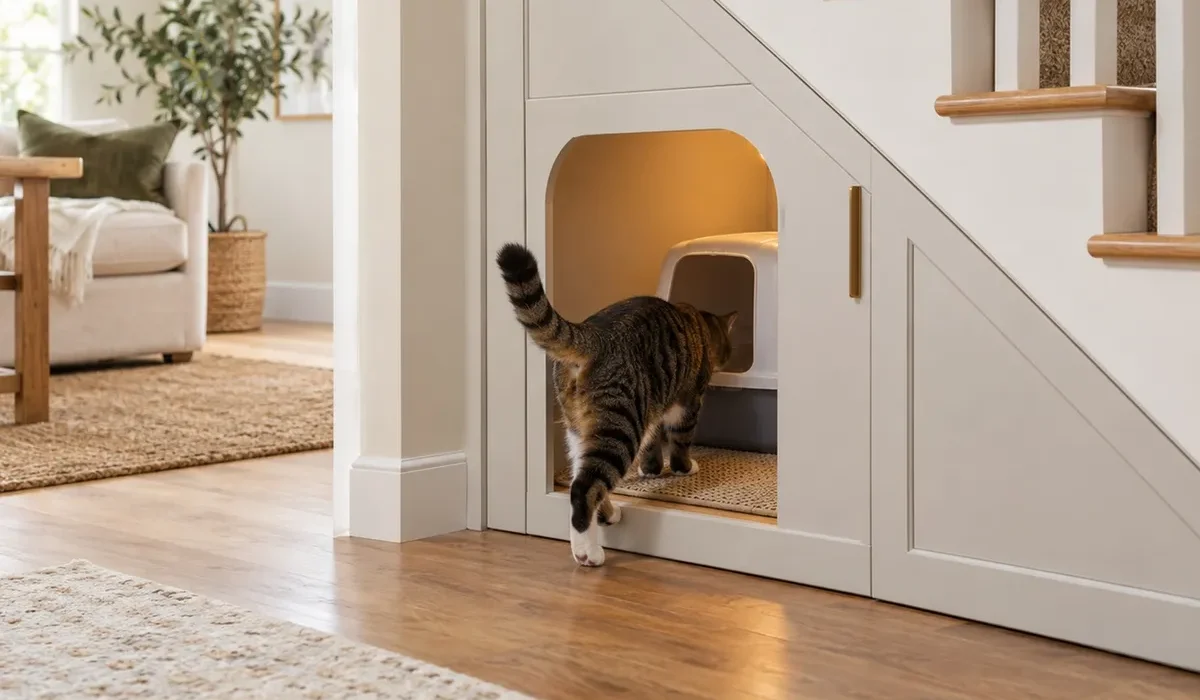
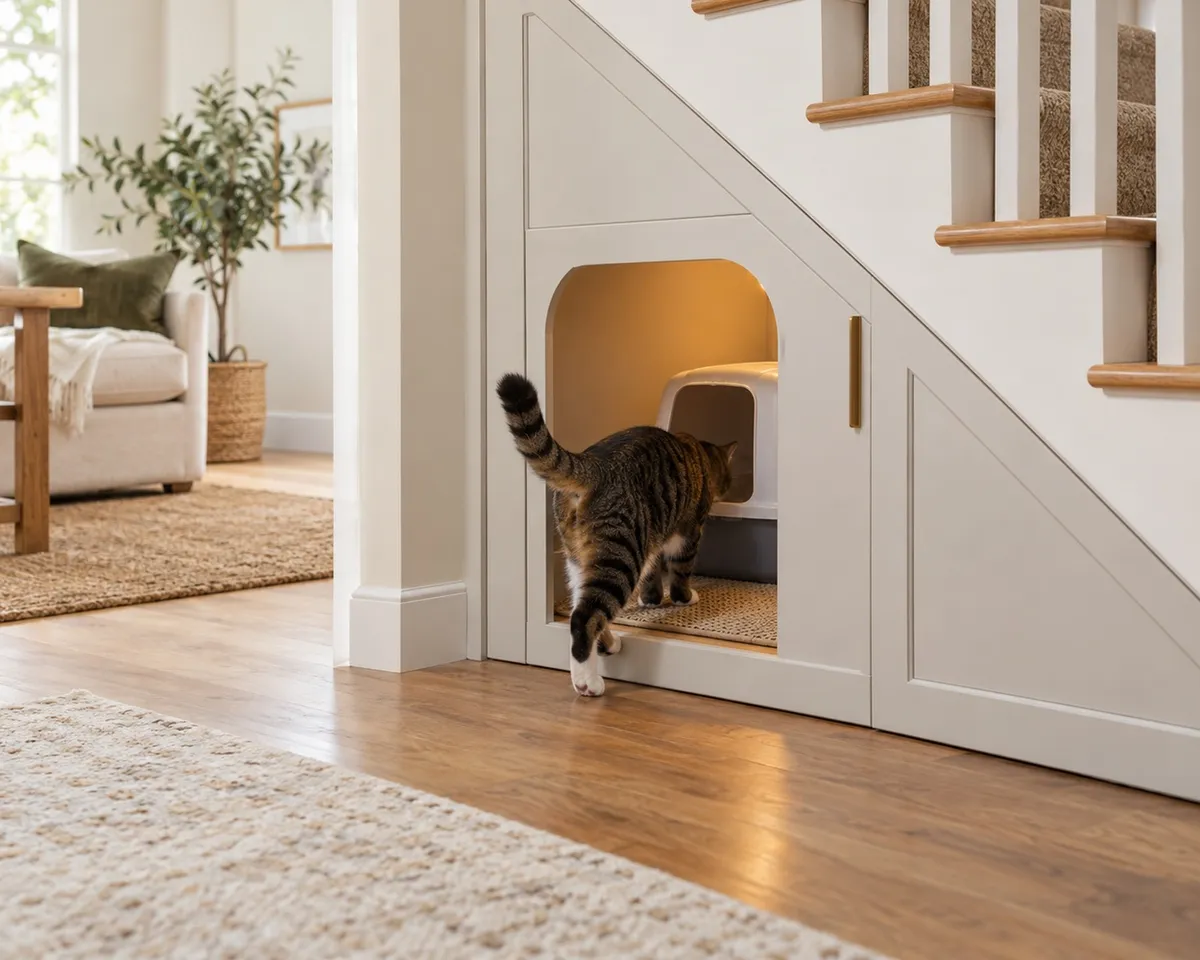
6. Under-Stairs Nook
Unused space beneath stairs is quiet and out of view. Add a small fan vent or leave one side open for airflow.
7. Cat Litter Box Furniture With Built-In Scratcher
Some enclosures include a scratching panel on the outside. This gives the piece two jobs and encourages cats to approach it.
8. Bathroom Vanity Cutout
Vanities have plumbing in the back, so cut the entrance on the side and keep the box away from pipes. The bathroom floor is also easy to wipe clean.
9. Behind a Decorative Screen
A folding screen creates a hidden corner without any cutting. It is renter-friendly, but make sure the screen leaves a gap at the bottom for airflow.
10. Washer-Dryer Alcove Shelf
A low shelf in a laundry nook keeps the box out of sight. Avoid placing it directly beside a running machine, since sudden noise can scare cats away from the box.
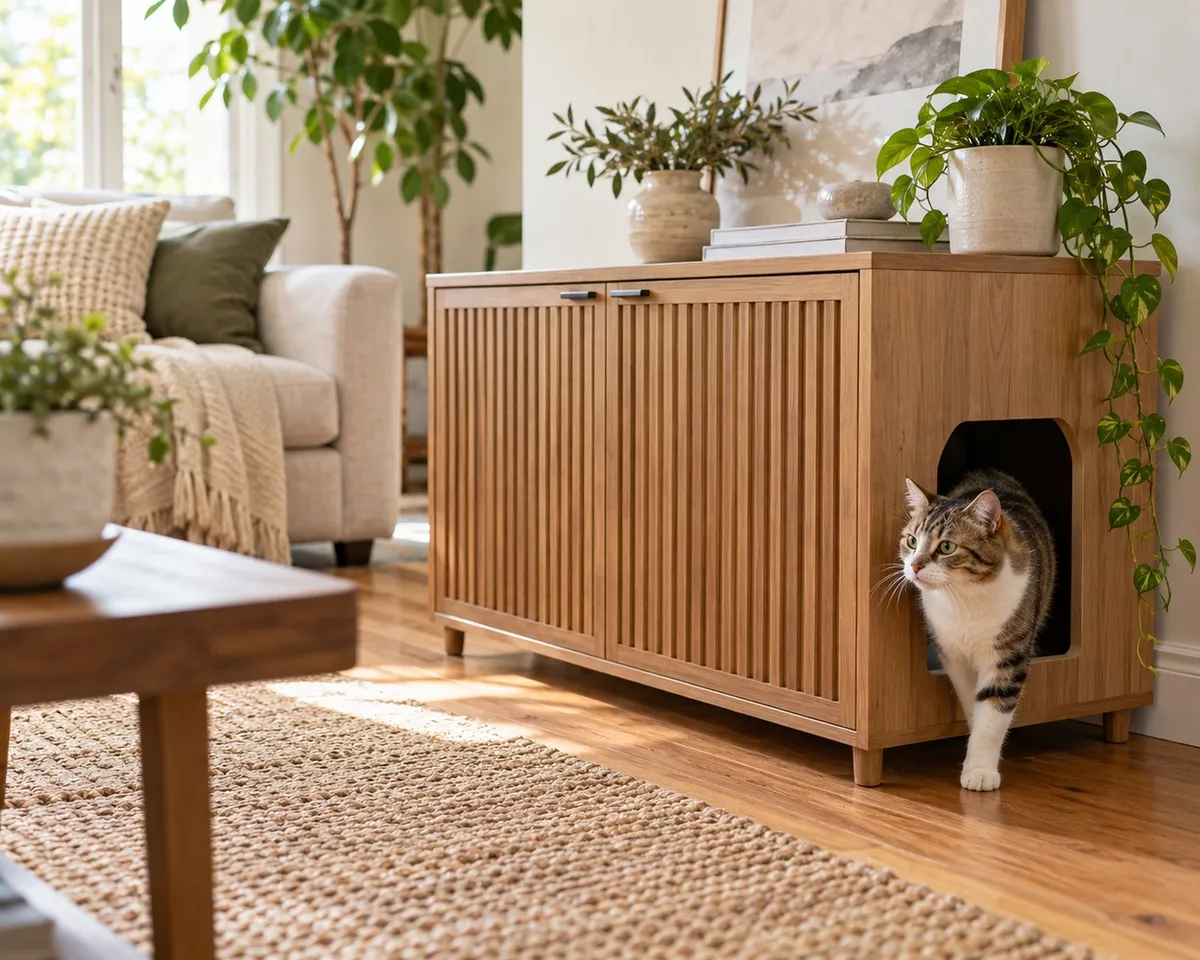
11. Sideboard or Credenza Setup
A low media console works for large cats because the interior is wide. Line the floor with a waterproof mat to protect the wood.
12. Top-Entry Hidden Box
Top-entry enclosures keep litter inside and stop dogs from raiding the box. They suit young, agile cats, but senior cats and kittens often struggle with the jump.
Hidden vs Open Litter Boxes: Quick Comparison
| Option | Best For | Main Drawback |
|---|---|---|
| Cabinet or furniture | Small apartments | Needs cutting and ventilation |
| Planter-style cover | Living rooms | Tight inside for large cats |
| Closet corner | Quiet homes | Door must stay partly open |
| Decorative screen | Renters | Offers less odor control |
| Top-entry enclosure | Homes with dogs | Hard for seniors and kittens |
How to Introduce a Hidden Litter Box Without Accidents
Cats dislike sudden change, and a box that disappears overnight can trigger accidents. Switch gradually.
- Place the new enclosure next to the current box for 3 to 5 days.
- Leave the doors, lid, or panels off so the cat sees the entrance as familiar.
- Move the box inside once the cat uses the empty enclosure area.
- Keep the old open box nearby for the first week as a backup.
- Add the door or cover last, only after the cat uses the box calmly.
If your cat starts avoiding the setup, read about why a cat is suddenly hiding, because stress and litter box problems often appear together.
Odor and Hygiene Tips for a Hidden Litter Box
An enclosed space traps smell faster than an open room, so cleaning habits matter more, not less. A cat’s nose is far stronger than yours, and a smelly box is one of the most common reasons for accidents.
Daily and weekly habits:
- Scoop at least once every day, and twice in multi-cat homes.
- Replace the litter fully every 1 to 2 weeks, depending on the type.
- Wash the box with mild unscented soap monthly, since strong cleaners can deter cats.
- Use a low-dust unscented clumping litter so the enclosure stays fresh without perfumes.
Our guide on how often you should clean a cat litter box gives a full schedule. For smaller homes, cat litter for odor control in small apartments can also reduce smell inside tight enclosures.
Keep a washable waterproof litter mat under or outside the enclosure to catch tracked granules and protect the floor.
Mistakes to Avoid With Hidden Cat Litter Box Ideas
- Entrance too small: Cats that must squeeze in will avoid the box.
- No airflow: Trapped ammonia is unpleasant and can irritate a cat’s airways.
- Dark, cramped interior: Cats like to see out while they use the box.
- Single exit in multi-cat homes: A dominant cat can block another cat inside.
- Skipping the gradual switch: Sudden changes cause accidents on rugs and beds.
- Forgetting older cats: High entrances are hard on arthritic joints.
If you share your home with senior pets, consider a low-entry design and review our senior cat care tips. If you are still unsure about the basic box itself, our guide to choosing the best litter box for your cat covers size and style.
When a Hidden Litter Box Signals a Problem
Sometimes the new setup is not the issue. Straining, frequent trips with little output, crying in the box, or blood in the urine can point to a urinary problem, which needs a veterinarian quickly. Urinary blockages can become life-threatening within 24 to 48 hours, especially in male cats.
If accidents begin suddenly after months of normal use, check with your vet first. The Cornell Feline Health Center explains how urinary and digestive conditions can change litter box habits. Never assume a behavior problem before ruling out illness.
Frequently Asked Questions
Are hidden cat litter box ideas bad for cats?
No, they are safe when the enclosure has good ventilation, a wide entrance, and is scooped daily. Problems appear only when the space is cramped, dark, or smelly.
How big should a litter box enclosure be?
The interior should be at least 1.5 times your cat’s body length, usually 24 inches or longer for average adult cats. Large breeds may need 30 inches.
How do I stop litter smell in a hidden litter box?
Scoop daily, use unscented clumping litter, and make sure the enclosure has at least two vents. A full litter change every 1 to 2 weeks keeps odor under control.
Can I hide a litter box in a closet?
Yes, as long as the door stays propped open about 4 to 6 inches. A fully closed closet traps ammonia and may frighten the cat.
Will my cat stop using the box if I cover it?
Some cats do, especially if the change is sudden. Introduce covers gradually over 1 to 2 weeks and keep the old box available until the cat adjusts.
The best hidden cat litter box ideas combine a roomy interior, good airflow, and a quiet spot your cat already likes. Start with one simple option, such as a cabinet or screen, introduce it slowly, and scoop every day so the box stays pleasant for your cat as well as for you.