


Why Does My Cat Meow at Night? 5 Common Causes
Nighttime meowing is one of the most frustrating cat behaviors for sleep-deprived owners. Your cat meows at night for specific reasons—hunger, loneliness, hormonal changes, medical issues, or simple attention-seeking, and identifying the cause is the first step to restful nights for both of you.
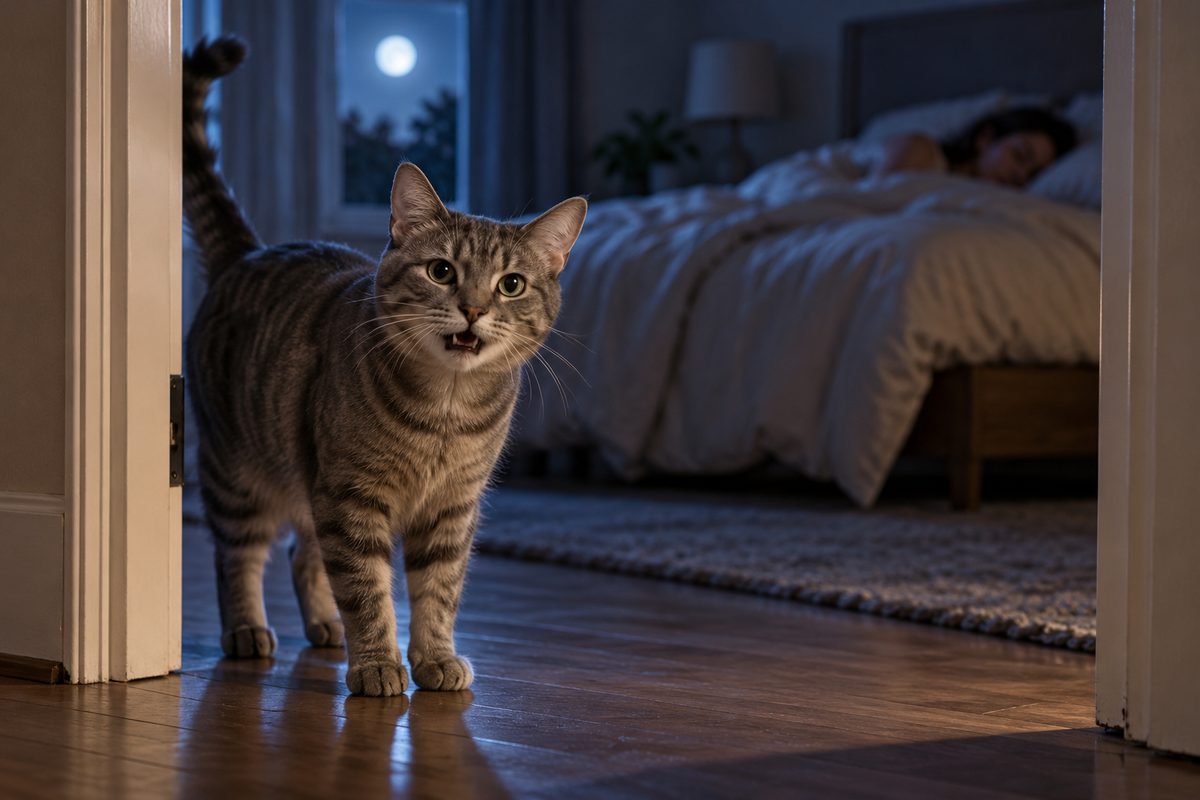
Table of Contents
Key Takeaways:
- Cats meow at night most often due to hunger, loneliness, heat cycles, or underlying health problems.
- Nighttime activity peaks because cats are crepuscular animals with natural energy surges at dawn and dusk.
- Medical conditions like hyperthyroidism and urinary issues commonly trigger excessive vocalization.
- Environmental changes, enrichment, and feeding schedules can reduce or eliminate nighttime meowing.
Why Cats Meow at Night: The Main Triggers
Cats are crepuscular, meaning they’re most active at dawn and dusk rather than during the day or all night. This natural instinct drives the classic 3 a.m. yowling session in many homes. Beyond biology, several specific factors trigger nighttime meows.
Common reasons include:
- Hunger or an empty food bowl before bed
- Loneliness or separation anxiety when you’re asleep
- Unspayed female cats in heat, signaling readiness to mate
- Medical conditions like hyperthyroid disease in cats, urinary tract infections, or pain
- Boredom or lack of daytime activity and stimulation
- Attention-seeking if meowing has worked in the past
Health Issues That Cause Nighttime Meowing
If your cat’s meowing is new or has intensified, a veterinary visit is essential to rule out medical causes. Several conditions commonly trigger vocalization changes in cats.
Hyperthyroidism is one of the most frequent culprits in older cats, causing increased appetite, restlessness, and excessive meowing. Cornell Feline Health Center notes that urinary tract infections and bladder issues often produce urgent, distressed meowing, especially during nighttime bathroom visits. Cognitive dysfunction in senior cats also causes confusion and vocalization at odd hours. If your cat seems in pain, is straining to urinate, or shows other behavioral changes, schedule a vet appointment promptly.
Behavioral Solutions for Nighttime Meowing
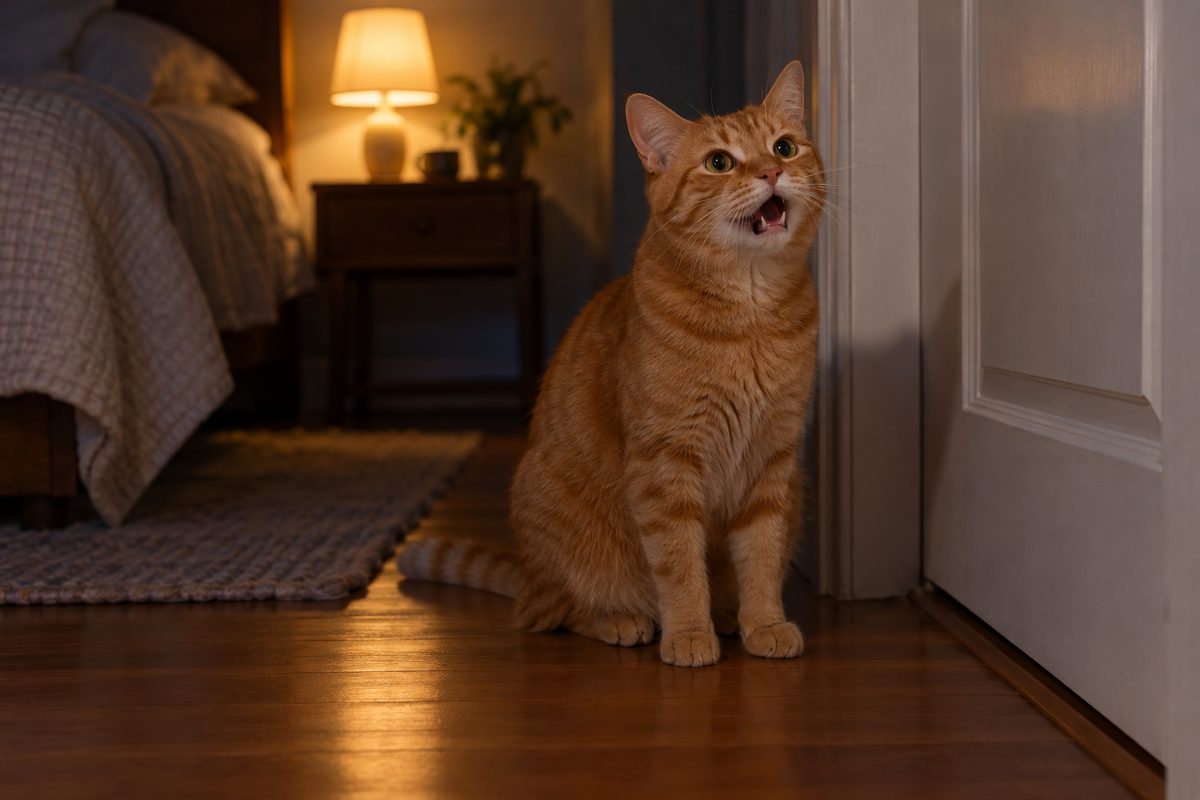
Once medical issues are ruled out, behavior modification and environmental changes work well to reduce nighttime noise. The goal is tiring your cat during the day so they sleep when you do.
Practical strategies:
- Play with your cat 1-2 hours before your bedtime using interactive cat toys like wand toys or laser pointers to mimic hunting.
- Feed a larger meal or use an automatic cat feeder right before bedtime so your cat feels full and satisfied.
- Provide puzzle feeders or enrichment toys during the day to occupy idle time and reduce nighttime restlessness.
- Close your bedroom door so meowing doesn’t disturb you, and reward quiet behavior with treats and attention during daylight hours.
- Keep your cat’s sleep area comfortable with soft bedding and consistent room temperature.
- Use a cat calming diffuser (pheromone-based) in the bedroom to help reduce anxiety-driven vocalization.
What Not to Do When Your Cat Meows at Night
Your response to nighttime meowing shapes whether it continues. Cats learn quickly that meowing brings results, even if that result is just your attention or annoyance.
Never reward meowing by getting up, petting your cat, or opening the bedroom door—this reinforces the behavior. Resist the urge to yell or punish, as stress increases vocalization. Instead, ignore the meowing completely (wear earplugs if needed during the adjustment period). Only reward your cat with attention, playtime, and treats when they are quiet during times you want them calm. Consistency from everyone in your household is critical for success.
When to Call Your Veterinarian
Seek immediate veterinary care if your cat’s meowing is accompanied by signs of distress or illness. Red flags include straining to urinate, blood in urine, lethargy, loss of appetite, or sudden behavior changes. A vet can rule out diabetes in cats, infections, and other treatable conditions. Senior cats especially need prompt evaluation since hyperthyroidism and kidney disease are common and manageable with early intervention.
Frequently Asked Questions
- Is it normal for cats to meow more at night? Yes, cats are naturally more active at dawn and dusk due to their crepuscular nature, but excessive or new nighttime meowing warrants a vet visit to rule out medical issues.
- Can I give my cat something to help them sleep through the night? Never give medication without veterinary guidance; instead, use daytime enrichment, feeding schedules, and playing with your cat to encourage nighttime rest.
- Will ignoring nighttime meowing make it stop? Yes, if done consistently for 1-2 weeks and combined with increased daytime activity and appropriate feeding times, most cats will reduce nighttime vocalization.
Nighttime meowing is solvable with patience, environmental tweaks, and the right enrichment routine. Work with your vet to rule out health issues, then adjust your cat’s daytime activity and feeding schedule to align their sleep cycle with yours.

