
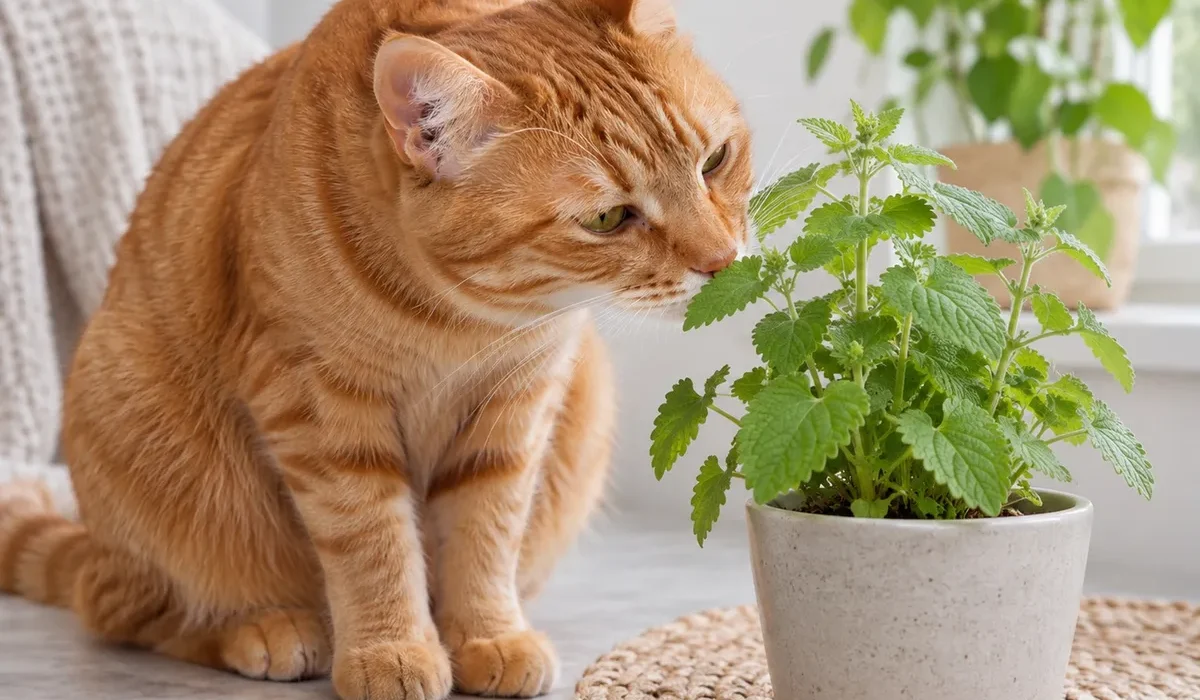
Why Do Cats Love Catnip? 6 Fascinating Facts About the Magic Herb
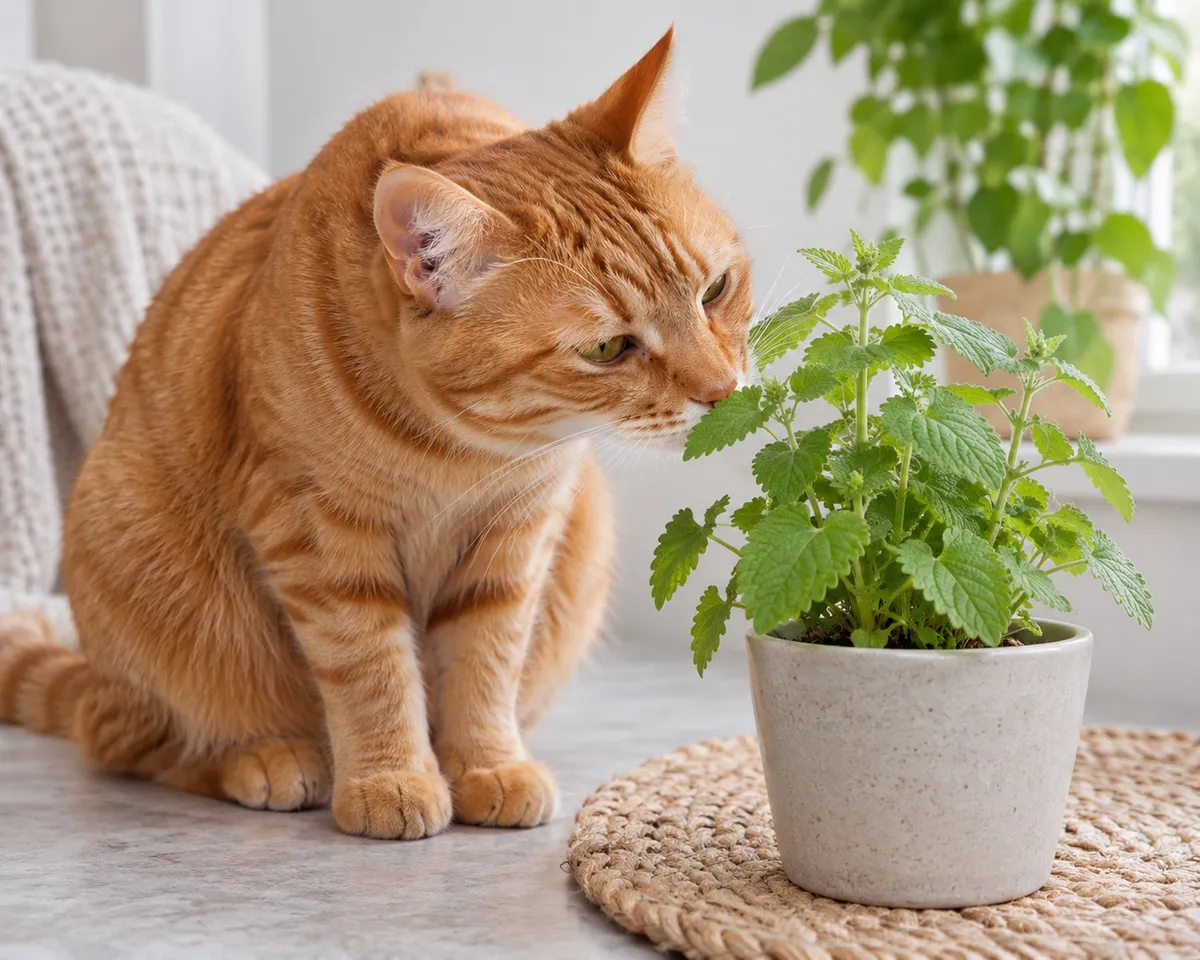
The answer to why do cats love catnip is nepetalactone, an oil in catnip leaves that binds to scent receptors in a cat’s nose and triggers a euphoric reaction lasting 10 to 15 minutes. Owners who understand how catnip works can use the herb safely for play, stress relief and enrichment, especially with indoor cats.
This post may contain affiliate links. As an Amazon Associate I earn from qualifying purchases.
Table of Contents
Why do cats love catnip at a glance:
- Short Answer: Nepetalactone stimulates scent receptors and releases feel-good endorphins in the brain.
- Why Cats Do It: The scent triggers rolling, rubbing, drooling and play for 10 to 15 minutes.
- Is It Normal: About 2 in 3 adult cats respond, and catnip sensitivity is inherited.
- How to Respond: Offer a small pinch once or twice a week and supervise the reaction.
Why Do Cats Love Catnip? The Science of Nepetalactone
Cats love catnip because nepetalactone, an oil in the leaves and stems of Nepeta cataria, binds to receptors inside the nose. Those receptors signal the olfactory bulb, amygdala and hypothalamus, brain areas that control emotion and behavior.
Japanese researchers reported in 2021 that catnip-type compounds raise beta-endorphin levels in cats, the natural opioids linked to pleasure. The same research found these compounds repel mosquitoes, which may explain why cats rub the plant onto their faces.
What a Catnip Reaction Looks Like
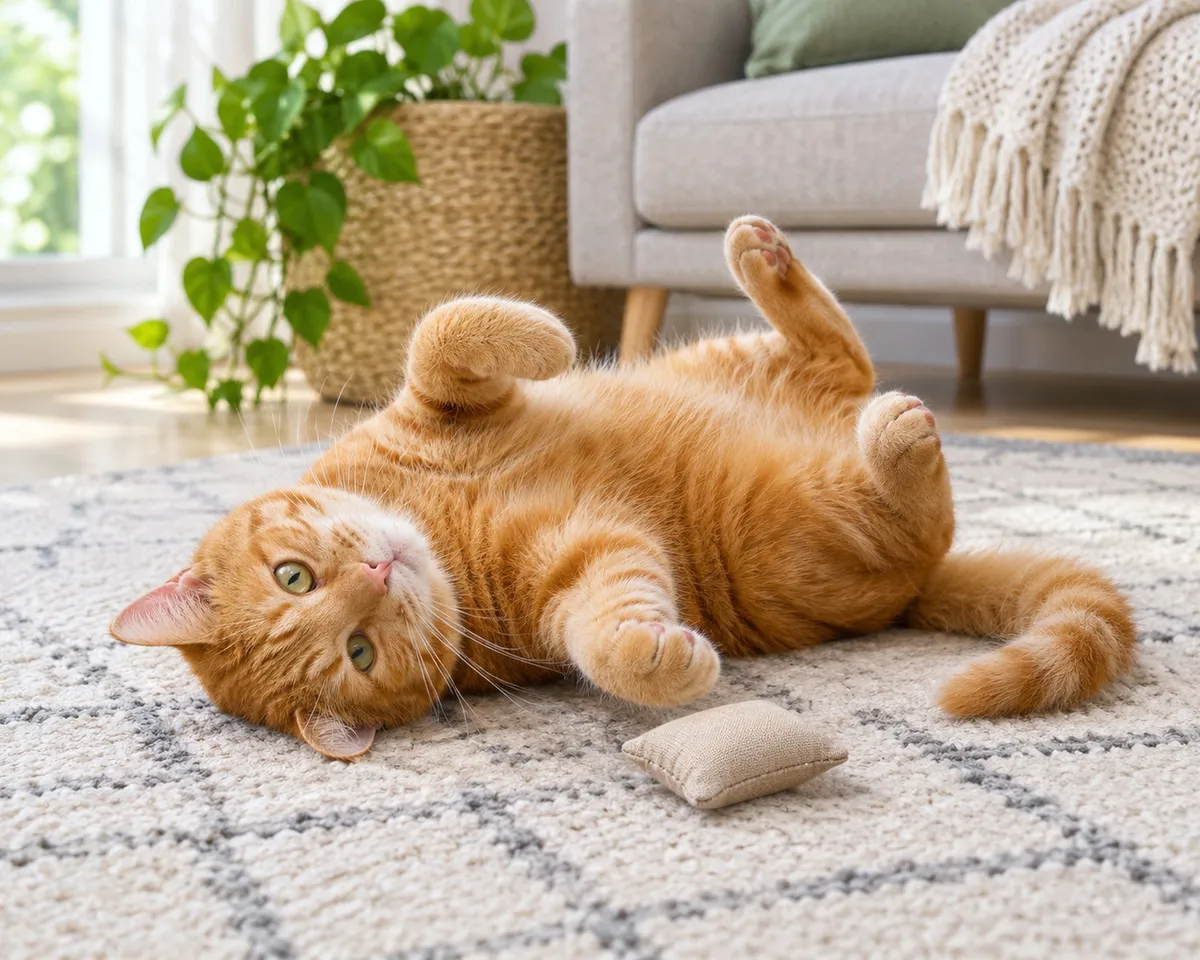
A typical catnip response lasts 10 to 15 minutes and follows a predictable pattern. Most cats show several of these signs:
- Sniffing, licking and chewing the leaves
- Rubbing the chin and cheeks against the catnip
- Twisting and cat rolling on back behavior
- Drooling, purring or loud vocalizing
- Running bursts that resemble cats get the zoomies
Afterward, cats stay temporarily immune to catnip for roughly 30 minutes to 2 hours. When my cat Milo first tried catnip, he rolled on the rug for ten minutes, then ignored the toy until evening.
Some cats turn playful while others become calm and sleepy. A few cats swat or growl during a catnip high, so separate overexcited cats from housemates.
Why Do Cats Love Catnip While Some Cats Ignore It?
Catnip sensitivity is inherited, and roughly one third of cats show no reaction at all. Kittens rarely respond before 3 to 6 months of age, and some senior cats react less strongly.
Non-responders often react to other plants instead. A 2017 study of 100 domestic cats found these response rates:
| Plant | Cats That Responded | Common Form |
|---|---|---|
| Silvervine | About 79% | Dried sticks or powder |
| Catnip | About 68% | Dried leaves, sprays, fresh plants |
| Tatarian honeysuckle | About 53% | Untreated wood chips |
| Valerian root | About 47% | Dried root in toys |
Many cats that ignore catnip react strongly to silvervine, so silvervine chew sticks are the best first alternative to try.
Sniffing vs Eating Catnip: Two Different Effects
Smelling catnip acts as a stimulant, while eating catnip usually acts as a mild sedative. The effects look quite different:
- Sniffed catnip: excitement, rolling and play for 10 to 15 minutes
- Eaten catnip: calm, drowsy and relaxed behavior
- Large amounts eaten: possible vomiting or diarrhea
Big cats respond to catnip as well. Lions, leopards and jaguars often react like house cats, while tigers usually show little interest.
Is Catnip Safe for Cats?
Catnip is safe for most healthy cats and is not addictive, according to widely accepted veterinary guidance. The ASPCA Animal Poison Control Center notes that large amounts can cause vomiting, diarrhea and sedation.
Call your veterinarian if vomiting lasts more than 24 hours or your cat seems unusually lethargic after eating catnip. Follow these simple safety rules:
- Use a small pinch, roughly 1/4 to 1 teaspoon of dried leaves
- Limit catnip sessions to once or twice a week
- Ask a vet before giving catnip to pregnant or sick cats
- Give each cat its own space in multi-cat homes
How to Use Catnip for Play and Enrichment
Catnip works best as a short, structured reward that boosts activity in indoor cats. Follow these steps for the strongest response:
- Crush a pinch of organic dried catnip between your fingers to release the oils.
- Sprinkle the catnip on a scratching post, cat bed or cat tree.
- Rub catnip inside a carrier to make the space feel inviting.
- Stuff the leaves into easy homemade cat toys such as sock kickers.
- Store dried catnip in an airtight container in the freezer to keep nepetalactone fresh for months.
Pair catnip with wand play and puzzle feeders to keep an indoor cat entertained all week. Rotating catnip with silvervine prevents boredom and keeps both scents exciting.
Frequently Asked Questions
Why do cats love catnip so much?
Cats love catnip because nepetalactone triggers scent receptors and releases endorphins, creating about 10 to 15 minutes of euphoria. The reaction is inherited, so roughly 2 in 3 cats respond.
How long does catnip last on a cat?
A catnip high lasts about 10 to 15 minutes. Afterward, cats stay unresponsive to catnip for roughly 30 minutes to 2 hours.
Can kittens have catnip?
Kittens can safely have catnip, but most kittens under 3 to 6 months show no reaction. The response usually appears as kittens approach maturity.
Is catnip a drug for cats?
Catnip is a natural herb from the mint family, not a drug, and catnip is not addictive. Eating large amounts may upset a cat’s stomach, causing vomiting or diarrhea.
How often can I give my cat catnip?
Giving catnip once or twice a week keeps the herb exciting and effective. Daily use can dull the reaction because cats grow used to the scent.
The answer to why do cats love catnip is nepetalactone, a plant oil that sparks a short, harmless burst of joy in about two thirds of cats. Start with a small pinch on a toy or scratching post this week, and try silvervine if your cat shows no interest in catnip.