

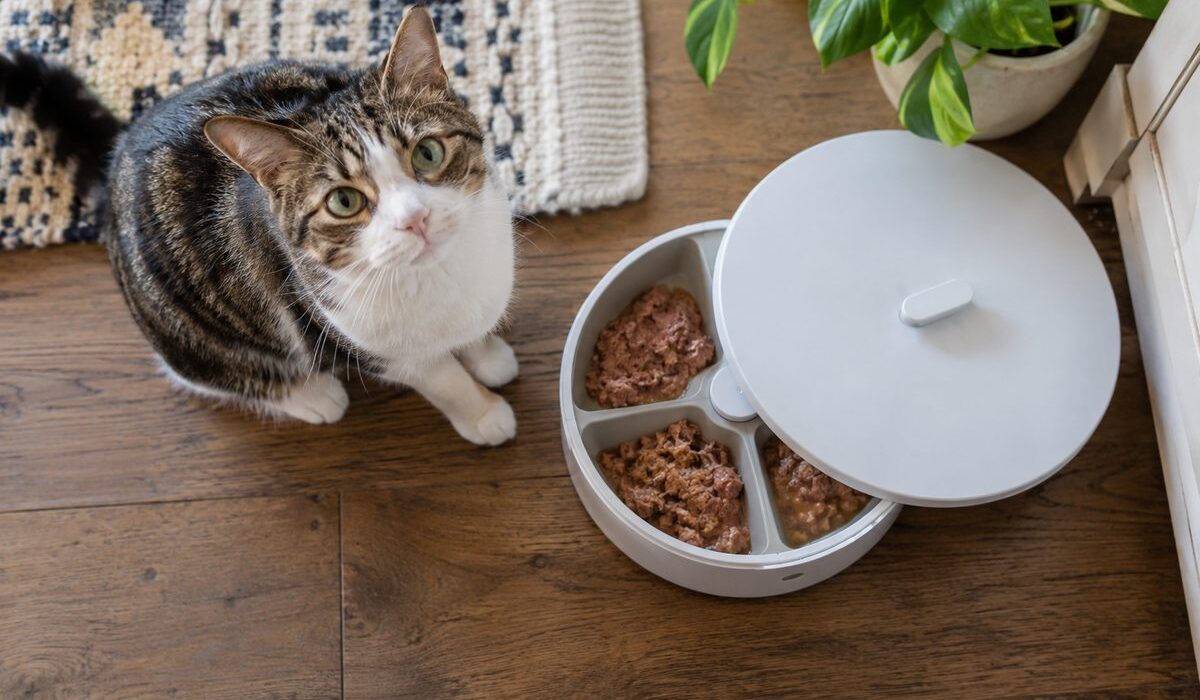
Best Automatic Cat Feeder for Wet Food: 5 Top Models
Automatic wet food feeders save time and keep portions consistent for cats who need fresh meals throughout the day. A quality automatic wet food feeder ensures your cat eats on schedule, even when you’re away, while preventing spoilage and bacterial growth on uneaten portions.
This post may contain affiliate links. As an Amazon Associate I earn from qualifying purchases.
Table of Contents
Key Takeaways:
- Automatic wet food feeders dispense portioned meals at set times, ideal for cats on strict diets or multiple-cat households.
- Look for models with sealed compartments, easy-clean designs, and reliable cooling to keep food fresh.
- Most units work best with standard wet food cans or pouches that fit the feeder’s slots.
- Set a routine maintenance schedule to prevent mold and bacteria buildup inside the feeder.
What Makes a Good Automatic Wet Food Feeder
The best automatic wet food feeders combine durability, ease of cleaning, and temperature control to preserve food safety. Key features separate reliable models from poor performers.
Essential features to prioritize:
- Sealed compartments that protect food from air exposure and drying.
- Stainless steel or food-grade plastic bowls that resist staining and odor absorption.
- Built-in ice packs or cooling function to keep wet food at safe temperatures for 8+ hours.
- Simple locking mechanisms and removable trays for thorough cleaning.
- Timer accuracy that dispenses meals on schedule without jamming.
- Capacity ranging from 2 to 5 compartments, depending on your household size.
Types of Automatic Wet Food Feeders Compared
Three main styles dominate the market, each with distinct advantages for different cat owners and living situations.
Carousel-style feeders:
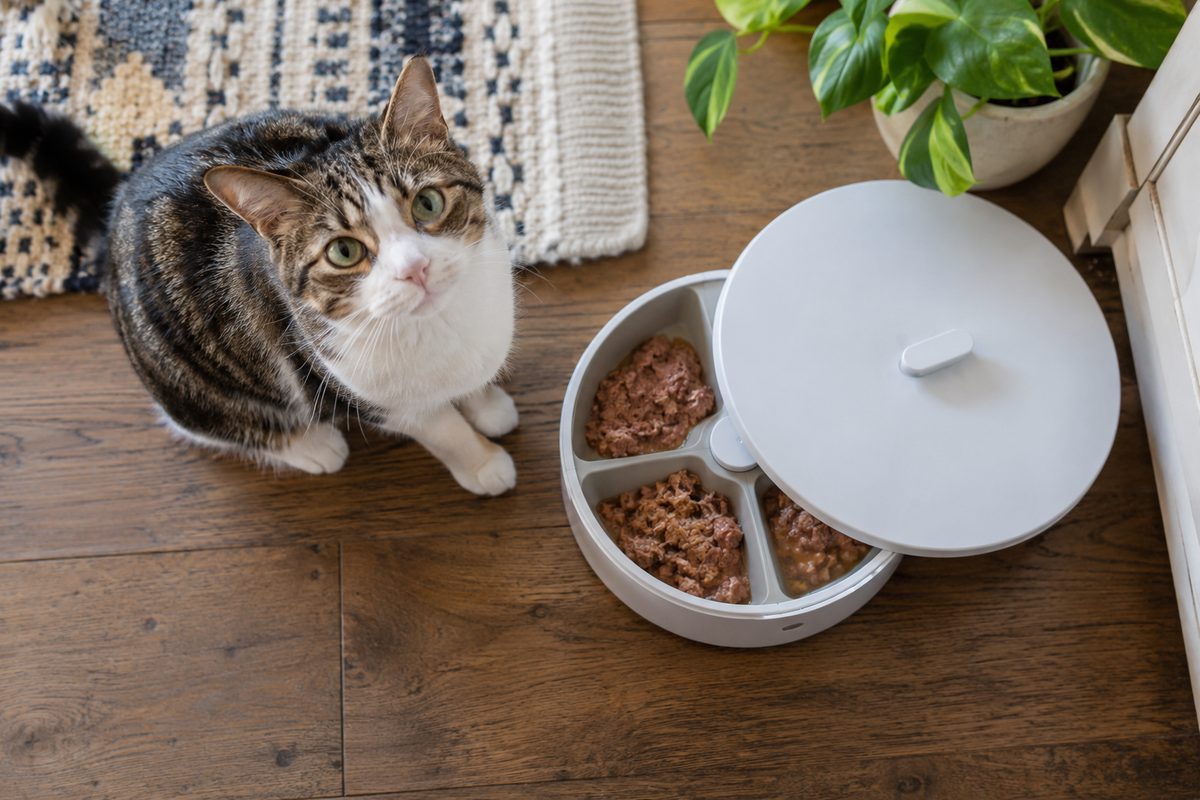
- Rotate multiple sealed compartments, exposing one fresh portion at feeding time.
- Hold 2 to 5 meals in separate chambers, ideal for all-day coverage.
- Work well with canned food or pouches placed directly in compartments.
- Often include removable ice packs to chill food during warm months.
Gravity-fed dual-bowl feeders:
- Feature two stainless steel bowls that alternate on a timer.
- Simpler mechanics than carousel models, with fewer moving parts to fail.
- Require fresh wet food loaded into each bowl before setting the timer.
- Best for households with one to two cats and twice-daily feeding schedules.
Slow-feed or portion-control models:
- Dispense measured amounts of wet food into a single bowl at set intervals.
- Suited for cats prone to overeating or with sensitive digestion.
- Require daily refilling of a larger reservoir or compartment.
- Generally more affordable than carousel-style units.
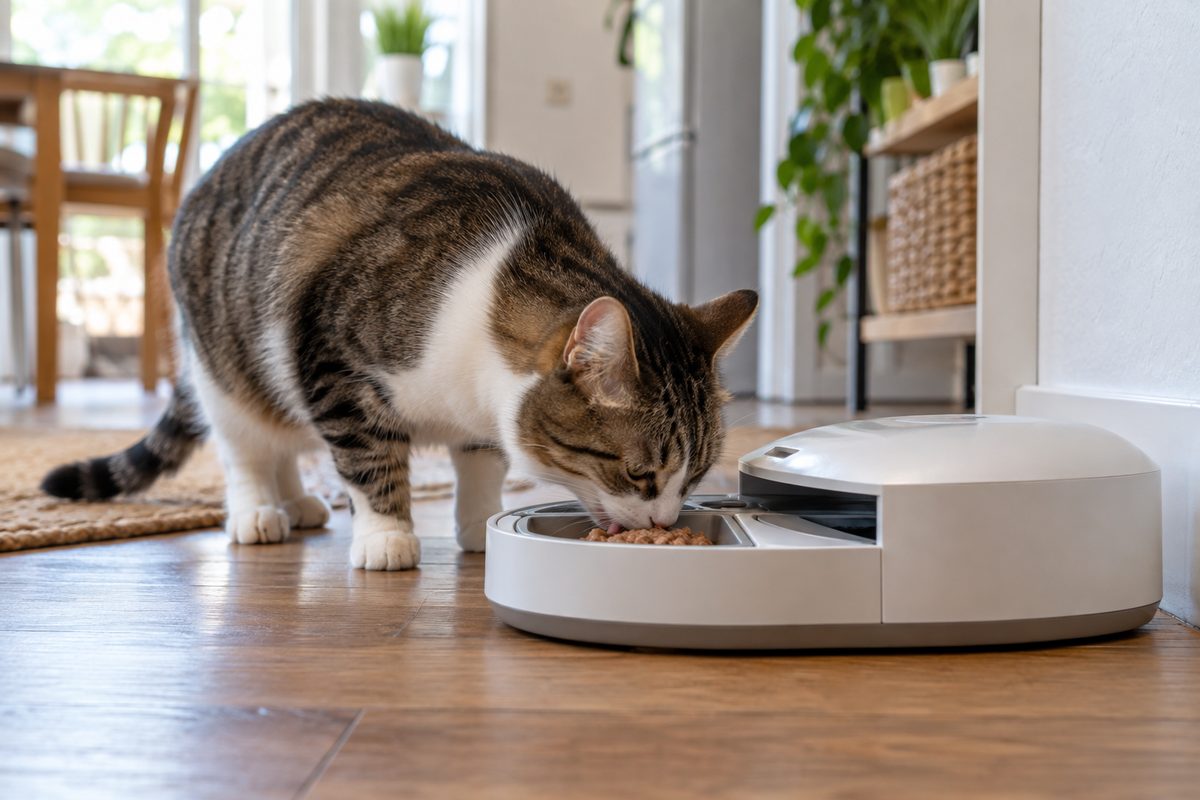
How to Choose the Best Automatic Wet Food Feeder for Your Cat
Selecting the right feeder depends on your cat’s feeding schedule, dietary needs, and your home environment. Consider these factors before purchasing.
Feeding frequency and household size:
- Single cat eating twice daily: a dual-bowl feeder or 2-compartment carousel meets your needs.
- Multiple cats or all-day coverage: choose a 4- to 5-compartment carousel feeder.
- Cats on strict portion control: opt for a slow-feed model with portion-size customization.
Food type and storage:
- Check if the feeder accommodates your preferred food format: open cans, pouches, or freshly scooped portions.
- Confirm compartment or bowl size matches typical serving amounts for your cat.
- Ensure cooling capacity matches your climate; warm homes need ice packs or refrigerated compartments.
Maintenance and durability:
- Prioritize models with dishwasher-safe or easily removable parts for daily cleaning.
- Avoid feeders with crevices or rubber seals that trap moisture and promote mold.
- Read reviews for longevity; budget automatic wet food feeders may require replacement every 2 to 3 years.
Many cat owners find Petlibro automatic pet feeders offer reliable carousel designs with good temperature control, making them a solid starting point for research.
Setup, Use, and Care Tips for Automatic Wet Food Feeders
Proper setup and maintenance ensure your feeder runs safely and hygienically for months or years. Follow these best practices to maximize the lifespan of your device.
Initial setup:
- Place the feeder on a flat, level surface away from direct sunlight and heat sources.
- Freeze ice packs overnight before the first use if your model includes them.
- Load food compartments only when you’re ready to activate the timer.
- Test the timer and rotation mechanism with empty compartments to ensure accuracy.
Daily maintenance:
- Wipe down bowls and compartments after each feeding cycle to remove residual food.
- Replace ice packs every 4 to 6 hours during warm weather or if food sits longer than 8 hours.
- Discard any uneaten wet food from the bowl after 2 hours to prevent bacterial growth.
Weekly and monthly cleaning:
- Deep clean the entire feeder weekly with warm soapy water and a soft brush.
- Use an enzyme cleaner or white vinegar solution to remove stubborn odors from compartments.
- Check rubber seals and gaskets monthly for mold or deterioration; replace if damaged.
- Inspect the timer mechanism for corrosion or stuck gears, especially if the feeder sits near water bowls.
For more veterinary guidance, see the Cornell Feline Health Center.
Frequently Asked Questions
- Can I leave wet food in an automatic feeder for more than 8 hours? No; wet food left at room temperature for longer than 2 hours risks bacterial growth, and even refrigerated portions should not sit longer than 8 hours without fresh ice packs.
- Will my cat learn to use an automatic wet food feeder? Most cats adapt within a few days once they associate the feeder’s sound or rotation with mealtime; no training is typically needed.
- What’s the difference between an automatic wet food feeder and a timed dry food dispenser? Wet food feeders prioritize cooling and sealed compartments to prevent spoilage, while dry food dispensers focus on portion control and moisture protection for kibble.
An automatic wet food feeder gives your cat consistent, fresh meals and simplifies your daily routine. Choose a model that matches your cat’s feeding schedule and your home’s climate for best results.

