
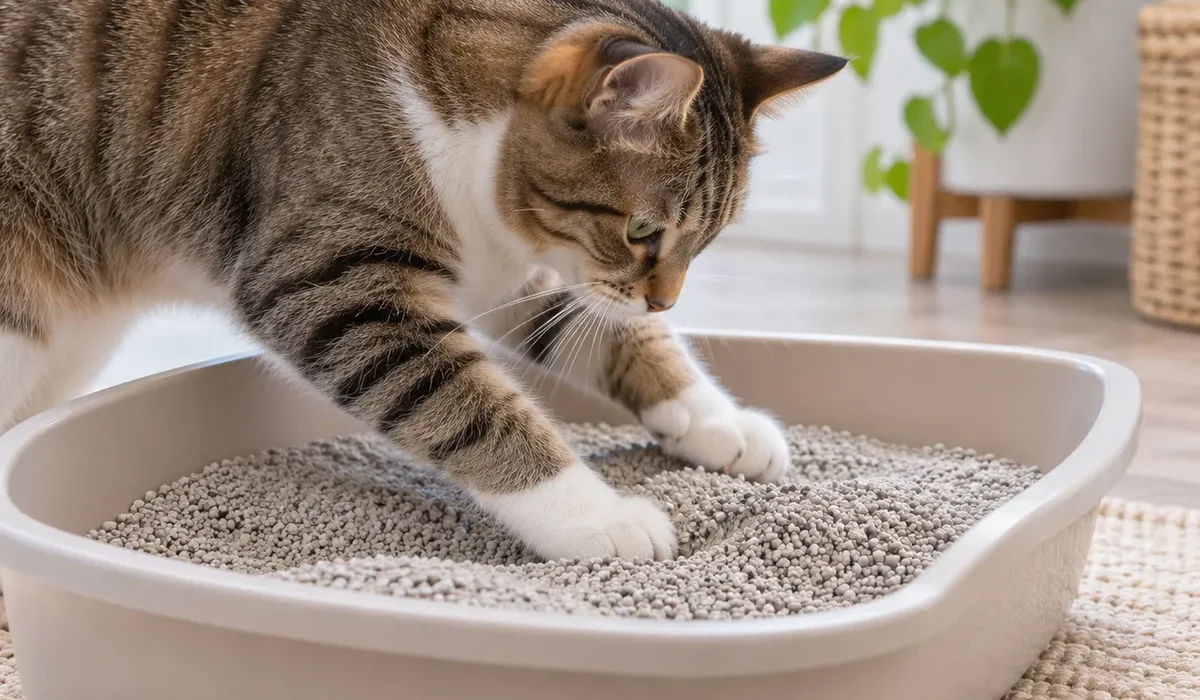
Why Do Cats Bury Their Poop? 5 Instinctive Reasons Explained
The answer to why do cats bury their poop is instinct: covering waste hides a cat’s scent from predators and signals no challenge to stronger rivals. This habit matters most for owners litter training kittens and for anyone whose adult cat suddenly stops covering waste.
This post may contain affiliate links. As an Amazon Associate I earn from qualifying purchases.
Table of Contents
Why do cats bury their poop at a glance:
- Short Answer: Cats bury feces to hide scent, avoid conflict and keep their living area clean.
- Why Cats Do It: The habit comes from the African wildcat, the ancestor of domestic cats.
- Is It Normal: Yes, most kittens start covering waste at 3 to 4 weeks old.
- How to Respond: Offer clean, deep litter and see a vet if burying habits change suddenly.
Why Do Cats Bury Their Poop? The 5 Main Reasons
The question of why do cats bury their poop has five overlapping answers rooted in survival, social rank and hygiene.
1. Hiding Scent From Predators
Feces carry a strong odor that tells predators a small cat lives nearby. Wild cats cover waste with sand or soil to keep resting spots hidden.
2. Avoiding Conflict With Dominant Cats
Covered waste signals that a cat is not claiming territory. Dominant feral toms often leave feces exposed, while lower-ranking cats bury theirs.
3. Keeping the Den Clean
Burying feces reduces flies, odor and parasite eggs near where a cat sleeps and eats. The same covering instinct explains why cats scratch around the food bowl.
4. Learning From Mother
Mother cats stimulate kittens to eliminate for roughly the first 3 weeks of life. Kittens then watch her dig and cover, and copy the routine.
5. Feeling Safe in Shared Territory
Indoor cats treat the home as territory shared with people and other pets. My shy rescue cat Milo covered every deposit for nearly a minute, then relaxed as his confidence grew.
Is Burying Poop Normal Cat Behavior?
Burying poop is normal behavior in most healthy domestic cats from kittenhood onward.
- Kittens: Most kittens start covering waste at 3 to 4 weeks old.
- Adults: Adult cats usually dig, eliminate, sniff and rake litter over waste in under a minute.
- Variation: Some cats bury thoroughly, while others scratch only 2 or 3 times.
International Cat Care describes digging and covering as natural feline toileting behavior.
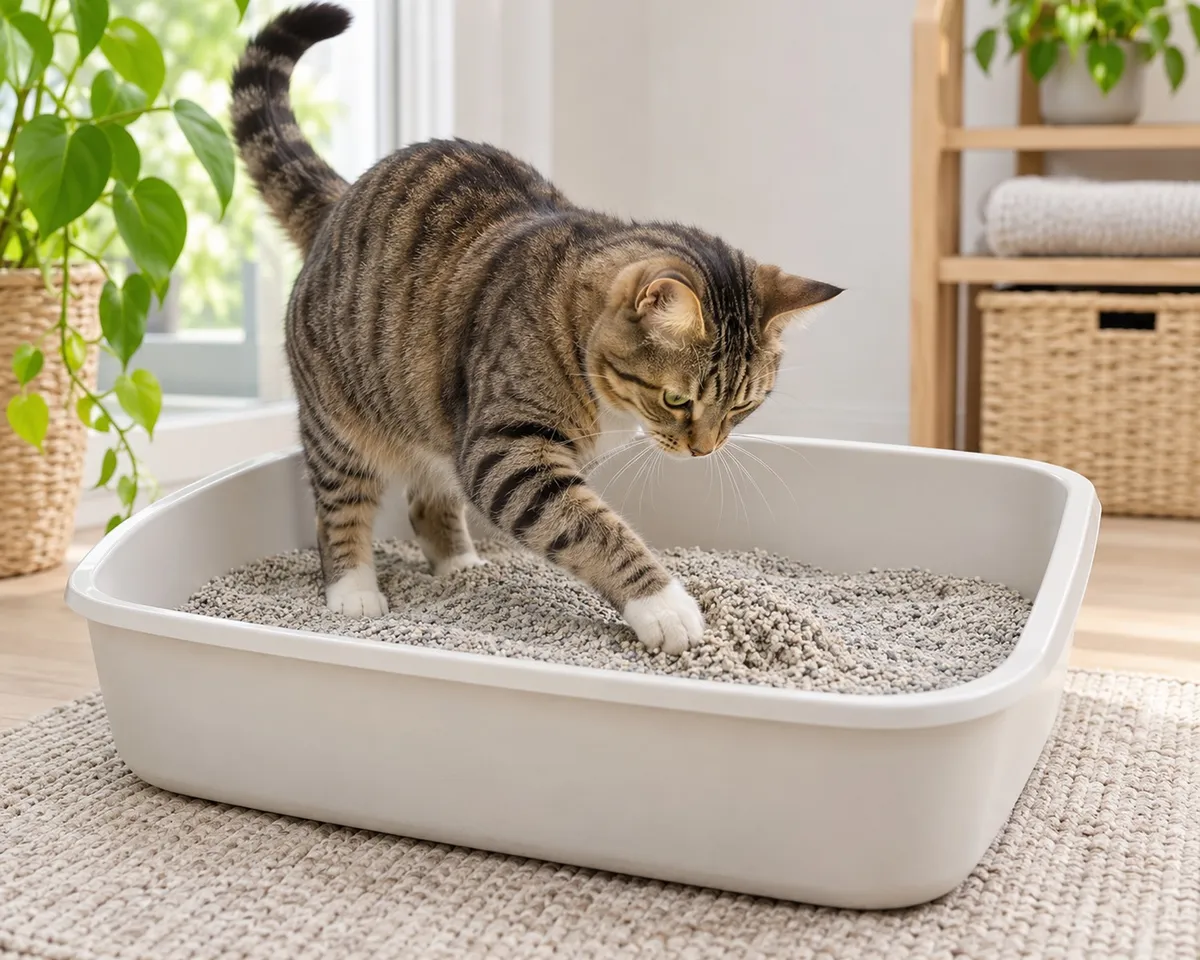
Why Some Cats Stop Covering Their Waste
Cats that leave feces uncovered usually dislike the box setup, feel socially confident, or feel discomfort.
| Behavior | Likely Meaning | What to Try |
|---|---|---|
| Covers waste fully | Normal, secure cat | No change needed |
| Leaves poop uncovered | Dislikes litter or marks status | Finer litter or larger box |
| Scratches walls outside box | Box too small or litter too shallow | Bigger box, deeper litter |
| Poops outside the box | Dirty box, stress or pain | Scoop daily, book a vet check |
| Strains with little output | Constipation or blockage | Call a vet the same day |
In multi-cat homes, one confident cat may leave feces uncovered to mark status. The ASPCA guide to common cat behavior issues lists litter box aversion among frequent causes of changed toileting habits.
How to Encourage Cats to Bury Their Poop
Cats bury poop most reliably in soft, neutral-smelling litter inside a quiet, roomy box.
- Choose a fine-grained unscented clumping litter, since most cats prefer a sand-like texture and dislike perfume.
- Fill the box with 2 to 3 inches (5 to 7 cm) of litter for proper digging.
- Provide a large uncovered litter box about 1.5 times your cat’s length, nose to tail base.
- Offer one box per cat plus one, in the best place to put a litter box, away from food.
- Scoop at least daily, following a schedule for how often to clean a litter box.
- Show kittens the box after meals and naps, raking the litter gently with your fingers.
Never force a cat’s paws into litter, because that creates lasting box aversion. Most covering problems improve within 1 to 2 weeks of these changes.
When Changes in Burying Signal a Health Problem
A sudden change in burying habits can signal pain, digestive trouble or urinary disease.
- Joint Pain: Arthritis makes digging and squatting painful, especially in cats over 10 years old.
- Constipation: No stool for over 48 hours points to cat constipation needing attention.
- Diarrhea: Loose stools often make cats rush out of the box without covering.
Any cat that suddenly stops covering waste or avoids the box should see a veterinarian to rule out a medical cause. Straining with no output, blood in the stool, or vomiting with lethargy needs same-day veterinary care.
Frequently Asked Questions
Why do cats bury their poop but not their pee?
Most cats cover both, but flat urine clumps are simply less noticeable. Cats that skip covering urine often find the litter shallower than 2 inches.
Do all cats bury their poop?
No, confident cats and cats with sore joints may leave waste partly uncovered. Partial covering is normal unless the habit changes suddenly.
At what age do kittens start burying their poop?
Kittens usually start burying poop at 3 to 4 weeks old, once they no longer need their mother’s help to eliminate.
Why does my cat scratch the wall after using the litter box?
Cats scratch walls when the box is too small or the litter too shallow. A box 1.5 times the cat’s length usually stops the habit.
Is it bad if my cat doesn’t cover its poop?
Uncovered poop is usually a preference or status signal, not illness. Call a vet if the change is sudden or comes with straining, diarrhea or blood.
Knowing why do cats bury their poop helps owners read litter habits as communication, not simple tidiness. Covering waste is a healthy instinct tied to safety, social rank and hygiene. This week, check for 2 to 3 inches of unscented litter, a roomy box and daily scooping, and call your vet about any sudden change.