
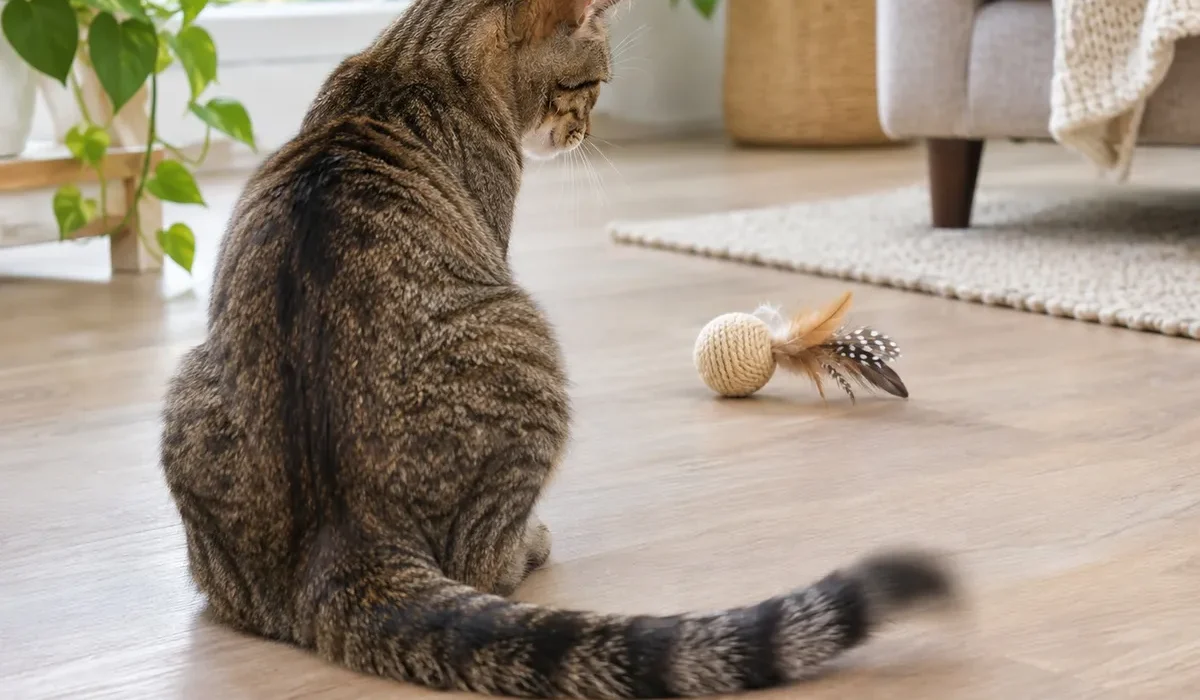
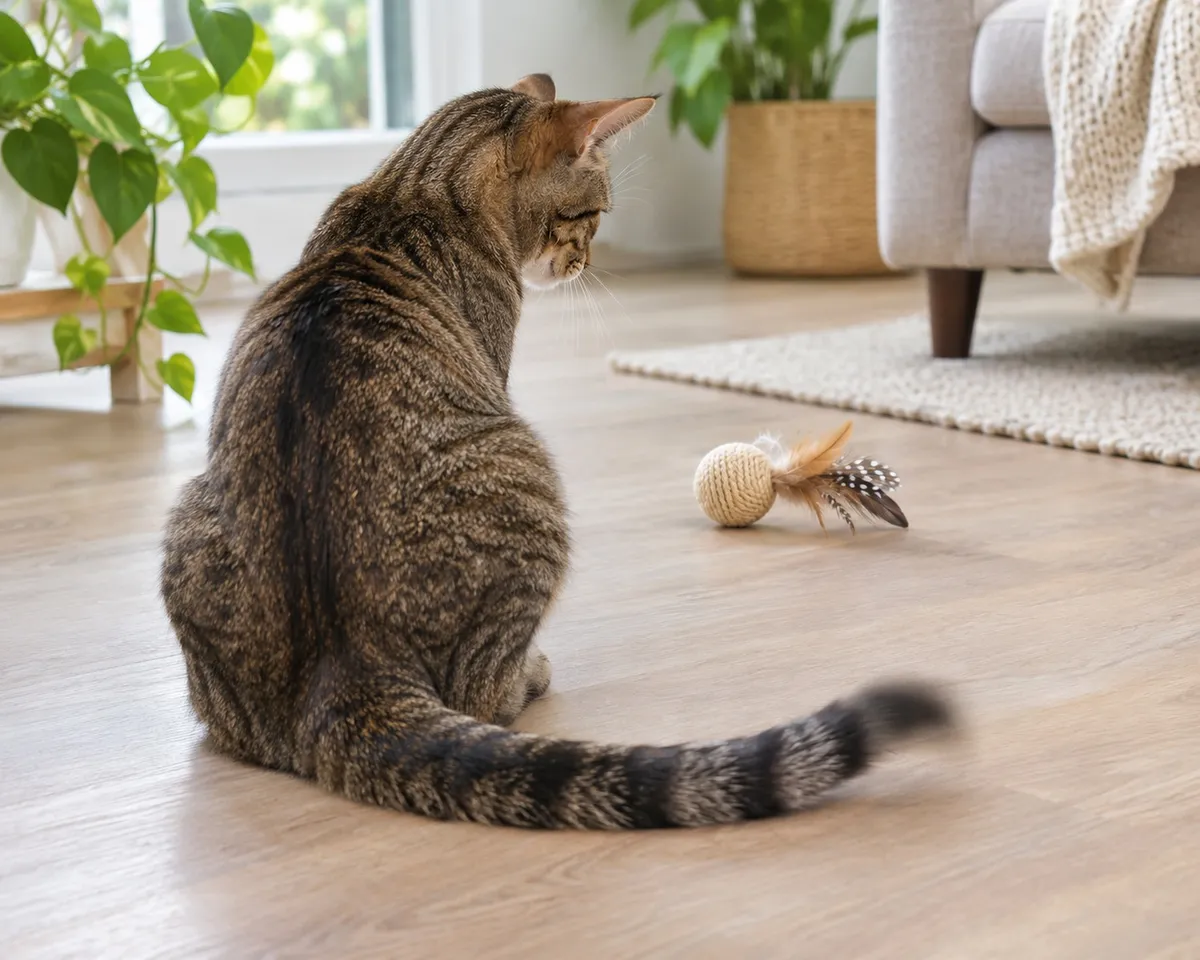
Why Do Cats Wag Their Tails? 7 Tail Signals Decoded
The answer to why do cats wag their tails is that cats use tail movement to show mood: a fast, thrashing wag signals irritation, while a slow sway signals focus. These signals matter most during petting, play and vet visits, when a misread tail can end in a scratch.
This post may contain affiliate links. As an Amazon Associate I earn from qualifying purchases.
Table of Contents
Why do cats wag their tails at a glance:
- Short Answer: Cats wag their tails to express focus, irritation, excitement or fear, rarely simple happiness like dogs.
- Why Cats Do It: A cat tail holds around 20 vertebrae, allowing precise signals other cats read from a distance.
- Is It Normal: Tail wagging is normal communication, but a limp tail needs a vet.
- How to Respond: Stop petting when the tail thumps or lashes, and give 5 to 10 minutes of space.
Why Do Cats Wag Their Tails Differently From Dogs?
Cats wag their tails mainly to show arousal or tension, while dogs often wag to show friendliness. Domestic cats descend from the solitary African wildcat, so tail signals helped them avoid fights from a distance.
International Cat Care explains that cat body language works as a whole, so read the tail with the ears and posture. When my tabby first lashed her tail during brushing, I assumed she liked it, and seconds later she nipped my wrist.
7 Tail Signals and What Each One Means
Each cat tail position carries a fairly consistent meaning, and this chart covers the 7 most common signals.
| Tail Signal | What It Usually Means | How to Respond |
|---|---|---|
| Upright, tip hooked | Friendly greeting, confidence | Offer a hand to sniff |
| Upright and quivering | Excitement at seeing you | Greet calmly |
| Slow side-to-side sway | Focus or curiosity | Let the cat watch |
| Twitching tip | Hunting focus or rising annoyance | Reduce handling |
| Fast lashing or thumping | Irritation, overstimulation | Stop touching, step back |
| Puffed and bristled | Fear, defensive threat | Remove the trigger |
| Low or tucked | Fear, submission or pain | Check for injury |
An upright tail is the friendliest signal, often paired with a cat headbutt against your leg.
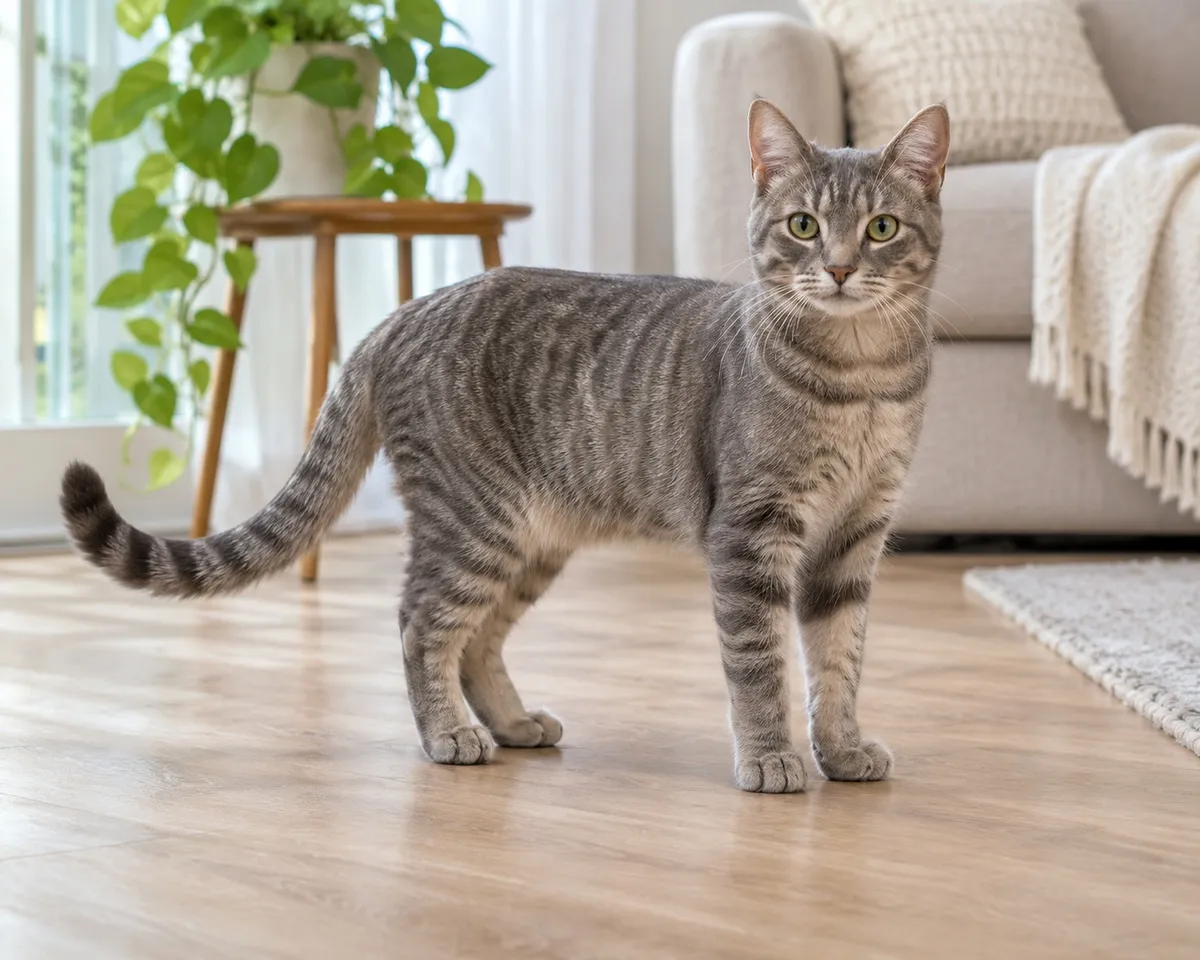
How to Tell a Happy Tail From an Annoyed One
A happy cat holds the tail high and loose, while an annoyed cat moves the tail faster and lower as tension builds.
Signs of a content cat:
- Tail up with a relaxed hooked tip.
- Soft eyes and cats slow blink moments.
- Forward ears and a loose body.
Signs of a cat losing patience:
- Tail tip twitching, then the whole tail swishing.
- Ears rotating sideways or flattening.
- Skin rippling along the back.
Why Do Cats Wag Their Tails While Lying Down?
A resting cat flicking its tail is usually relaxed but alert, tracking sounds without getting up. Sleeping cats with twitching tails are often dreaming, as our guide to cat twitching in sleep explains.
Steady thumping as you approach means the cat wants space. Thumping with hiding, hunching or poor appetite can point to discomfort, so compare it with these signs a cat is in pain.
Tail Twitching During Play and Hunting
A twitching tail during play shows hunting focus, the same signal cats give while stalking birds. Play sessions of 10 to 15 minutes, twice a day, release that predatory energy safely.
A feather wand toy keeps your hands away from teeth and claws when the tail lashes. Puffed fur or pinned ears mean play has become stress, so learn the signs of cats playing or fighting.
How to respond when a tail starts lashing:
- Stop petting or moving the toy immediately.
- Keep your hands still and step back slowly.
- Give the cat 5 to 10 minutes of quiet space.
- Resume contact once the tail hangs loose.
When Tail Wagging Signals Stress or Injury
Constant lashing, a puffed tail or a limp tail can signal stress, fear or injury rather than normal communication. The ASPCA lists fear and stress among common triggers of aggression in cats.
In multi-cat homes or after a move, a calming pheromone diffuser near the main resting area can ease tension, and most refills last about 30 days.
See a vet urgently if your cat shows:
- A limp tail after a fall, door accident or car strike.
- Dribbling urine, loss of bowel control or weak back legs.
- Swelling, a wound or constant biting near the tail base.
Any change in tail carriage lasting over a day deserves a veterinarian’s exam, because tail injuries can damage bladder nerves.
Frequently Asked Questions
Why do cats wag their tails when you pet them?
Cats wag their tails during petting because of petting-induced overstimulation. Stopping at the first tail twitch usually prevents a bite.
Is a cat wagging its tail happy or mad?
A fast-wagging cat is usually annoyed, while a tail held straight up with a slight quiver means the cat is happy.
Why does my cat’s tail twitch when I say its name?
Cats often answer their name with 1 or 2 flicks of the tail tip, showing they heard you but prefer not to get up.
Why does my cat wag its tail while purring?
Wagging while purring means mixed emotions, often a content cat close to its tolerance limit.
Why does my cat thump its tail on the floor?
Tail thumping signals irritation or a request for space. Thumping with hiding or appetite loss for over 24 hours warrants a vet call.
Knowing why do cats wag their tails lets you read your cat’s mood in seconds: upright means friendly, slow sways mean focus, and fast lashing means stop. During your next petting session, end contact at the first tail twitch to build trust and prevent bites.