
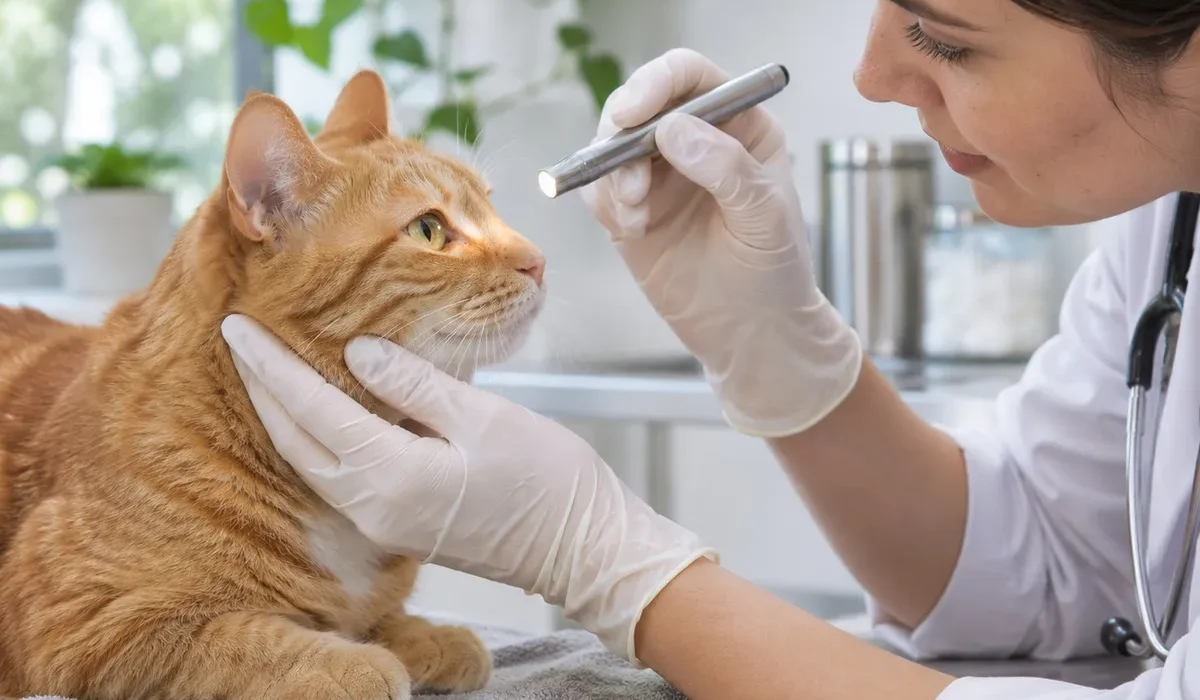
Feline Herpes: 7 Clear Signs, Causes and Treatment Options
Feline herpes is a common, contagious virus called feline herpesvirus type 1 (FHV-1) that causes sneezing, eye discharge and conjunctivitis, and most infected cats carry it for life. The signs matter most for kitten owners, multi-cat homes and cats facing stress such as a move or a boarding stay.
This post may contain affiliate links. As an Amazon Associate I earn from qualifying purchases.
Table of Contents
Feline herpes at a glance:
- Short Answer: FHV-1 is an eye and upper respiratory virus that hides in nerve cells and flares up under stress.
- Most Common Causes: Contact with infected cats, shared bowls and mutual grooming spread the virus.
- Urgency: Mild flare-ups settle in 10-14 days, but eye ulcers and sick kittens need prompt care.
- What to Do at Home: Clean the eyes and nose, warm wet food and reduce stress.
- When to See a Vet: Go for squinting, a cloudy eye, breathing trouble or no eating for 24 hours.
What Is Feline Herpes?
Feline herpes, also called feline viral rhinotracheitis, is caused by feline herpesvirus type 1. Up to 90% of cats meet this virus, and about 80% of infected cats become lifelong carriers.
After the first infection, FHV-1 hides in the trigeminal nerve and can reactivate months or years later. When my rescue kitten arrived with crusty eyes, her later springtime flare-ups turned out to be the same sleeping virus.
The Cornell Feline Health Center confirms that FHV-1 infects only cats, so people and dogs cannot catch it.
Causes and How Cats Catch Feline Herpes
Cats catch FHV-1 through direct contact with eye, nose or mouth secretions from an infected cat.
Main transmission routes:
- Mutual grooming, nose-to-nose greetings and sneezed droplets.
- Shared bowls, water dishes, litter boxes and bedding.
- Owner hands and clothing after handling a sick cat.
- Carrier mothers infecting kittens aged 4-8 weeks.
Common flare-up triggers:
- Moving house, boarding or a new pet in the home.
- Surgery, other illness, steroids, pregnancy or nursing.
Reactivated carriers start shedding the virus about 1 week after a stressful event, and shedding lasts 1-2 weeks.
7 Clear Signs of Feline Herpes
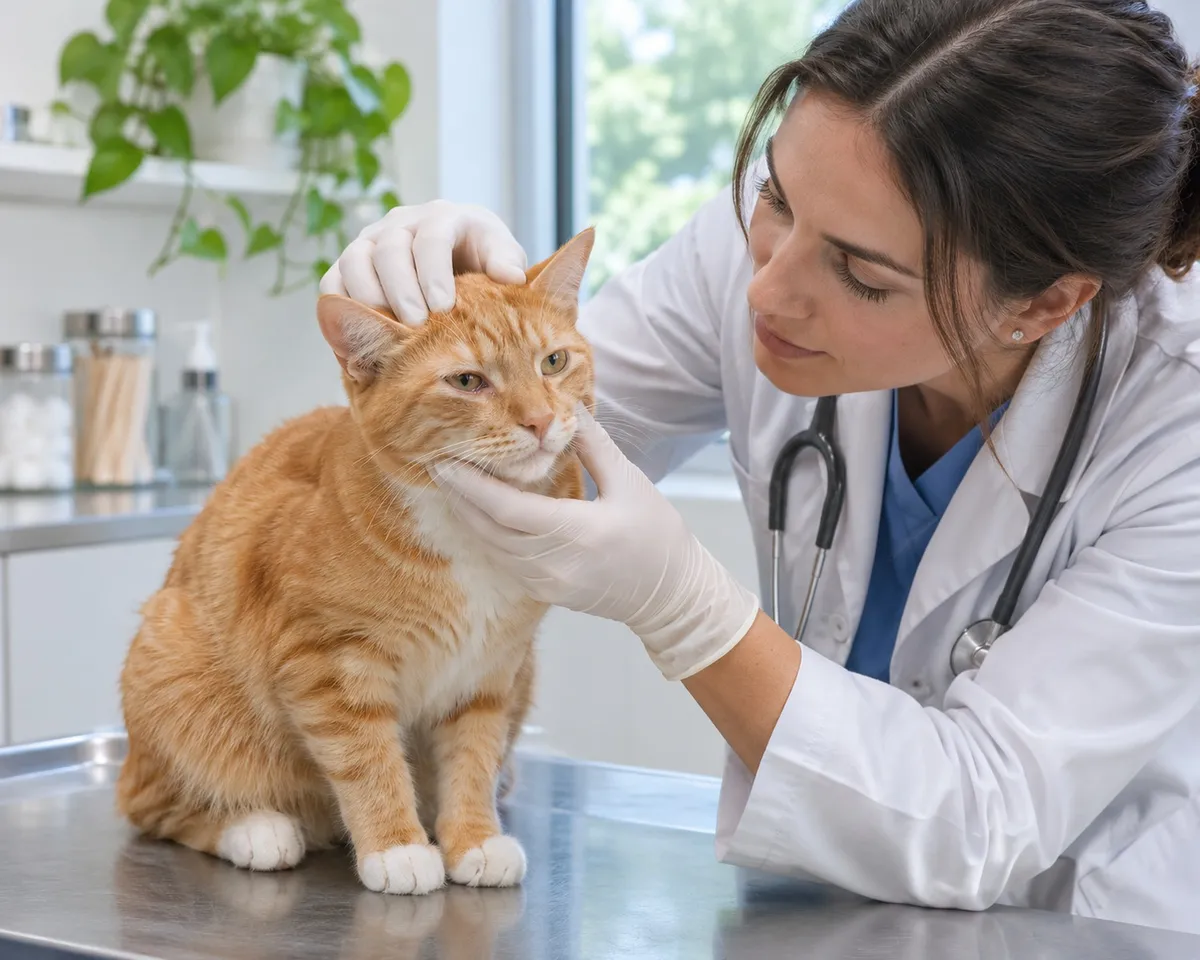
Signs usually appear 2-6 days after exposure and range from mild sneezing to painful eye damage. Other cat sneezing causes look similar, so check the eyes too.
| Sign | What It Looks Like | Urgency |
|---|---|---|
| 1. Sneezing | Repeated bursts through the day | Monitor |
| 2. Nasal discharge | Clear, then yellow or green | Vet if colored |
| 3. Watery eyes | Tears and crusting at corners | Monitor |
| 4. Conjunctivitis | Red, swollen eye tissue | Vet within 48 hours |
| 5. Squinting or cloudy eye | Possible corneal ulcer | Same-day vet |
| 6. Fever and lethargy | Hiding, sleeping more | Vet after 24 hours |
| 7. Appetite loss | Blocked nose hides food smell | Vet after 24 hours |
Bacterial infections cause similar eye symptoms, so compare them with our guide to cat eye infection signs.
How Vets Diagnose Feline Herpes
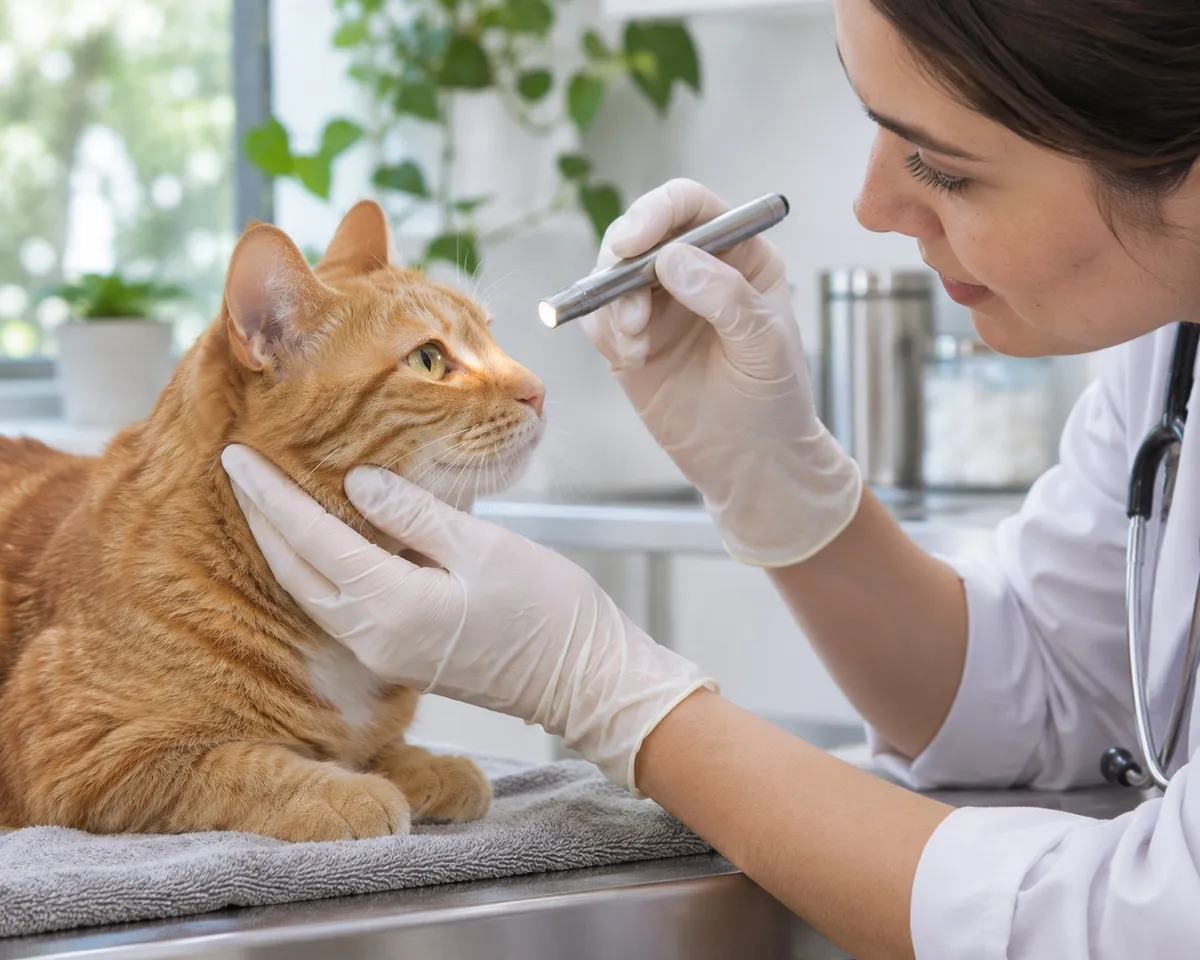
Vets diagnose FHV-1 mainly from typical symptoms, the cat’s history and a physical exam.
- PCR swab: An eye or throat swab detects viral DNA, though healthy carriers can also test positive.
- Fluorescein stain: Dye reveals corneal ulcers, including branching dendritic ulcers typical of FHV-1.
- Bloodwork: Blood tests check very sick kittens or cats with weak immune systems.
Feline Herpes Treatment Options and Home Care
No medicine removes the virus, so treatment aims to shorten flare-ups and protect the eyes. Always let a veterinarian prescribe antivirals, because human cold-sore creams and tablets can be toxic to cats.
Vet treatments:
- Antiviral eye drops or ointments for conjunctivitis and ulcers.
- Oral antivirals such as famciclovir, dosed specifically for cats.
- Antibiotics when thick discharge signals a secondary bacterial infection.
- Fluids and appetite support for dehydrated cats.
Home care steps:
- Wipe discharge 2-3 times daily with sterile saline eye wipes for cats, using a fresh wipe for each eye.
- Run a cool-mist humidifier near your cat’s bed to loosen congestion, and clean the humidifier daily.
- Warm wet food to body temperature so the smell reaches a blocked nose, and see our tips for a cat not eating.
- Keep feeding times steady and offer a quiet hiding spot to lower stress.
- Disinfect bowls and bedding with bleach diluted 1:32, since FHV-1 survives up to 18 hours on damp surfaces.
When to See a Vet and How to Prevent Flare-Ups
Any cat with eye symptoms should see a vet within 1-2 days, and some signs are emergencies.
Emergency signs:
- Open-mouth or labored breathing.
- A cloudy, bulging or held-shut eye.
- A kitten under 12 weeks that stops eating or nursing.
- No food for 24 hours or signs of dehydration in cats, such as tacky gums.
The core FVRCP vaccine reduces disease severity, with kitten doses every 3-4 weeks from 6-8 weeks until at least 16 weeks. Follow our cat vaccinations schedule, and keep a flare-up diary to spot your cat’s stress triggers.
Frequently Asked Questions
Is feline herpes contagious to humans?
No, FHV-1 cannot infect humans or dogs because the virus only replicates in cat cells.
How long does a cat herpes flare-up last?
Most flare-ups last 7-14 days, while eye ulcers can take 2-3 weeks to heal with treatment.
Can a cat with herpes live a normal life?
Yes, most carrier cats live a normal 12-18 year lifespan with only occasional mild flare-ups.
Can indoor cats get herpes?
Indoor cats can get herpes, because many caught FHV-1 as kittens and stress can reactivate the virus years later.
Can vaccinated cats still catch cat herpes?
Vaccinated cats can still catch FHV-1, because the FVRCP vaccine lowers severity without fully blocking infection.
Feline herpes is a lifelong but manageable virus, and most carrier cats stay healthy between short, stress-triggered flare-ups. Clean discharge daily, keep routines calm and book a vet visit for any squinting or cloudy eye. As a next step, confirm your cat’s FVRCP vaccine is current and note recent stress triggers in a simple diary.