

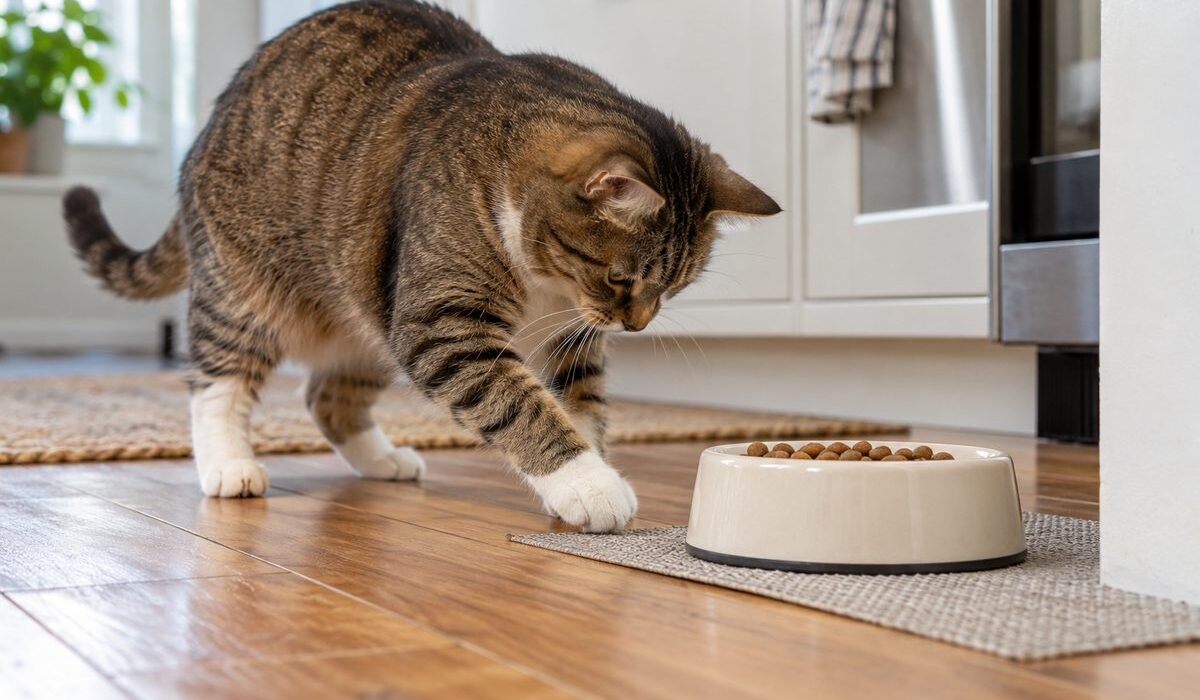
Why Does My Cat Scratch Around the Food Bowl?
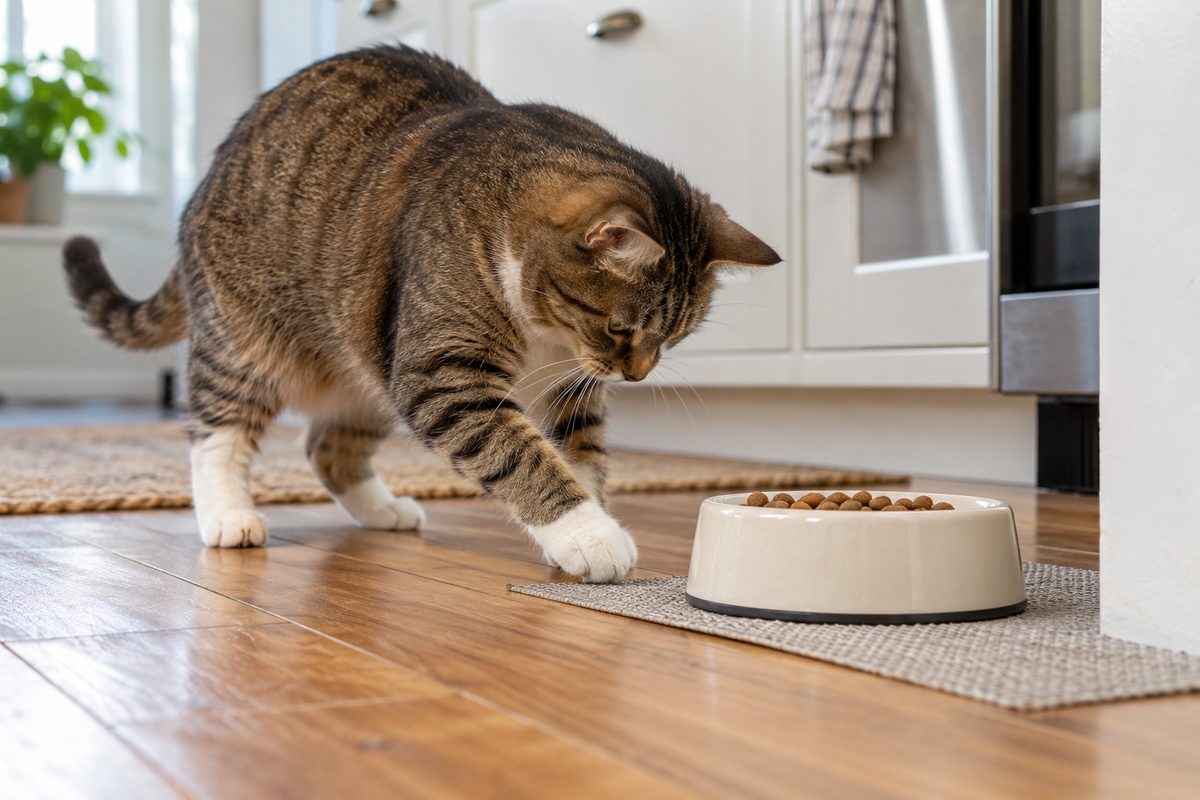
Cats scratch around their food bowl for several natural reasons rooted in their instincts and environment. This behavior is usually harmless, though understanding why it happens helps you respond appropriately and keep mealtimes stress-free for your cat.
This post may contain affiliate links. As an Amazon Associate I earn from qualifying purchases.
Table of Contents
Key Takeaways:
- Scratching around the food bowl stems from instinctive burying behavior and territorial marking.
- Most causes are normal, but persistent digging may signal discomfort with the bowl, food, or location.
- Adjusting bowl placement, material, and feeding routine often resolves the behavior quickly.
- Watch for signs of anxiety or food aversion that warrant a veterinary checkup.
Instinctive Digging and Burying Behavior
Scratching around the food bowl mimics the natural burying instinct cats use in the wild to hide food scraps and maintain a clean eating area. Your cat isn’t trying to bury the bowl itself; she’s following an ancient drive to cover her feeding spot. This behavior is especially common in cats who eat canned or wet food, which leaves stronger odors than dry kibble.
- Burying instinct peaks after eating wet or smelly foods.
- Multi-cat households may show more scratching as cats try to mark territory.
- Kittens often display this behavior as part of learning normal bathroom and feeding routines.
Territorial Marking and Scent Glands
Cats have scent glands in their paws, and scratching releases pheromones that mark the area as theirs. When your cat scratches around the food bowl, she’s claiming the spot and communicating to other cats (or pets in the home) that this is her territory. This is especially noticeable in multi-cat households where feeding competition exists.
- Scratching deposits scent from paw pads onto the floor and around the bowl.
- More frequent scratching may indicate stress about sharing resources with other pets.
- The behavior strengthens when a cat feels insecure about her food access.
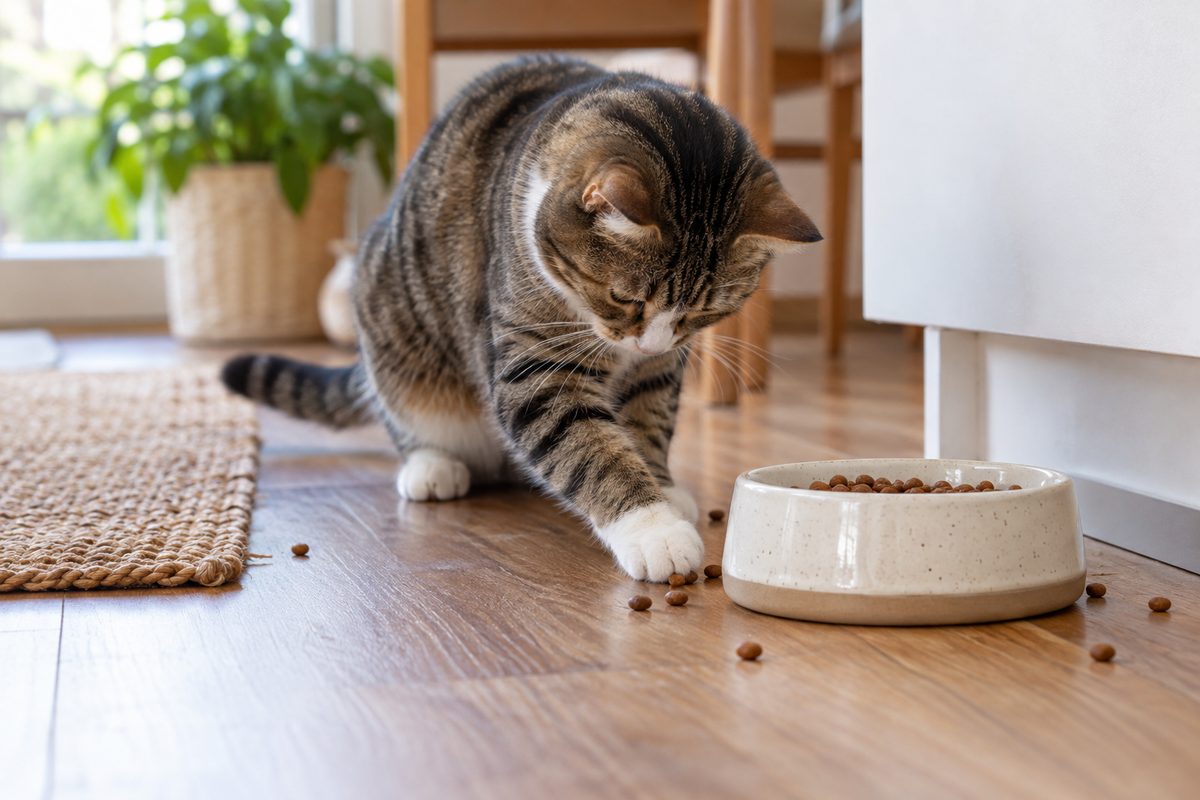
Discomfort with the Bowl or Food Location
Sometimes scratching around the food bowl signals that your cat is unhappy with the setup. The bowl material, size, location, or proximity to the litter box can all trigger excessive digging. Cats prefer wide, shallow dishes and eating spots away from their bathroom area.
Bowl and placement factors:
- Ceramic or stainless steel bowls are gentler on whiskers than plastic.
- A food mat or placemat gives your cat a defined eating zone and reduces scratching on bare floors.
- Keep the food bowl at least 3 feet away from the litter box; cats naturally avoid eating near their waste.
- If the bowl is too small or deep, your cat may scratch in frustration before eating.
Food Quality or Preference Issues
A cat may scratch excessively around her bowl if she dislikes the food or finds the flavor or texture unappealing. This behavior sometimes precedes refusal to eat or vomiting. If scratching is paired with not eating, loss of interest, or digestive upset, consider whether a food change or medical issue is present.
- Picky cats may scratch to express dissatisfaction before walking away uneaten.
- Food sensitivities or allergies can prompt anxiety-driven scratching at mealtimes.
- Switching to a high-quality, grain-free or limited-ingredient wet food may reduce stress.
- Gradual food transitions prevent sudden aversion and scratching behavior.
Anxiety and Stress at Feeding Time
Scratching can also reflect nervousness or stress during meals. Loud noises, interruptions, or competition from other pets make some cats anxious, and they channel that stress through digging. A cat with anxiety or hiding behaviors may scratch the floor as a self-soothing mechanism while eating.
- Feed cats in quiet, low-traffic areas away from household commotion.
- In multi-cat homes, provide separate bowls spaced far apart or feed in different rooms.
- A cat calming diffuser or pheromone spray near the feeding area can ease mealtime tension.
- If scratching worsens alongside other behavioral changes, consult your veterinarian to rule out underlying illness or extreme stress.
For more veterinary guidance, see the Cornell Feline Health Center.
Frequently Asked Questions
- Is it normal for cats to scratch around their food bowl? Yes, scratching around the food bowl is a normal instinctive behavior rooted in your cat’s natural burying and territorial marking instincts.
- Why does my cat scratch the floor after eating? Your cat is mimicking the wild behavior of covering food scraps and waste, and she is marking the area with scent glands in her paws to claim the feeding territory.
- When should I worry about scratching at the food bowl? Monitor for signs of food refusal, vomiting, changes in appetite, or excessive anxiety; these warrant a veterinary visit to rule out illness or food sensitivities.
Most cats who scratch around their food bowl are simply expressing healthy instincts. Adjust the bowl location, use a food placemat, and ensure a calm feeding environment to minimize the behavior. If scratching is accompanied by loss of appetite or other symptoms, schedule a vet checkup to ensure your cat’s health and comfort.

