


Tortoiseshell Cat: 7 Essential Facts About This Unique Coat
This post may contain affiliate links. As an Amazon Associate I earn from qualifying purchases.
A tortoiseshell cat is a cat whose coat blends black and orange (or their diluted forms, grey and cream) in a mottled pattern, and almost all of them are female. The pattern comes from genetics rather than a breed, so you can find a tortoiseshell cat in many breeds, from domestic shorthairs to Maine Coons.
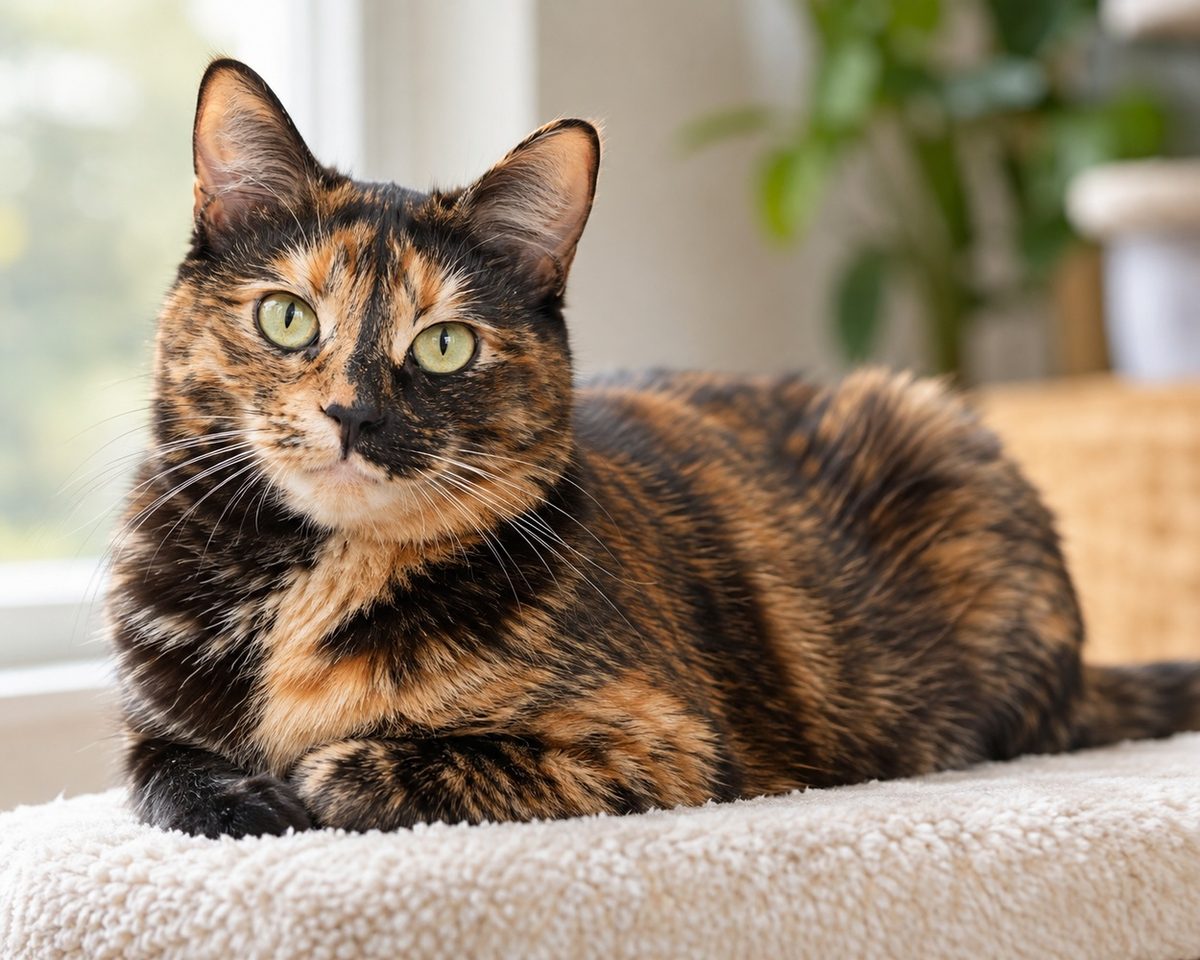
Table of Contents
Tortoiseshell cat at a glance:
- Short Answer: A tortoiseshell cat has a patchwork coat of black and orange, caused by two X chromosomes carrying different color genes.
- Gender: Roughly 99.9 percent are female; true male tortoiseshells are very rare.
- Temperament: Often described as spirited, vocal and strong-willed, though personality varies by cat.
- Lifespan: Typically 12 to 16 years, the same as other healthy domestic cats.
- Care Needs: Coat length decides the grooming routine, not the tortoiseshell pattern.
What Is a Tortoiseshell Cat?
A tortoiseshell cat is defined by its coat pattern, not by a breed. The coat shows two colors, black and orange, mixed in patches or swirls across the body. Dilute versions look softer, with grey and cream replacing the black and orange.
Because the pattern is tied to genetics, tortoiseshell cats appear in many breeds and in random-bred domestic cats. Owners often call them “torties” for short. Each cat’s markings are unique, much like a fingerprint.
Common tortoiseshell coat variations include:
- Classic tortie: black and orange mixed with no white.
- Dilute tortie: grey and cream, giving a pastel look.
- Tortie tabby (torbie): tortoiseshell patches over tabby stripes.
- Calico: tortoiseshell colors plus large white patches. You can read more in our guide to the calico tabby cat.
Why Are Almost All Tortoiseshell Cats Female?
Nearly all tortoiseshell cats are female because the orange gene sits on the X chromosome. A female cat has two X chromosomes, so she can carry one orange gene and one black gene. A male cat has only one X chromosome and normally shows either orange or black, not both.
In each cell of a female cat, one X chromosome switches off at random during early development. Cells with the orange X active produce orange fur, while cells with the black X active produce black fur. The result is the mottled coat that defines a tortoiseshell cat.
Male tortoiseshell cats do exist, but they are rare. They usually have an extra X chromosome (XXY, known as Klinefelter syndrome) or are chimeras. Many such males are sterile, and some may face extra health challenges, so a vet check is wise.
| Coat Type | Typical Sex | Reason |
|---|---|---|
| Tortoiseshell | Female (about 99.9%) | Two X chromosomes carry different color genes |
| Calico | Female (almost always) | Same genetics plus a white spotting gene |
| Orange tabby | Male (about 80%) | One X chromosome with the orange gene is enough |
| Rare male tortie | Male | Extra X chromosome or chimerism |
Tortoiseshell Cat Colors and Patterns Explained
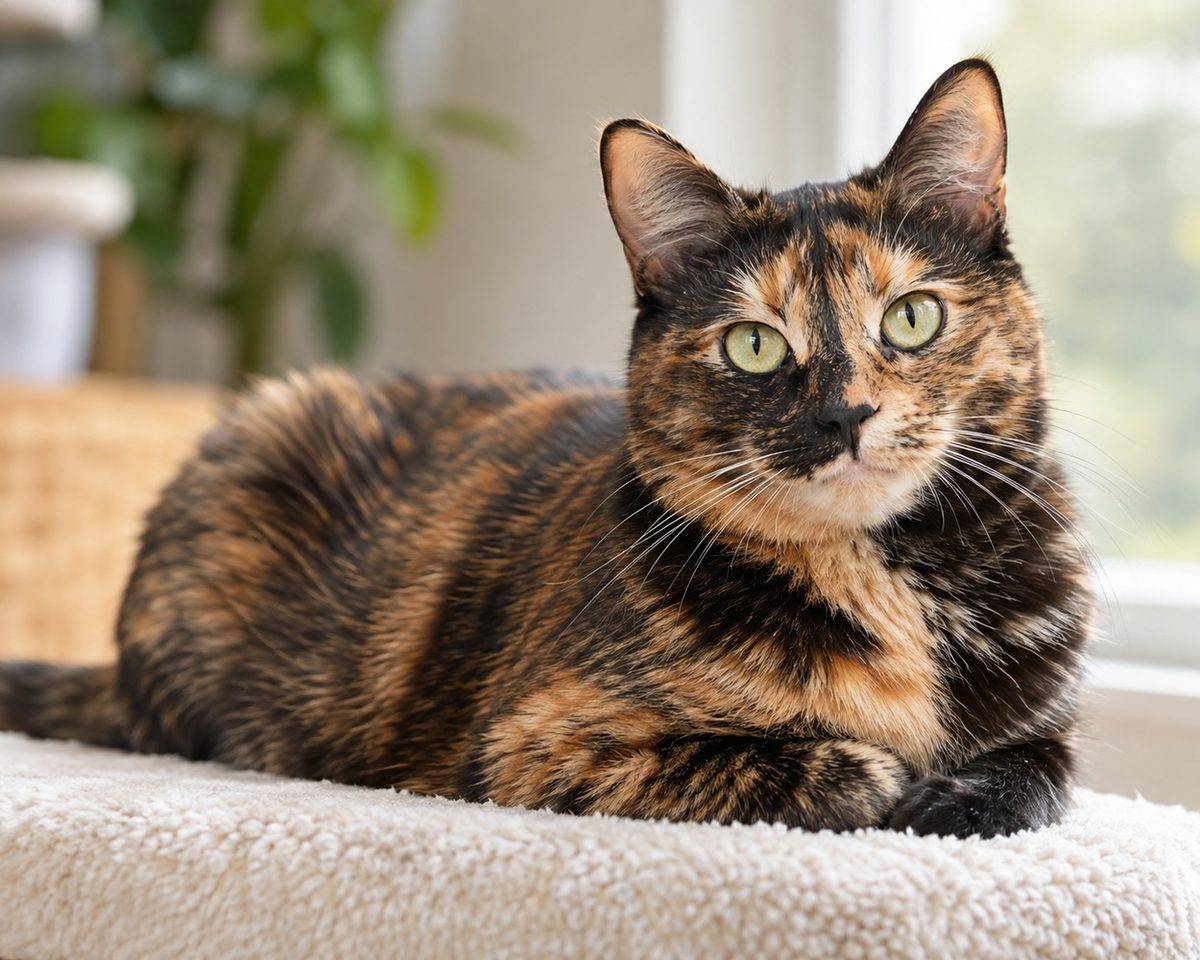
Tortoiseshell cat colors range from bold black and orange to soft grey and cream. The amount and arrangement of each color differ from cat to cat. Some torties have fine, blended speckles, while others have large, distinct patches.
Patterns you may notice include:
- Brindled: colors finely mixed, giving a speckled look.
- Patched: larger blocks of orange and black.
- Chimera look: a face split down the middle into two colors, which is rare and striking.
- Blaze: an orange stripe running down the nose.
The tortoiseshell pattern is not the same as a tabby. A tortie tabby, or torbie, combines patches with stripes, often visible on the legs and face. If you love dark coats, our post on black cat names has plenty of naming ideas that also suit torties.
Tortoiseshell Cat Personality: Is “Tortitude” Real?
Many owners describe a tortoiseshell cat as feisty, independent and talkative, a trait nicknamed “tortitude.” This reputation is based on owner reports rather than formal scientific proof. No study has confirmed that coat color directly controls behavior.
Still, owners often report these traits in their torties:
- Strong opinions about food, play and attention.
- Frequent vocalizing, especially when they want something.
- A sudden shift from cuddling to biting or swatting when overstimulated.
- High energy and a love of interactive play.
When my own tortie-patterned foster first arrived, she demanded dinner at the same minute every evening and told the whole house about it. Understanding that kind of bold personality helps you respond calmly. If a cat nips during petting, our guide to why a cat bites while purring explains the overstimulation signs to watch for.
Channel that energy into play. A feather wand toy gives a high-drive tortie a safe outlet for stalking and pouncing, and ending each session with a small treat lets her finish the “hunt” calmly.
Caring for a Tortoiseshell Cat
Caring for a tortoiseshell cat is the same as caring for any cat of the same coat length. The pattern itself does not create special medical needs. Focus on diet, grooming, litter hygiene and regular vet visits.
Grooming basics:
- Brush short-haired torties once or twice a week with a slicker brush or rubber grooming glove.
- Brush long-haired torties 3 to 5 times a week to prevent mats.
- Check ears and eyes weekly for dirt or discharge.
- Trim nails every 2 to 3 weeks; see our steps for trimming your cat’s nails.
Shedding can be heavy in spring and autumn, and dark fur shows on light furniture. A good cat brush for short hair shedding keeps loose fur under control. Keep clean water available, and a stainless steel cat water fountain encourages many cats to drink more.
Feeding and activity:
- Feed a complete, balanced diet suited to her age; adult cats usually eat two meals a day.
- Offer 15 to 20 minutes of interactive play daily with wand toys.
- Provide climbing and scratching spots to burn off energy, such as a sturdy sisal scratching post placed near her favorite sleeping area.
Active torties often thrive with vertical space. Read about the best ways to keep an indoor cat entertained if she gets bored easily.
Common Health Issues in Tortoiseshell Cats
A healthy tortoiseshell cat has no coat-related disease risks, because the color pattern is not linked to illness in female cats. The usual feline health concerns apply: dental disease, obesity, kidney disease, thyroid problems and parasites. Regular checkups catch most problems early.
Points worth knowing:
- Male torties: may have Klinefelter syndrome and often need closer veterinary monitoring.
- Sun exposure: light or white areas on calico-type cats can sunburn, especially on the ears and nose.
- Weight: adult cats should stay lean; ribs should be easy to feel under a thin fat layer.
- Dental care: most cats show some dental disease by age 3, so start tooth care early with a soft cat toothbrush and enzymatic toothpaste.
Common illness warning signs are worth learning. Our overview of common cat diseases lists symptoms that deserve a call to your veterinarian. The Cornell Feline Health Center also offers reliable information on feline health conditions. Always ask your veterinarian before changing diet or giving any supplement or medicine.
Tortoiseshell Cat Lifespan and Life Stages
A tortoiseshell cat typically lives 12 to 16 years, and indoor cats often reach the upper end of that range. Lifespan depends on genetics, diet, weight, dental health and vet care rather than coat color. Some well-cared-for torties live into their late teens.
| Life Stage | Approximate Age | Care Focus |
|---|---|---|
| Kitten | 0 to 12 months | Vaccines, kitten food, socialization |
| Adult | 1 to 6 years | Weight control, play, yearly checkups |
| Mature | 7 to 10 years | Dental care, bloodwork, joint comfort |
| Senior | 11+ years | Twice-yearly vet visits, easy-access litter box |
Kittens need early care and the right food, covered in our kitten care essentials guide. Older cats benefit from extra attention, as explained in adopting a senior cat. Visit the vet at least once a year, and the American Veterinary Medical Association shares preventive care resources for cat owners.
Frequently Asked Questions
Are male tortoiseshell cats real?
Yes, but they are extremely rare, making up only about 1 in 3,000 tortoiseshell cats. They usually carry an extra X chromosome (XXY) and are often sterile.
What is the difference between a tortoiseshell cat and a calico?
A calico has large white patches along with orange and black, while a tortoiseshell cat has little or no white. Both are almost always female because of the same X chromosome genetics.
Do tortoiseshell cats have bad tempers?
Not by science, but many owners report a strong-willed “tortitude.” No study has proven that coat color causes a cat’s behavior, and each cat’s personality and early socialization matter far more.
How long do tortoiseshell cats live?
A tortoiseshell cat typically lives 12 to 16 years with good care. Indoor torties with a healthy weight and regular dental and vet care often reach the longer end of that range.
Is a tortoiseshell cat a breed?
No, tortoiseshell describes a coat pattern, not a breed. The pattern appears in many breeds, including Persians, Maine Coons, Cornish Rex and American Shorthairs, as well as mixed-breed cats.
A tortoiseshell cat is a genetic marvel, a female cat carrying two color genes that paint a one-of-a-kind coat. Care for her like any cat: balanced food, regular grooming, daily play and yearly vet visits. Your next step is to book a checkup and set up a simple weekly brushing routine.

