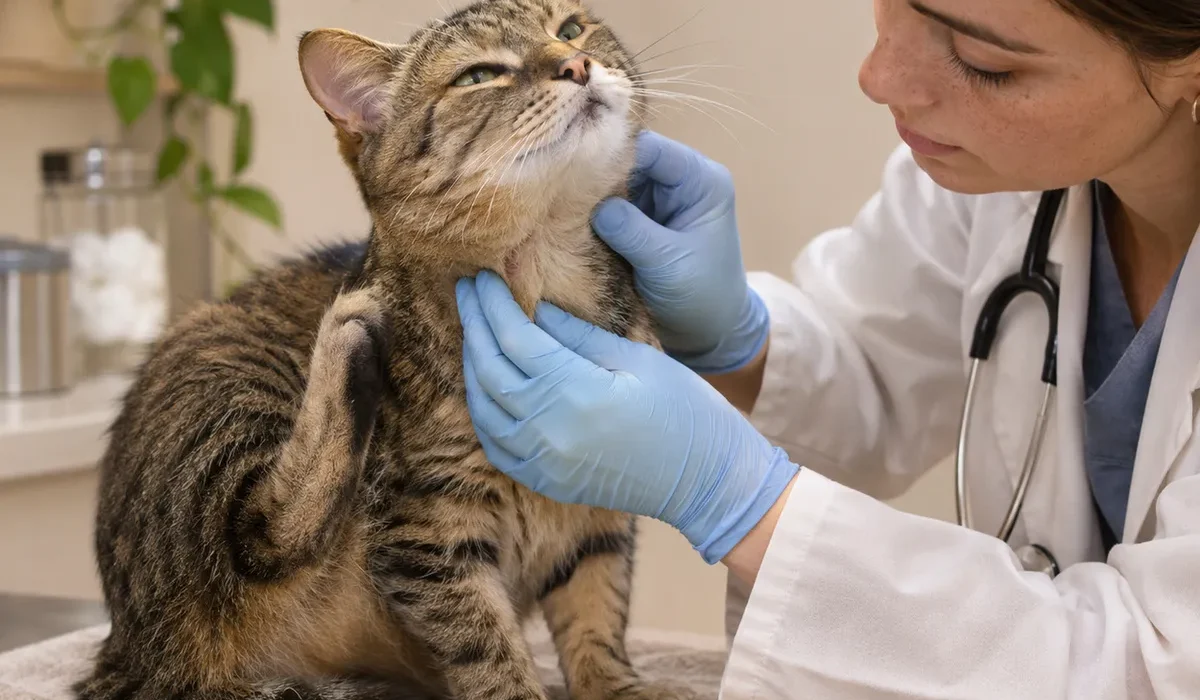
Apoquel for Cats: 7 Vet Facts on Safety and Dosage
Apoquel for cats is an off-label use of oclacitinib, a drug approved by the FDA only for allergic itch in dogs. Veterinarians sometimes prescribe it for cats with severe, unresolved itching, so owners should know how the drug works, what the risks are, and why dosing must always come from a vet.
This post may contain affiliate links. As an Amazon Associate I earn from qualifying purchases.
Table of Contents
Apoquel for cats at a glance:
- Short Answer: Apoquel is not FDA-approved for cats, and vets prescribe it off-label only in selected cases.
- How It Works: Oclacitinib blocks JAK enzymes that send itch and inflammation signals.
- Main Risk: Immune suppression, which raises the chance of infections and some parasitic skin conditions.
- Dosing: Only a veterinarian can set the dose, based on your cat’s weight and health.
- When to See a Vet: Any cat that itches constantly, loses hair, or has open skin sores.
What Is Apoquel and How Does It Work?
Apoquel is the brand name for oclacitinib, a Janus kinase (JAK) inhibitor that interrupts the signals behind itch and skin inflammation. It was developed and approved for dogs older than 12 months with allergic dermatitis. Unlike steroids, it targets a narrower set of immune pathways, which is why many dog owners see itch relief within about 4 hours.
Cats are not small dogs, and their bodies process drugs differently. Cats lack certain liver enzymes that dogs have, so a medication that is safe for one species can behave very differently in the other. That is the main reason apoquel for cats remains an off-label decision rather than a standard treatment.
Most feline skin allergies are handled with other tools first. If you suspect your cat has an allergy, our guide to allergies in cats explains the common triggers and standard diagnosis steps.
Is Apoquel for Cats Safe?
Apoquel for cats is not proven safe the way it is for dogs, because large feline safety trials have not been completed. Small published studies and case reports suggest some cats tolerate it, but evidence is limited, and responses vary widely from cat to cat. Veterinarians weigh the potential benefit against known risks before prescribing.
Reported or expected concerns:
- Vomiting, diarrhea, or reduced appetite in the first weeks
- Higher susceptibility to bacterial, fungal, and viral infections
- Possible flare-up of demodex mites or skin infections already present
- Changes in white blood cell counts on bloodwork
- Unknown long-term effects in cats
Cats with a history of cancer, serious infections, or immune disease are poor candidates. When my own cat had a stubborn itch cycle, our vet ran skin tests before even mentioning a drug like this, and that cautious order of steps is the right one.
Never give leftover dog tablets to your cat. The tablet strengths are built around canine weights, and a cat’s tiny body makes accidental overdose easy.
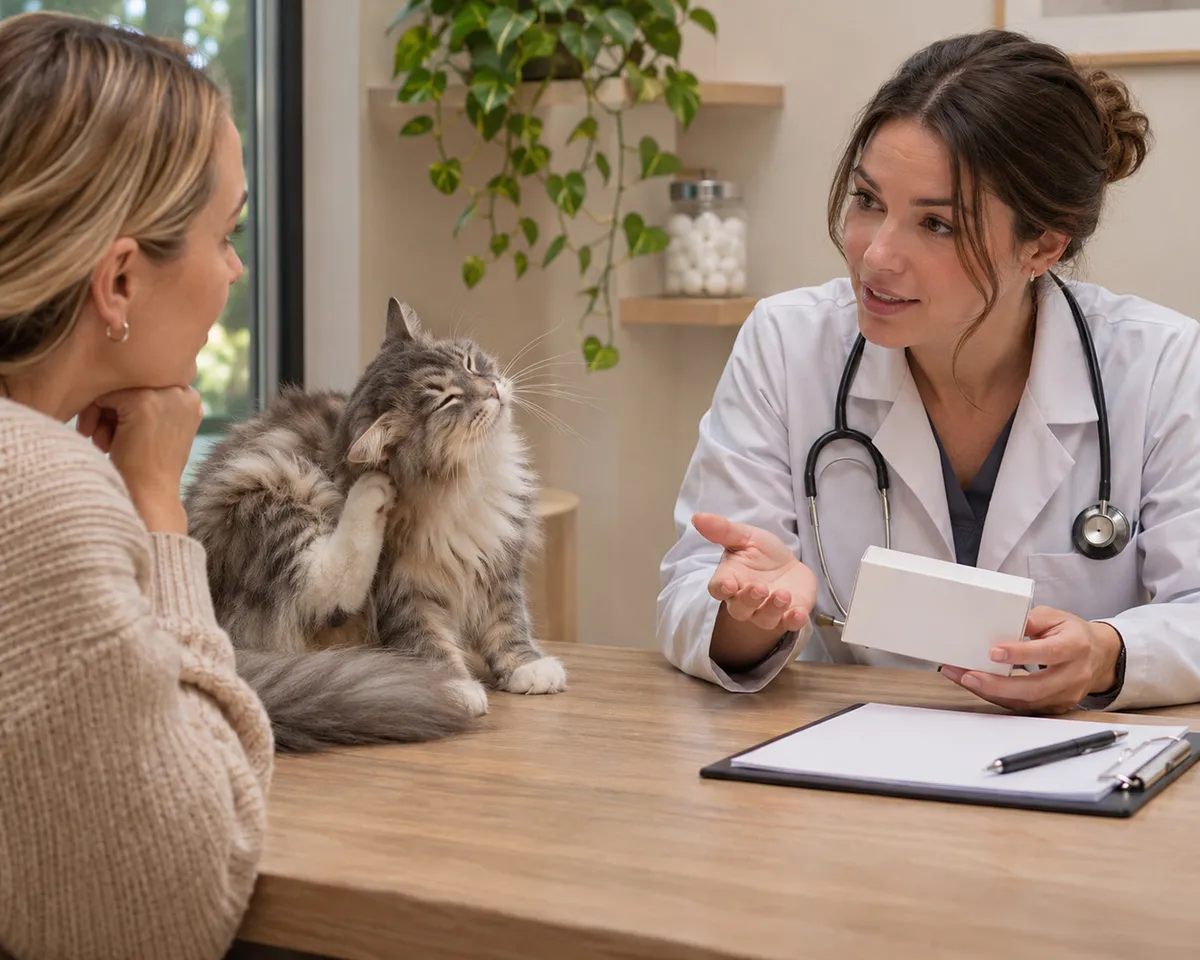
Apoquel for Cats Dosage: Why Only Your Vet Can Decide
Apoquel dosage for cats cannot be safely calculated at home, because no label dose exists for the species. Any dose a vet chooses is extrapolated from limited research and adjusted for your cat’s weight, age, and health. Your veterinarian will usually start low and recheck within a few weeks.
For safety, this article does not give a dose. Instead, here is what a responsible prescribing plan usually includes:
- A full exam and skin workup to confirm allergies, not parasites or infection
- Baseline bloodwork, especially liver and kidney values and a blood count
- A written dose and schedule from your vet, with exact tablet-splitting instructions
- A recheck visit, often within 2 to 4 weeks, to judge response and side effects
- Repeat bloodwork if the cat stays on the drug long term
A pill splitter and a pill pocket treat for cats can make giving half or quarter tablets easier. Always follow your vet’s instructions on whether to give the drug with food.
Why Do Vets Consider Apoquel for Cats?
Vets consider apoquel for cats when itching is severe and other treatments have failed or caused problems. Allergic skin disease in cats can lead to overgrooming, scabs, hair loss, and constant misery. When steroids or cyclosporine are unsuitable, oclacitinib becomes an option some specialists try.
Common situations where it comes up:
- Feline atopic skin syndrome that does not respond to diet changes
- Food-allergy cats whose itching persists despite an elimination diet
- Cats that cannot tolerate steroid side effects such as weight gain or diabetes risk
- Flea allergy cases where the itch continues after parasite control
Itching in cats often looks like excess grooming, scabs around the neck and head, or bald patches. If your cat is losing fur, read about hair loss in cats to understand the range of possible causes before assuming allergies.
Safer First-Line Options Before Apoquel for Cats
Most cats with itchy skin should try proven, approved options before apoquel for cats is considered. Controlling fleas, testing for food allergies, and treating infections solve a large share of cases. Only when these steps fail does a vet usually escalate.
Flea Control and Parasite Checks
Flea allergy is one of the most common causes of feline itch, and a single flea bite can trigger days of scratching. A monthly, vet-approved cat flea preventive removes this trigger. See our guide on how to get rid of cat fleas for a full plan.
Diet Trials
An 8 to 12 week elimination diet is the gold standard for diagnosing food allergy in cats. During the trial, your cat eats only a prescription hydrolyzed or novel-protein diet, with no treats or flavored medications. Our post on cat food for cats with allergies explains how to run one properly.
Other Medications
Vets also use antihistamines, steroids, cyclosporine, and newer biologics for feline allergies. Our overview of allergy meds for cats covers what vets prescribe and why. Some cats respond best to a combined plan.
Signs Your Cat May Need Allergy Treatment
A cat that scratches or grooms until skin is red or bare needs a vet visit, because chronic itch rarely resolves on its own. Early treatment prevents infections and spares your cat weeks of discomfort. Watch for these signs:
- Scabs or small crusty bumps, especially on the head and neck
- Bald patches from overgrooming
- Frequent ear scratching or head shaking
- Red, inflamed skin or sores that do not heal
- Restlessness, hiding, or irritability from constant itch
Ear problems are a frequent hidden cause, so also review cat itchy ears if your cat shakes its head often.
Side Effects to Watch For During Treatment
If your vet does prescribe apoquel for cats, watch your cat closely during the first month. Most problems show up early, and catching them quickly makes a big difference. Keep a short daily note of appetite, stool, energy, and skin condition.
| Sign | What It May Mean | Urgency |
|---|---|---|
| Mild soft stool or one vomiting episode | Digestive upset from a new drug | Call your vet within a day |
| Not eating for 24 hours | Drug intolerance or illness | Call your vet the same day |
| New skin sores, pus, or odor | Secondary infection | Vet visit within 1 to 2 days |
| Fever, lethargy, or breathing changes | Serious infection or reaction | Emergency vet now |
| Increased thirst or urination | Possible organ stress | Vet visit soon |
Do not stop or change the dose on your own without speaking to your vet. If you notice vomiting after your cat swallows pills, cat vomiting after eating can help you tell medication upset from other causes.
Frequently Asked Questions
Can you give a cat Apoquel?
Only a veterinarian can decide that, because Apoquel is approved for dogs and used off-label in cats. Never give your cat dog medication without a vet’s written dose.
How fast does Apoquel work for itching?
In dogs, Apoquel starts reducing itch within about 4 hours and reaches full effect in roughly 24 hours. Cats may respond differently, so your vet will judge results at a recheck visit.
What is the apoquel for cats dosage?
There is no approved apoquel for cats dosage, so your vet sets one based on your cat’s weight and health. Guessing at a dose from dog charts is dangerous and should never be done.
What can I give my cat for itching instead of Apoquel?
Vets usually start with flea control, a food-allergy diet trial, and treatment of skin or ear infections. Antihistamines, steroids, or cyclosporine are other options your vet may prescribe.
Can Apoquel hurt cats long term?
Long-term safety in cats is not well studied, and the drug suppresses parts of the immune system. Cats on it usually need repeat bloodwork and regular vet rechecks.
Apoquel for cats is a specialist decision, not a home remedy, and it should only follow a proper diagnosis from your veterinarian. Rule out fleas, food allergy, and infection first, then ask your vet whether an off-label drug is truly needed. For general guidance on feline skin and immune health, the Cornell Feline Health Center is a trustworthy place to start.