
Russian Blue Personality: 7 Charming Traits of a Shy Cat
The Russian Blue personality combines shyness with strangers, deep loyalty to one or two people, and a sharp, playful intelligence. These traits matter most for calm households with steady routines and owners who want an affectionate cat that rarely demands attention loudly.
This post may contain affiliate links. As an Amazon Associate I earn from qualifying purchases.
Table of Contents
Russian Blue personality at a glance:
- Size and Weight: Adults weigh 7 to 12 pounds (3 to 5.5 kg) with a lean, fine-boned body.
- Lifespan: Healthy Russian Blues often live 15 to 20 years indoors.
- Temperament: Reserved with strangers, devoted to family, calm but playful.
- Grooming Needs: One brushing per week keeps the dense double coat healthy.
What Is the Russian Blue Personality Really Like?
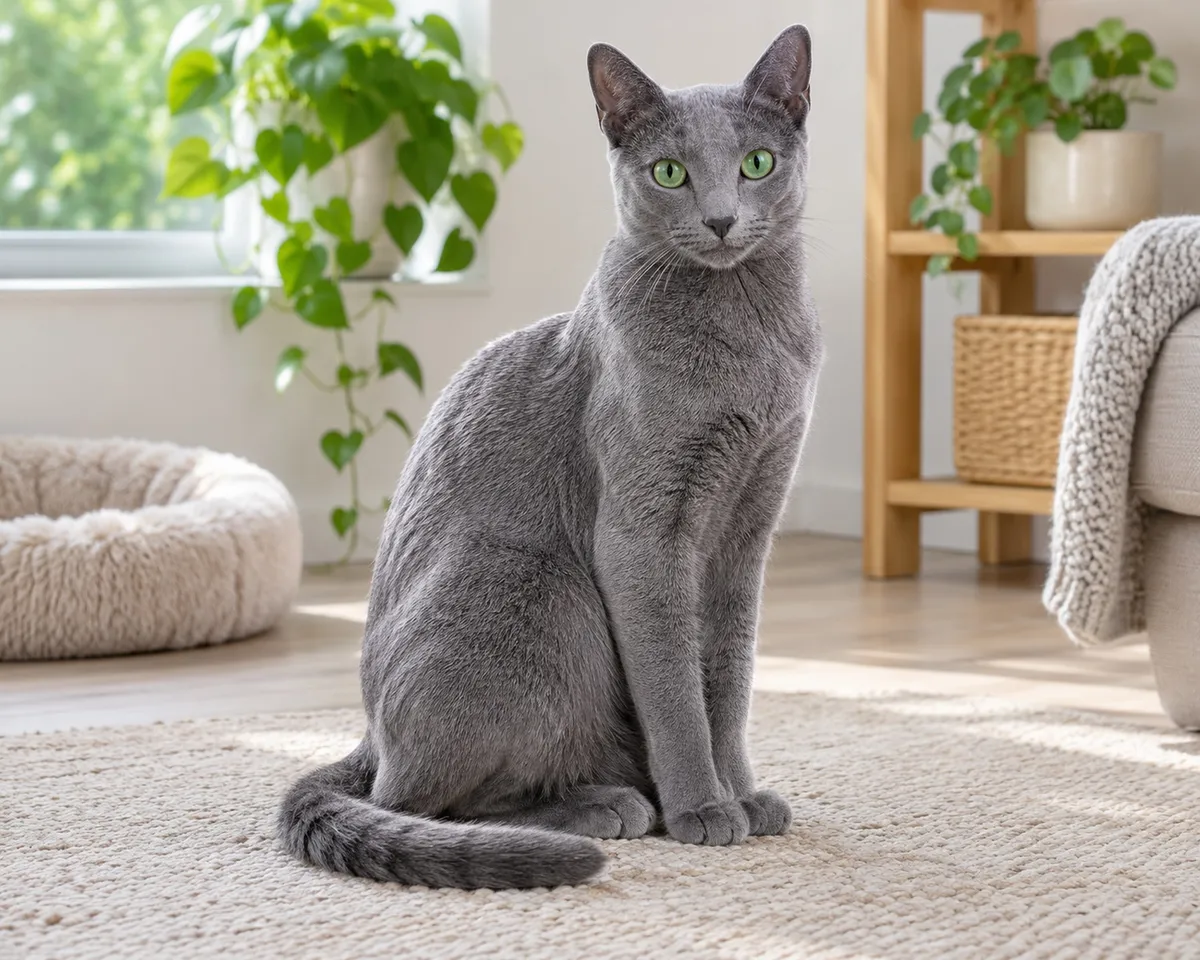
The Russian Blue personality is gentle, observant and loyal, with a clear preference for quiet homes and predictable days. The breed is linked to the port of Arkhangelsk in northern Russia and first appeared at British cat shows in 1875.
When my Russian Blue, Misha, came home, she hid under the bed for three days, then slept against my legs every night after that.
International Cat Care explains that gentle handling between 2 and 7 weeks of age strongly shapes how confident any adult cat becomes.
7 Charming Russian Blue Personality Traits
Seven traits appear again and again in this breed, and together they explain why owners call Russian Blues quietly devoted.
1. Shy With Strangers
Russian Blues often hide when guests arrive and may watch from a doorway for 30 minutes before approaching. Asking visitors to ignore the cat shortens this cautious phase.
2. Loyal to One or Two People
Most Russian Blues choose one or two favorite humans, greet them at the door and follow them between rooms. This bond feels steady rather than clingy.
3. Highly Intelligent
This breed learns fast and often figures out cupboards and door handles within weeks. Short 5-minute sessions of cat training tricks teach fetch and high-fives easily.
4. Playful Into Adulthood
Adult Russian Blues keep a kitten-like love of chase games well past age 5. Two daily play sessions of 10 to 15 minutes prevent boredom-driven mischief.
5. Quiet and Soft-Voiced
The typical Russian Blue meow is soft and infrequent, unlike the chatty Siamese voice. Sudden loud meowing in this breed often signals stress, hunger or discomfort.
6. Devoted to Routine
Russian Blues expect meals, play and bedtime at the same hours daily. Moving house or a schedule change can trigger several days of hiding.
7. Gentle and Sensitive
A Russian Blue rarely bites or scratches during handling and responds best to a calm voice. Scolding or rough play makes this sensitive cat withdraw.
Russian Blue Personality Compared With Other Breeds
The Russian Blue sits between extremes: calmer than a Siamese, yet more playful than a Persian.
| Breed | Energy Level | With Strangers | Voice |
|---|---|---|---|
| Russian Blue | Moderate | Shy, slow to warm up | Soft, quiet |
| British Shorthair | Low to moderate | Calm, tolerant | Quiet |
| Persian | Low | Calm, accepting | Very quiet |
| Siamese | High | Outgoing | Loud, talkative |
Owners who want another calm cat can compare the British Shorthair personality, while fans of conversation may prefer the Siamese cat personality.
How to Help a Shy Russian Blue Settle In
A shy Russian Blue settles fastest with a safe room, a fixed schedule and full control over first contact.
- Prepare one quiet room with food, water, litter and a covered cat cave bed for the first 3 to 7 days.
- Serve meals at the same two or three times each day to build predictability.
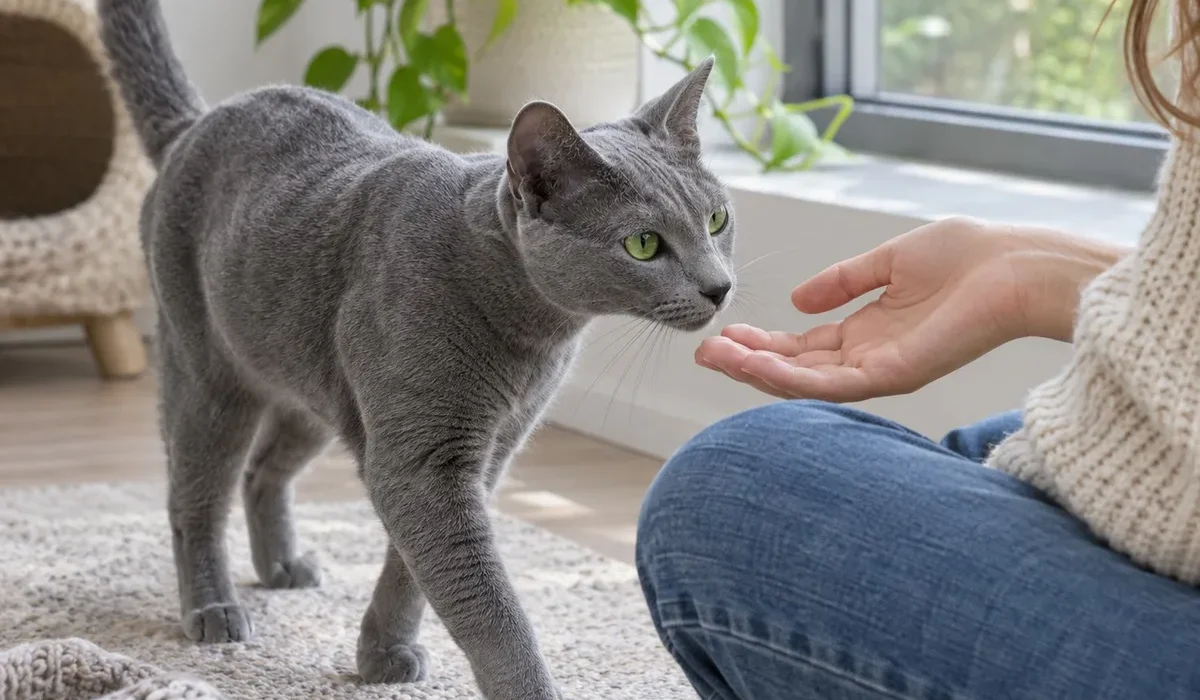
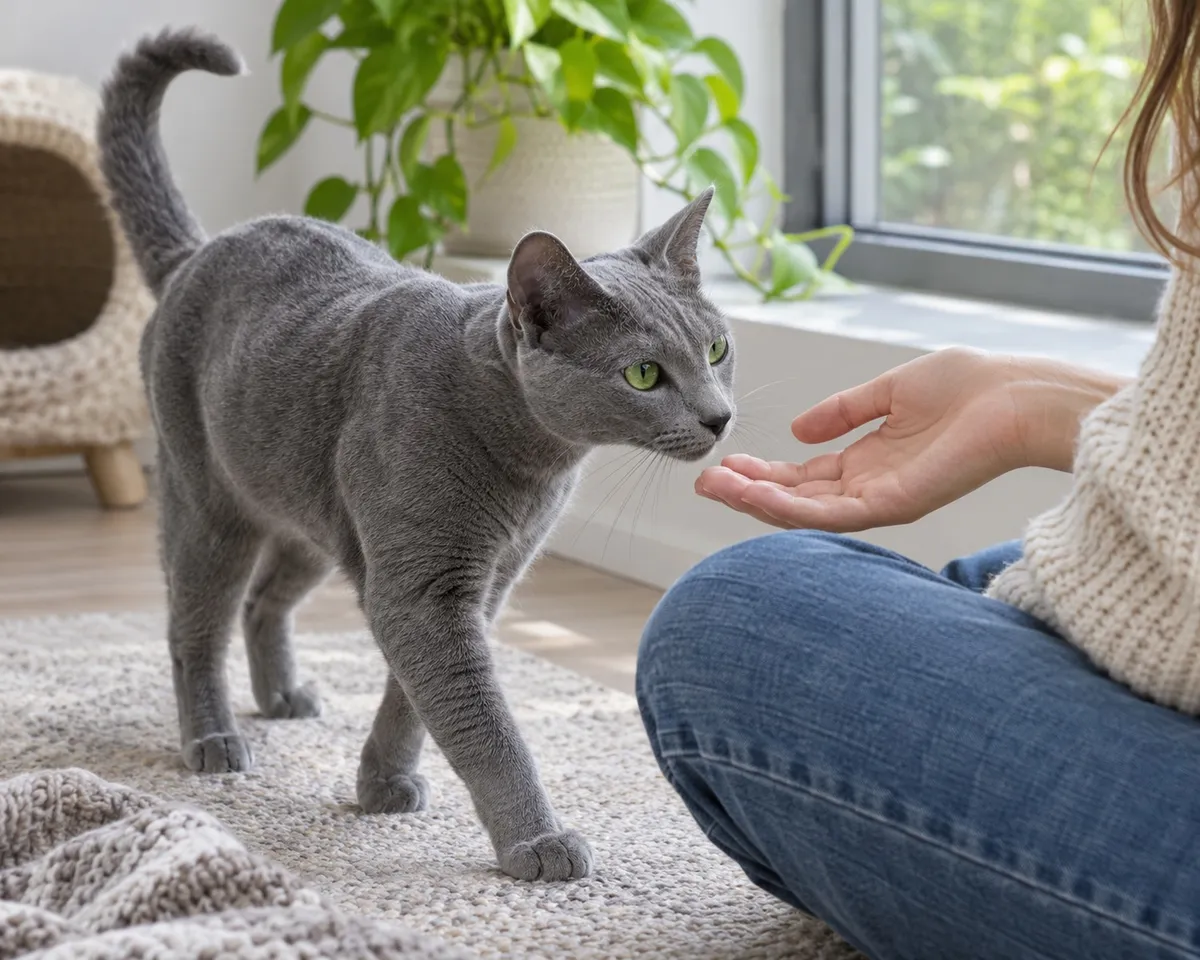
- Sit on the floor, avoid direct staring, and let the cat approach first.
- Start play from a distance with a feather wand toy, which builds trust without forcing touch.
- Open the rest of the home once the cat eats, plays and uses the litter box normally.
When a confident adult suddenly starts hiding, review the causes of a cat suddenly hiding and book a vet check, because pain often shows first as withdrawal.
Is the Russian Blue Personality Right for Your Home?
The Russian Blue personality suits calm adults, couples and quiet families who can offer a stable routine for up to 20 years.
Great match:
- Homes with predictable schedules and few frequent visitors.
- Owners who enjoy 20 to 30 minutes of daily interactive play.
- Allergy-aware households, since this breed often appears among hypoallergenic cat breeds, though no cat is allergen-free.
Harder match:
- Loud homes with regular parties or renovations.
- Families with toddlers who grab or chase cats.
- Owners who travel weekly or change schedules often.
Frequently Asked Questions
Are Russian Blue cats affectionate?
Yes, Russian Blue cats are very affectionate with their chosen people and often sleep nearby every night. Around strangers, that affection stays reserved for days or weeks.
Do Russian Blues like to be held?
Many Russian Blues tolerate holds of a minute or two but prefer sitting beside their owner. Letting the cat choose lap time builds stronger trust.
Is the Russian Blue personality good for first-time owners?
Yes, the Russian Blue personality suits first-time owners who keep a quiet, predictable home. The breed needs patience for the first 1 to 2 weeks but rarely turns destructive.
Are Russian Blue cats good with children?
Russian Blues do well with calm children aged about 6 and older who handle cats gently. Toddlers who shout or chase usually make this breed hide.
Can Russian Blue cats be left alone during the day?
Adult Russian Blues usually cope with 8 to 9 hours alone when they have toys, perches and a steady routine. Kittens under 6 months need more frequent company and meals.
The Russian Blue personality rewards patient owners with a quiet, clever and deeply loyal companion for up to 20 years. Shyness with strangers is normal and fades with routine, gentle play and a safe place to hide. Start by preparing one calm room and a fixed feeding schedule before your new Russian Blue arrives home.