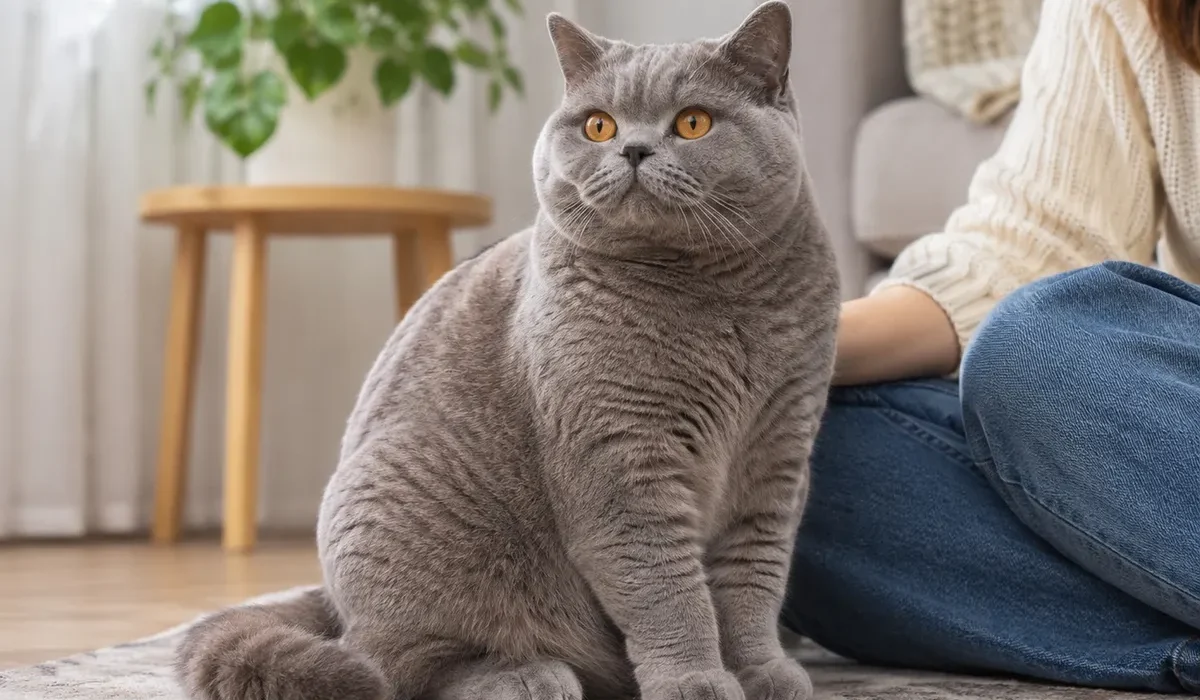
British Shorthair Personality: 7 Lovely Traits of a Calm Cat
The British Shorthair personality is calm, affectionate and independent, with a quiet voice, a steady temper and a love of company without constant handling. This easygoing temperament matters most for busy families, apartment dwellers and first-time owners who want a gentle cat that tolerates time alone.
This post may contain affiliate links. As an Amazon Associate I earn from qualifying purchases.
Table of Contents
British Shorthair personality at a glance:
- Size and Weight: Males weigh 9 to 17 pounds, and females weigh 7 to 12 pounds.
- Lifespan: Most British Shorthairs live 12 to 17 years, and some reach 20.
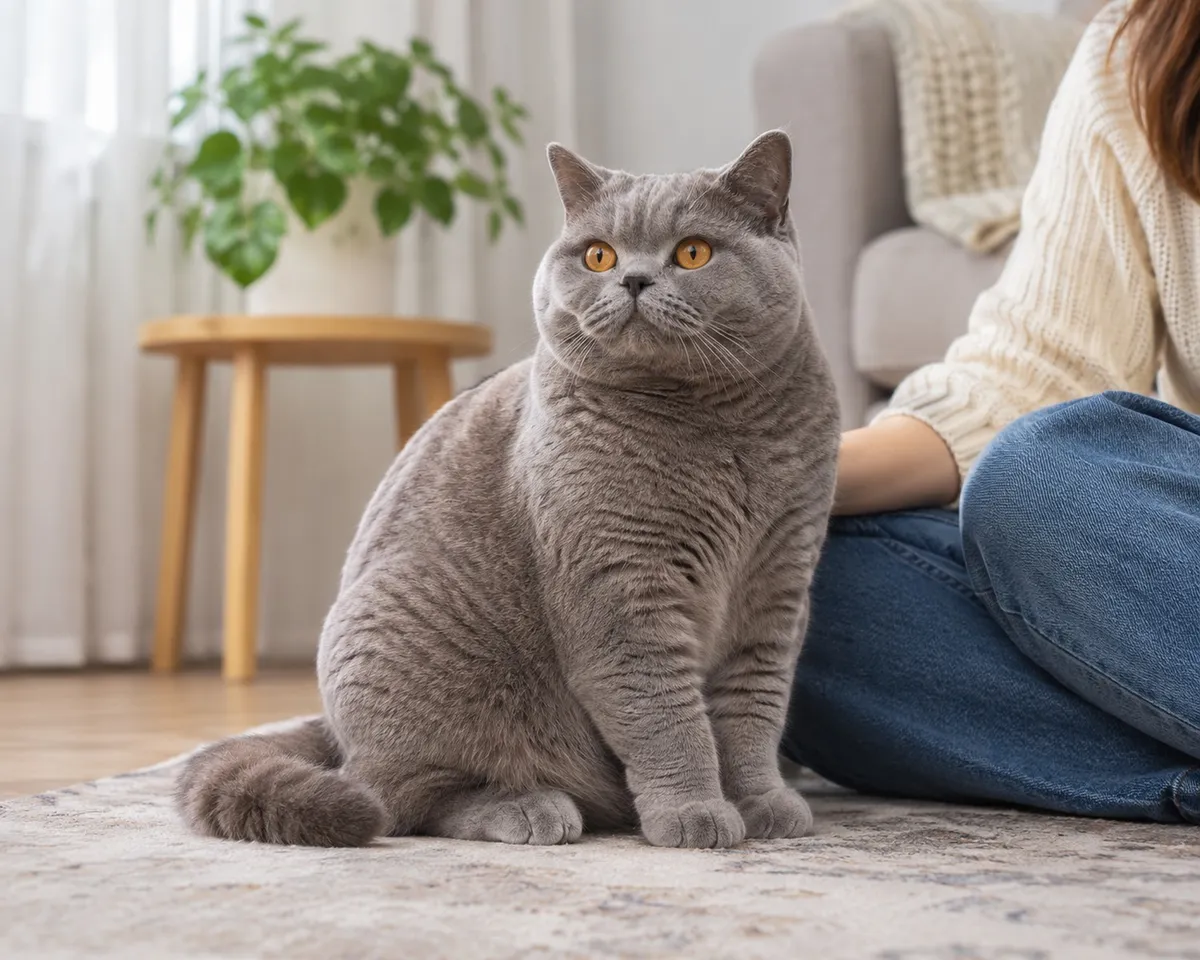
- Temperament: Calm, loyal and undemanding, these cats prefer sitting beside owners rather than on laps.
- Grooming Needs: The dense, plush coat needs brushing once or twice a week.
The 7 Key British Shorthair Personality Traits
Seven core traits define this sturdy, round-faced breed and shape daily life in any home.
1. Calm and Even-Tempered
Most British Shorthairs stay relaxed through visitors, vacuum cleaners and household noise. When my British Blue arrived at 14 weeks, he explored the whole flat within an hour instead of hiding.
2. Affectionate Without Being Clingy
This breed shows love by following owners between rooms and settling nearby, not by demanding attention. Carrying usually stresses a British Shorthair, which feels safest with all four paws on the floor.
3. Independent and Content Alone
A healthy adult British Shorthair handles an 8-hour workday alone better than most companion breeds. Fresh water, measured food and a window perch keep the cat settled until you return.
4. Quiet Voice
Soft chirps and short meows replace loud demands, making this one of the quietest cat breeds. Owners who find the Siamese cat personality too talkative often prefer this hushed companion.
5. Playful Kittens, Relaxed Adults
Kittens stay lively until roughly 18 to 24 months, then energy drops sharply. Full size and adult temperament often arrive late, at 3 to 5 years of age.
6. Intelligent and Food-Motivated
Routines, feeding times and simple tricks are learned quickly when treats are involved. That strong food drive makes portion control essential, because British Shorthairs gain weight easily.
7. Loyal and Routine-Loving
These cats bond with the whole household rather than one person and thrive on predictable schedules. Sudden changes, such as a house move, can cause several days of withdrawn behavior.
British Shorthair Personality vs Other Popular Breeds
The British Shorthair personality is calmer than a Siamese, more independent than a Ragdoll and less chirpy than a Maine Coon.
| Breed | Energy Level | Voice | Lap Cat Tendency |
|---|---|---|---|
| British Shorthair | Low to moderate | Quiet | Low, sits beside you |
| Ragdoll | Low | Quiet | High, relaxes when held |
| Maine Coon | Moderate | Chirpy | Moderate |
| Siamese | High | Loud and frequent | High, seeks constant contact |
Gentle-breed shoppers can also compare the Ragdoll cat personality and the larger Maine Coon personality before choosing.
Living With a British Shorthair: Kids, Pets and Alone Time
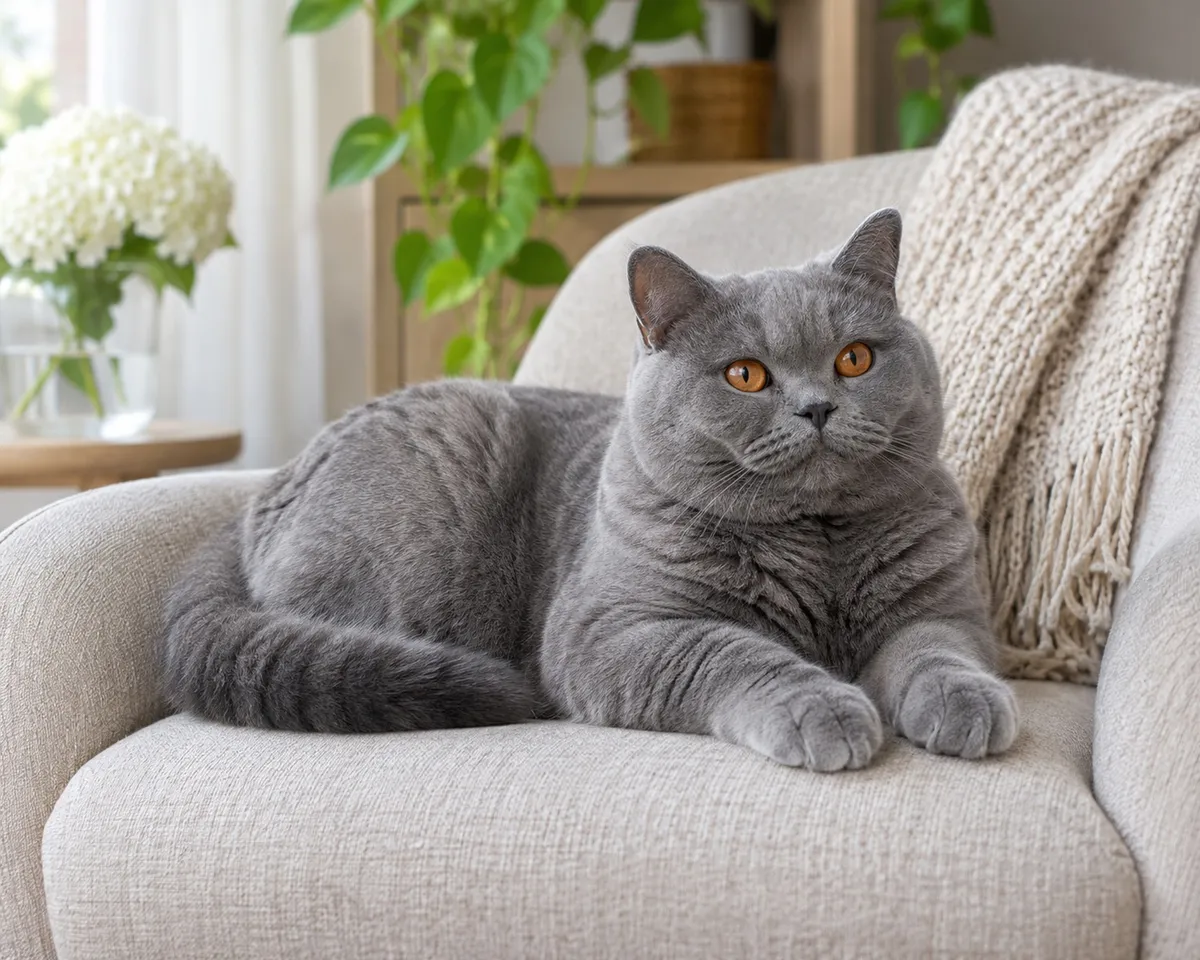
The British Shorthair personality fits most homes because the breed meets noise, children and other pets with patience.
Good matches:
- Families with children over 5 who learn to stroke rather than lift the cat.
- Cat-friendly dogs introduced gradually over 1 to 2 weeks.
- Apartments, since adults need modest space and rarely climb high shelves.
- Working owners who are away 6 to 9 hours a day.
Poor matches:
- Owners who want a cat to carry around or cuddle on demand.
- Households expecting a high-energy, acrobatic companion.
For respectful handling techniques, International Cat Care offers practical guidance that suits this hands-off breed.
Care Tips That Suit the British Shorthair Personality
A steady routine keeps a calm British Shorthair slim, healthy and mentally engaged.
- Play twice daily for 10 to 15 minutes with an interactive wand toy, because short chase sessions burn calories in lazy adults.
- Measure every meal using a guide on how much to feed a cat, since obesity is the breed’s biggest lifestyle risk.
- Brush the dense coat weekly with a rubber grooming mitt, increasing to daily sessions during spring and autumn shedding, as the cat grooming guide explains.
- Book a yearly vet check, because the breed is prone to hypertrophic cardiomyopathy, a heart disease described by the Cornell Feline Health Center.
- Call a veterinarian promptly if your cat shows rapid breathing, sudden hiding or lethargy, since these signs can signal heart trouble.
- Keep feeding and play at fixed times to suit the breed’s routine-loving nature.
Frequently Asked Questions
Are British Shorthairs affectionate cats?
Yes, British Shorthairs are affectionate but undemanding, showing love by staying within a few feet of their owners. Most enjoy gentle stroking but rarely seek long lap sessions.
Do British Shorthairs like to be held?
Most British Shorthairs tolerate being held for only a few seconds and prefer all four paws on the ground. Supporting the chest and hindquarters together reduces their stress.
Does the british shorthair personality change with age?
Yes, the british shorthair personality shifts from playful kitten to calm adult between ages 2 and 5. Seniors over 11 years usually become even more sedentary.
Are British Shorthairs good for first-time owners?
Yes, this breed suits first-time owners because it is calm, quiet and needs only weekly brushing. Portion control to prevent obesity is the main ongoing task.
Can a British Shorthair be left alone all day?
A healthy adult British Shorthair usually copes with 8 to 9 hours alone when food, water and a clean litter box are available. Kittens under 6 months need midday meals and company.
The british shorthair personality blends calm loyalty, quiet affection and easy independence, making this breed a dependable companion for families and busy owners. Respect the cat’s dislike of being carried, measure every meal and play daily to prevent weight gain. Start this week by setting fixed feeding and play times, because predictable routines bring out the best in British Shorthairs.