Can Cats Eat Avocado? 5 Important Facts Every Owner Should Know
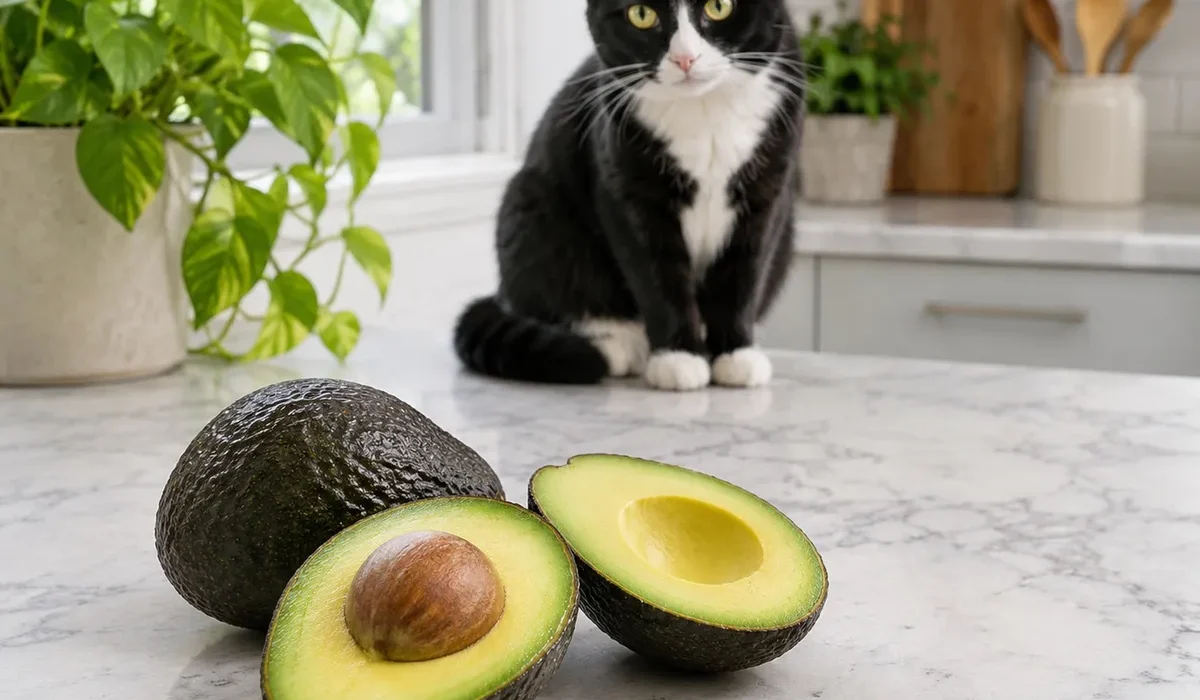
The answer to can cats eat avocado is a cautious no: a tiny lick of plain ripe flesh rarely harms a cat, but avocado offers no benefit, and its fat, skin and pit carry real risks. This matters most for owners who cook with avocado, serve guacamole, or leave pits and peels within reach.
This post may contain affiliate links. As an Amazon Associate I earn from qualifying purchases.
Table of Contents
Can cats eat avocado at a glance:
- Short Answer: A fingertip-sized taste of plain flesh is low risk, but skipping avocado is safer.
- Safe Amount: No more than about 1 teaspoon of plain flesh, offered rarely.
- Main Benefit: None that cats need, because complete cat food already supplies healthy fats and vitamins.
- Main Risk: Vomiting, diarrhea and pancreatitis from high fat, plus choking or blockage from the pit.
Is Avocado Toxic to Cats?
Avocado contains persin, a natural fungicidal toxin concentrated in the leaves, skin, pit and bark. Persin seriously harms the hearts and lungs of birds, rabbits, horses and goats.
Cats appear far less sensitive, but the ASPCA Animal Poison Control Center still lists avocado as toxic to cats, with vomiting and diarrhea as typical effects. When my tabby licked guacamole off a chip, the onion in the dip worried my vet far more than the avocado.
Can Cats Eat Avocado Flesh, Skin or Pit?
The risk from avocado depends on which part a cat eats, with the pit and guacamole causing the most serious problems.
| Avocado Part | Risk Level | Main Concern |
|---|---|---|
| Ripe flesh | Low | High fat can cause vomiting or diarrhea |
| Skin or peel | Moderate | More persin and hard to digest |
| Pit (seed) | High | Choking and intestinal blockage |
| Leaves and plant | Moderate | Highest persin levels |
| Guacamole | High | Onion, garlic, salt and lime juice |
| Avocado oil | Low to moderate | Pure fat that can trigger pancreatitis |
Why Avocado Fat Upsets a Cat’s Stomach
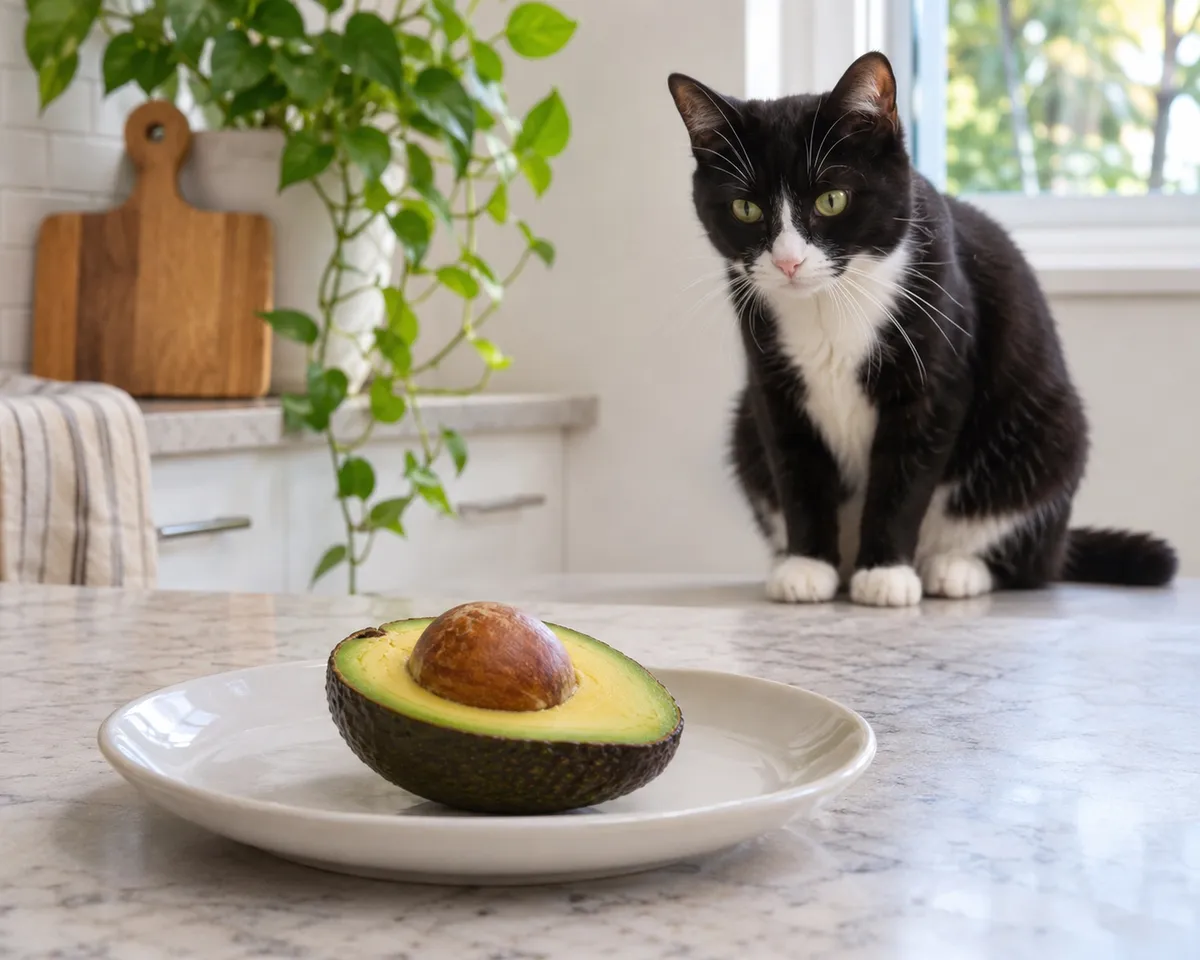
For most owners, the practical answer to can cats eat avocado comes down to fat rather than persin. Ripe avocado flesh contains roughly 15 grams of fat and 160 calories per 100 grams.
A 10-pound indoor cat needs about 200 to 250 calories a day, so one tablespoon of avocado uses roughly 10% of that budget. Veterinarians widely recommend keeping all treats under 10% of daily calories.
Signs of fat-related stomach upset:
- Vomiting within 2 to 12 hours of eating
- Soft stool or diarrhea lasting 1 to 2 days
- Skipped meals or reduced appetite
- Lethargy and belly pain, which can point to pancreatitis
Mild cases usually settle with bland meals, and this guide on what to feed a cat with an upset stomach covers safe options.
What to Do If Your Cat Ate Avocado
A cat that licked a little plain avocado flesh usually needs only home monitoring for 24 to 48 hours.
- Remove any leftover avocado, skin and pit from your cat’s reach.
- Identify what your cat ate: plain flesh, skin, pit or guacamole.
- Offer fresh water and skip treats for the rest of the day.
- Watch appetite, energy and litter box output for 48 hours.
- Call your veterinarian if vomiting or diarrhea lasts longer than 24 hours.
Never induce vomiting or give your cat human medicine at home, because both can cause more harm than the avocado. Your veterinarian should guide treatment, especially for cats prone to cat vomiting after eating.
Seek emergency care right away if your cat:
- Swallowed an avocado pit or a large piece of skin
- Ate guacamole containing onion or garlic
- Vomits repeatedly or strains without passing stool
- Has a swollen, painful belly, trouble breathing or collapses
Safer Treats Than Avocado for Cats
Cats are obligate carnivores, so plain cooked meat makes a far better treat than avocado or any fruit.
- Plain cooked chicken: unseasoned, boneless and cut into pea-sized pieces.
- Cooked fish: small flakes of plain salmon or tuna, once or twice a week.
- Single-ingredient treats: freeze-dried meat cat treats deliver protein without avocado’s fat load.
This list of human foods cats can eat shows more kitchen-safe options in sensible portions.
Can Cats Eat Avocado Safely at Home? Prevention Tips
When people ask can cats eat avocado, the safest household answer is keeping every part of the fruit out of reach.
- Store whole avocados in the fridge or a closed cupboard, not on the counter.
- Throw pits and peels into a locking kitchen trash can that curious paws cannot open.
- Cover guacamole bowls during parties, when cats often sneak onto tables.
- Review this guide to dangerous foods for cats covering onions, garlic and grapes.
Frequently Asked Questions
Can cats eat avocado every day?
No, daily avocado adds about 25 fat-heavy calories per tablespoon, which raises the risk of weight gain and pancreatitis. Plain avocado should stay a rare, fingertip-sized taste at most.
Is guacamole poisonous to cats?
Yes, guacamole is dangerous because onion and garlic damage red blood cells and can cause anemia that appears 2 to 5 days after eating.
How much avocado is toxic to a cat?
Veterinarians have not set an exact toxic dose of avocado for cats, and a teaspoon of plain flesh usually causes mild stomach upset at worst. Any swallowed pit counts as an emergency because of blockage risk.
Can kittens eat avocado?
No, kittens under 6 months handle rich fat poorly and need every calorie to come from complete kitten food.
Can cats eat avocado oil?
Avocado oil should not be added to a cat’s food, since one tablespoon holds about 120 calories of pure fat. One accidental lick from a spill rarely causes more than mild diarrhea.
The answer to can cats eat avocado is that a tiny lick of plain flesh rarely causes harm, but avocado adds fat without any benefit. Keep pits, peels and guacamole out of reach, offer meat-based treats instead, and call your veterinarian if vomiting lasts beyond 24 hours or your cat swallows a pit.