
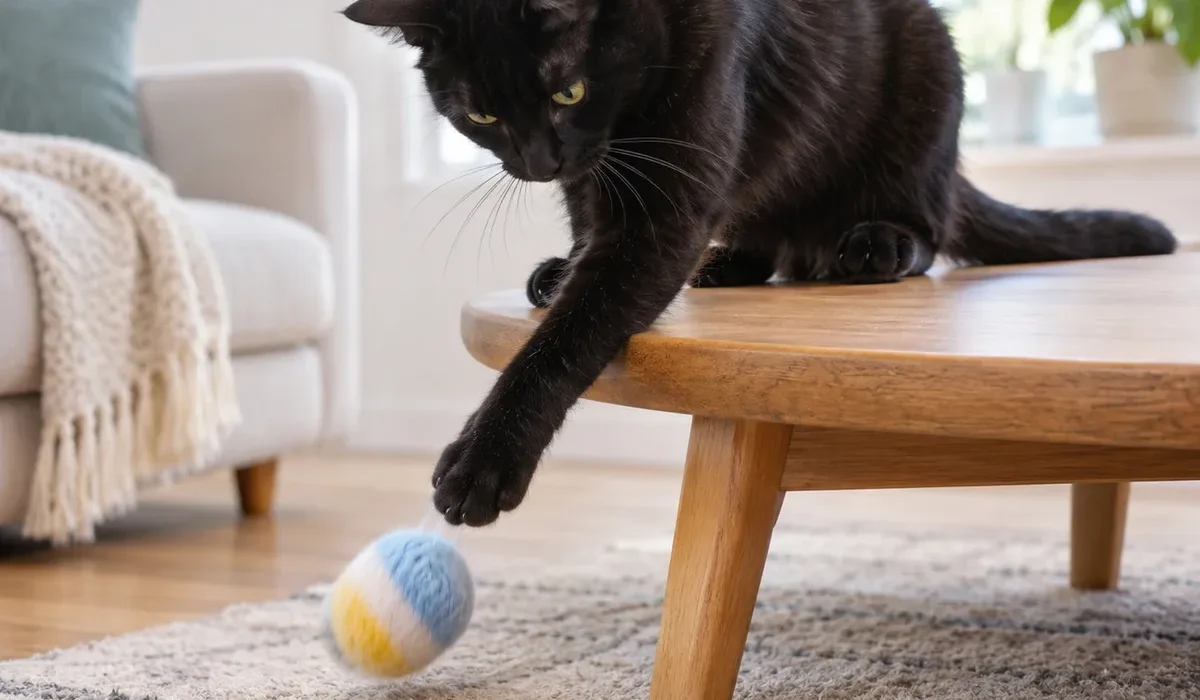
Why Do Cats Knock Things Off Tables? 6 Funny Reasons Explained
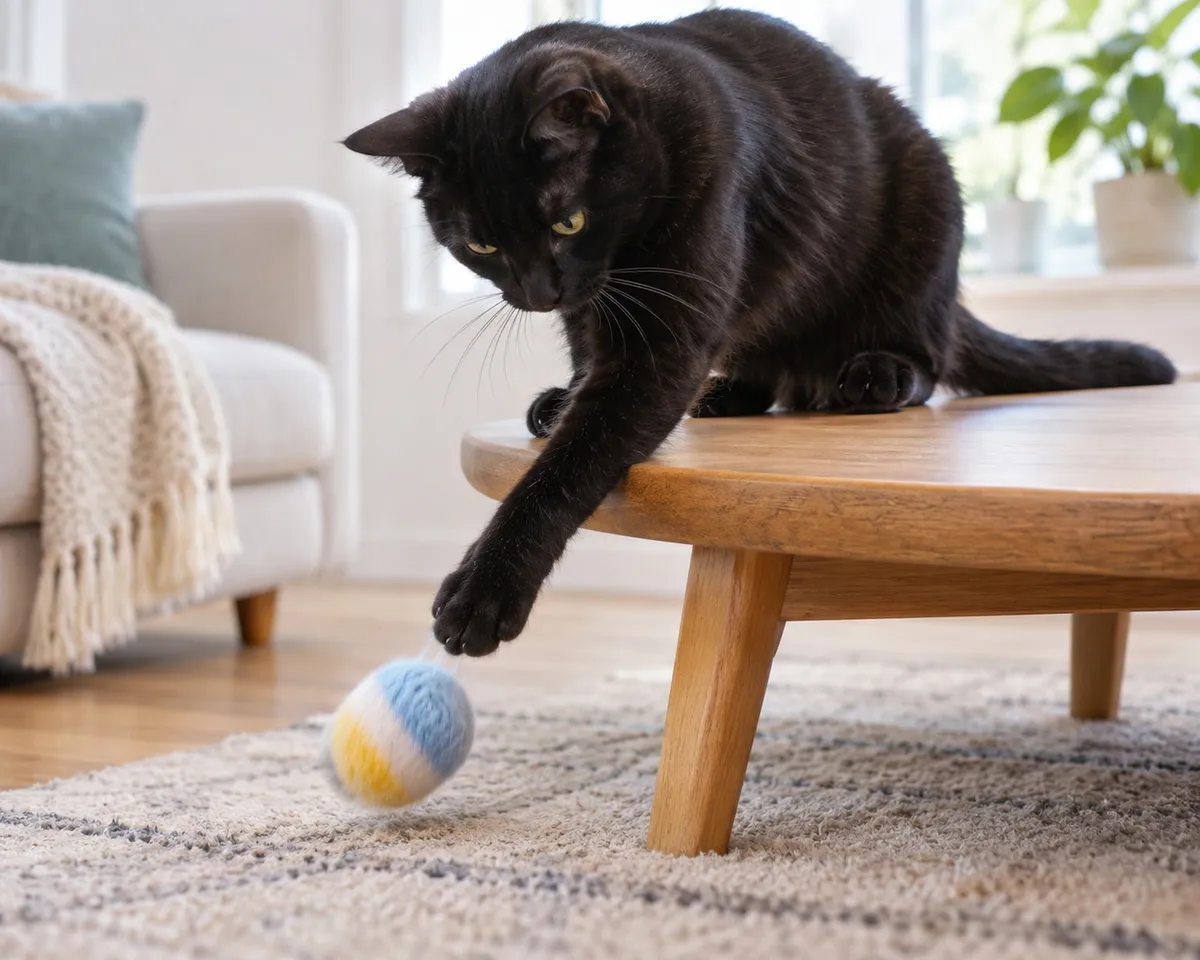
The answer to why do cats knock things off tables is mostly instinct: cats paw small objects to test them, practice hunting, and get a quick reaction from owners. This habit matters most for indoor cats, young cats under 2 years old, and homes with fragile items on shelves.
This post may contain affiliate links. As an Amazon Associate I earn from qualifying purchases.
Table of Contents
Why do cats knock things off tables at a glance:
- Short Answer: Cats knock objects down to investigate, practice hunting, play, and get your attention.
- Why Cats Do It: Sensitive paw pads and predator instinct push cats to test whether objects move like prey.
- Is It Normal: Yes, table swiping is normal play behavior in healthy cats of every age.
- How to Respond: Stay calm, remove tempting items, and add two 10 to 15 minute play sessions daily.
Why Do Cats Knock Things Off Tables? 6 Main Reasons
Most cats knock things off tables for a mix of six reasons, and several reasons can drive a single swipe.
1. Hunting Instinct
Cats are predators that tap small objects to see whether those objects move like mice or insects. My cat Milo always freezes and watches the falling item before pouncing, a classic stalking sequence.
2. Curiosity and Testing
Cat paw pads contain sensitive nerve receptors that judge texture, weight, and movement. Pushing a cup toward the edge is how a cat learns what an unfamiliar object is.
3. Attention Seeking
A falling glass makes owners jump, shout, or come running, and cats learn this connection quickly. Even negative attention rewards table swiping, so many cats make eye contact first, then slowly push.
4. Boredom and Excess Energy
Indoor cats without enough daily activity invent games with whatever sits within reach. Our guide on how to keep an indoor cat entertained covers routines that burn off extra energy.
5. Hunger and Mealtime Reminders
Many cats target tables and nightstands shortly before breakfast or dinner, because a crash reliably summons the person who fills the bowl.
6. Playful Kitten Behavior
Kittens start object play at around 7 to 8 weeks old, and the batting stays intense through the first year.
Reasons, Clues and Best Responses
Each reason for table swiping leaves a different clue, so timing and body language point to the right fix.
| Reason | Typical Clue | Best Response |
|---|---|---|
| Hunting instinct | Crouching and tail twitching first | Daily prey-style play |
| Curiosity | Slow pawing at new items | Let the cat sniff, then move the item |
| Attention seeking | Eye contact before swiping | Stay calm, reward quiet behavior |
| Boredom | More swiping after long days alone | Add climbing spots and enrichment |
| Hunger | Swiping before mealtimes | Keep a fixed feeding schedule |
| Kitten play | Fast batting in cats under 1 year | Keep safe toys within reach |
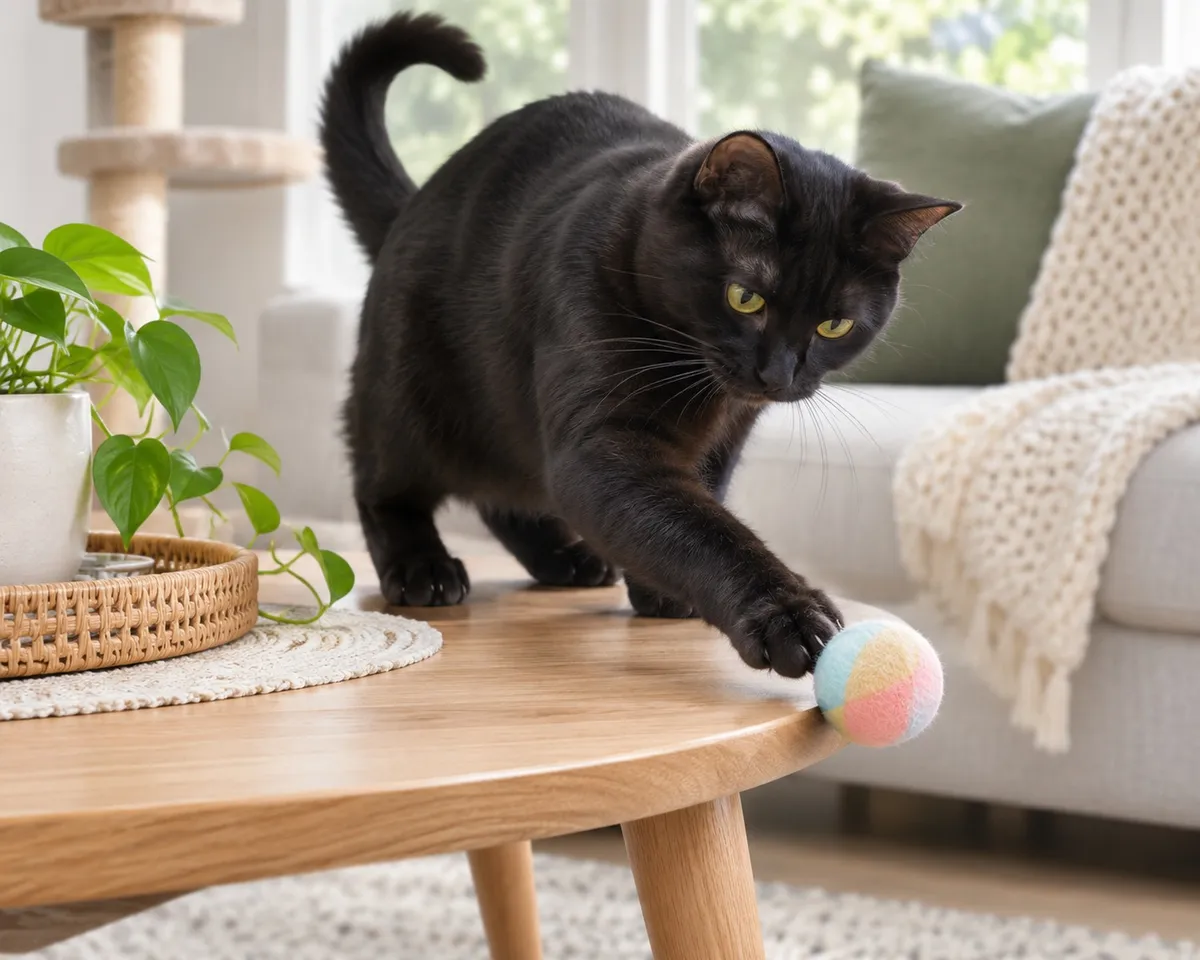
Why Do Cats Knock Things Off Tables at Night?
Cats are crepuscular, meaning they are naturally most active at dawn and dusk. Crashes around 4 or 5 a.m. happen because peak energy and hunger hit together.
Night swiping often comes with bursts of running, so see why cats get the zoomies for the full picture. A play session followed by a meal right before bed helps many cats sleep longer.
How to Stop Cats Knocking Things Off Tables
The most effective fix is meeting the need behind table swiping instead of punishing the cat.
- Move breakable items into closed cabinets or rooms your cat cannot enter.
- Stay calm, because shouting rewards attention-seeking swipes.
- Schedule two 10 to 15 minute play sessions daily with an interactive wand toy that mimics fleeing prey. More ideas are in our guide to interactive toys for indoor cats.
- Serve part of each meal from a food puzzle feeder so your cat hunts with its paws.
- Offer cat trees and window shelves as approved high surfaces to explore.
- Reward calm moments on furniture with praise or a treat within a few seconds.
The ASPCA guide to common cat behavior issues recommends redirecting unwanted behavior rather than punishing cats. Spraying water or yelling increases fear, which can make swiping worse.
When Knocking Things Over Signals a Problem
Occasional table swiping is normal, but a sudden jump in restless behavior can point to stress or illness.
- Senior cats over 10 years with new restlessness, night yowling, or a ravenous appetite may have hyperthyroidism.
- Swiping paired with hiding, appetite loss, or litter box changes can signal stress or pain.
- New pets, moves, and schedule changes often trigger attention seeking, as our list of cat behavior problems explains.
If behavior changes suddenly alongside weight loss or vomiting, book a veterinarian visit to rule out medical causes. Our guide on a cat losing weight lists the warning signs.
Frequently Asked Questions
Why do cats knock things off tables while looking at you?
Cats that hold eye contact while swiping usually want attention, because falling objects make owners react within seconds.
Is it normal for cats to knock things over?
Yes, knocking things over is normal play and hunting behavior, and the habit is most common in cats under 2 years old.
Do cats knock things off on purpose?
Yes, cats push objects deliberately to explore, hunt, or gain attention, and they repeat any swipe that earns a reaction.
Should I punish my cat for knocking things over?
No, yelling or spraying water raises stress and damages trust, while two 10 to 15 minute play sessions daily redirect the energy.
Do kittens grow out of knocking things off tables?
Many cats calm down by 1 to 2 years of age, but adults keep the habit if swiping still earns attention.
The real answer to why do cats knock things off tables combines hunting instinct, curiosity, boredom, and a clever bid for attention. Table swiping is normal behavior, not spite. Start tonight with a 15 minute play session before bed, clear fragile items from tables, and watch the crashes slow down.