Living With a Wobbly Cat: 9 Home Setup Tips That Help
Living with a wobbly cat means adapting your home so a cat with poor balance or coordination can move, eat, and rest safely. Most wobbly cats do not suffer and can live full lives once the floors, litter box, and furniture are adjusted to their ability.
This post may contain affiliate links. As an Amazon Associate I earn from qualifying purchases.
Table of Contents
Living with a wobbly cat at a glance:
- Short Answer: Cats with cerebellar or balance problems adapt well when the home is padded, low, and non-slip.
- Most Common Causes: Cerebellar hypoplasia from birth, inner ear disease, injury, infection, or toxins.
- Urgency: A cat that suddenly becomes wobbly needs a vet visit the same day, while a lifelong wobble is usually stable.
- What to Do at Home: Add traction, low-entry litter boxes, raised bowls, and ramps in place of high jumps.
- When to See a Vet: Any new, worsening, or fast-changing loss of balance.
What Is a Wobbly Cat?
A wobbly cat is a cat with ataxia, which means uncoordinated, unsteady movement caused by a problem in the brain, inner ear, spinal cord, or nerves. The cat may sway, stumble, tremble, or walk with a wide-legged stance.
Many owners first notice a wobbly gait in a kitten of 4 to 6 weeks old, when kittens normally begin walking with confidence. Others notice it suddenly in an adult cat, which is a very different situation.
Common signs include:
- A swaying, drunken walk with a wide stance
- Head tremors or bobbing, especially when the cat focuses on food or a toy
- Overshooting jumps or missing the landing
- Falling over while grooming or turning
- Tilted head or eyes that flick side to side
If your cat became unsteady overnight, read why a cat can turn wobbly all of a sudden and call your vet promptly.
Why Cats Become Wobbly: Common Causes
Wobbly cats have an underlying cause that decides both the outlook and the care they need. Knowing the cause tells you whether to expect a stable lifelong condition or an illness that needs treatment.
Cerebellar Hypoplasia
Cerebellar hypoplasia happens when the cerebellum, the brain region that controls balance and coordination, does not fully develop before birth. It is often linked to the mother catching feline panleukopenia virus during pregnancy. The condition is not painful, not contagious, and does not get worse over time. Our guide to cerebellar hypoplasia in cats covers it in depth.
Vestibular Disease
The vestibular system in the inner ear and brainstem controls balance. Inner ear infections, polyps, or an idiopathic (unknown cause) flare-up can cause sudden stumbling, a head tilt, and rapid eye movement. Many cats with idiopathic vestibular disease improve noticeably within 72 hours and recover over several weeks.
Other Causes
- Head or spinal trauma
- Toxin exposure, including some plants, medications, and chemicals
- Low blood sugar or severe anemia
- Stroke or brain tumor, more common in older cats
- Thiamine (vitamin B1) deficiency
For a full overview of how vets investigate balance problems, see ataxia in cats and its treatment options and our page on wobbly cat syndrome.
Living With a Wobbly Cat: 9 Home Setup Tips
The right setup lets a wobbly cat stay independent while lowering the risk of falls. These nine changes cost little and work for most cats with balance problems.
1. Add Traction to Slippery Floors
Hardwood, tile, and laminate floors make a wobbly cat splay and slide. Lay down washable rugs with rubber backing or carpet runners along the routes your cat uses most. Clear a path from the sleeping spot to the food, water, and litter box.
2. Choose a Low-Entry Litter Box
A wobbly cat often cannot step over a tall box edge. Use a box with a front opening cut down to 2 to 3 inches, or a shallow under-bed storage tub. Place a non-slip mat under it so the box does not slide when your cat climbs in. A good low-entry litter box is one of the most helpful single purchases. See our tips on the best place to put a litter box for placement ideas.
3. Raise Food and Water Bowls Slightly
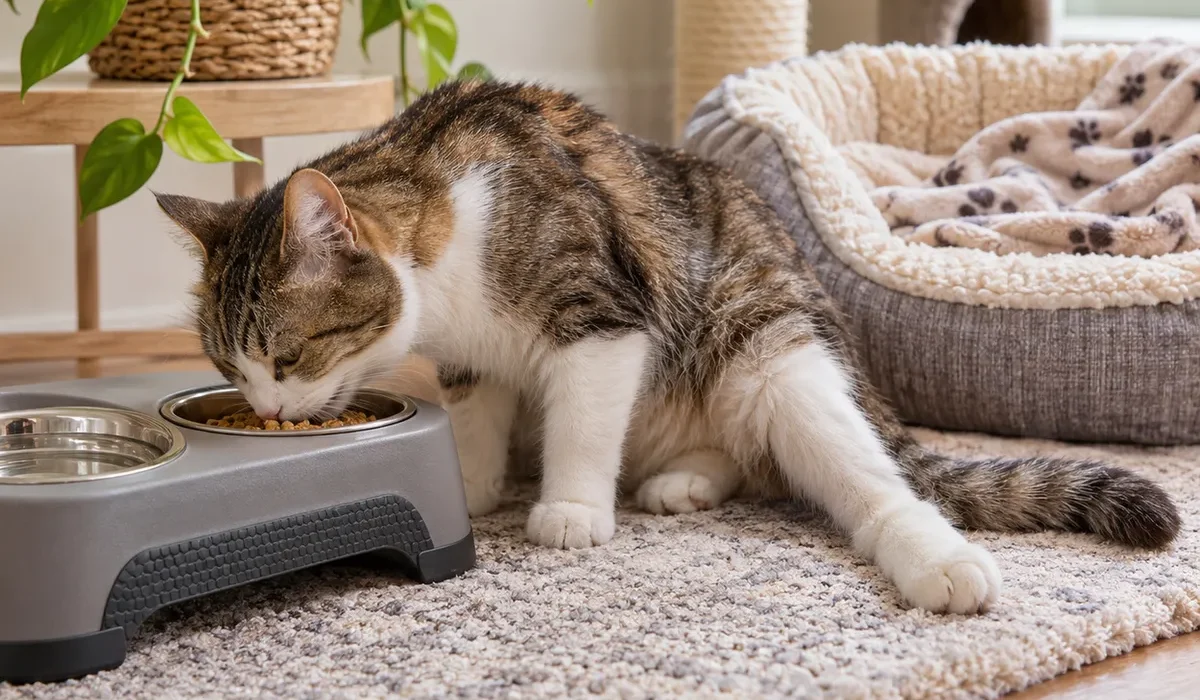
Head tremors make it hard to eat from a deep, wobbly dish. Use heavy, wide, shallow ceramic bowls that cannot tip. A bowl raised 2 to 3 inches reduces the need to crouch low, which helps cats that topple forward while eating.
4. Use Ramps and Steps Instead of Jumps
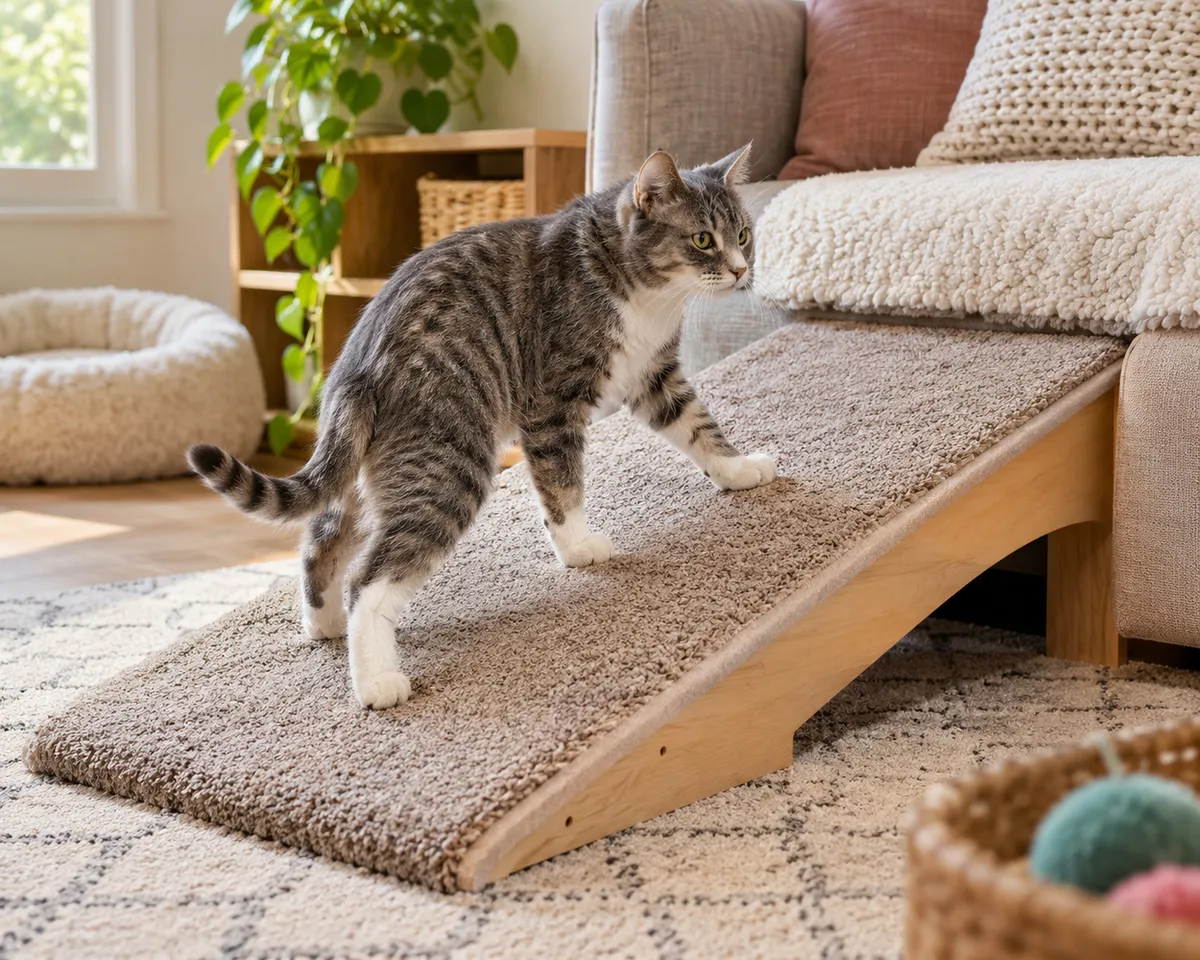
Wobbly cats still love high perches, but a missed jump can mean a bad fall. Place a sturdy carpeted pet ramp next to the bed or couch and keep furniture heights low. Our list of cat tree options for small spaces shows low, stable designs worth considering.
5. Pad Sharp Corners and Hard Edges
Cats with head tremors or poor coordination bump into table legs and door frames. Cover sharp furniture corners with soft foam guards. Move glass tables, fragile ornaments, and anything that can fall onto your cat to a higher room or shelf.
6. Block Stairs and Open Heights
Use a baby gate with a fine mesh to close off stairs, balconies, and open loft areas. A wobbly cat can slip through wide bars. Keep windows screened and secured, because a cat that misjudges a jump to a sill may fall.
7. Set Up a Safe Resting Zone
Create a quiet corner with a low, thick bed and walls on two sides, such as a bolster bed against a wall. The side support lets the cat lean and stay steady while lying down. Keep it away from busy foot traffic and away from other pets that may bump the cat.
8. Keep the Layout Consistent
Cats with balance problems memorize their route. Avoid moving furniture often, and keep pathways clear of cords, shoes, and bags. A stable layout reduces stumbles and builds confidence.
9. Supervise Play and Use Gentle Toys
Wobbly cats still need to play. Choose low, floor-level toys such as wand toys held near the ground, and avoid toys that encourage big leaps. Soft play on a carpeted surface keeps the cat active and happy. For ideas, browse our interactive toys for indoor cats.
Daily Care When Living With a Wobbly Cat
Daily care for a wobbly cat comes down to safety, nutrition, grooming help, and patience. Small routines make a large difference in comfort.
Feeding and hydration:
- Offer 3 to 4 small meals a day if your cat tires easily while eating
- Feed wet food, which supports hydration and is easier to eat for cats with tremors
- Wipe the chin and whiskers after meals, since messy eating is common
- Keep fresh water in more than one spot
Grooming support:
- Brush your cat gently once a day, because wobbly cats often cannot reach their back or hindquarters
- Check the area around the tail and rear for litter or stool residue
- Trim nails every 2 to 3 weeks so claws do not catch on carpet or rugs
Our cat grooming guide covers brushing basics, and you can learn about trimming your cat’s nails safely in six steps.
Weight and Mobility
Extra weight makes balance harder and strains joints. Aim for a lean body where you can feel the ribs under a thin fat layer. Gentle daily play and a measured portion of food keep a wobbly cat fit.
Wobbly Cat vs. Sudden Illness: A Quick Urgency Guide
A lifelong wobble is different from a new one, and the urgency depends on how fast the signs appeared. The table below summarizes the usual guidance.
| Situation | Typical Cause | Urgency |
|---|---|---|
| Wobbly since kittenhood, stable | Cerebellar hypoplasia | Routine vet check |
| Sudden loss of balance in an adult | Vestibular disease, stroke, toxin | Same-day vet visit |
| Head tilt with eye flicking | Inner ear problem | Vet visit within 24 hours |
| Wobbly with seizures or collapse | Neurological emergency | Emergency clinic now |
| Gradual worsening over weeks | Tumor, degenerative disease | Prompt vet exam |
When to See a Vet About a Wobbly Cat
Any new or worsening loss of balance deserves a veterinary exam, because several causes are treatable when caught early. A vet may check the ears, test blood and urine, take blood pressure, and sometimes recommend imaging such as an MRI.
Go to an emergency clinic immediately if your cat shows any of these signs:
- Seizures, collapse, or inability to stand
- Repeated vomiting along with a wobbly walk
- Crying out in pain or sudden blindness
- Possible exposure to a toxin or poisonous plant
- Refusing food and water for more than 24 hours
Never give your cat human medicine or any dose from the internet. Only a veterinarian can choose safe treatment, and the Cornell Feline Health Center offers reliable background on feline neurological conditions. If your cat also seems to be in distress, our guide to signs that a cat is in pain can help you decide how urgent it is.
Emotional Care and Quality of Life With a Wobbly Cat
Wobbly cats usually adapt faster than their owners expect, and they rarely seem bothered by their clumsiness. Cats with cerebellar hypoplasia often live a normal lifespan of 12 to 15 years or more when kept safe.
Be patient with accidents, and avoid scolding a cat for missing the litter box or knocking things over. Give calm praise when your cat succeeds at a hard task such as climbing onto the couch. Many owners find that living with a wobbly cat gets calmer when the daily routine stays predictable.
If you share your home with other pets, supervise rough play. Keep an eye on sudden changes like hiding, which may signal pain or fear. For older cats with new wobbliness, our senior cat care guide explains common age-related changes.
Frequently Asked Questions
Is living with a wobbly cat difficult?
Living with a wobbly cat is manageable for most owners once the home has traction, low litter boxes, and padded corners. Many cats with cerebellar hypoplasia live 12 to 15 years and rarely need more than basic safety changes.
Do wobbly cats feel pain?
Cerebellar hypoplasia itself is not painful, but other causes such as ear infections, injuries, or tumors can be. If your cat cries out, hides, or stops eating, see a vet within 24 hours.
Can a wobbly cat go outside?
A wobbly cat should not roam outdoors unsupervised, because poor balance makes escaping predators, cars, and falls much more dangerous. A secure catio or supervised harness time in a quiet yard is safer.
Will my wobbly kitten get better with age?
Kittens with cerebellar hypoplasia do not outgrow the condition, but many learn to compensate and look steadier by 6 to 12 months of age. The wobble itself usually stays the same for life without getting worse.
What is the best floor for a wobbly cat?
Carpet or rubber-backed rugs are the best floor surfaces because they give grip and cushion falls. Smooth tile and hardwood cause the most slipping and should be covered along main walking routes.
Living with a wobbly cat becomes easier once you remove slippery floors, high jumps, and sharp corners, and add a low litter box, steady bowls, and ramps. Start by covering one main walkway with a grippy rug today, then book a vet visit if the wobble is new or worsening.