

Bladder Stones in Cats: 7 Signs, Types and Treatments
Bladder stones in cats are hard mineral crystals that clump together inside the bladder and irritate its lining, causing painful and frequent urination. They matter most for cats that strain in the litter box, pass blood, or urinate small amounts often, because a stone can quickly turn into a urinary blockage.
This post may contain affiliate links. As an Amazon Associate I earn from qualifying purchases.
Table of Contents
Bladder stones in cats at a glance:
- Short Answer: Bladder stones (uroliths) are mineral masses that form when urine becomes too concentrated or has the wrong pH.
- Most Common Types: Struvite and calcium oxalate account for the large majority of feline stones.
- Urgency: A cat that strains and produces no urine is an emergency; go to a vet immediately.
- What to Do at Home: Increase water intake and feed the diet your vet recommends.
- When to See a Vet: Any blood in the urine, repeated litter box trips, or straining lasting more than a day.
What Are Bladder Stones in Cats?
Bladder stones are solid mineral deposits that form when urine minerals crystallize and stick together. Over weeks to months, tiny crystals grow into stones ranging from a grain of sand to a small pebble.
Stones can sit in the bladder without causing trouble for a while. Trouble starts when they rub the bladder wall, cause inflammation, or travel into the urethra, the narrow tube that carries urine out of the body.
Male cats face the highest danger because their urethra is much narrower than a female’s. A stone or crystal plug can block it completely, and a fully blocked cat can die within 24 to 72 hours without treatment.
Bladder stones differ from kidney stones, which form higher in the urinary tract. In cats, stones in the bladder and urethra are far more common than stones in the kidneys.
7 Signs of Bladder Stones in Cats
Cats hide discomfort well, so owners often notice litter box changes first. Watch for these seven signs:
- Blood in the urine: Pink, red, or rust-tinged urine is the most common sign. Our guide to blood in cat urine explains the other causes vets rule out.
- Straining to urinate: The cat squats for a long time and produces only drops or nothing.
- Frequent trips to the litter box: Many cats visit the box 10 or more times a day with little output.
- Urinating outside the box: Cats link the litter box with pain and choose cool surfaces like tubs, tile, or sinks.
- Crying or vocalizing while peeing: A sharp yowl during urination signals real pain.
- Excessive licking of the genital area: Constant grooming around the urinary opening points to irritation.
- Lethargy, hiding, or vomiting: These suggest a blockage or kidney involvement and need urgent care. A cat that is suddenly hiding may be hurting.
When my own cat started squatting repeatedly and leaving tiny wet spots near the box, I assumed it was a behavior issue. It was a urinary problem, and the delay cost us an extra day of discomfort.
Many of these signs overlap with feline idiopathic cystitis, which is why only a vet can tell the two apart.
Types of Bladder Stones in Cats
Knowing the stone type matters because it decides the treatment. A stone that dissolves with diet will not respond the same way as one that needs surgery.
| Stone Type | Typical Cause | Can Diet Dissolve It? |
|---|---|---|
| Struvite | Alkaline urine, sometimes infection | Yes, in most cases |
| Calcium oxalate | Acidic urine, high calcium | No, needs removal |
| Urate | Liver problems, genetics | Rarely |
| Cystine | Inherited kidney defect | Sometimes |
Struvite Stones
Struvite stones form in alkaline urine and are made of magnesium, ammonium, and phosphate. In cats they are usually sterile, meaning no bacterial infection is involved, unlike in dogs.
Calcium Oxalate Stones
Calcium oxalate stones have become more common since urinary diets began acidifying cat urine. They cannot be dissolved by food, so vets remove them through surgery or other procedures.
Rarer Stone Types
Urate and cystine stones together make up a small share of cases. Urate stones are linked to liver shunts, and cystine stones to a rare inherited kidney condition.
What Causes Bladder Stones in Cats?
Bladder stones in cats develop when several factors line up, rather than from a single cause. Concentrated urine is the biggest driver because minerals crystallize faster when less water dilutes them.
Common risk factors include:
- Low water intake: Cats on dry-only diets often drink too little to dilute their urine.
- Diet composition: Foods high in magnesium, phosphorus, or calcium can raise stone risk.
- Urine pH problems: Alkaline urine favors struvite; overly acidic urine favors calcium oxalate.
- Obesity and low activity: Overweight cats urinate less often, which lets crystals settle.
- Age and breed: Middle-aged cats from 4 to 10 years are most affected, and Persians, Burmese, and Himalayans carry higher calcium oxalate risk.
- Urinary tract infections: Rare in cats, but they can trigger struvite formation.
Indoor cats with little exercise and stress are also overrepresented. Stress does not create stones directly, but it can reduce drinking and worsen bladder inflammation.
How Vets Diagnose Bladder Stones in Cats
A vet confirms the diagnosis with a physical exam plus imaging and urine tests. Many stones can be felt as a firm, gritty bladder, but tests show their size and number.
Typical diagnostic steps include:
- Urinalysis: Checks urine pH, crystals, blood, and signs of infection.
- X-rays: Show most stones, especially calcium oxalate and struvite, which are visible on radiographs.
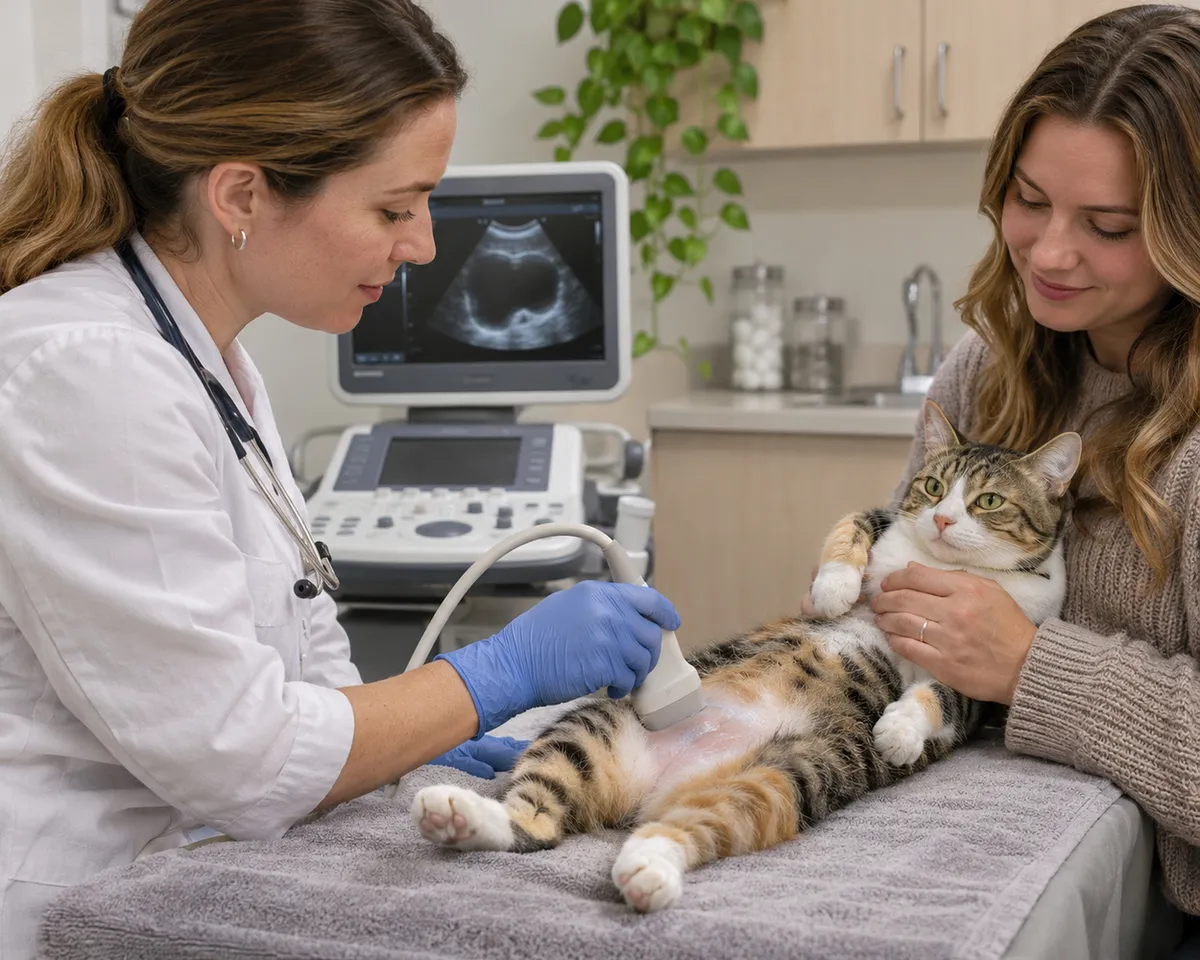
- Ultrasound: Reveals stones X-rays miss and shows the bladder wall.
- Blood work: Rules out kidney disease or a blockage that has raised waste products.
- Urine culture: Identifies bacteria if infection is suspected.
Once a stone is removed, the lab analyzes it. That result tells your vet exactly which diet and prevention plan to use.
Treatment for Bladder Stones in Cats
Treatment depends on stone type, size, and whether the urethra is blocked. Your vet will pick one of three main routes.
Dissolution with a special diet:
- Works for struvite stones only, often within 2 to 6 weeks.
- Requires a prescription dissolution diet for urinary stones fed exclusively, with no treats or table scraps.
- Needs follow-up imaging to confirm the stones are shrinking.
Surgical removal (cystotomy):
- The standard option for calcium oxalate stones and for large struvite stones.
- The vet opens the bladder, removes the stones, and flushes the bladder.
- Most cats go home within 1 to 3 days and recover over about two weeks.
Emergency unblocking:
- A blocked cat needs sedation, a urinary catheter, and IV fluids right away.
- Hospital stays usually run 2 to 4 days while the urethra heals.
Never give your cat human painkillers. Many, including acetaminophen and ibuprofen, are toxic to cats. Pain relief must come from your vet.
Home Care and Diet for Bladder Stones in Cats
The best prevention plan for bladder stones in cats centers on getting more water into your cat. A cat eating wet food takes in roughly 70 to 80 percent moisture, while dry kibble holds only about 10 percent.
Practical steps that help:
- Feed canned food: Wet food dilutes urine and lowers crystal formation.
- Add water to meals: A spoonful of warm water mixed into wet food raises moisture further.
- Offer a flowing source: Many cats drink more from a cat water fountain than from a still bowl. Our guide to the best cat water fountain for easy cleaning covers what to look for.
- Keep litter boxes clean: Cats that avoid dirty boxes hold urine longer, which concentrates it. See how often you should clean a cat litter box.
- Control weight: Gradual weight loss and daily play reduce recurrence risk.
- Reduce stress: Stable routines and enough boxes (one per cat plus one extra) help bladder health.
Always follow your vet’s diet advice for your specific stone type. A diet that prevents struvite can raise calcium oxalate risk if used wrongly, so never switch to a urinary formula without veterinary guidance.
When to See a Vet About Bladder Stones in Cats
See a vet within 24 hours if your cat shows any blood in the urine or frequent small urinations. These signs mean something is irritating the bladder, and waiting rarely helps.
Go to an emergency clinic immediately if your cat:
- Strains repeatedly and produces no urine at all.
- Cries in pain, hides, or hunches over.
- Vomits, refuses food, or seems weak or wobbly.
- Has a hard, painful belly.
A full urethral blockage is life-threatening. Toxins build up in the blood within hours, and potassium levels can rise high enough to cause fatal heart rhythm problems. The Cornell Feline Health Center lists urinary blockage among the top feline emergencies.
Cats that have had stones once are likely to form them again. Plan on urine rechecks and imaging every 3 to 6 months at first, as your vet advises. Regular exams are worth it, and our note on regular veterinary check-ups for cats explains why.
Frequently Asked Questions
Can bladder stones in cats go away on their own?
Rarely. Small struvite stones may dissolve with a prescription diet, but calcium oxalate stones never dissolve and usually need surgical removal.
How much does bladder stone surgery cost for a cat?
Costs vary widely by region and clinic, but a cystotomy commonly falls between several hundred and a few thousand dollars including imaging, anesthesia, and hospital care.
How long can a cat live with bladder stones?
Cats can live for years with treated stones, but untreated stones risk a fatal urinary blockage within 24 to 72 hours of a full obstruction.
What is the difference between bladder crystals and bladder stones in cats?
Crystals are microscopic particles found in urine tests, while stones are larger solid masses visible on X-rays; crystals can grow into stones if urine stays concentrated.
Can diet prevent bladder stones in cats from coming back?
Yes. A vet-recommended urinary diet fed long term, combined with plenty of water, lowers recurrence for most cats, though some still need periodic monitoring.
Bladder stones in cats are painful but very treatable when caught early. Watch for blood in the urine, straining, and litter box changes, and treat any blocked cat as an emergency. Your next step is simple: call your vet today if you notice these signs, and ask about a urine test and a wet-food-based prevention plan.
