

Spaying a Pregnant Cat: 7 Facts on Safety and Cost
Spaying a pregnant cat is a safe, routine surgery that a veterinarian can perform at almost any stage of pregnancy, and it ends the pregnancy permanently. It matters most for owners of stray, rescued, or accidentally bred cats who cannot care for a litter.
This post may contain affiliate links. As an Amazon Associate I earn from qualifying purchases.
Table of Contents
Spaying a pregnant cat at a glance:
- Short Answer: Yes, cats can be spayed while pregnant, and the earlier the stage, the simpler the surgery.
- Typical Cost: Usually higher than a standard spay, because the uterus is larger and the surgery takes longer.
- Main Risk: Slightly more bleeding and a longer recovery as pregnancy advances.
- Urgency: Cats can get pregnant again within weeks, so decide quickly after confirming the pregnancy.
- When to See a Vet: As soon as you suspect pregnancy, to confirm it and plan the surgery.
Is Spaying a Pregnant Cat Safe?
Veterinarians consider the surgery safe when a licensed vet performs it with proper anesthesia and monitoring. Most healthy cats recover well, even in mid or late pregnancy.
The surgery is called an ovariohysterectomy. The vet removes the ovaries and the uterus together, including the developing kittens. Because the uterus is enlarged and has a richer blood supply during pregnancy, the procedure takes more care than a routine spay.
Many shelters and rescue organizations perform pregnant spays every day. They do it to prevent more homeless kittens, since a single female cat can have two or three litters a year.
Your vet will decide whether the surgery is right for your cat after a physical exam. Cats with other illnesses, such as heart disease or severe anemia, may need extra testing first. Routine veterinary check-ups for cats help catch those problems early.
How Long Is a Cat Pregnant and Why Timing Matters
A cat is pregnant for about 63 to 65 days, which is roughly nine weeks. The stage of pregnancy affects how complex the surgery is and how long your cat needs to recover.
Knowing the stage helps you decide quickly. Our guide on how long cat pregnancy lasts explains the full timeline in detail.
- Weeks 1-3: The uterus is still small, and the surgery is closest to a standard spay.
- Weeks 4-6: The belly begins to swell and nipples turn pink, so the uterus is larger and more vascular.
- Weeks 7-9: Kittens are fully formed and the surgery is the most involved.
A cat can go into heat again within one to two weeks after giving birth. Waiting too long can mean a second pregnancy right after the first litter, so owners who plan on spaying a pregnant cat should not delay.

Signs Your Cat Might Be Pregnant
The first signs of cat pregnancy appear around week three: pink, enlarged nipples, a calmer mood, and sometimes mild morning vomiting. These changes are easy to miss, so a vet exam is the only reliable confirmation.
Watch for these common signs:
- Nipples that turn pink and swell, often called “pinking up”
- An increased appetite that rises through the pregnancy
- Weight gain and a rounder belly after week four
- More affectionate or more withdrawn behavior
- Nesting in quiet corners as the due date nears
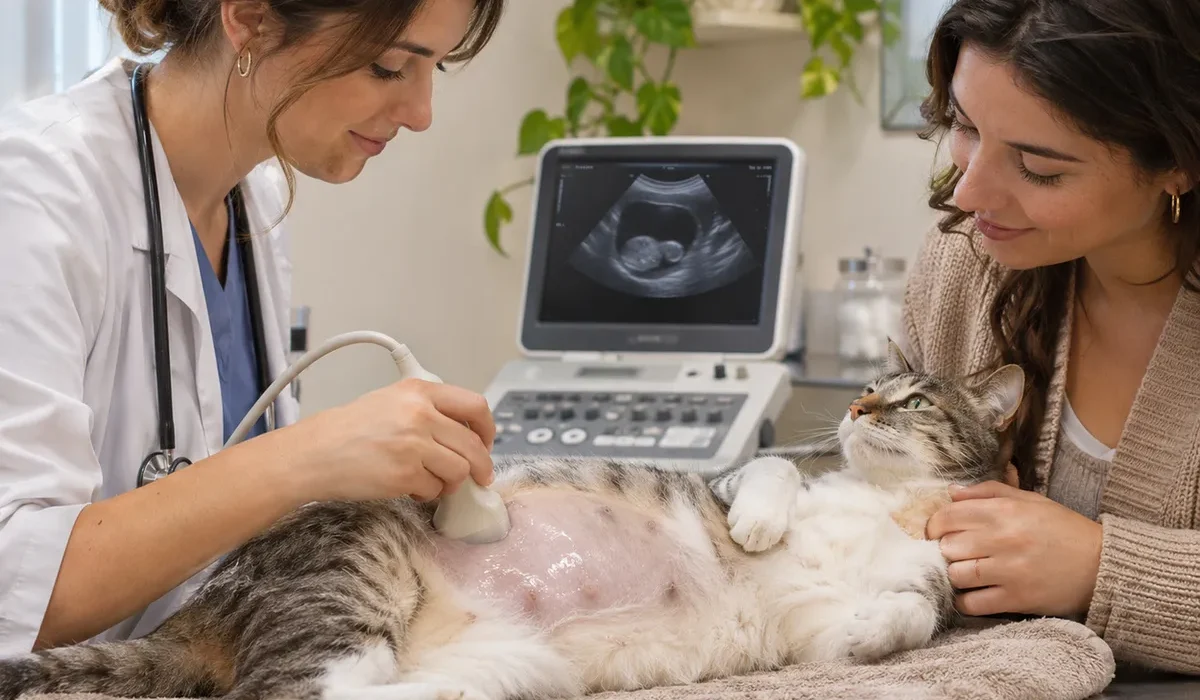
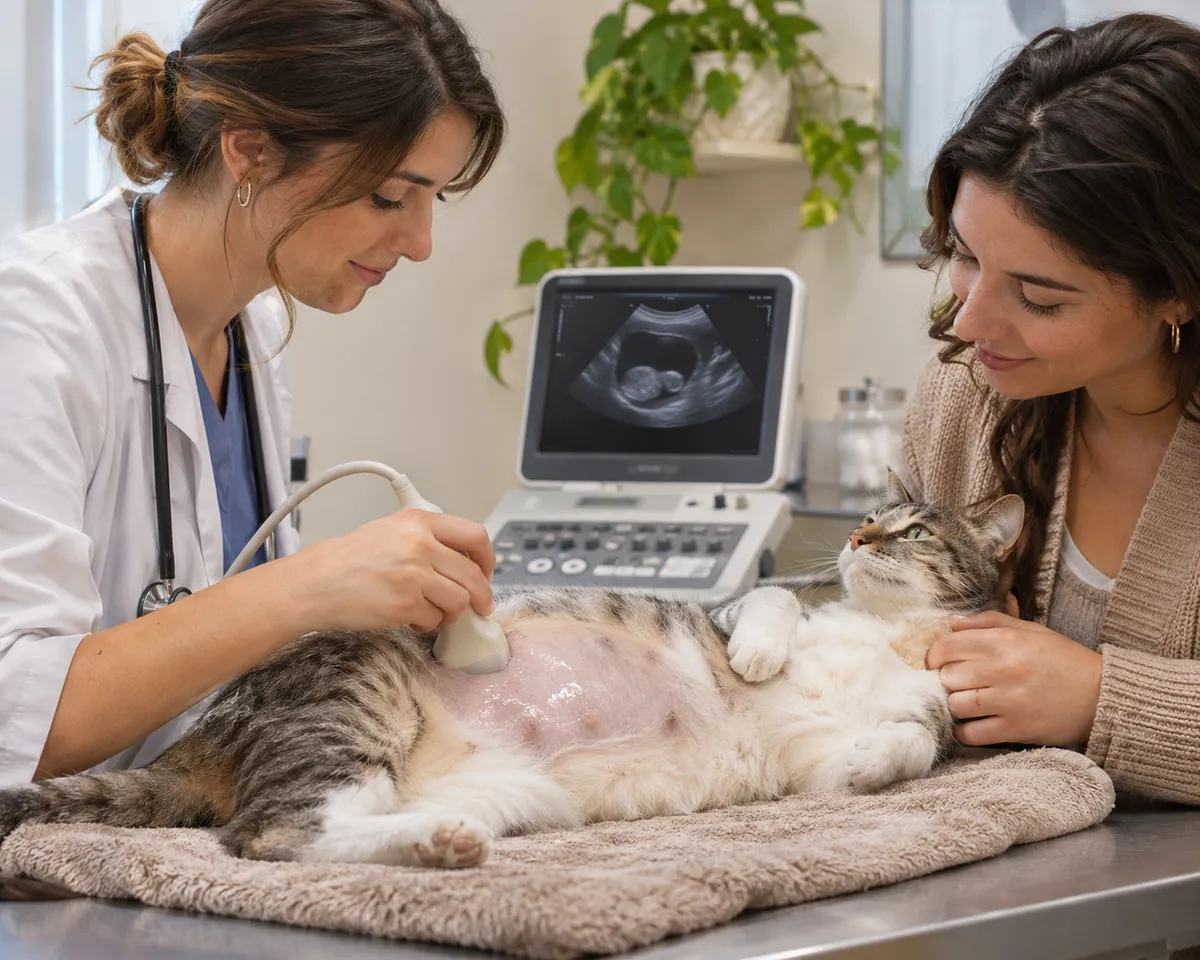
Your vet can confirm pregnancy with abdominal palpation around day 17 to 25, ultrasound from about day 15, or an X-ray after day 45 to count the kittens. If you are unsure whether your cat is in heat or pregnant, our advice on managing a cat in heat may help you tell the difference.
Once pregnancy is confirmed, ask your vet about spaying a pregnant cat right away. Early confirmation gives you the widest choice of surgery dates and the simplest procedure.
Spaying a Pregnant Cat: Risks and Complications
The main risks are higher bleeding and a longer anesthesia time, and they grow as the pregnancy advances. Serious complications remain uncommon when an experienced vet performs the surgery.
Possible risks include:
- Increased bleeding: The uterine blood vessels are larger during pregnancy.
- Longer surgery: A bigger uterus takes more time to remove safely.
- Anesthesia reactions: These are rare but possible in any surgery.
- Slower healing: Late-stage pregnancies often mean a larger incision and more soreness.
- Infection: This is uncommon but can happen at the incision site if it is not kept clean.
Kittens removed during the surgery are generally not viable, since they come out with the uterus. This is a difficult reality for many owners. Our overview of cat abortion methods, risks and costs covers the alternatives to a spay and when each is used.
The surgery is not the only choice. Some owners decide to let the pregnancy continue and spay after the kittens are weaned. That route carries its own work and expense, which we cover below.
How Much Does Spaying a Pregnant Cat Cost?
The price usually exceeds a standard spay, and it rises with the stage of pregnancy. The final bill depends on your location, the clinic type, and how far along your cat is.
Costs differ widely between clinics, so it helps to know what drives the price:
- Clinic type: Low-cost clinics and shelters usually charge far less than private practices.
- Pregnancy stage: Late-term surgeries take longer and often carry an added fee.
- Pre-surgery tests: Blood work or an ultrasound can add to the total.
- Aftercare: Pain medication and a recovery cone may be billed separately.
Ask your vet for a written estimate before the surgery. Many humane societies and spay-and-neuter programs offer reduced-cost options, and some will perform pregnant spays at a discount. If money is tight, call your local shelter first and ask about their rates for spaying a pregnant cat.
What to Expect Before, During, and After Surgery
A pregnant spay follows the same basic steps as a standard one, with extra monitoring for your cat’s safety. Preparing well at home makes recovery smoother.
Before surgery:
- Book a pre-surgery exam so the vet can confirm the pregnancy stage and your cat’s health.
- Follow the fasting instructions, which usually mean no food for 8 to 12 hours beforehand.
- Bring your cat in a secure carrier, such as a sturdy cat carrier, so she stays calm and safe.
After surgery:
- Keep your cat indoors and quiet for 10 to 14 days.
- Check the incision daily for redness, swelling, or discharge.
- Use a soft recovery collar to stop licking and chewing at the stitches.
- Offer small, easy meals; if she vomits, see cat vomiting after eating for common causes.
Most cats are eating and moving normally within 24 to 48 hours. Your vet will give pain relief and tell you when to return for a check. Never give human pain medicine to your cat, as many common ones are toxic to cats.
Alternatives to Spaying a Pregnant Cat
The main alternative is letting the pregnancy continue and spaying after the kittens are weaned. This requires time, money, and a plan for rehoming the litter.
If you choose this path, your cat will need:
- A quiet, warm nesting area away from foot traffic
- Higher-calorie food, usually kitten formula, throughout pregnancy and nursing
- A vet check before birth and again after delivery
- A spay appointment about 8 weeks after birth, once the kittens are weaned
Raising a litter is a real commitment. Kittens need socializing, vaccines, and homes, and our guide to kitten care essentials shows how much that involves. Fostering support from a rescue can help; see fostering kittens step by step if you want to bring the family through safely.
Weigh both paths honestly before deciding between spaying a pregnant cat now and waiting until the litter is weaned. Your own situation, budget, and your cat’s health should guide the choice.
For more on neutering and general preventive care, the American Veterinary Medical Association offers guidance for pet owners on spay and neuter surgery. Your own vet remains the best source for advice on your cat’s situation.
Frequently Asked Questions
Is spaying a pregnant cat possible at any stage?
Yes, a veterinarian can spay a cat at almost any stage of pregnancy. The surgery removes the uterus and the kittens, and most healthy cats recover in 10 to 14 days.
How late in pregnancy can a cat be spayed?
Many vets will spay a cat up to the final week of pregnancy, though the risk of bleeding rises with each week. Your vet will weigh your cat’s health and pregnancy stage before agreeing to operate.
Is spaying a pregnant cat more expensive than a regular spay?
Yes, it typically costs more because the surgery is longer and more complex. Low-cost clinics and shelters often offer the lowest prices, so call several before booking.
How long does recovery take after spaying a pregnant cat?
Most cats recover within 10 to 14 days, though pregnant cats may feel sore for a few days longer than usual. Keep her indoors and quiet until your vet clears her.
Will my cat get pregnant again right after giving birth?
Yes, a cat can return to heat within one to two weeks after giving birth and become pregnant again quickly. Spaying soon after weaning at about 8 weeks prevents repeat litters.
Spaying a pregnant cat is a safe and widely used option when you cannot care for a litter, and acting early keeps the surgery simpler and the cost lower. Book a vet exam as soon as you suspect pregnancy, ask for a written estimate, and choose the plan that protects your cat’s health.
