Cat Eye Infection: 6 Warning Signs and Safe Treatments at Home
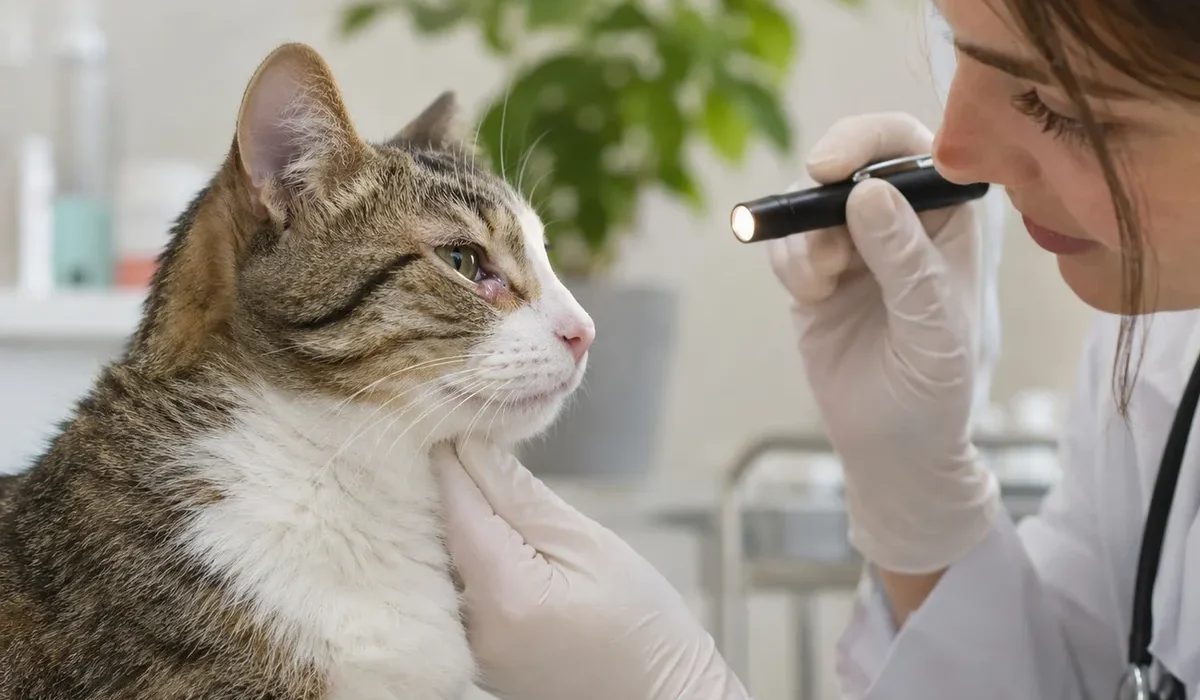
A cat eye infection is usually conjunctivitis, an inflamed pink lining around the eye most often triggered by feline herpesvirus, Chlamydia felis, or bacteria. Kittens, shelter cats, multi-cat homes, and flat-faced breeds get eye infections most often, and treatment within 24-48 hours helps prevent corneal damage.
This post may contain affiliate links. As an Amazon Associate I earn from qualifying purchases.
Table of Contents
Cat eye infection at a glance:
- Short Answer: Most cases are conjunctivitis from feline herpesvirus-1, Chlamydia felis, or Mycoplasma.
- Most Common Signs: Squinting, redness, swelling, and yellow or green discharge.
- Urgency: See a vet within 24-48 hours, or the same day if the eye is cloudy, bulging, or shut.
- What to Do at Home: Wipe discharge with cotton and lukewarm water, using a fresh pad per eye.
- When to See a Vet: Every infected eye needs an exam, because eye antibiotics and antivirals require a prescription.
What Causes a Cat Eye Infection?
Infectious agents cause most eye infections in cats, and stress often reactivates a dormant virus.
- Feline herpesvirus-1 (FHV-1): The leading cause; exposed cats carry the virus for life, with flare-ups after stress or boarding.
- Chlamydia felis: This bacterium starts in one eye and spreads to the other within days.
- Mycoplasma and secondary bacteria: These germs invade eyes already irritated by a virus or scratch.
- Feline calicivirus: Calicivirus causes eye discharge with mouth ulcers, sneezing, and fever.
- Non-infectious triggers: Scratches, grass seeds, dust, and allergies mimic infection.
Eye discharge often comes with congestion, so see our guide to cat sneezing causes.
6 Warning Signs of a Cat Eye Infection
These six signs separate true infection from irritation that clears within a day.
- Squinting: Pain makes cats hold the affected eye partly closed.
- Red conjunctiva: The tissue around the eye looks puffy or bright red.
- Colored discharge: Yellow or green discharge signals infection; clear tears usually mean irritation.
- Visible third eyelid: A white membrane covering the inner corner signals discomfort.
- Pawing or rubbing: Infected cats rub their face on furniture to relieve itching.
- Crusting: Dried discharge glues the eyelids together after naps.
When my cat started squinting after a week at a boarding cattery, her herpes flare showed every sign here within two days. Also check these signs your cat is in pain.
Eye Symptom Urgency Chart
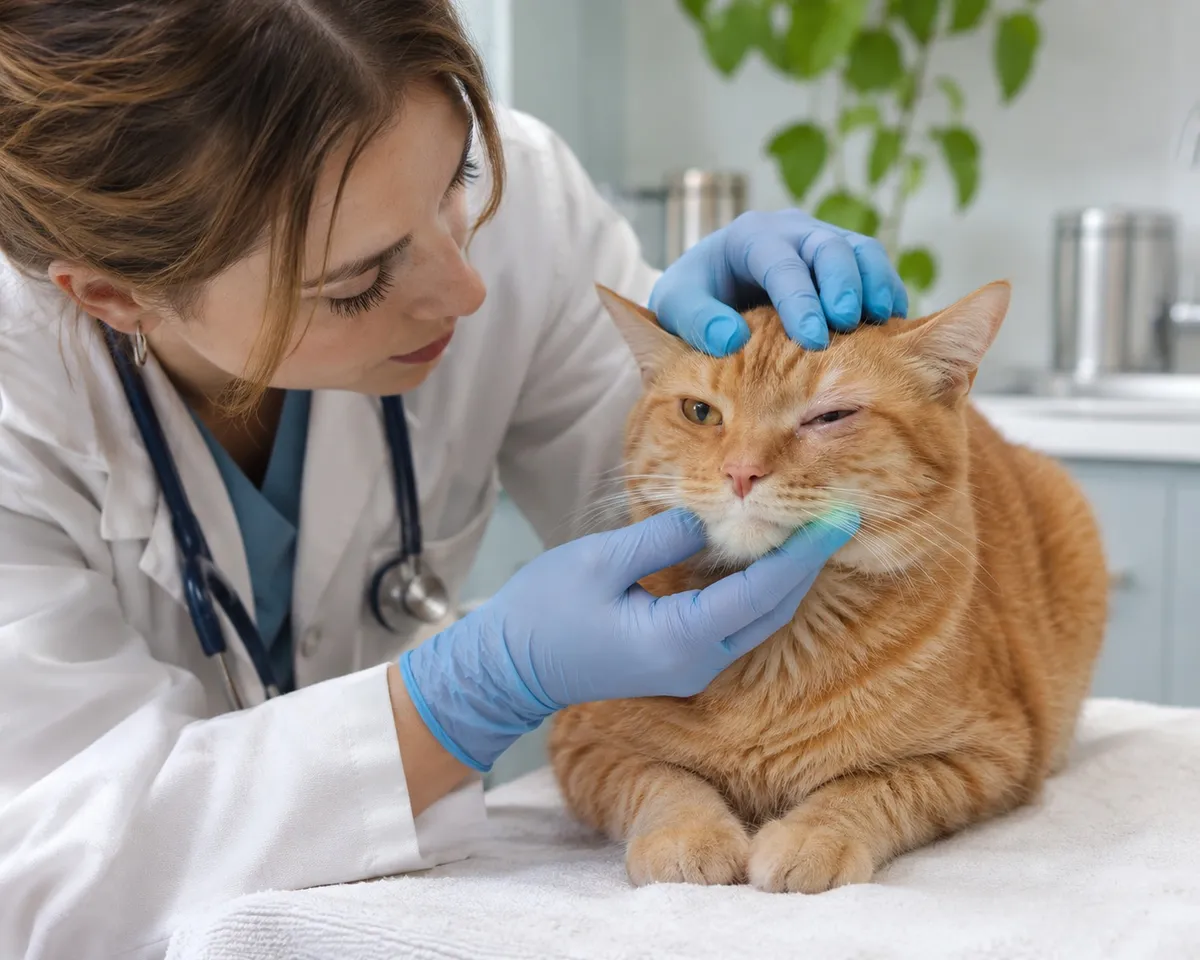
Urgency depends on which part of the eye is affected and how fast it changes.
| Sign | Likely Meaning | Urgency |
|---|---|---|
| Clear tears, no squinting | Irritation or allergy | Monitor 24 hours |
| Yellow or green discharge | Bacterial infection | Vet within 24-48 hours |
| Squinting with redness | Conjunctivitis or ulcer | Vet within 24 hours |
| Cloudy or bluish cornea | Corneal ulcer | Same-day vet |
| Discharge plus fever | Systemic infection | Same-day vet |
| Kitten with sealed, bulging eyelids | Neonatal infection | Same-day vet |
| Eye bulging or bleeding | Trauma or glaucoma | Emergency |
Safe Cat Eye Infection Treatments at Home
Home care keeps the eye clean while vet-prescribed medication clears the infection.
- Wash your hands and gather cotton pads, cooled boiled water, and a towel.
- Wrap your cat snugly in the towel to steady the head and paws.
- Wipe from the inner corner outward, using a new pad for each eye.
- Soften crusts with a warm damp pad for 30 seconds.
- Repeat 2-3 times daily, and wash shared bowls and bedding.
Pre-moistened veterinary eye wipes speed up cleaning if they are alcohol-free and unscented. A soft recovery cone stops scratching that can turn conjunctivitis into a corneal ulcer.
Never use human eye drops or leftover pet medication, because steroids in some products worsen viral ulcers. Home remedies cannot cure a cat eye infection, so treat home care as support only.
When a Cat Eye Infection Needs a Vet
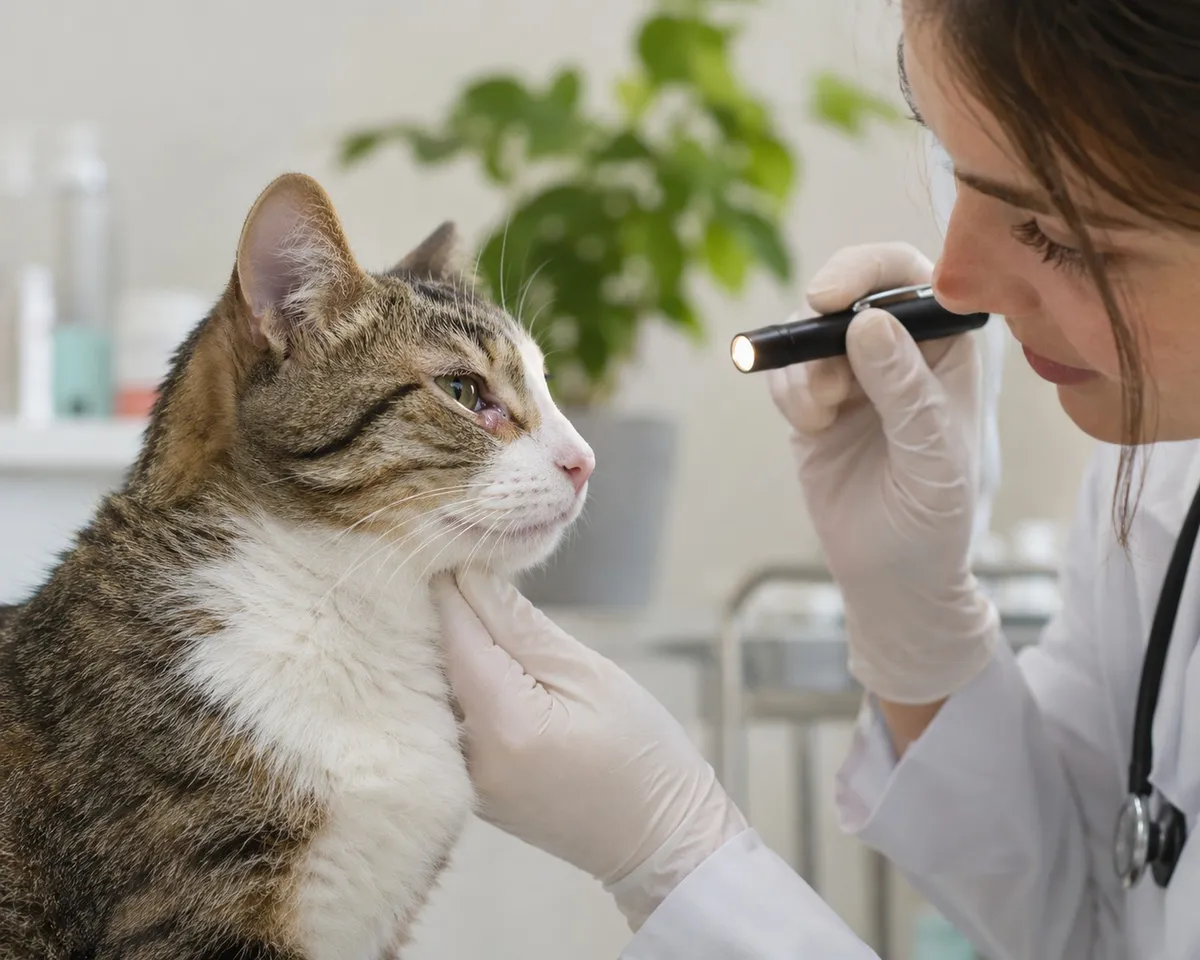
Every cat with colored discharge or squinting should see a veterinarian, because only an exam rules out a corneal ulcer. The Cornell Feline Health Center lists conjunctivitis among the most common feline eye disorders.
- Fluorescein stain test: A green dye reveals corneal ulcers within minutes.
- Prescription treatment: Antibiotic ointments treat bacteria and antivirals treat herpes, often for 7-21 days.
- PCR swab: A lab test identifies the germ in recurring cases.
Go to an emergency clinic immediately if the eye bulges, bleeds, turns cloudy, or stays shut. These tips to get a cat into a carrier make the trip calmer.
How to Prevent a Cat Eye Infection
Prevention relies on vaccines, hygiene, and low stress, because stress triggers most herpes flare-ups.
- Vaccinate: The core FVRCP vaccine reduces herpes and calicivirus severity; follow the cat vaccinations schedule.
- Isolate newcomers: Keep a new cat in a separate room for 10-14 days.
- Reduce stress: Stable routines and hiding spots cut flare-ups in herpes carriers.
- Clean consistently: Wash food bowls daily and bedding weekly.
- Book checkups: Regular veterinary check-ups catch chronic eye problems early.
Frequently Asked Questions
How long does a cat eye infection last?
Most cases improve within 5-7 days of treatment and clear within 2 weeks. Herpes-related infections can take 3 weeks and often recur.
Can cat eye infections go away on their own?
Mild viral conjunctivitis sometimes clears in 1-2 weeks untreated. Bacterial infections and corneal ulcers can worsen within days and threaten vision.
Are cat eye infections contagious to other cats?
Yes, herpesvirus, calicivirus, and Chlamydia felis spread through discharge, shared bowls, and mutual grooming. Separate the sick cat until a vet confirms the cause.
Can I use human eye drops on my cat?
No, human eye drops are unsafe for cats because some contain steroids that worsen ulcers. Use only veterinarian-prescribed eye medication.
Why does my cat keep getting eye infections?
Recurring eye infections usually point to feline herpesvirus, which stays dormant in roughly 80% of infected cats. Stress, illness, and boarding reactivate the virus.
A cat eye infection usually starts with squinting and colored discharge, and most cases clear within 2 weeks when treated early. Gentle home cleaning keeps your cat comfortable, but vet-prescribed medication does the healing. Check both eyes today in good light, and book an exam if you see discharge or redness.