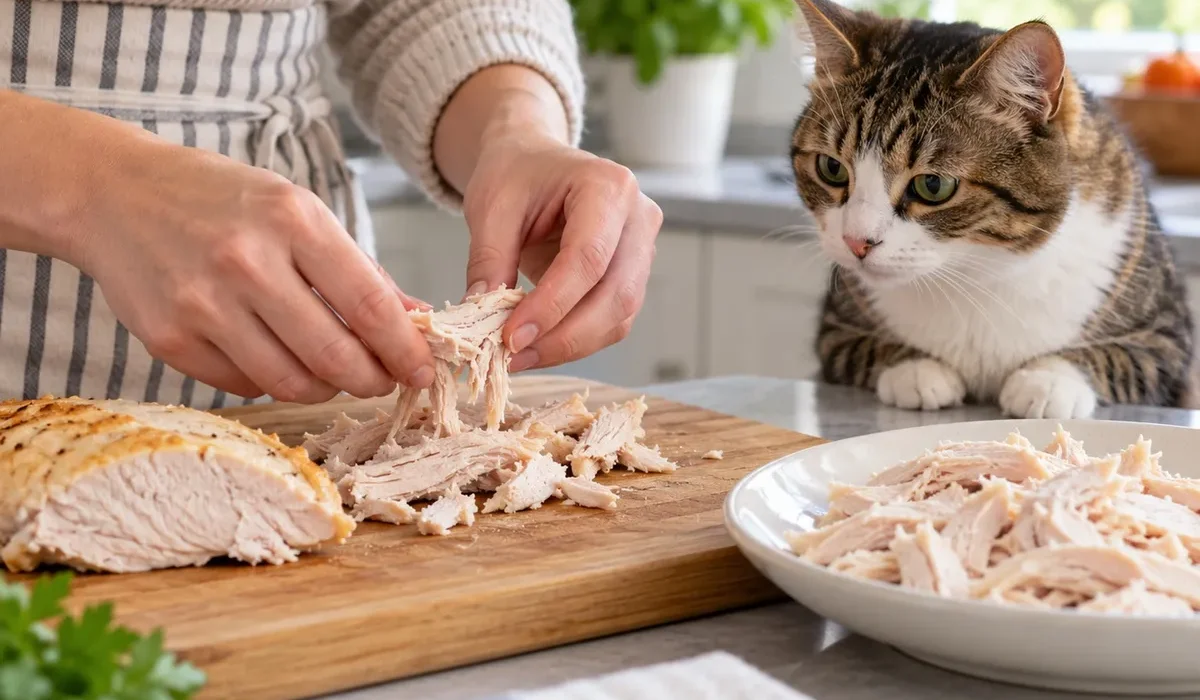
Can Cats Eat Turkey? 7 Safe Thanksgiving Tips for Happy Cats
Yes, can cats eat turkey is a common holiday question, and the answer is yes when the meat is plain, fully cooked, boneless, and skinless, because turkey is a lean animal protein that suits an obligate carnivore. Holiday seasoning, gravy, and stuffing are where the danger starts, so this matters most at Thanksgiving and Christmas dinners.
This post may contain affiliate links. As an Amazon Associate I earn from qualifying purchases.
Table of Contents
Can cats eat turkey at a glance:
- Short Answer: Yes, plain cooked turkey meat is safe in small portions as a treat.
- Safe Amount: About 1 to 2 teaspoons of shredded meat, and treats should stay under 10% of daily calories.
- Main Benefit: Lean, high-quality protein with B vitamins and minerals such as selenium and phosphorus.
- Main Risk: Onion, garlic, butter, salt, cooked bones, and raw or undercooked meat.
- When to See a Vet: Repeated vomiting, bloody stool, or a lethargic cat after eating holiday scraps.
Can Cats Eat Turkey Safely? The Short Answer
Cats are obligate carnivores, which means their bodies are built to get nutrients from animal tissue. Plain turkey breast or thigh meat fits that need well and is a common ingredient in commercial cat food.
The key word is plain. Turkey that is cooked without oil, salt, onion, garlic, or herbs is safe for most healthy adult cats.
When my cat first begged at the Thanksgiving table, I learned quickly that the turkey itself was never the problem. The butter, sage, and onion stuffing next to it was.
Turkey is a treat, not a meal replacement. A cat needs taurine, arachidonic acid, and balanced vitamins that only complete cat food provides reliably. For a broader look at daily portions, see this guide on how much to feed a cat.
Nutritional Benefits When Cats Eat Turkey
Turkey meat delivers several nutrients that cats need. These benefits apply to the cooked meat only, not to the skin or seasoned portions.
- High-quality protein: Turkey breast is roughly 25 to 30 percent protein by cooked weight, which supports muscle maintenance.
- Low fat in white meat: Skinless breast is much leaner than dark meat, which helps cats prone to weight gain.
- B vitamins: Niacin and B6 support energy metabolism and nerve function.
- Selenium and phosphorus: These minerals support the immune system and bone health.
- Taurine: Turkey, especially dark meat, contains some taurine, an amino acid cats cannot make enough of on their own.
These benefits do not make turkey a complete diet. Cats still need a balanced food to cover every nutrient. The Cornell Feline Health Center feeding guide explains why complete and balanced diets matter for cats.
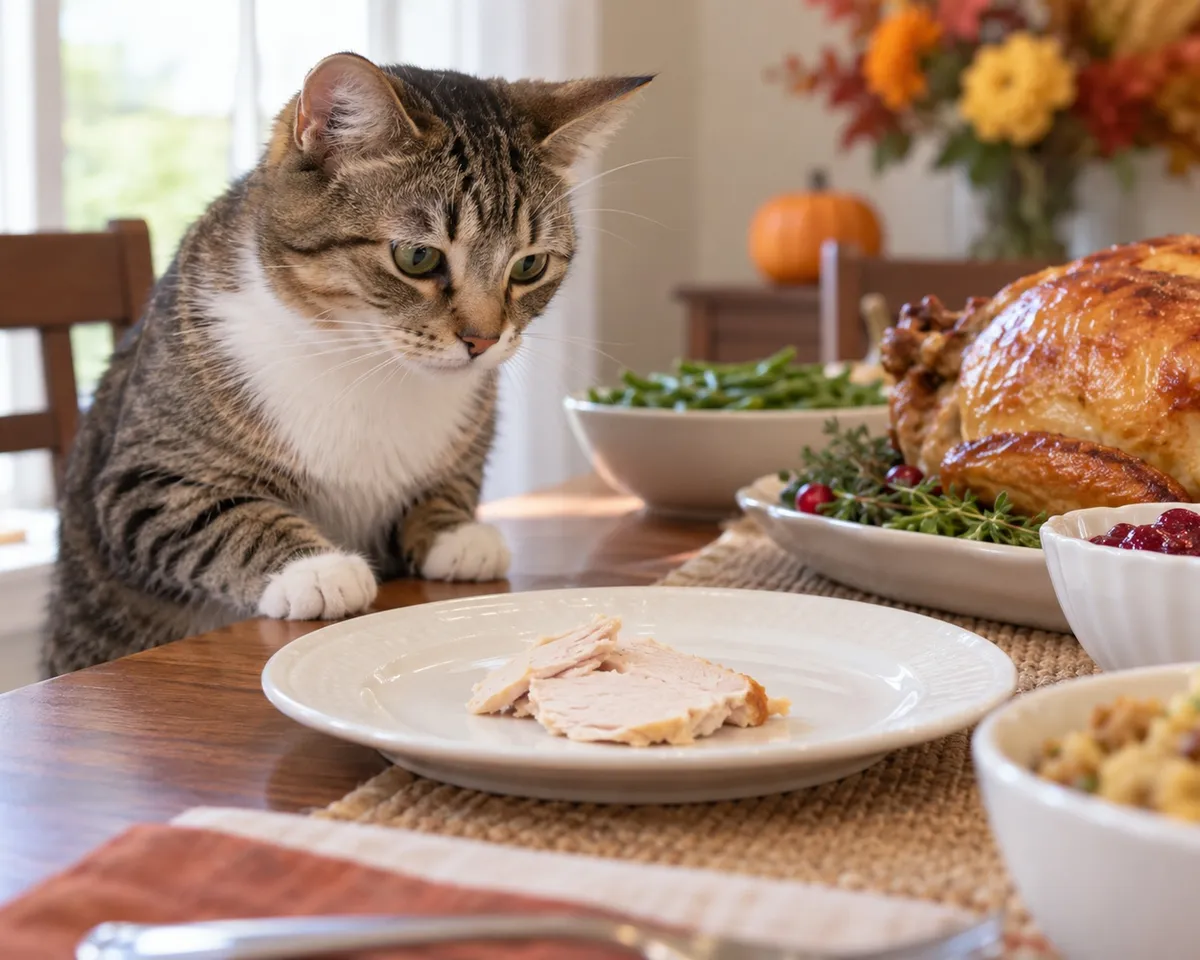
How to Prepare Turkey for Cats the Safe Way
Preparation decides whether turkey is a healthy snack or a vet visit. Anyone asking can cats eat turkey should follow these steps every time they share it.
- Choose fresh, plain turkey breast or thigh meat with no marinade or brine.
- Cook it fully until the internal temperature reaches 165°F (74°C) to kill bacteria such as Salmonella.
- Remove all skin, visible fat, and every bone.
- Cook it with no butter, oil, salt, garlic, onion, or herbs.
- Let the meat cool completely before serving.
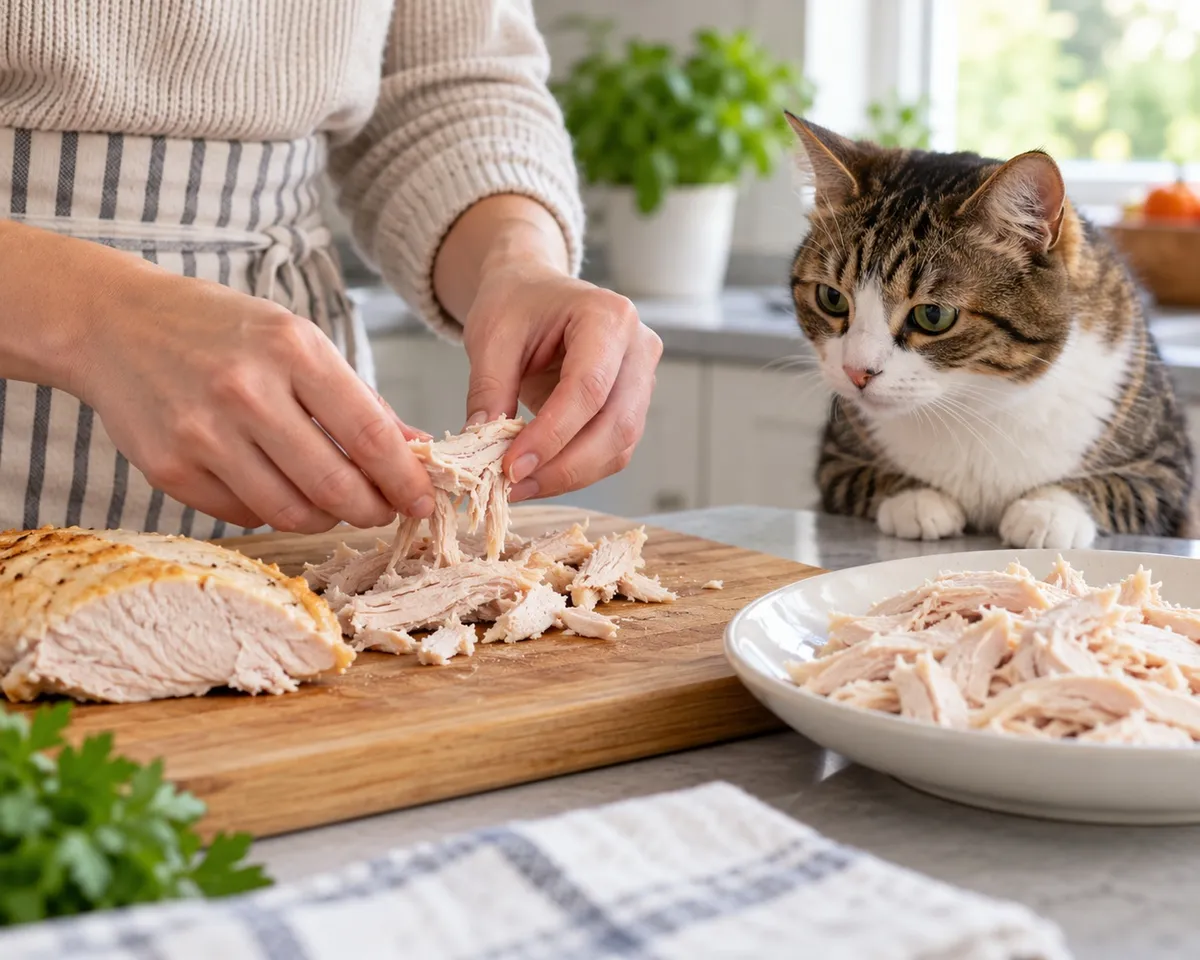
- Shred it into tiny, bite-sized pieces to prevent choking.
- Offer 1 to 2 teaspoons and watch for any stomach upset.
Boiling or baking without seasoning works best. If you boil turkey for your cat, discard the broth unless you made it with no salt or aromatics.
Can Cats Eat Turkey Skin, Bones, and Gravy?
Most holiday dangers sit around the meat, not in it. Each extra on the turkey plate carries its own risk for cats.
Turkey skin:
- Skin is very high in fat and can trigger vomiting, diarrhea, or pancreatitis.
- Roasted skin is also usually coated in butter, salt, and spices.
Turkey bones:
- Cooked bones splinter easily and can puncture the throat, stomach, or intestines.
- A swallowed bone fragment can cause choking or a life-threatening blockage.
Gravy and stuffing:
- Gravy is high in sodium and fat, and many recipes contain onion or garlic.
- Stuffing usually includes onions, garlic, sage, or raisins, all of which are risky for cats.
Onions and garlic damage a cat’s red blood cells and can cause anemia, even in small repeated amounts. For a wider list of risky holiday items, read about dangerous foods for cats.
Can Cats Eat Turkey Raw? Risks of Uncooked Meat
Raw turkey is not recommended for most cats. Raw poultry often carries Salmonella, Campylobacter, and Listeria, which can make cats sick and spread bacteria to people in the home.
Symptoms of food-borne illness in cats include vomiting, diarrhea, fever, and loss of appetite. Kittens, seniors, and cats with weak immune systems face the highest risk.
Raw feeding also makes it easy to create nutritional gaps. If you are curious about preparing food at home, this guide to homemade cat food recipes covers vet-guided rules to follow.
Cooked turkey is always the safer choice. A fully cooked piece gives your cat the same protein without the bacterial gamble.
Turkey Safe and Unsafe Items: Quick Chart
Use this chart when you are fixing a plate at a holiday dinner. It shows which turkey-related items are safe for cats and why.
| Item | Safe for Cats? | Reason |
|---|---|---|
| Plain cooked turkey breast | Yes | Lean protein with no added ingredients |
| Plain cooked dark meat | Yes, small amounts | Higher in fat, so portions must stay tiny |
| Turkey skin | No | High fat, risk of pancreatitis |
| Cooked turkey bones | No | Splinter and cause choking or blockage |
| Raw turkey | Not recommended | Salmonella and other bacteria |
| Gravy | No | Salt, fat, often onion or garlic |
| Stuffing | No | Onion, garlic, raisins, and herbs |
| Deli or smoked turkey | No | Very high in sodium and preservatives |
How Much Turkey Can Cats Eat?
Portion size matters because turkey adds calories on top of regular meals. Veterinarians commonly advise that treats make up no more than 10 percent of a cat’s daily calories.
For an average 10-pound adult cat, that works out to roughly 1 to 2 teaspoons of shredded turkey, a few times per week at most. Smaller cats need less, and cats with health conditions may need none.
- Offer turkey as a topper or a reward, not as a main meal.
- Reduce the regular meal slightly on days your cat gets extra turkey.
- Introduce it once, then wait 24 hours to check for stomach upset.
Cats with kidney disease, pancreatitis, or food allergies should only get turkey with veterinary approval. Turkey is a common ingredient, so cats with poultry sensitivities may react. Learn more about food reactions in this guide to cat food for cats with allergies.
Can Cats Eat Turkey Baby Food or Canned Turkey?
Some owners reach for turkey baby food when a cat refuses to eat. This works only when the label lists turkey and water, with no onion powder or garlic powder.
Always read the ingredient list, because many baby food varieties include onion powder. Even small amounts of onion can harm cats over time.
Plain canned turkey packed in water with no added salt is another option. Most cat owners find it simpler to buy a turkey-flavored wet cat food made for cats, since it is already balanced and seasoned safely. A freeze-dried turkey cat treat is another easy option, because it contains a single ingredient and has no seasoning to worry about.
If your cat refuses all food for more than 24 hours, skip the home remedies and call your vet. A cat that stops eating can develop serious liver problems quickly, as explained in this guide on a cat not eating.
Signs Your Cat Reacted Badly to Turkey
Most cats handle a small piece of plain turkey without trouble. Watch for these signs in the 24 hours after feeding, especially if your cat sampled fatty or seasoned food.
- Vomiting or retching, especially repeated episodes
- Diarrhea or loose stool
- Drooling, pawing at the mouth, or gagging, which may signal a bone fragment
- Lethargy, hiding, or a hunched posture
- Refusing food or a swollen, painful belly
Contact a veterinarian right away if you suspect your cat swallowed a bone, ate stuffing with onion or garlic, or shows repeated vomiting. Emergency signs include trouble breathing, pale gums, collapse, or severe pain. Persistent stomach upset is covered in this guide to cat vomiting and diarrhea.
For poison concerns, the ASPCA Animal Poison Control Center offers guidance on toxic foods. Never give human medicine to a sick cat without your vet’s direction.
Frequently Asked Questions
Can cats eat turkey every day?
Cats should not eat turkey every day as a treat, because extra calories can lead to weight gain and unbalanced nutrition. A few small servings per week is a safer limit for most healthy adult cats.
Can cats eat turkey lunch meat or deli turkey?
No, deli turkey is not a good choice because it contains high levels of sodium, preservatives, and sometimes garlic or onion powder. Excess salt can cause thirst, vomiting, and in severe cases sodium toxicity in cats.
Can kittens eat turkey?
Kittens over 8 weeks old can try a tiny amount of plain cooked turkey, but their main nutrition must come from kitten food. Their digestive systems are sensitive, so introduce any new food in a very small portion.
Can cats eat turkey leftovers after Thanksgiving?
Only plain, unseasoned turkey meat is safe, and it should be stored in the fridge no longer than 3 to 4 days. Never share leftovers that contain gravy, stuffing, skin, or bones.
Is turkey or chicken better for cats?
Both are safe, lean proteins when cooked plain, and neither is clearly better for every cat. Turkey is a good alternative for cats that need a different poultry protein, as long as they do not have a poultry allergy.
Can cats eat turkey? Yes, as long as the meat is plain, fully cooked, boneless, and given in tiny portions. This holiday season, set aside a small piece of unseasoned meat for your cat before you add butter, salt, or stuffing, and keep the rest of the plate out of reach.