


Can Cats Drink Milk? 7 Surprising Facts Every Owner Needs
This post may contain affiliate links. As an Amazon Associate I earn from qualifying purchases.
Can cats drink milk? Most adult cats can, but they should not, because the majority are lactose intolerant and cow’s milk often causes diarrhea, gas, and stomach cramps. This matters for every owner who has ever wondered whether a saucer of milk is a harmless treat, and for anyone caring for a stray kitten.
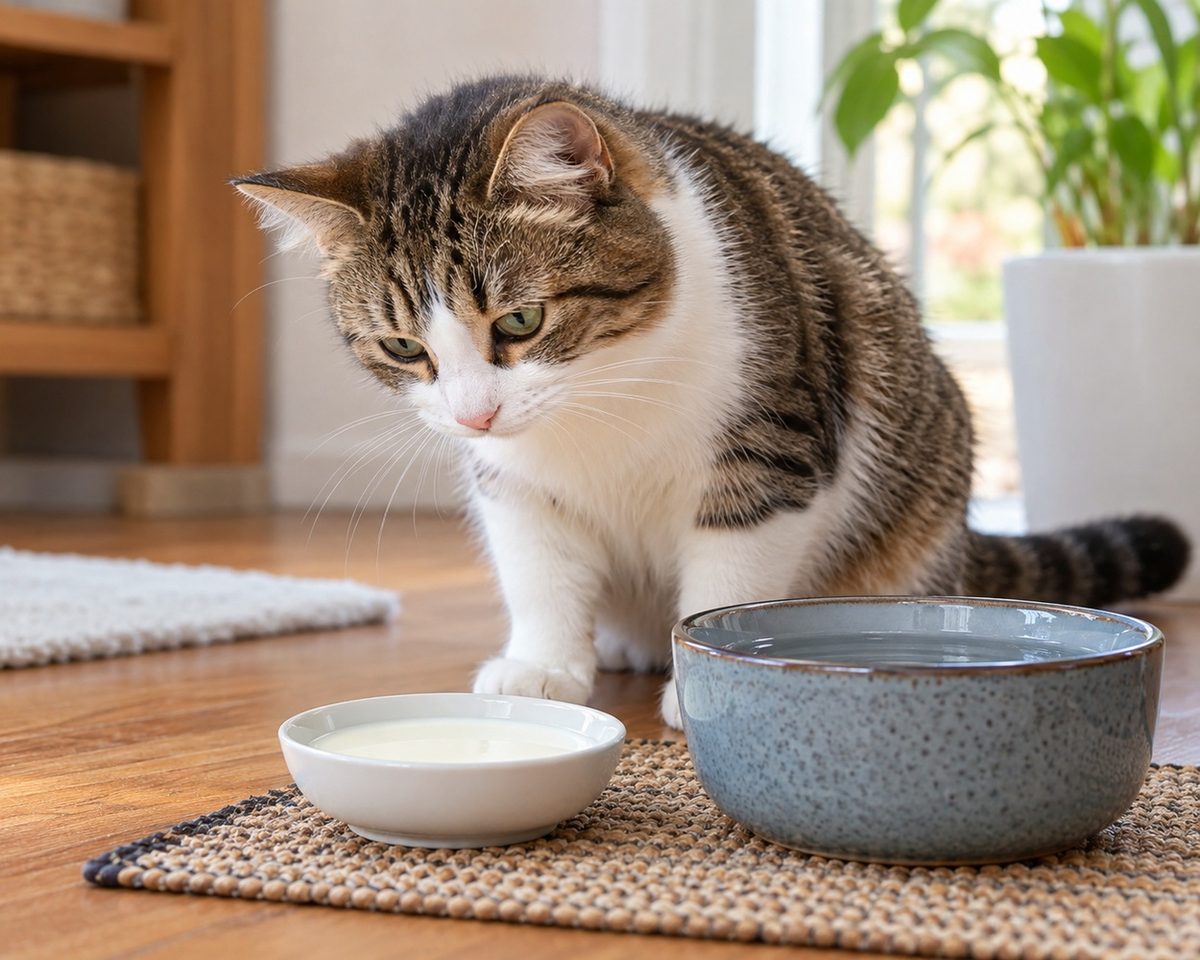
Can cats drink milk at a glance:
- Short Answer: Cow’s milk is not recommended, because most adult cats cannot digest lactose well.
- Most Common Problem: Loose stools, bloating, and vomiting within 8 to 12 hours of drinking milk.
- Safe Amount: A teaspoon or two of milk now and then will not harm a healthy cat, but it is never needed.
- Better Options: Fresh water, lactose-free cat milk, and a complete balanced cat diet.
- When to See a Vet: Diarrhea lasting more than 24 to 48 hours, repeated vomiting, or any sign of dehydration.
Table of Contents
Why the Milk Myth Exists
The picture of a cat lapping milk from a saucer comes from old farm life. Barn cats lived near dairy cows and often got fresh milk, so the habit became a cultural symbol of cat care.
Cats love milk because it is fatty, rich, and smells appealing. Liking the taste does not mean the drink is good for them.
Kittens do drink milk, but only their mother’s milk, which is built for their growing bodies. That is very different from the cow’s milk sold in grocery stores.
When I first adopted a cat years ago, a neighbor insisted that a bowl of milk was the kindest welcome gift. My cat drank it eagerly, and by the next morning I was cleaning up the evidence on the bathroom floor.
Can Cats Drink Milk Safely? The Lactose Problem
Many owners ask whether cats can handle dairy without getting sick, and the answer is sometimes, but the risk is high. Lactose digestion depends on an enzyme called lactase. Kittens produce plenty of lactase while nursing, and the amount drops sharply after weaning at around 8 to 10 weeks of age.
Without enough lactase, lactose passes undigested into the intestines. Gut bacteria ferment it, which pulls water into the bowel and causes gas and diarrhea.
Not every cat reacts the same way. Some adult cats keep a little lactase activity and tolerate small sips, while others get sick from a few tablespoons.
Fat can add to the trouble. Whole milk is high in fat, which may upset the stomach further, and it adds extra calories without any nutritional need.
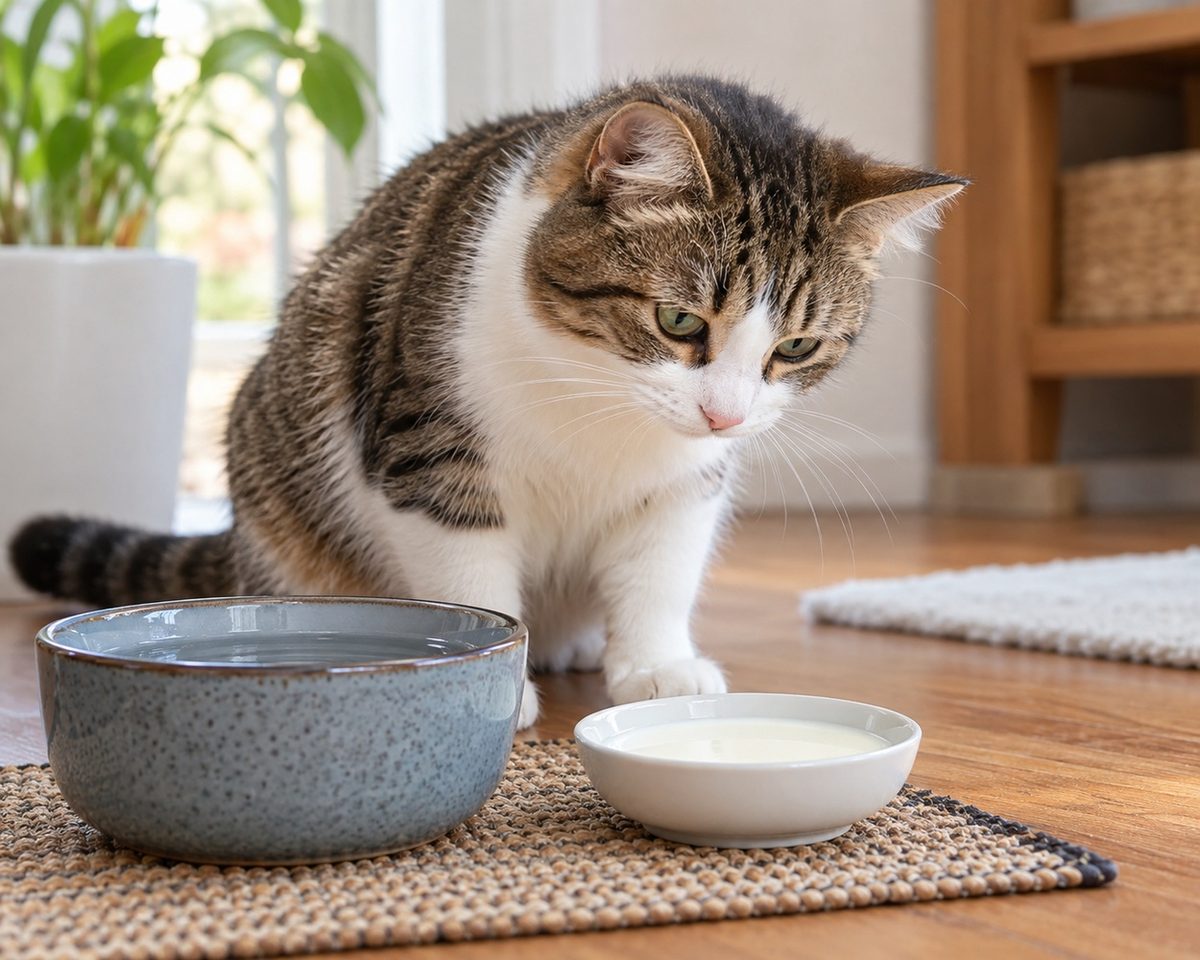
Signs Your Cat Cannot Digest Milk
Symptoms of lactose intolerance usually appear within 8 to 12 hours after drinking milk. Watch for these signs:
- Soft stools or watery diarrhea
- Gas and a bloated belly
- Stomach rumbling or cramping
- Vomiting
- Reduced appetite or lethargy
Mild cases usually pass within a day once the milk is stopped. If your cat also has other digestive trouble, our guide to cat vomiting and diarrhea explains the common causes and when treatment is needed.
Repeated diarrhea can lead to fluid loss quickly, especially in small cats. Learn the signs of dehydration in cats so you can act early.
Can Cats Drink Milk If They Have an Allergy?
No, a milk allergy and lactose intolerance are two different problems in cats. Lactose intolerance is a digestive issue caused by a missing enzyme, while a true milk allergy is an immune reaction to the proteins in milk.
Allergic cats may show itchy skin, repeated ear problems, hair loss, or chronic vomiting instead of just loose stools. Dairy is one of several common food allergens in cats, alongside beef and fish.
Digestive upset after milk is far more common than a true allergy. If your cat itches or has skin trouble that does not clear up, ask your vet about an elimination diet, and read our guide to cat food for cats with allergies for dietary options.
Milk Types Compared
Not all milk is equal, and some options are safer than others. This table shows how common milk types compare when owners ask whether cats can drink milk of each kind.
| Milk Type | Lactose Level | Safe for Cats? |
|---|---|---|
| Cow’s milk (whole, skim, 2%) | High | Not recommended |
| Goat’s milk | Moderate to high | Not recommended |
| Lactose-free cat milk | Very low | Yes, as an occasional treat |
| Almond, oat, or soy milk | None | Not recommended, often has additives |
| Kitten milk replacer | Formulated for kittens | Yes, for orphaned kittens |
| Flavored or sweetened milk | Varies | No, sugar and additives are harmful |
Can Cats Drink Milk as Kittens?
Newborn kittens need their mother’s milk or a proper replacement, and this is the one situation where milk is essential. Kittens nurse for roughly the first 4 weeks and are usually weaned by 8 weeks.
Cow’s milk is a poor substitute for orphaned kittens. It lacks the right balance of protein and fat, and it commonly causes diarrhea that can become dangerous fast in tiny bodies.
If you find an orphaned litter, use a commercial kitten milk replacer made for this purpose. Our step-by-step guide to bottle feeding a kitten covers the technique and schedule.
Weaning kittens move on to soft food around 4 weeks of age. See our advice on wet cat food for kittens for a safe transition, and our care for six week old kittens post for the next stage.
Can Cats Drink Milk When Senior or Unwell?
Senior cats and cats with medical conditions are even less suited to milk than healthy adults. Their digestion is often more fragile, and extra fat or calories can worsen existing problems.
Here is why milk is a poor choice for these cats:
- Kidney disease: Milk adds phosphorus and protein that stressed kidneys must process.
- Diabetes: Lactose is a sugar, which can complicate blood sugar control.
- Obesity: A single cup of whole milk holds over 100 calories, far too many for a small cat.
- Pancreatitis or sensitive stomachs: High-fat dairy may trigger painful flare-ups.
Cats with ongoing digestive issues do better on a carefully chosen diet. Our guide to cats with sensitive stomachs covers food and care tips, and our post on diabetes in cats explains why sugar control matters.
Pregnant and nursing queens also do not need milk. They need a calorie-dense kitten or high-quality wet food, plus plenty of fresh water.
What About Other Dairy Products?
Dairy products vary in lactose content, but none are a good routine food for cats. Aged cheeses and yogurt contain less lactose than milk, yet they still carry fat and salt.
If you are curious, read our posts on whether cats can eat cheese and whether it is safe to feed yogurt to your cat. The short version is that tiny amounts are usually tolerated, but they should never replace real cat food.
Cream, ice cream, and milk-based desserts are worse choices. They are high in sugar and fat, and some contain chocolate or xylitol, which are toxic to cats.
Healthy Alternatives When Cats Can’t Drink Milk
Cats get nearly everything they need from a complete and balanced meat-based diet. Their main drink should be fresh, clean water available at all times.
Many cats drink more when water moves, so a cat water fountain can encourage better hydration. Our guide to the best cat water fountain for easy cleaning lists what to look for.
If you want a special treat, here are safer ideas:
- Lactose-free milk made for cats, in small portions
- A spoonful of plain wet food mixed with warm water
- Small pieces of plain cooked chicken or turkey, with no seasoning
- Bone broth made without onion or garlic, which are toxic to cats
Treats should make up no more than about 10 percent of daily calories. For overall portions, see our guide on how much to feed a cat.
What to Do If Your Cat Already Drank Milk
Do not panic if your cat licked up some spilled milk. A small amount rarely causes more than mild stomach upset in a healthy adult.
- Remove any remaining milk so your cat cannot drink more.
- Provide fresh water and make sure your cat is drinking.
- Watch for diarrhea, vomiting, or lethargy over the next 12 to 24 hours.
- Offer a normal portion of the usual food at the regular time.
- Call your vet if symptoms last longer than 24 to 48 hours.
Kittens, senior cats, and cats with chronic illness need faster attention, because dehydration develops quickly. The Cornell Feline Health Center also notes that cats do not need milk as part of a balanced diet.
Contact a veterinarian right away if your cat has bloody stool, repeated vomiting, or seems weak or unresponsive. Our post on bloody diarrhea in cats explains why this needs prompt vet care.
Frequently Asked Questions
Can cats drink milk every day?
No, daily milk is not recommended for cats. It adds unnecessary calories and fat and can lead to chronic diarrhea or weight gain.
Is milk bad for cats?
Milk is not toxic, but it is a common cause of digestive upset because most adult cats are lactose intolerant. A few sips may be fine, while larger amounts often cause diarrhea within 8 to 12 hours.
Can cats drink almond milk or oat milk?
Plant milks are not toxic in plain form, but they offer no benefit and often contain sugar, sweeteners, or additives like xylitol. Fresh water is a safer and healthier choice.
What can I give a kitten instead of cow’s milk?
Give orphaned kittens a commercial kitten milk replacer, fed warm in a small bottle every 2 to 3 hours for newborns. Kittens older than 4 weeks can start eating softened wet food.
Why does my cat beg for milk if it makes her sick?
Cats are drawn to the fat and smell of milk, not its nutrition. Craving it does not mean your cat can digest it, so offer a lactose-free treat instead.
Conclusion
So, can cats drink milk? Technically yes, but most should not, since lactose intolerance makes cow’s milk a common cause of diarrhea and stomach pain. Choose fresh water and a balanced diet first, offer lactose-free cat milk only as an occasional treat, and call your vet if digestive symptoms last beyond a day or two.
