
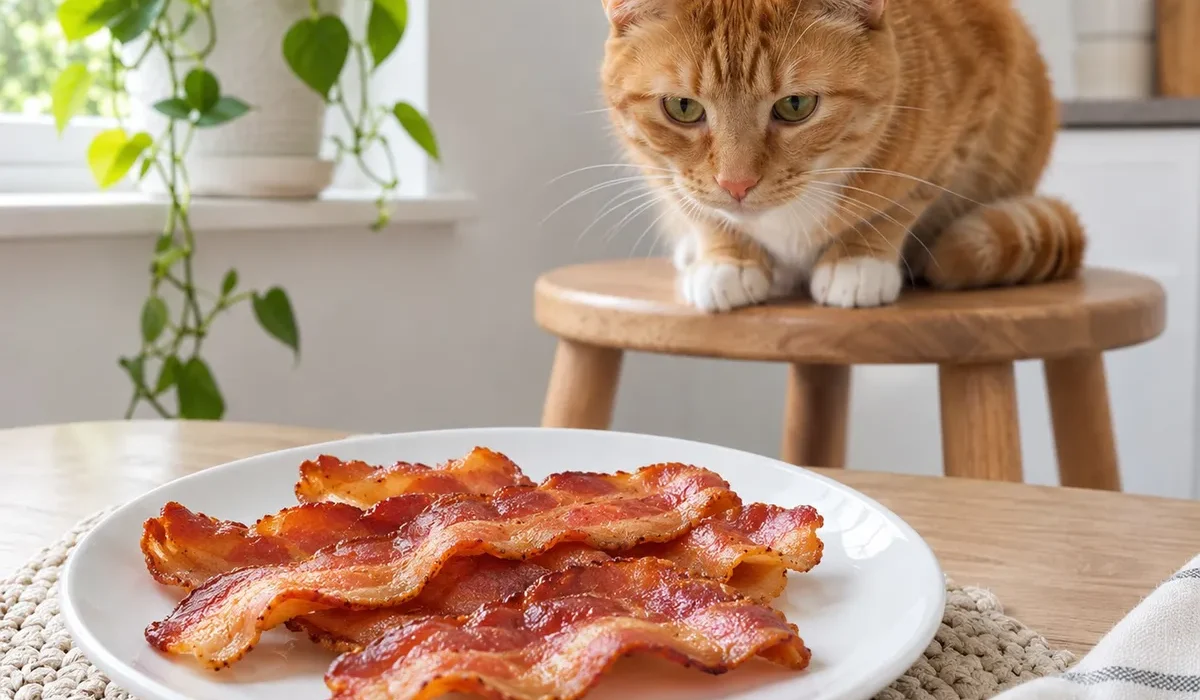
Can Cats Eat Bacon? 5 Risks Every Cat Owner Should Know
Owners asking can cats eat bacon should know that one fingertip-sized bite of plain cooked bacon rarely harms a healthy cat, but salt, fat and curing agents make bacon a poor treat. These risks matter most for kittens under 6 months and cats with kidney disease, heart disease, obesity or past pancreatitis.
This post may contain affiliate links. As an Amazon Associate I earn from qualifying purchases.
Table of Contents
Can cats eat bacon at a glance:
- Short Answer: A tiny piece of plain, fully cooked bacon is fine occasionally, never regularly.
- Safe Amount: One fingertip-sized piece, at most once a week.
- Main Benefit: Animal protein that complete cat food already supplies.
- Main Risk: Sodium, fat, nitrites, toxic seasonings and raw-pork parasites.
- When to See a Vet: After a large amount, seasoned bacon, grease or repeated vomiting.
Can Cats Eat Bacon Safely?
Bacon is not toxic to cats, but bacon adds salt and fat without any nutrition that balanced cat food lacks. Cats are obligate carnivores, so cooked pork smells irresistible to them.
A cooked slice of bacon holds roughly 40 calories, close to 20% of a 10-pound indoor cat’s daily needs. The ASPCA nutrition tips support keeping treats under 10% of daily calories.
For most owners, can cats eat bacon comes down to portion size and frequency. When my tabby stole a full strip off my plate, she vomited within two hours.
5 Risks of Feeding Bacon to Cats
Anyone wondering can cats eat bacon should weigh salt, fat, preservatives, seasonings and undercooked pork.
1. High Sodium Content
A cooked slice of bacon contains roughly 130 to 190 mg of sodium, a heavy load for a 4 to 5 kg cat. Excess salt causes thirst, vomiting and diarrhea, and severe salt poisoning causes tremors or seizures. Cats with kidney or heart disease are especially sensitive.
2. High Fat and Pancreatitis
Cooked bacon is roughly 40% fat by weight, far richer than the lean meat in cat food. A sudden fatty meal can trigger vomiting, diarrhea and pancreatitis, which VCA Animal Hospitals links to lethargy, appetite loss and dehydration.
3. Nitrites and Preservatives
Cured bacon contains sodium nitrite and preservatives that add salt and offer cats no benefit. Our guide on can cats eat ham covers the same concerns for other cured pork.
4. Toxic Seasonings
Flavored bacon may contain garlic powder, onion powder, black pepper or maple syrup. Garlic and onion damage feline red blood cells even in small amounts, and both top every list of toxic foods to avoid.
5. Raw Bacon and Parasites
Raw or undercooked pork can carry Salmonella, Toxoplasma and Trichinella, which infect both cats and people. Never offer a cat raw bacon or uncooked fat trimmings.
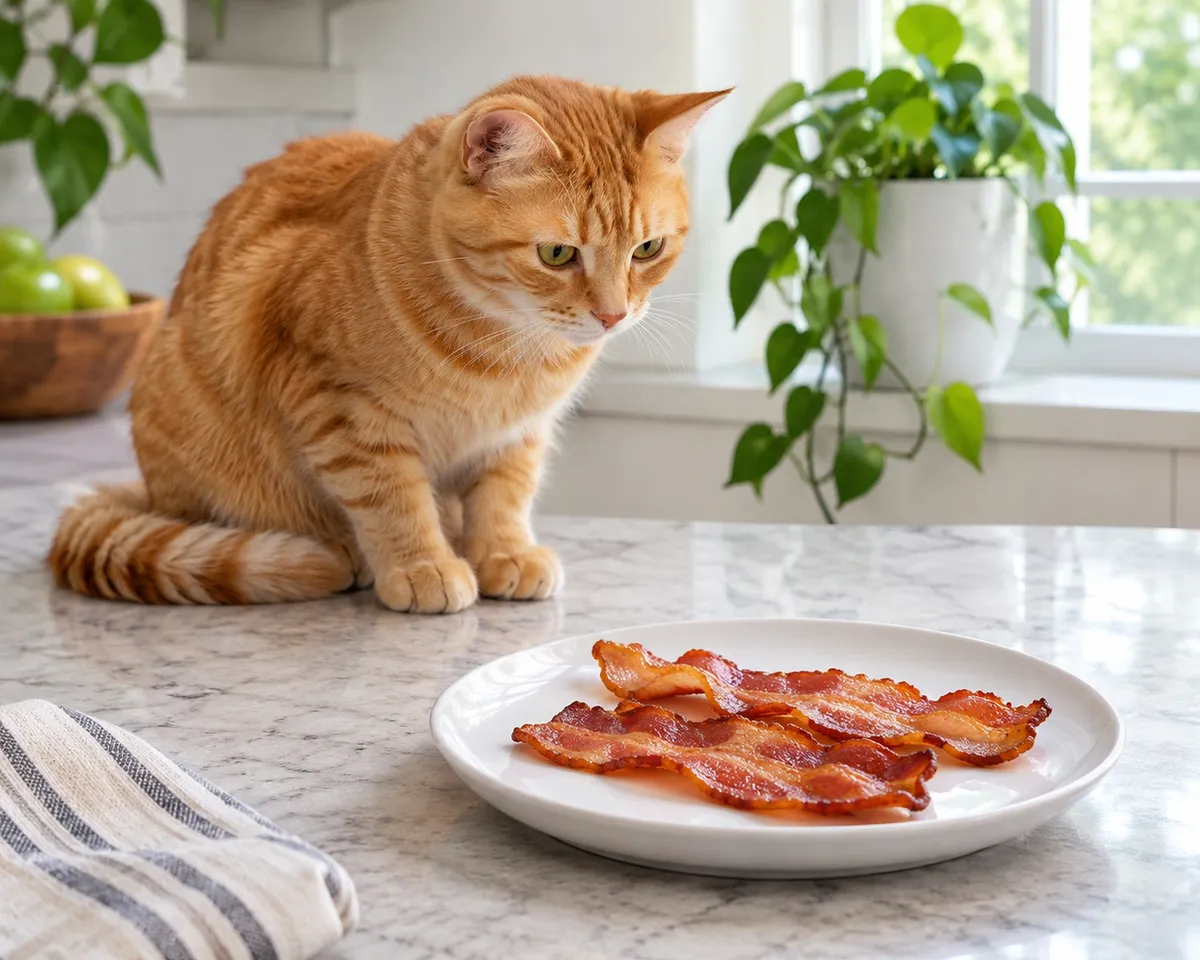
Can Cats Eat Bacon Raw or Cooked?
Plain, fully cooked bacon with the grease blotted off is the least risky form, while raw bacon and grease are the worst.
- Raw bacon: Unsafe because of bacteria and parasites.
- Plain cooked bacon: A fingertip-sized piece occasionally, blotted on a paper towel.
- Bacon grease: Unsafe, since grease is almost pure fat.
- Turkey bacon: Still cured and salty, so not a healthy swap.
- Bacon bits: Avoid, because most contain heavy salt and flavorings.
What to Do If Your Cat Ate Bacon
Most healthy cats that steal one small strip of bacon need only close monitoring for 24 to 48 hours.
- Remove leftovers and check the packaging for garlic or onion.
- Estimate how much bacon your cat ate and when.
- Offer fresh water, since salty food increases thirst quickly.
- Watch for vomiting, diarrhea, belly pain, hiding or appetite loss.
- Call your veterinarian after a large amount, seasoned bacon or grease.
Never induce vomiting at home or give your cat human medicine. Cats with kidney disease, diabetes or past pancreatitis need a vet check after eating bacon.
Emergency signs: Go to an emergency vet immediately for repeated vomiting, tremors, seizures, extreme thirst, a swollen painful belly or collapse. Once mild vomiting stops, bland foods for an upset stomach help settle digestion.
Healthier Alternatives to Bacon for Cats
Lean, plain, unseasoned cooked meats give cats protein without bacon’s salt and fat. A better question than can cats eat bacon is which meats make good everyday rewards.
| Food | Safe for Cats? | Main Concern |
|---|---|---|
| Bacon | Rarely, tiny piece | Salt, fat, nitrites |
| Ham | Rarely, tiny piece | Salt, curing agents |
| Sausage | No | Fat, salt, garlic, onion |
| Plain cooked chicken | Yes | Remove skin and bones |
| Plain cooked turkey | Yes | Remove skin and seasoning |
| Cooked salmon | Occasionally | Remove all bones |
Cooked chicken for cats is the easiest swap, and our list of human foods cats can eat adds more options.
For ready-made rewards, freeze-dried chicken cat treats deliver real meat flavor with far less sodium than bacon. Lickable cat treat tubes suit cats that beg at breakfast, and both fit the 10% treat rule.
Frequently Asked Questions
Can cats eat bacon grease?
No, bacon grease is almost pure fat that can cause vomiting, diarrhea and pancreatitis in cats. Even 1 teaspoon is a heavy fat load for a 4 kg cat.
Is bacon toxic to cats?
Plain bacon is not toxic to cats, but its high sodium and fat make it unhealthy. Bacon seasoned with garlic or onion powder is dangerous.
How much bacon can a cat eat?
A healthy adult cat can have a fingertip-sized piece of plain cooked bacon occasionally, never daily. One full slice equals about 20% of a 10-pound cat’s daily calories.
Can kittens eat bacon?
No, kittens under 6 months handle salt and fat poorly and need complete kitten food only.
Is turkey bacon safe for cats?
No, turkey bacon is still cured, salty and processed. One slice often holds sodium similar to pork bacon.
The honest answer to can cats eat bacon is that a fingertip-sized piece of plain cooked bacon rarely hurts a healthy cat, but salt, fat and nitrites make it a poor treat. Keep bacon and grease out of reach, and stock plain cooked chicken or meat-based treats for begging moments.