


Cat Sneezing: 7 Common Causes and When to Worry
This post may contain affiliate links. As an Amazon Associate I earn from qualifying purchases.
Cat sneezing is usually caused by a mild upper respiratory infection, dust, or an irritant, and a few sneezes a day are normal. It matters most for owners whose cats sneeze repeatedly, produce colored discharge, or stop eating, because those signs point to illness that needs a vet.
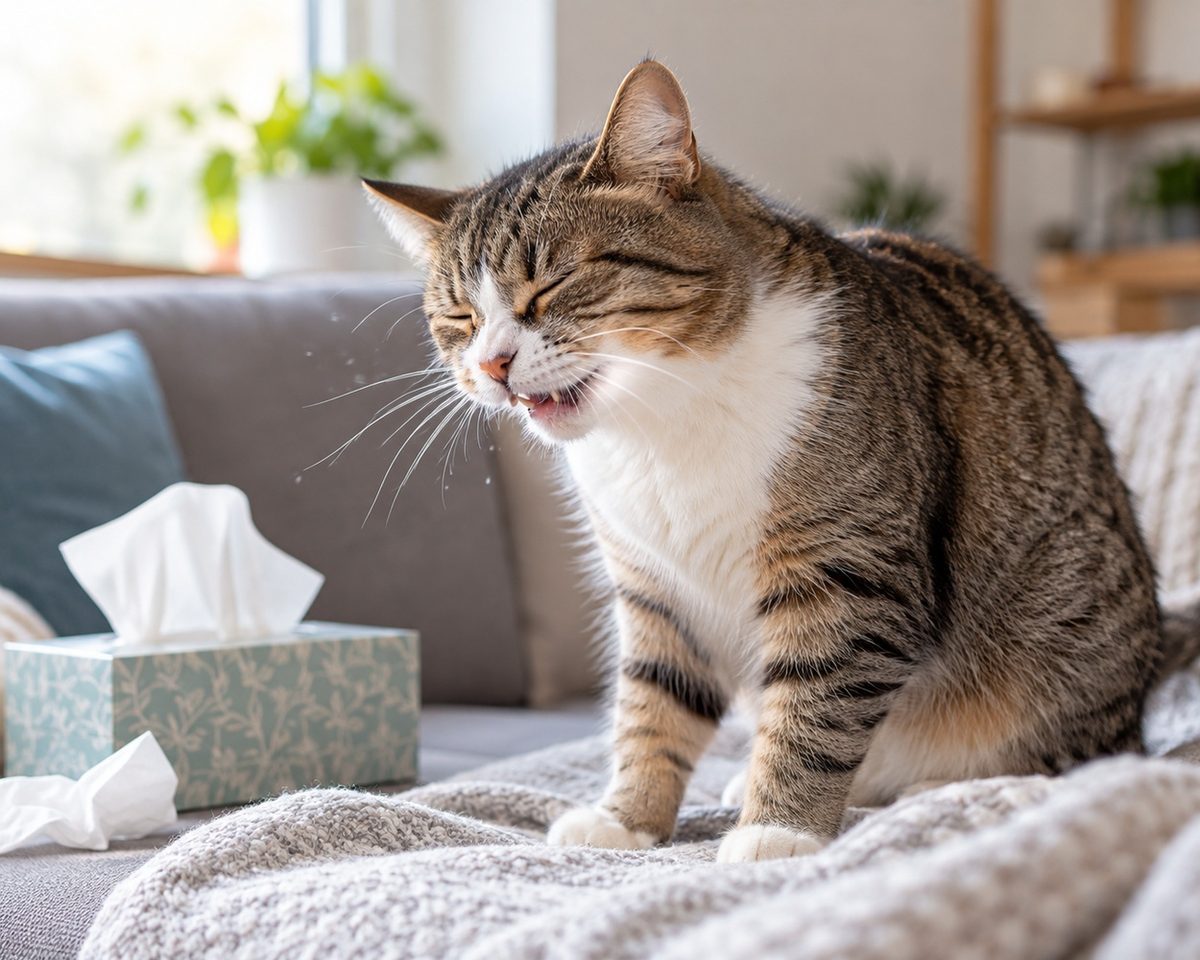
Cat sneezing at a glance:
- Short Answer: Occasional sneezing is normal, but frequent sneezing for more than 3 to 5 days needs attention.
- Most Common Causes: Viral upper respiratory infections, dust, scented products, allergies, and dental disease.
- Urgency: Low for a single sneeze, high if your cat has trouble breathing, stops eating, or has green or bloody discharge.
- What to Do at Home: Remove irritants, keep the eyes and nose clean, and encourage eating and drinking.
- When to See a Vet: Sneezing that lasts longer than a week, or any sneezing with fever, lethargy, or eye problems.
Table of Contents
Is Cat Sneezing Normal?
Yes, an occasional sneeze is a healthy reflex that clears dust or a stray hair from the nose. A cat that sneezes once or twice after sniffing a dusty corner or a new scent is almost always fine.
The picture changes when sneezing becomes frequent, comes in repeated bursts, or appears with other symptoms. When my own cat started sneezing in clusters of five or six, I stopped treating it as a quirk and began tracking it.
Watch for these patterns that suggest a real problem:
- Sneezing many times per day for more than 3 to 5 days
- Thick yellow, green, or bloody nasal discharge
- Watery, red, or squinting eyes
- Loss of appetite or visible weight loss
- Open-mouth breathing or noisy breathing
7 Common Causes of Cat Sneezing
The causes of cat sneezing range from harmless irritants to infections that need treatment. Knowing the most common ones helps you decide how worried to be.
1. Viral Upper Respiratory Infection
Viral infections are the most common reason cats sneeze, especially in kittens and cats from shelters. Feline herpesvirus and feline calicivirus cause most cases, and they spread through shared bowls, sneezes, and close contact.
Typical signs include sneezing, watery eyes, a runny nose, and a mild fever. Most cats recover in 7 to 21 days with supportive care, but herpesvirus can stay in the body for life and flare up during stress.
2. Bacterial Infection
Bacteria such as Bordetella and Chlamydia can cause sneezing, often on top of a viral infection. Thick green or yellow discharge is a sign that bacteria may be involved. A veterinarian can prescribe the right treatment after examining your cat.
3. Dust, Smoke, and Household Irritants
Cats have sensitive noses, and airborne particles trigger sneezing quickly. Common household triggers include:
- Dusty or scented clumping litter
- Cigarette smoke and candle smoke
- Air fresheners, perfumes, and cleaning sprays
- Fireplace ash and cooking fumes
If sneezing started after you changed litter or cleaning products, that change is the first suspect. A dust-free unscented low-dust cat litter often settles litter-related sneezing within a few days.
4. Allergies
Cats can react to pollen, mold, dust mites, and certain foods, and sneezing is one of the signs. Allergic sneezing tends to be seasonal or tied to a specific room. You can read more in our guide to allergies in cats and the best natural remedies for cat allergies.
5. Foreign Objects
A blade of grass, a seed, or a piece of litter can lodge in the nasal passage. This causes sudden, violent sneezing and pawing at the face, often on one side only. Nasal discharge from a single nostril is a clue. Do not try to pull anything out yourself, because a vet can remove it safely.
6. Dental Disease
The roots of the upper teeth sit close to the nasal passages. A tooth root infection or abscess can drain into the nose and cause chronic sneezing, usually with bad breath or drooling. Regular brushing your cat’s teeth helps prevent the dental problems behind this.
7. Nasal Polyps, Tumors, or Chronic Rhinitis
Long-lasting sneezing that never fully clears can point to growths in the nose or throat, or to chronic rhinitis. These are less common but more likely in middle-aged and older cats. A vet may recommend imaging or a nasal scope to find the cause.
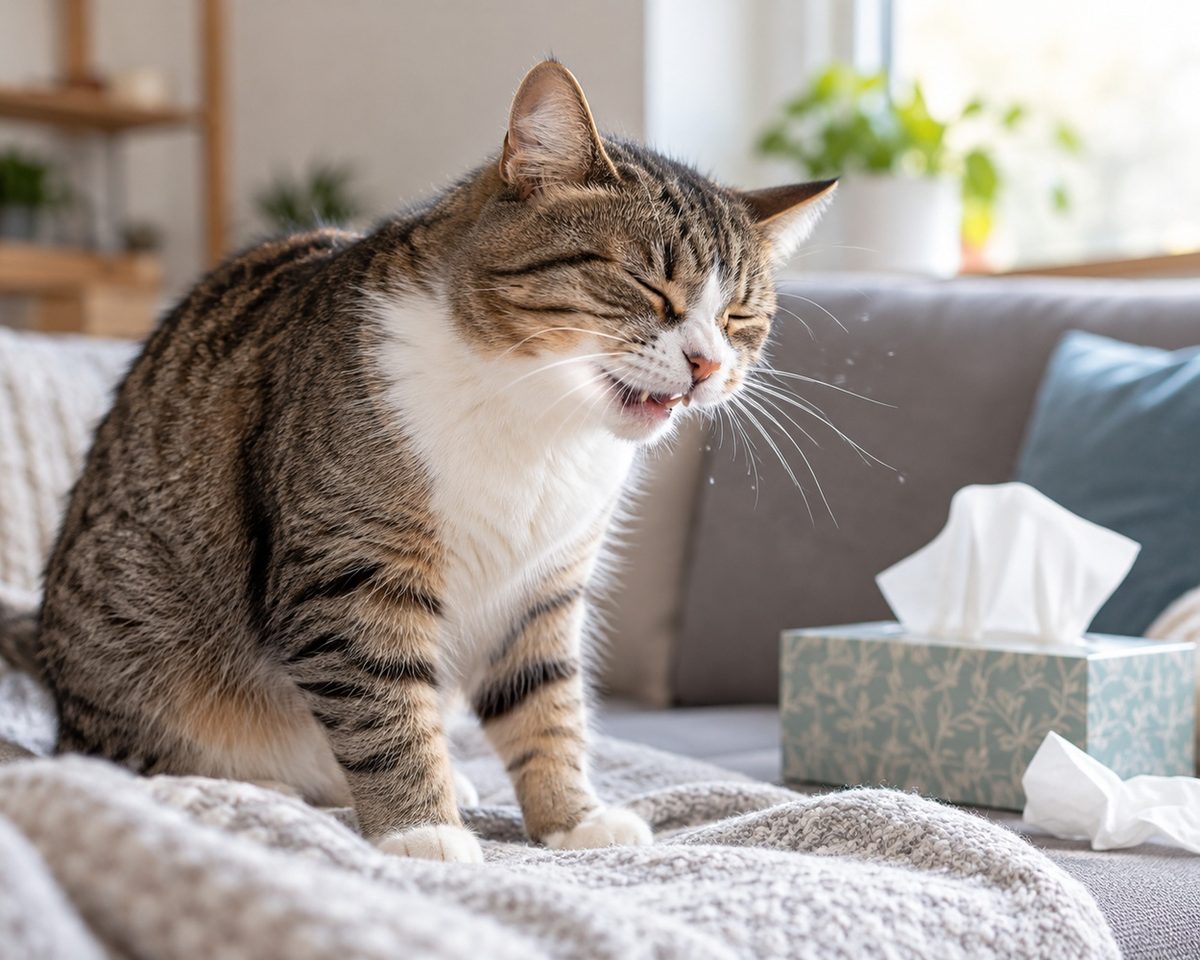
Cat Sneezing Causes by Urgency
| Sign | Likely Cause | Urgency |
|---|---|---|
| Occasional sneezes, clear nose | Dust or mild irritant | Low |
| Sneezing with watery eyes | Viral infection or allergy | Moderate |
| Yellow or green discharge | Bacterial infection | Vet visit soon |
| Sneezing from one nostril only | Foreign object or polyp | Vet visit soon |
| Bloody discharge | Injury, infection, or tumor | Prompt vet visit |
| Open-mouth breathing | Severe respiratory distress | Emergency |
Signs That Come With Cat Sneezing
The symptoms that appear alongside sneezing tell you far more than the sneeze itself. Look closely at your cat’s eyes, nose, mouth, and behavior.
Mild signs that can be monitored:
- Clear, watery nasal discharge
- Slightly watery eyes
- Normal appetite and energy
Warning signs that need a vet:
- Thick, colored, or bloody discharge
- Squinting, eye ulcers, or swollen eyelids
- Refusing food for more than 24 hours
- Lethargy, hiding, or fever
- Mouth ulcers or drooling
Cats that stop eating are especially at risk, because smell drives appetite and a blocked nose makes food unappealing. A cat that skips meals for more than 24 to 48 hours can develop serious liver problems. See our guide to why a cat is not eating for more detail.
How to Treat Cat Sneezing at Home
Mild cat sneezing from irritants or a light cold often improves with simple home care. Always involve a vet if symptoms last beyond a few days or worsen.
- Remove possible irritants such as scented litter, sprays, candles, and smoke.
- Wipe discharge from the eyes and nose gently with a warm, damp cloth.
- Run a humidifier or sit with your cat in a steamy bathroom for 10 minutes to loosen congestion.
- Warm up wet food slightly to boost its smell and encourage eating.
- Keep fresh water available and track how much your cat drinks.
- Separate a sick cat from other pets to limit spread.
A cool-mist pet-safe humidifier can ease dry air that irritates the nose. Never give human cold medicine, decongestants, or essential oils, because many are toxic to cats. Pet-specific advice from Cornell Feline Health Center is a good reference for respiratory illness.
When to See a Vet for Cat Sneezing
See a veterinarian if cat sneezing lasts longer than a week or comes with any of the warning signs above. Kittens, seniors, and cats with other health problems should be seen sooner, because respiratory infections can turn serious quickly.
Go to an emergency vet right away if your cat:
- Breathes with an open mouth or struggles for air
- Has blue or very pale gums
- Will not eat or drink at all
- Has a high fever or collapses
Your vet may swab the nose or eyes, check the teeth, or take X-rays to find the cause. Treatment depends on the diagnosis and may include fluids, eye ointment, or prescription medicine. Never give your cat human medicine without veterinary direction.
How to Prevent Cat Sneezing
Prevention focuses on vaccines, clean air, and low stress. These steps lower the risk of repeat infections.
- Keep core vaccinations current; the FVRCP vaccine protects against herpesvirus and calicivirus. See our guide to cat vaccinations.
- Choose low-dust, unscented litter and keep the box clean.
- Avoid smoking, sprays, and strong fragrances indoors.
- Reduce stress, which can trigger herpesvirus flare-ups.
- Wash bowls and bedding regularly, especially in multi-cat homes.
- Book routine checkups through regular veterinary check-ups for cats.
Frequently Asked Questions
Is it normal for a cat to sneeze a lot?
A few sneezes per day are normal, but frequent sneezing over several days is not. Sneezing that lasts more than 3 to 5 days, or comes with discharge, should be checked by a vet.
Can a cat catch a cold from a human?
No, human cold viruses do not usually infect cats. Cats get their own respiratory viruses, mainly feline herpesvirus and calicivirus, which spread only between cats.
How long does cat sneezing from a cold last?
Most mild cat colds clear up in 7 to 21 days. Cats carrying herpesvirus may sneeze again during stress, even after recovering.
Why is my cat sneezing and has watery eyes?
Sneezing with watery eyes most often points to a viral upper respiratory infection or an allergy. If the discharge turns yellow or green, or your cat squints, see a vet.
What is the best way to stop cat sneezing at home?
Remove irritants like dusty litter and scented sprays, and add moisture to the air with a humidifier. Mild sneezing often improves within a few days, but persistent cases need a veterinarian.
Cat sneezing is often harmless, but it is worth watching closely for duration, discharge, and changes in appetite. Remove household irritants first, keep vaccinations current, and book a vet visit if sneezing continues beyond a week or any warning sign appears.
