
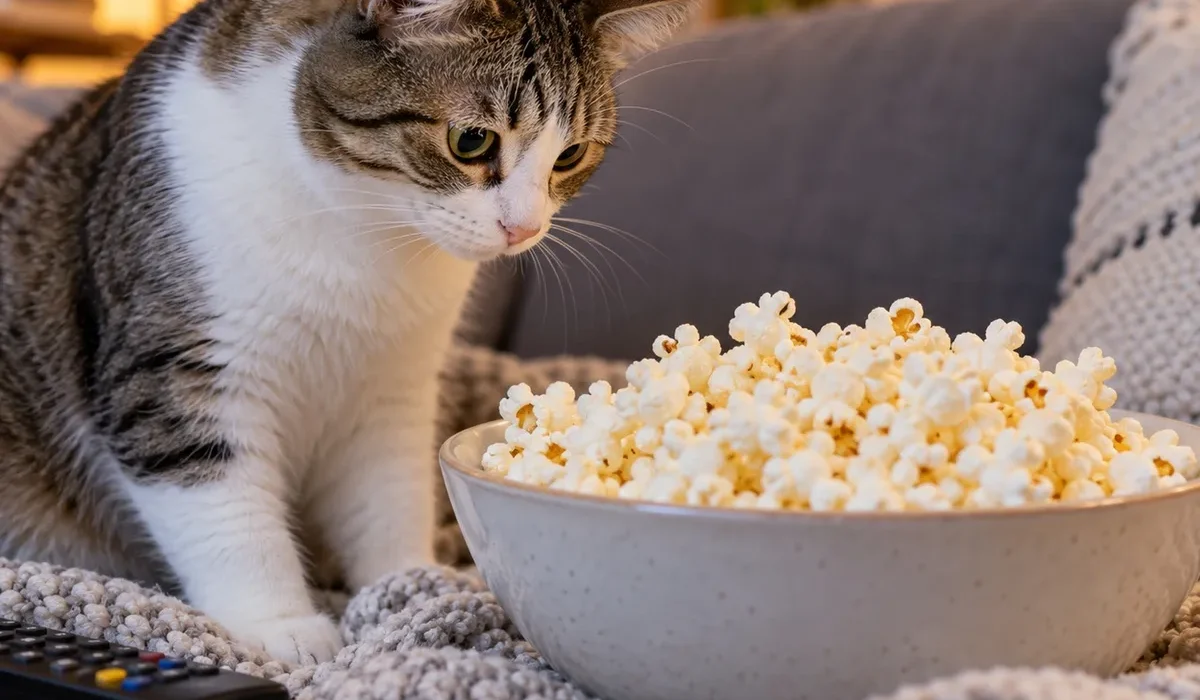
Can Cats Eat Popcorn? 5 Surprising Dangers to Avoid
Can cats eat popcorn? Yes, a single piece of plain, air-popped popcorn will not poison a healthy cat, but it offers no nutritional value and carries real choking and digestive risks. Owners who share movie-night snacks should know which popcorn is harmless, which is risky, and which toppings can make a cat sick.
This post may contain affiliate links. As an Amazon Associate I earn from qualifying purchases.
Table of Contents
Can cats eat popcorn at a glance:
- Short Answer: Plain, unsalted, unbuttered popcorn is not toxic to cats, but it is not recommended as a treat.
- Main Risk: Unpopped kernels and hard popcorn hulls can cause choking, gagging, and gum or tooth injury.
- Worst Types: Butter, salt, caramel, cheese powder, and microwave flavorings can cause stomach upset or toxicity.
- Safe Amount: One or two fluffy, plain pieces at most, and only occasionally.
- When to See a Vet: Repeated vomiting, trouble breathing, or refusing food for 24 hours after eating popcorn.
Can Cats Eat Popcorn Safely, or Is It a Risk?
Plain popcorn is technically non-toxic to cats, but “not toxic” does not mean “good for cats.” Cats are obligate carnivores, which means their bodies are built to get nutrients from animal protein, not grains. Popcorn is mostly starch and fiber, so it fills a small stomach without giving a cat anything it needs.
The ASPCA lists corn itself as non-toxic to cats, and many commercial cat foods contain corn-based ingredients. The difference is that processed cat food uses cooked, ground corn, while whole popcorn is dry, brittle, and sharp-edged. That physical form is where the trouble starts.
When my cat first jumped onto the couch and nosed into a bowl of popcorn, I realized how quickly a curious cat can swallow something awkward. Most cats chew little and swallow fast. A hard, crunchy piece can scrape the throat on the way down.
So can cats eat popcorn in a way that is truly safe? Only in the narrowest sense: one plain, fully popped piece, offered rarely, with no seasoning. For everyday treating, better options exist, and you can read about risky snacks in our guide to dangerous foods for cats.
5 Surprising Dangers of Feeding Popcorn to Cats
The risks below explain why vets generally advise against letting cats snack on popcorn, even when the popcorn looks harmless.
1. Choking and Throat Injury
Unpopped kernels are hard, round, and small enough to lodge in a cat’s throat. Even popped pieces have sharp, papery hulls that can stick to the back of the mouth or throat. Signs of trouble include pawing at the mouth, gagging, drooling, and repeated swallowing.
2. Dental and Gum Damage
A cat that bites down on an unpopped kernel can crack a tooth or injure the gums. Hull fragments can also wedge between teeth and under the gumline, causing irritation and inflammation. Cats hide mouth pain well, so the first sign is often dropping food or chewing on one side.
3. Digestive Upset and Blockage
Popcorn is high in insoluble fiber that cats cannot digest well. A few pieces may pass without trouble, but larger amounts can cause vomiting, gas, or constipation. In rare cases, a mass of kernels or hulls can create an intestinal blockage, which is an emergency.
4. Salt, Butter, and Seasoning Overload
Movie-theater and microwave popcorn is usually loaded with sodium, oil, and artificial flavorings. Too much salt can cause excessive thirst, vomiting, and in large amounts, sodium ion poisoning. Fatty butter and oil can trigger stomach upset or, in sensitive cats, inflammation of the pancreas.
5. Toxic Toppings and Hidden Ingredients
Some popcorn flavors contain ingredients that are genuinely dangerous to cats. Garlic powder, onion powder, chocolate drizzle, and xylitol-sweetened coatings are all harmful. Onion and garlic can damage red blood cells, and chocolate contains theobromine, which cats cannot process safely.
Can Cats Eat Popcorn With Butter, Salt, or Caramel?
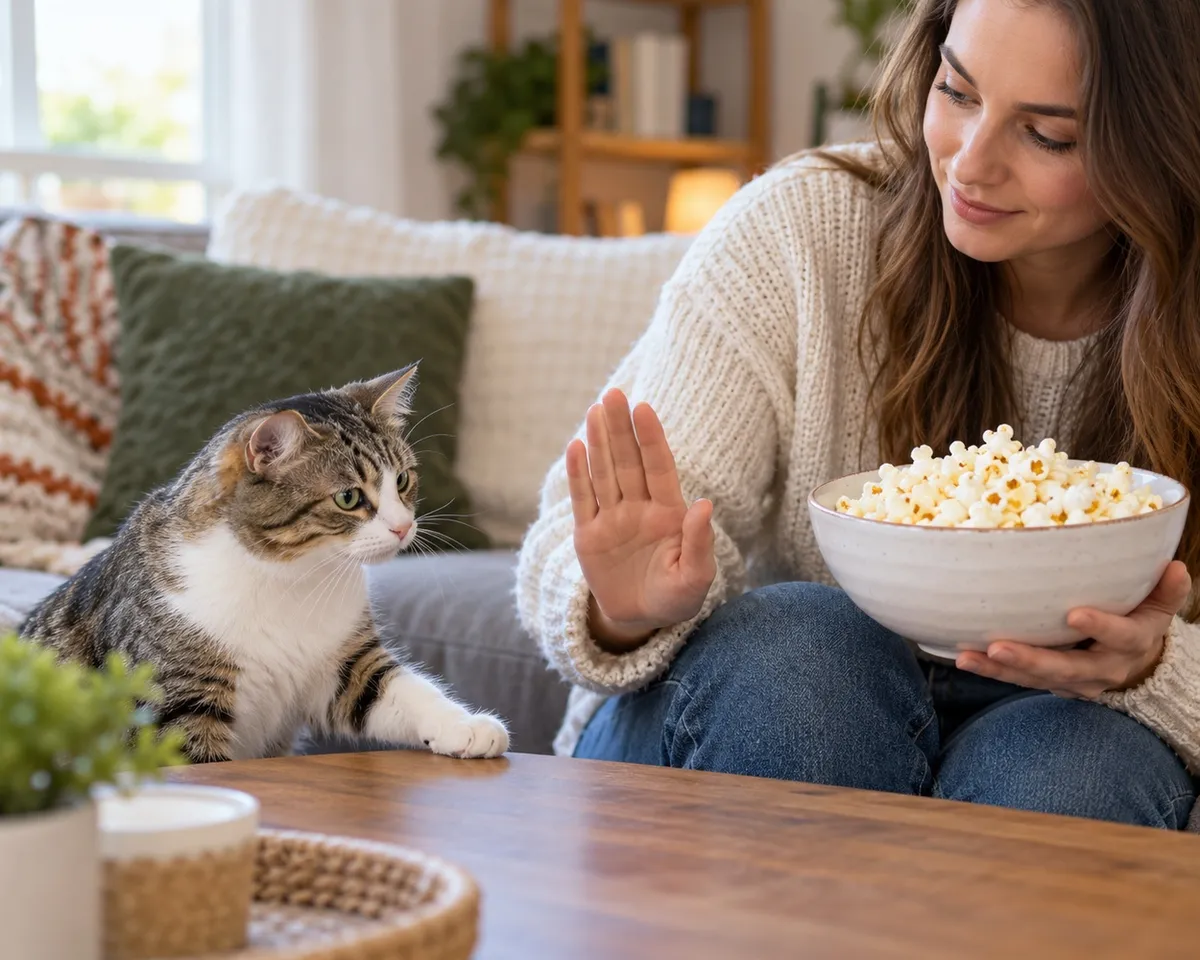
No, cats should not eat flavored popcorn of any kind. The plain kernel is the least harmful part; the toppings are what turn a snack into a health risk. Here is how common popcorn types compare.
| Popcorn Type | Risk Level | Main Concern |
|---|---|---|
| Plain air-popped | Low | Choking on hulls or kernels |
| Salted | Moderate | Excess sodium, thirst, vomiting |
| Buttered | Moderate | Fat, stomach upset, pancreatitis risk |
| Caramel or kettle corn | High | Sugar, sticky texture, dental harm |
| Cheese or ranch flavored | High | Garlic, onion, and dairy ingredients |
| Microwave popcorn | High | Artificial flavorings, oils, salt |
| Chocolate-coated | Very high | Theobromine toxicity |
Caramel popcorn deserves special mention because it sticks to teeth and can glue pieces together into a hard clump. Cats are also lactose intolerant as adults, so cheese-flavored powders can cause diarrhea. If you are curious about dairy specifically, see our post on whether cats can eat cheese.
How Much Popcorn Can a Cat Eat?
If you choose to offer popcorn at all, keep it to one or two plain, fully popped, fluffy pieces. Treats of any kind should make up no more than 10 percent of a cat’s daily calories, and an average-sized cat needs only about 200 to 250 calories per day. Popcorn adds calories without protein, taurine, or any nutrient cats require.
Follow these basic safety steps if you decide to share a piece:
- Choose plain air-popped popcorn with no salt, butter, oil, or seasoning.
- Remove any unpopped or partly popped kernels completely.
- Break the piece into smaller bits so it is easy to swallow.
- Offer it by hand so you can watch your cat chew and swallow.
- Skip popcorn entirely for kittens, senior cats, and cats with dental disease or sensitive stomachs.
Keep in mind that cats do not crave popcorn for its taste. Most cats are drawn to the crunchy sound, the movement, or the buttery smell, not the corn itself. Whether can cats eat popcorn for fun or not, a cat that sniffs the bowl is usually curious, not hungry.
Can Cats Eat Popcorn Kernels, Hulls, and Leftovers?
No, cats should never eat unpopped kernels, and the leftover hulls at the bottom of the bowl are nearly as risky. Kernels are rock hard and can crack teeth, while hulls are thin, sharp shards that stick in the throat and gums.
Cleaning up matters as much as portioning. Cats are drawn to crumbs on the floor and in the couch cushions after a movie night. A few seasoned, salty crumbs may not cause harm, but a whole bowl left on a coffee table can lead to a big, unsupervised snack.
Tip the bowl into a sealed trash can, wipe up butter and oil, and keep popcorn bags closed. Greasy paper bags are especially tempting, and cats that lick the lining can swallow salt and oil in concentrated form. A quick cleanup removes the temptation entirely.
What to Do If Your Cat Ate Popcorn
Stay calm and check how much your cat ate and what type it was. One plain piece rarely needs treatment, while a handful of seasoned popcorn warrants a closer look. Remove the bowl so your cat cannot eat more.
Watch for these signs over the next 24 hours:
- Vomiting more than once or retching without bringing anything up.
- Drooling, pawing at the mouth, or difficulty swallowing.
- Lethargy, hiding, or a hunched posture that suggests belly pain.
- Refusing food or water for a full day.
- Straining in the litter box or producing no stool.
Do not try to make your cat vomit at home, and never give human medicine without veterinary direction. If your cat is coughing or struggling to breathe, treat it as an emergency and go to a vet right away. Our guide on a coughing cat explains which signs point to something stuck in the throat or airway.
A vet may examine the mouth, feel the abdomen, or recommend imaging if a blockage is suspected. Cats that vomit repeatedly can also become dehydrated quickly, so learn the signs in our post on dehydration in cats. If your cat ate popcorn with unknown toppings, the ASPCA Animal Poison Control Center keeps guidance on toxic foods.
Safer Snack Alternatives When Can Cats Eat Popcorn Is Not the Answer
If your cat wants to join snack time, plenty of options are safer and more useful than popcorn. Cats do best with small amounts of cooked, plain animal protein or purpose-made treats. These choices fit a carnivore’s biology far better than grain-based snacks.
Better treat ideas:
- Small pieces of plain cooked chicken or turkey with no seasoning, bones, or skin.
- Freeze-dried single-ingredient meat, such as chicken or fish.
- A crunchy dental treat for cats designed to be chewed and digested safely.
- A few small cubes of cooked egg, in moderation.
Our posts on turkey for cats and eggs for cats cover portion sizes and cooking tips. If your cat loves crunchy textures, a treat-dispensing puzzle toy lets them work for kibble or treats while staying mentally busy. That mimics hunting far better than a bowl of popcorn ever could.
Cats that beg during snack time often just want attention. Try redirecting with a play session using a wand toy, or review our tips for playing with your cat to burn off that curiosity. A consistent routine of meals and play reduces food-seeking behavior.
Frequently Asked Questions
Can cats eat popcorn without butter or salt?
Plain air-popped popcorn is not toxic, but it is still a choking risk and offers no nutrition. Limit it to one or two fluffy pieces with all unpopped kernels removed.
Is popcorn toxic to cats?
Plain popcorn is not toxic to cats, according to the ASPCA’s non-toxic food listings. Seasoned popcorn can be harmful because garlic powder, onion powder, chocolate, and xylitol are all dangerous to cats.
What happens if a cat eats unpopped kernels?
Unpopped kernels can cause choking, tooth damage, or a digestive blockage. Call your vet if your cat gags, vomits repeatedly, or stops eating for 24 hours.
Can kittens eat popcorn?
No, kittens should not eat popcorn because their throats are small and their digestive systems are still developing. Stick to kitten food and vet-approved treats until your kitten is fully grown at around 12 months.
Why does my cat like popcorn?
Most cats are attracted to popcorn’s crunchy sound, rolling movement, and buttery smell rather than its taste. Cats lack sweet taste receptors, so the interest is usually curiosity and play.
So, can cats eat popcorn? One plain, fluffy piece is unlikely to harm a healthy cat, but the choking risk and the dangerous toppings make it a snack best skipped. Keep seasoned popcorn well out of reach, offer a species-appropriate treat instead, and call your vet if your cat shows breathing trouble or repeated vomiting after a snack.