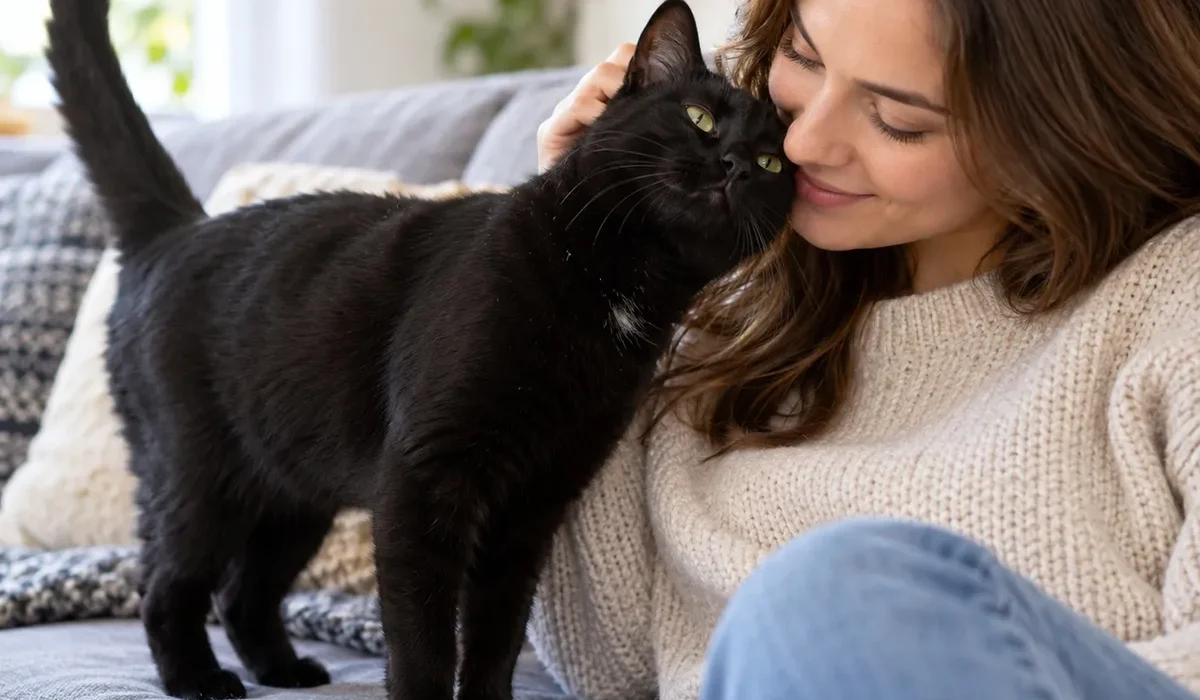
Black Cat Behavior: 8 Surprising Traits Owners Love
Black cat behavior is shaped by the same factors as any other cat: genetics, early socialization, and environment, not by coat color. Still, many owners describe black cats as unusually affectionate, playful, and people-oriented. This guide is for adopters and owners who want to know which traits are real, which are myths, and how to care for a black cat well.
This post may contain affiliate links. As an Amazon Associate I earn from qualifying purchases.
Table of Contents
Black cat behavior at a glance:
- Short Answer: Black cats behave like all cats, and coat color does not determine personality, though owners often report a friendly, social nature.
- Why Cats Do It: Individual temperament comes from parentage, socialization before 12 weeks, and daily environment.
- Is It Normal: Affection, vocal chatter, lap-seeking and play are all typical for any healthy cat.
- How to Respond: Offer routine play, gentle handling, and a calm home to bring out the best in your cat.
- Common Myth: Black cats are not bad luck, and there is no evidence they are more aggressive or less healthy.
What Does Black Cat Behavior Really Look Like?
Black cat behavior varies as widely as the cats themselves, because a black coat is simply a pigment trait. The same melanin gene that darkens the fur does not rewrite a cat’s personality.
Black is one of the most common coat colors in domestic cats, so black cats appear across every breed type and every temperament. A black cat may be a bold explorer, a shy observer, or a clingy lap cat.
Some researchers have studied coat color and personality in cats. Findings are mixed and based on owner reports, which are subjective. Treat any claim about color-linked personality as a loose tendency, never a rule.
8 Black Cat Behavior Traits Owners Love
These eight traits come up again and again in owner stories. They describe patterns many people notice, not guarantees for every cat.
1. Strong Attachment to Their People
Many black cats bond closely and follow their owners from room to room. If this sounds like your cat, why your cat follows you everywhere explains the reasons behind this shadowing habit.
2. Playful, Kitten-Like Energy
Black cats often keep a playful streak well into adulthood. Daily play sessions of 10 to 15 minutes, twice a day, help burn energy and strengthen your bond. A feather wand toy works well for this.
3. Talkative Chatter
Plenty of black cats greet their owners with trills, chirps, and meows. Vocal cats are usually saying hello, asking for food, or requesting attention. Chirping in particular is explained in why cats chirp and what it means.
4. Lap-Seeking and Sleeping on You
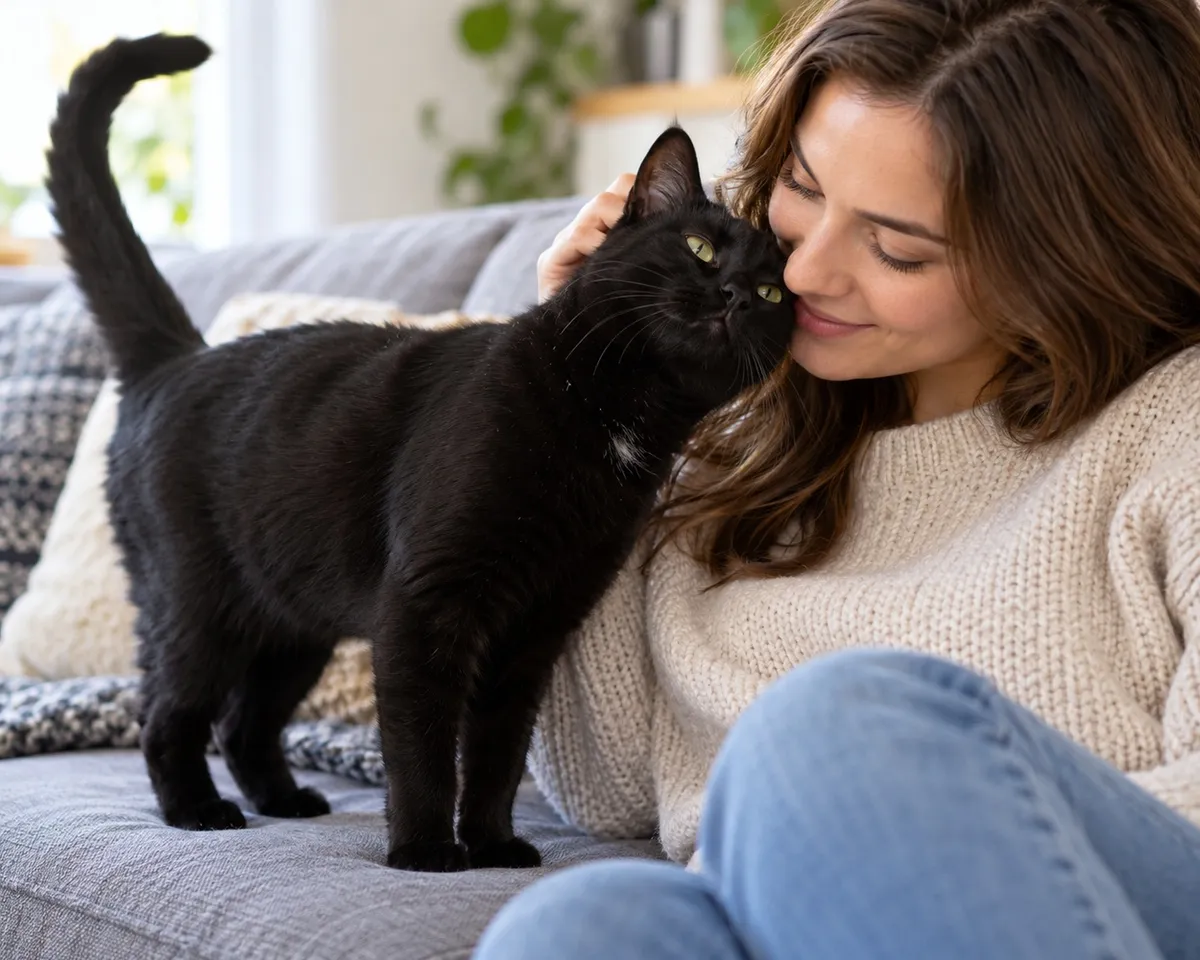
Black cats are frequently described as cuddly, choosing laps, chests, and pillows. Sleeping on you signals trust and a wish for warmth. See why your cat sleeps on you for more on this behavior.
5. Confident Curiosity
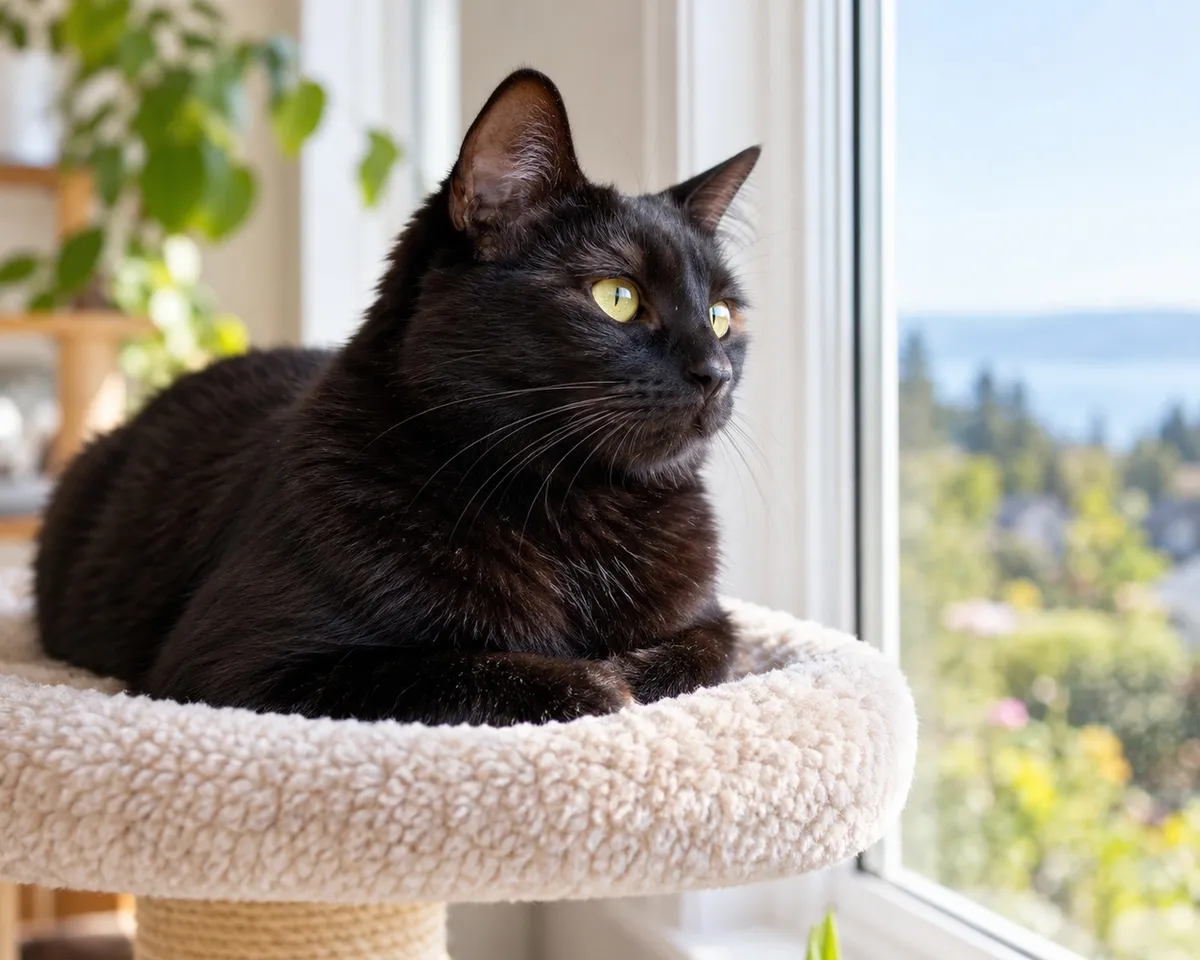
Many black cats investigate new rooms, boxes, and visitors with little hesitation. This curiosity needs safe outlets, so rotate toys weekly and offer a sturdy perch near a window.
6. Gentle Kneading and Purring
Kneading and purring are comfort behaviors that black cats show as often as any other cat. Kneading starts in kittenhood, when nursing kittens press on their mother. Read why cats knead for the full explanation.
7. Strong Hunting Instinct
Black cats stalk, pounce, and chase just like every cat. Puzzle feeders and chase toys let them act out this instinct indoors. A treat puzzle feeder turns mealtime into mental exercise.
8. Sensitivity to Routine
Many owners notice their black cat settles best with predictable feeding and play times. A steady schedule lowers stress and can reduce nighttime yowling.
Black Cat Behavior Myths vs Facts
Black cats carry centuries of superstition, and several myths still affect how they are treated. The facts below separate folklore from what is actually known.
| Myth | Fact |
|---|---|
| Black cats bring bad luck | This is pure folklore with no basis in cat biology or behavior. |
| Black cats are more aggressive | Aggression depends on genetics, socialization, and stress, not coat color. |
| Black cats are less adoptable because they are less friendly | Shelter staff often report slower adoption of black cats, mostly due to bias and poor photo visibility. |
| Black cats are unhealthy | No evidence shows black cats are generally less healthy than other colors. |
| Black cats always have yellow eyes | Eye color varies, and kittens are born with blue eyes that change by about 7 to 12 weeks. |
Why Black Cat Behavior Can Look Different
When owners notice distinct black cat behavior, several real factors usually explain it. Understanding them helps you avoid blaming the coat.
Common influences on personality:
- Genetics: A cat inherits temperament traits from both parents, especially confidence and sociability.
- Early socialization: Kittens handled gently between 2 and 7 weeks tend to grow into calmer, friendlier adults.
- Breed background: Black appears in breeds like the Bombay, which is bred for a people-focused, dog-like temperament.
- Environment: Stable routines, enrichment, and safe spaces shape daily behavior more than color does.
- Observer bias: Owners who love black cats tend to notice and remember the affectionate moments.
The Bombay deserves a mention because it is the breed most associated with a sleek black coat and a social personality. Many other black cats are domestic shorthairs with mixed ancestry, so their behavior reflects individual history. You can explore more coat and breed differences in tortoiseshell cat facts and tuxedo cat facts.
How to Care for a Black Cat’s Wellbeing and Behavior
Good care brings out the friendly, playful side that owners love. These steps work for any cat and are especially useful for a lively black cat.
Daily care routine:
- Schedule two play sessions of 10 to 15 minutes each, ideally before meals so the hunt ends with food.
- Provide a tall cat tree with perches so your cat can survey the room from above.
- Offer scratching surfaces near sleeping areas and doorways to protect furniture.
- Feed at consistent times each day to support a calm routine.
- Give quiet, undisturbed rest spots, since cats sleep 12 to 16 hours daily.
Consistent routines make black cat behavior more predictable and easier to guide. If your cat sleeps a lot, that is normal, and why cats sleep so much covers the reasons. For more ideas on keeping a bright, active cat busy, see how to keep an indoor cat entertained.
Coat Care for a Black Cat
A black coat can look dull when a cat is stressed, ill, or sun-exposed. Dark fur often fades to a rusty brown tint in strong sunlight, which is harmless. A sudden dull, greasy, or flaky coat can point to diet or health problems, so mention it at your next vet visit. General brushing guidance appears in the cat grooming guide.
When Black Cat Behavior Signals a Problem
Behavior changes matter more than coat color. A sudden shift in a previously friendly cat can signal pain, illness, or stress.
Signs worth a vet visit:
- Hiding for more than a day or refusing to eat for over 24 hours
- Sudden aggression in a cat that was previously gentle
- Changes in litter box habits, including straining or urinating outside the box
- Excessive vocalizing, especially at night, in an older cat
- Weight loss, lethargy, or a noticeably dull, thinning coat
A veterinarian should check any abrupt change in black cat behavior, because pain and illness often show up first as mood changes. If your cat hides suddenly, why a cat is suddenly hiding lists common causes. For background on feline health and behavior, the International Cat Care resources are a trustworthy reference.
Adopting a Cat and Understanding Black Cat Behavior
Black cats are often overlooked in shelters, so adopting one gives a deserving cat a home. Judge each cat by how it acts in person, not by color or by a dark photo.
Tips for choosing a cat:
- Spend at least 15 to 20 minutes with the cat to see how it responds to touch and play.
- Ask shelter staff about the cat’s history, energy level, and reaction to other pets.
- Choose a cat whose energy matches your household, whether quiet or active.
- Prepare a safe room for the first few days so your new cat can settle.
Looking for a name that suits a dark coat? Browse black cat names for 150 ideas. If you are weighing options, things to consider before adopting a cat covers the essentials. You can also read general welfare guidance at the ASPCA cat care guide.
Meeting a few cats in person is the best way to see real black cat behavior rather than rely on stereotypes. Personality shows up in how a cat greets you, plays, and settles.
Frequently Asked Questions
Is black cat behavior different from other cats?
No, black cat behavior depends on genetics, socialization, and environment rather than coat color. Many owners report friendly black cats, but studies rely on subjective reports and show mixed results.
Do black cats have more health problems?
No evidence shows black cats are less healthy than other colors. Their health depends on breed, genetics, diet, and veterinary care, and routine checkups are recommended once a year.
Why is my black cat so clingy?
Clinginess usually reflects a strong bond, early handling, or a need for attention and routine. A sudden increase in clinginess can signal stress or illness, so consult a vet if it appears abruptly.
What is typical behavior for black kittens?
Black kittens behave like all kittens, with bursts of play, climbing, and pouncing between long naps. Most kittens need 16 to 20 hours of sleep daily during early growth.
Why do black cats turn reddish-brown in the sun?
Strong sunlight can bleach the pigment in black fur, creating a rusty brown tint. This is harmless, though a dull coat inside the home can reflect diet or health issues worth checking with a vet.
Black cat behavior comes down to each cat’s individual personality, not the color of its coat. Give your cat steady routines, daily play, and gentle socialization, and the affectionate, curious traits owners love will shine. Your next step: schedule two short play sessions today and watch how your cat responds.