Savannah Cat: 9 Amazing Facts About This Wild-Looking Breed
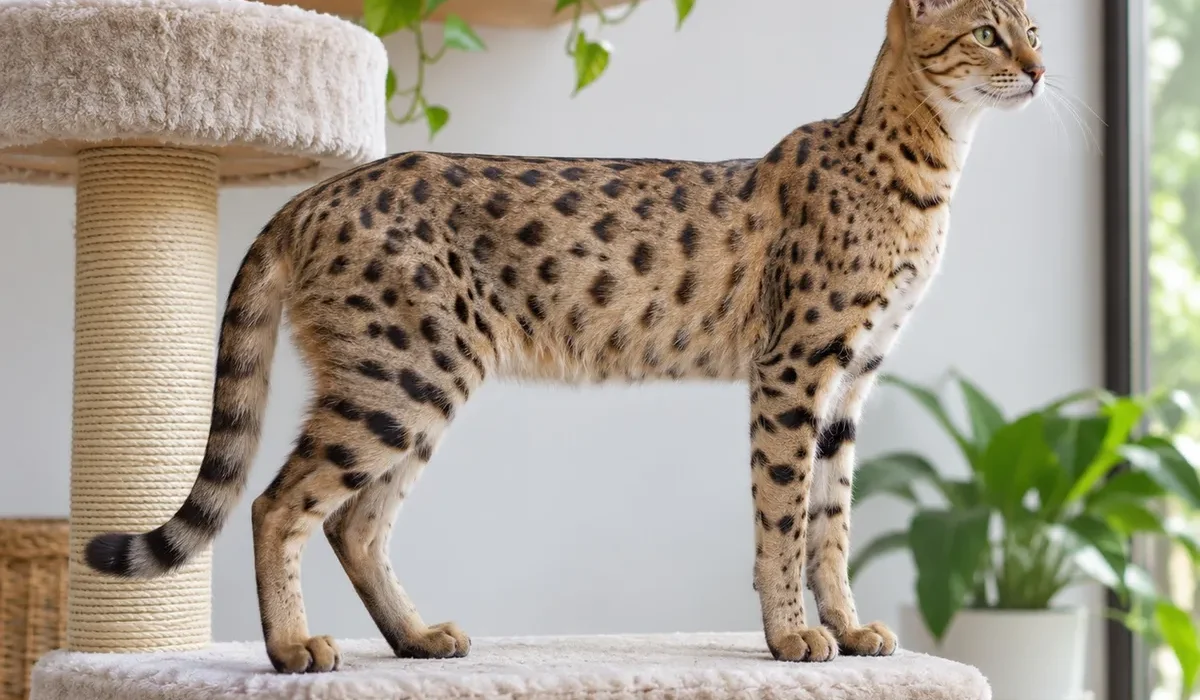
The savannah cat is a hybrid breed created by crossing a domestic cat with the African serval, which produces a tall, spotted and unusually athletic pet. The breed suits active, experienced owners who can meet its high energy needs and confirm that local laws allow ownership.
This post may contain affiliate links. As an Amazon Associate I earn from qualifying purchases.
Table of Contents
Savannah cat at a glance:
- Size and Weight: Most Savannahs weigh 12 to 25 pounds and stand 14 to 17 inches tall at the shoulder.
- Lifespan: Typically 12 to 20 years with indoor living and yearly vet checkups.
- Temperament: Bold, curious and dog-like, and many Savannahs quickly learn fetch and simple tricks.
- Grooming Needs: Low, because weekly brushing keeps the short spotted coat clean and glossy.
What Is a Savannah Cat?
Every Savannah descends from the serval, a wild African cat that weighs roughly 20 to 40 pounds. Breeder Judee Frank produced the first Savannah kitten in 1986 by pairing a male serval with a female Siamese.
The International Cat Association (TICA) accepted the breed for registration in 2001. TICA granted the breed full championship status in 2012.
When I first met an F2 Savannah at a breeder’s home, the cat cleared a 6-foot bookcase in a single leap.
Savannah Cat Facts: 9 Amazing Traits
Nine traits set Savannahs apart from every other domestic breed.
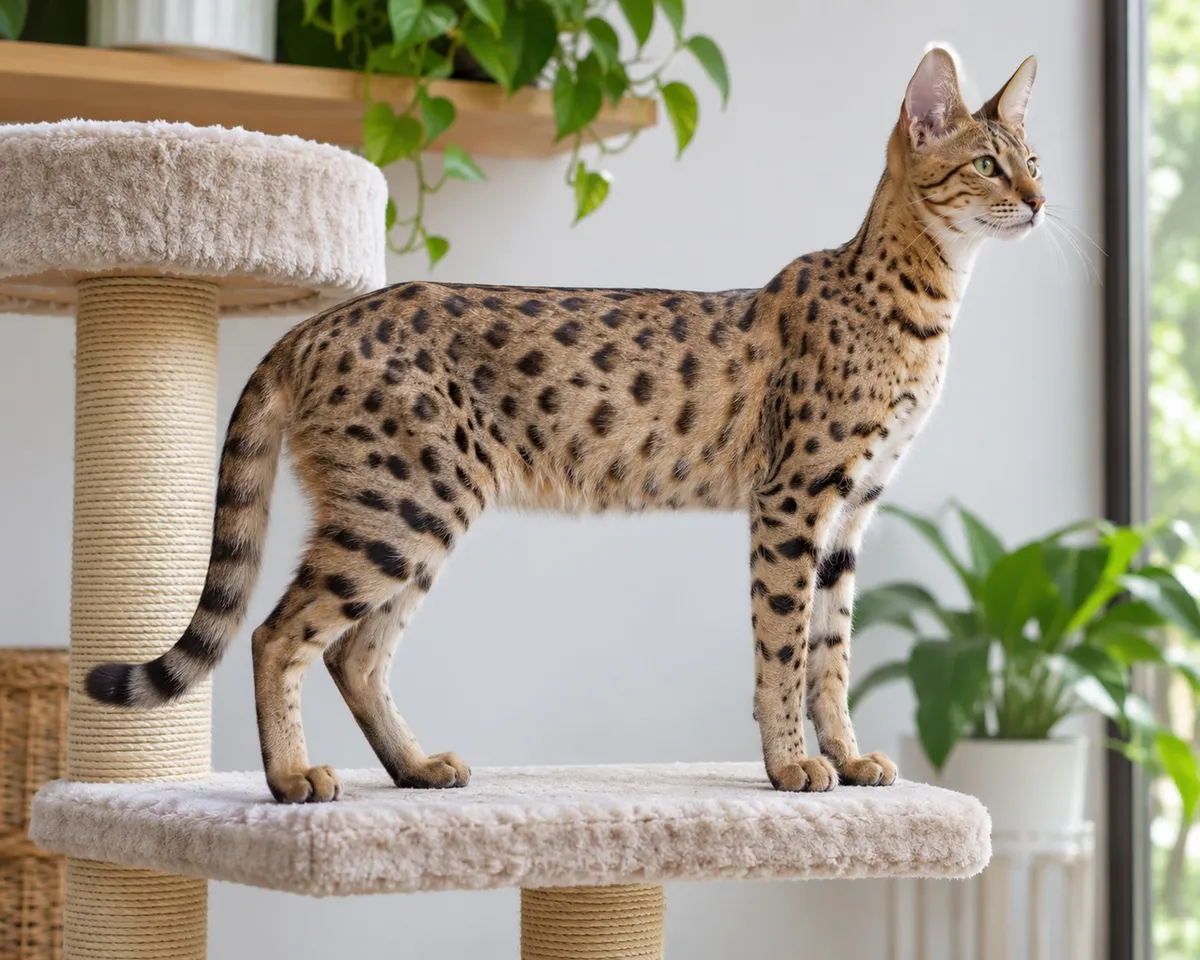
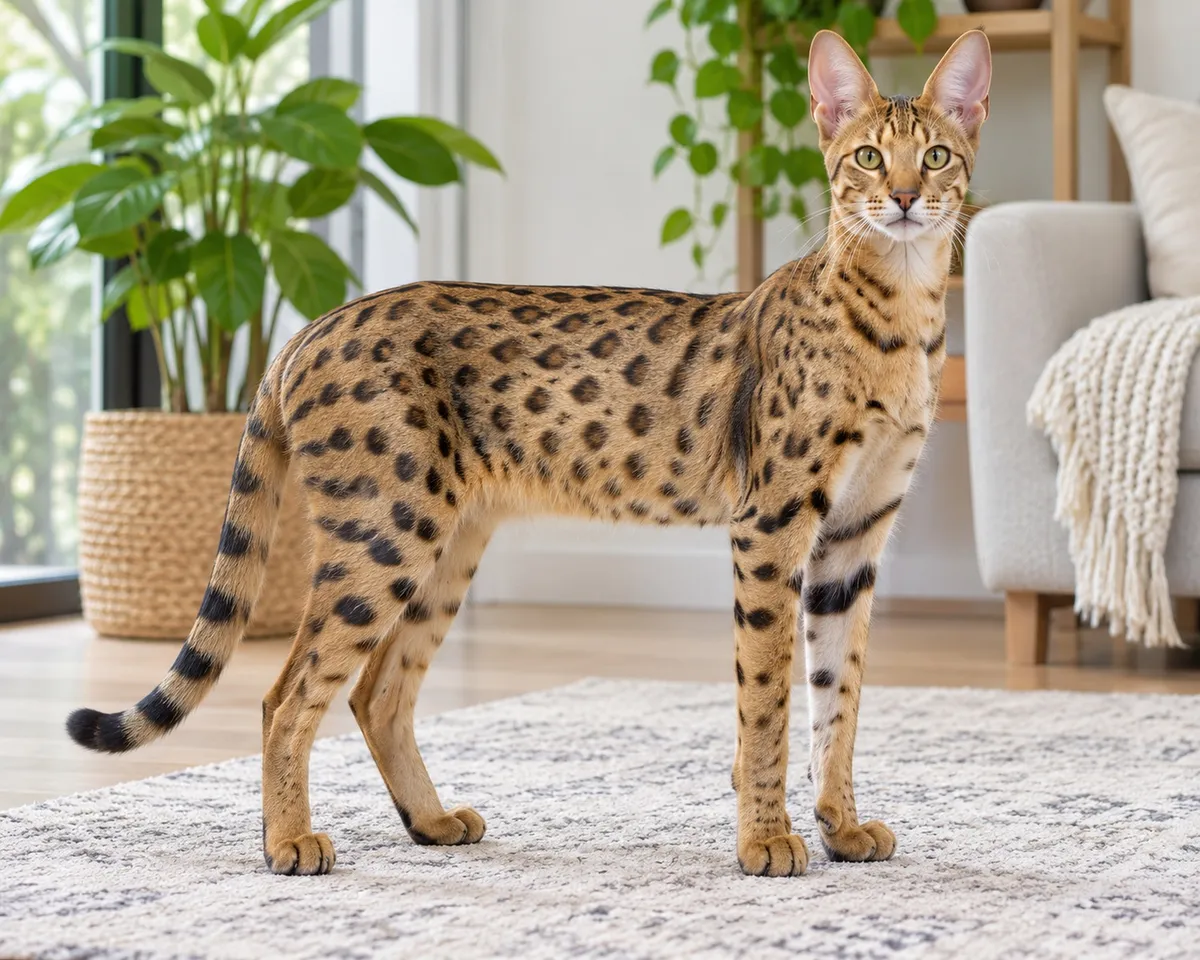
- Serval looks: Long legs, tall upright ears and a bold spotted coat all come from the serval side of the family.
- Jumping power: Many Savannahs can leap about 8 feet straight up from a standing start.
- Water lovers: Despite the usual reasons cats hate water, many Savannahs splash in bowls and even join owners in the shower.
- Dog-like habits: Most Savannahs learn fetch, simple commands and outdoor walks within a few weeks.
- Unusual sounds: Some Savannahs chirp like a serval, and many give a sharp “snake hiss” when startled.
- Four show colors: TICA accepts brown spotted tabby, black, black silver spotted tabby and black smoke.
- Sterile males: Male Savannahs from F1 to about F4 are usually sterile, so breeding programs depend on females.
- Slow growth: The breed keeps growing until about 3 years old, much later than most cats.
- Strong bonds: These cats often attach to one or two people and follow them from room to room.
Savannah Cat Generations Explained
The F number shows how many generations separate a Savannah from its serval ancestor, and a lower number means wilder behavior.
| Generation | Approx. Serval Ancestry | Male Fertility | Best Suited For |
|---|---|---|---|
| F1 | About 50% | Sterile | Very experienced owners |
| F2 | About 25% | Sterile | Experienced owners |
| F3 | About 12.5% | Usually sterile | Active families |
| F4 | About 6% | Often sterile | Most pet homes |
| F5 and later | Under 3% | Usually fertile | First-time Savannah owners |
Most pet homes do best with F4, F5 or later Savannahs, which keep the wild look with a calmer domestic temperament. F1 kittens often cost over $10,000, while later generations usually sell for a few thousand dollars.
Personality and Energy Needs of the Breed
Savannahs are high-energy cats that need 30 to 60 minutes of active play daily to stay calm and well behaved. A bored savannah cat opens cabinets, knocks items off shelves and invents its own games.
- Climb: A tall, sturdy cat tree of at least 6 feet gives Savannahs safe height and a place to burn energy.
- Walk: A cat harness and leash lets Savannahs explore outdoors safely after 1 to 2 weeks of indoor practice.
- Train: Five-minute sessions of cat training tricks and rotating puzzles keep a Savannah’s sharp mind busy.
Savannah Care, Diet and Health
Savannahs need a high-protein, meat-based diet, minimal grooming and yearly vet exams, just like any domestic cat.
Daily care essentials:
- Diet: Feed a complete commercial food with animal protein as the first ingredient, and measure portions to prevent obesity.
- Grooming: Brush weekly and trim nails every 2 to 3 weeks to protect furniture and skin.
- Health screening: Hypertrophic cardiomyopathy has been reported in the breed, and the Cornell Feline Health Center explains this heart disease.
- Lifespan: Good care supports a 12 to 20 year lifespan, as our guide on how long cats live explains.
See a veterinarian promptly if your Savannah shows labored breathing, sudden hiding or appetite loss lasting over 24 hours.
Is a Savannah Right for Your Home?
A Savannah fits best with active, experienced owners who are home often and enjoy daily interactive play.
- Legal checks: Australia banned Savannah imports in 2008, and several US states and cities restrict early generations, so confirm local rules before you buy a savannah cat.
- Other pets: A strong prey drive makes Savannahs risky around birds, hamsters and fish.
- Welfare: International Cat Care raises welfare concerns about breeding servals with domestic cats, so choose a responsible, registered breeder.
Frequently Asked Questions
Is a savannah cat legal to own?
Savannah ownership is legal in many areas, but Australia has banned imports since 2008 and some US states and cities restrict early generations.
How big does a Savannah get?
Most Savannahs reach 12 to 25 pounds and 14 to 17 inches at the shoulder, with F1 and F2 males growing largest.
How long do Savannahs live?
Savannahs usually live 12 to 20 years, and indoor living plus yearly vet exams supports the longer end of that range.
Are Savannahs good with kids?
Yes, F4 and later Savannahs usually enjoy respectful older children, though rough handling by toddlers can trigger swats.
What does F1 Savannah mean?
F1 means the kitten has a serval parent, giving it roughly 50% serval ancestry and the wildest temperament of all generations.
The savannah cat pairs a serval’s striking look with a playful, dog-like personality that rewards active owners. Later generations such as F4 and F5 offer the easiest fit for most homes. Check your local laws first, then visit a registered breeder and meet the kitten’s parents before choosing.